
The life and reign of Sultan Kilij Arslan II form a vast epic chronicle in which mysteries of origin, fierce struggles for power, and great battles were intertwined — battles that forever changed the face of Anatolia. As the eldest son of the outstanding Seljuk sultan of Rum, Mesud I, Kilij Arslan was immersed from his youth in the whirlpool of politics and war, sharing with his father the burden of defending and expanding the state.
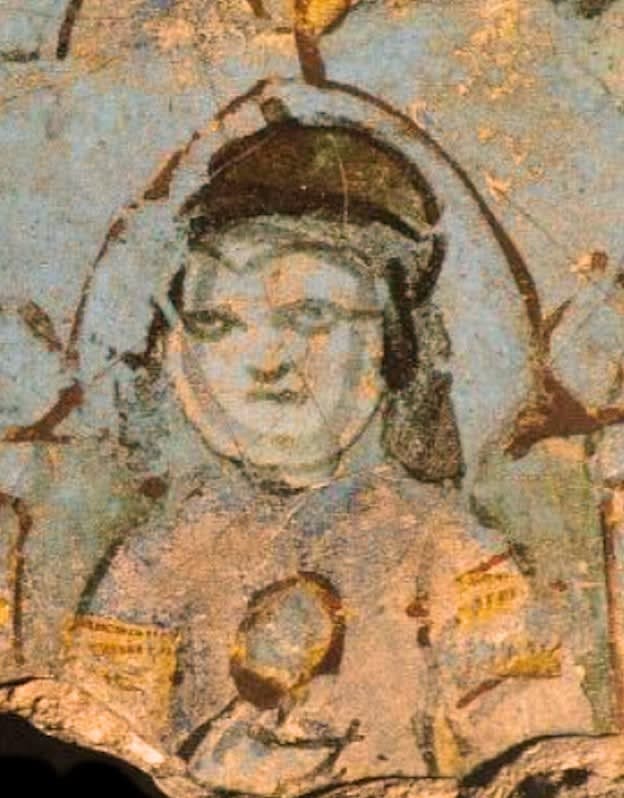
The question of his origins remains surrounded by a veil of historical intrigue. According to the hypothesis of the historian A. V. Nazarenko, based on the Slavonic Chronicle of Arnold of Lübeck, the sultan’s mother may have been a noble European lady, the granddaughter of Sviatoslav Yaroslavich through his marriage to Oda of Stade. This version is supported by accounts of the sultan’s meeting with Duke Henry the Lion in 1172, during which Kilij Arslan allegedly acknowledged their blood kinship. Modern genetic research and DNA analysis of the dynasty’s remains in the tomb near the Alaeddin Mosque in Konya, completed in 2023, made it possible not only to confirm family ties but also to reconstruct the appearance of the sultan’s mother, whose face has now become a subject of scientific knowledge.

Kilij Arslan’s path to the summit of power began in 1144, when he is first mentioned in the chronicles as ruler of Elbistan, which his father had taken from the Danishmendids. During these years, the young prince was hardened in endless campaigns against the crusaders of Northern Syria, the Artuqids, and the Zengids. He took part in battles against Emperor Manuel Komnenos and repelled the onslaught of the participants of the Second Crusade.
By 1149, after the successful siege of Marash, he had already shown himself to be a decisive and at times harsh military commander, whom chroniclers accused of breaking oaths for the sake of achieving strategic objectives. Seeing in his eldest son a wise successor, Mesud I officially proclaimed him sultan in 1155, shortly before his own death. In the presence of the emirs, the julus ceremony was held, and Mesud personally placed the crown on his son’s head, distributing the remaining lands among his other sons and sons-in-law and ordering them to obey the new sovereign.
However, peace did not last long. Immediately after his father’s death in the autumn of 1155, Kilij Arslan faced betrayal and rebellion. Fearing for his throne, he ordered his middle brother Devlet to be strangled, which forced his younger brother Shahin-Shah to flee and enter into an alliance with his eternal rivals — the Danishmendids and Byzantium.

The beginning of Kilij Arslan’s sole rule was marked by a period of deep instability. The state was caught between Byzantine possessions on the coast, Armenian Cilicia, and the Crusader states. The Anatolian lands were exhausted by war, agriculture had fallen into decline, and the nomadic way of life of most Turkmens hindered economic development. The sultan had not only to defend the borders but also to lead his people toward settled life.
His main opponent in the first stage was Yaghibasan the Danishmendid, who captured Kayseri and carried away tens of thousands of prisoners. Only the intervention of the clergy and the threat from Nur ad-Din Mahmud, who had seized the cities of Aintab and Raban, forced Kilij Arslan to agree to a temporary peace with the Danishmendids. Showing diplomatic flexibility, the sultan concluded alliances with the king of Jerusalem and the prince of Antioch, which allowed him by the end of 1157 to restore the territorial integrity of the sultanate and force Nur ad-Din to return the captured lands.
Relations with Byzantium remained extremely tense because of the constant raids of Turkmen tribes. Emperor Manuel Komnenos, seeking to weaken the Seljuks, skillfully plotted against them by supporting emirs hostile to Kilij Arslan. In 1162, the sultan took an unprecedented step — he personally went to Constantinople to conclude peace. This visit, which lasted, according to different estimates, from 8 to 80 days, became a masterpiece of diplomacy: the sultan was received with extraordinary splendor, showered with gifts, and signed a treaty obliging him to assist the empire and suppress the raids of nomads.
This peace gave him freedom of action within Anatolia. While he was in the imperial capital, Yaghibasan continued his raids, but upon his return Kilij Arslan quickly broke apart the coalition of emirs. After Yaghibasan’s death in 1164, the sultan systematically seized the possessions of his rivals: Elbistan, Sivas, and Kayseri. By 1169, the Danishmendids had lost power almost everywhere, retaining only Malatya, while the sultan’s brother Shahin-Shah was forced to flee under the protection of Nur ad-Din Mahmud.
The confrontation with Nur ad-Din reached its peak in 1173, when the armies of two great Muslim rulers met on the banks of the Ceyhan River. The danger of a large-scale clash and the famine that had begun in the region forced them to seek a compromise. Kilij Arslan formally recognized Zunnun as ruler of Sivas and promised to continue the jihad against the Christians, which, however, led to the breakdown of his agreement with Manuel Komnenos.
The emperor, angered by the sultan’s growing power, began preparing for a decisive campaign. Manuel planned to crush the Seljuks completely and restore Byzantine domination over Anatolia. In the spring of 1176, a huge Byzantine army marched toward Konya. Despite repeated peace proposals from the sultan, Manuel, urged on by young courtiers, longed for battle.
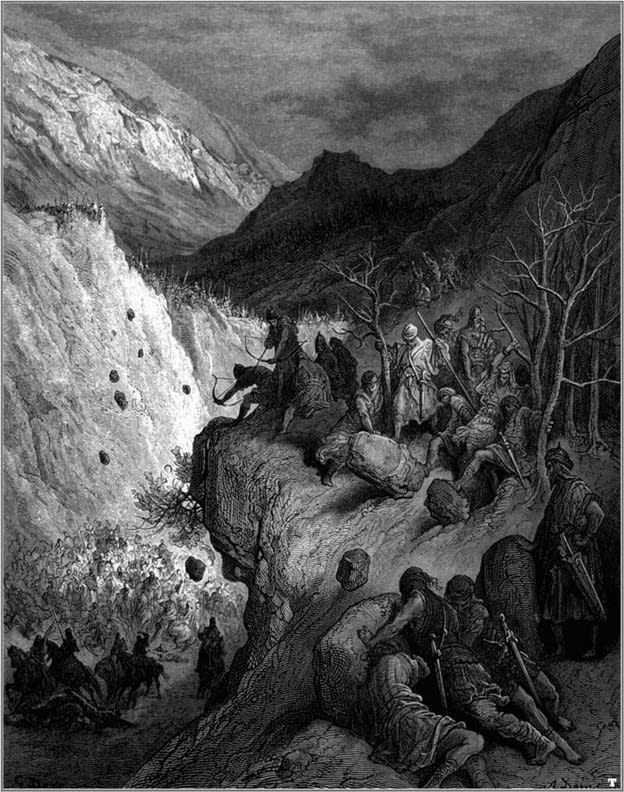
The decisive clash took place in a narrow mountain pass near the fortress of Myriokephalon. Kilij Arslan displayed his tactical talent: he lured the Byzantine forces into a trap, using the terrain to his advantage. The Seljuks, occupying the heights, rained arrows and stones down upon the enemy. The heavily burdened Byzantine army, stretched out for many kilometers, was cut into pieces and effectively paralyzed. Thousands of warriors died in the bloody slaughter, including Baldwin of Antioch. Emperor Manuel barely escaped, breaking through to his vanguard.
The next morning, the sultan, wishing to finally break the enemy’s spirit, displayed on a spear the head of Andronikos Vatatzes, the commander of another Byzantine column that had been defeated earlier. The Battle of Myriokephalon became a “second Manzikert”: Byzantium’s hopes of recovering Anatolia were finally buried. The peace concluded after the battle obliged the empire to demolish the fortifications of Dorylaeum and Soublaion, although Manuel later tried to violate these terms.
The final years of Kilij Arslan II’s rule after the great victory of 1176 were devoted to the final unification of Anatolia under Seljuk authority. In 1178, the last stronghold of the Danishmendids — Malatya — fell. The sultan also had to face a new power: Salah ad-Din, or Saladin, who took the Artuqids under his protection. Only after prolonged disputes and the threat of a major war were the two great leaders able to reach an agreement, partly through the mediation of the vizier Ikhtiyar ad-Din Hasan.
By the end of his life, Kilij Arslan had expanded the borders of the sultanate to the Aegean Sea, capturing Uluborlu, Kütahya, and Eskişehir, and forcing Byzantium to pay tribute. His reign laid the foundation for the golden age of the Seljuk Sultanate of Rum, transforming scattered territories into a powerful Islamic state that became the undisputed master of the Anatolian plateau.
The twilight of the reign of the great Sultan Kilij Arslan II turned into a tragedy in which the greatness of the state collided with the inevitability of old age and the destructive ambitions of his heirs. By the 1180s, the sultan, whose authority had seemed unshakable after the victory at Myriokephalon, began to feel the burden of his years and endless wars.
The question of exactly how many sons the ruler had still causes debate among chroniclers: Ibn al-Athir mentioned nine, Ibn Bibi eleven, while Michael the Syrian and Bar Hebraeus confidently spoke of twelve. Modern scholars, such as Claude Cahen, suggest that brothers or nephews of the sultan may have slipped into these lists, but one fact remains beyond dispute: there were many heirs, and each of them, according to Turkic tradition, considered himself a legitimate claimant to the throne.
Between 1184 and 1188, feeling exhausted and wishing to ensure stability during his lifetime, Kilij Arslan took a fatal step — he divided the sultanate into appanages. According to ancient law, the state was considered the common property of the dynasty, and the sultan, while remaining the supreme suzerain in Konya, granted his sons authority over key regions.

His eldest son, Qutb ad-Din Malik-Shah, received Sivas and Aksaray.
Rukn ad-Din Suleiman-Shah received Tokat and the northern lands stretching to the Black Sea.
Muhyi ad-Din Masud-Shah established himself in Ankara.
Nur ad-Din Mahmud Sultan-Shah settled in Kayseri.
Mughith ad-Din Tughril-Shah received Elbistan.
The youngest and beloved son, Ghiyath ad-Din Kaykhusraw, received Uluborlu and Kütahya.
At first, the system worked: the princely maliks expanded the borders at the expense of their neighbors, minted coins, and came once a year to their father to confirm their loyalty. However, the absence of a clear rule of primogeniture turned every appanage into a bridgehead for future civil war.
The sultan’s peace was finally shattered in 1188–1189. A new wave of nomadic Turkmens poured into Anatolia, and the ambitious sons began using them as personal armies. The eldest son, Malik-Shah, consumed by jealousy toward his father’s favorites, raised a rebellion. The main target of his anger was the wise vizier Ikhtiyar ad-Din Hasan, whom the prince accused of intrigue.
In 1188, near Kayseri, the armies of father and son stood face to face, but at that time Malik-Shah’s soldiers still did not dare raise their swords against the old sultan. Enraged, Kilij Arslan harshly punished the Turkmens who had joined the revolt, executing 4,000 people. But betrayal had already taken root: in September 1189, the loyal vizier Ikhtiyar ad-Din Hasan was killed on the road, and Malik-Shah effectively took his father prisoner in Konya, forcing him to declare him the official heir.
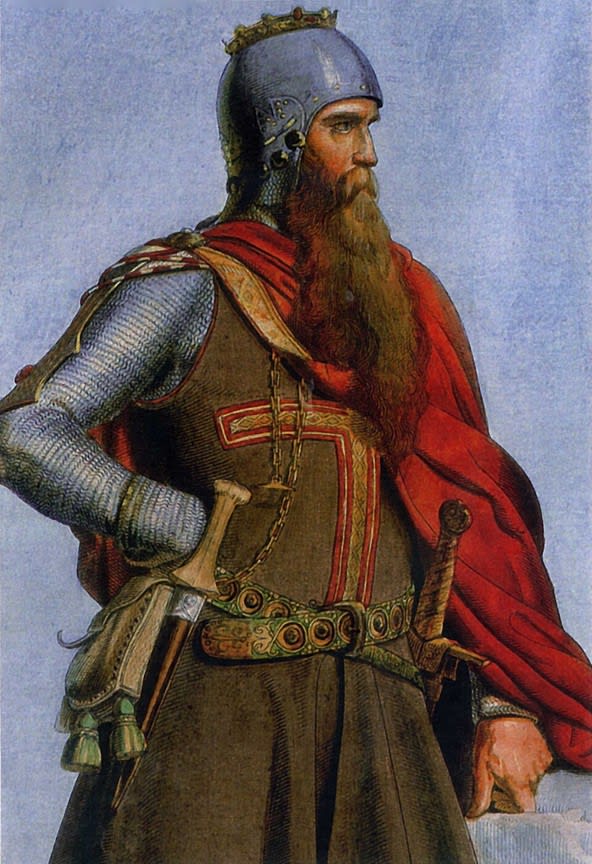
It was precisely at this moment of deep internal crisis that a new external threat appeared on the horizon — the Third Crusade. The Holy Roman Emperor Frederick Barbarossa, at the head of a colossal army of 100,000 men, was moving toward Jerusalem. Although Kilij Arslan had agreed to allow the crusaders passage, real power in the country no longer belonged to him. His sons, Malik-Shah and Masud, attacked the Germans against their father’s will.
On 17 May 1190, Barbarossa approached the walls of Konya. In a bloody battle that lasted several days, the crusaders broke into the city, committing plunder and slaughter there. The old sultan and Malik-Shah were locked in the citadel on the hill and were forced to ask for peace, supplying Frederick’s army with food. Only Barbarossa’s accidental death in the waters of the mountain river Göksu on 10 June 1190 saved the sultanate from final devastation by the crusaders.

The last two years of Kilij Arslan II’s life are rightly compared by historians to the fate of King Lear. Deprived of power by his eldest son, he fled Konya and wandered from one heir to another. But neither in Kayseri with Sultan-Shah nor among the other maliks did he find anything except a desire to use his name in political games. “The sultan went from place to place,” wrote Michael the Syrian, describing the decline of the great warrior.
He found refuge only with his youngest son, Kaykhusraw. Together they managed to gather forces and return to Konya, driving out Malik-Shah. However, the sultan’s strength was exhausted. During the siege of Aksaray, where the rebellious eldest son had taken refuge, Kilij Arslan II fell ill and died on 26 August 1192 at the age of about 76, although some sources gave his age as over 80. Rumors of poisoning circulated, but most likely the great sultan was broken by age and the bitterness of family strife.

Kilij Arslan II’s personality was woven from contradictions. The chronicler Niketas Choniates described him as physically awkward in appearance — with crippled hands and lame legs, because of which he often moved in a cart. Yet this physical affliction was compensated for by an iron will and a brilliant intellect. The sultan was known for his religious tolerance and love of philosophy. He held long conversations with the Christian patriarch Michael the Syrian and surrounded himself with learned philosophers, for which the fanatical Nur ad-Din Mahmud even called him a heretic. European legends even attributed to him a secret baptism, basing this on his letters to the Pope and his deep respect for Christian holy sites.
The significance of his reign for history is impossible to overestimate. Kilij Arslan II was the “architect” of Turkish Anatolia. He was the first to begin minting gold Seljuk dinars, which testified to an unprecedented economic rise. Mosques, madrasas, and the first caravanserais were built throughout the country, ensuring the safety of trade routes. He transformed Aksaray into a flourishing center of science and crafts, settling it with scholars and veterans.
Despite the tragic end and the civil strife among his sons, Kilij Arslan II left behind a powerful, centralized state that remained the dominant force in the region for decades to come.


