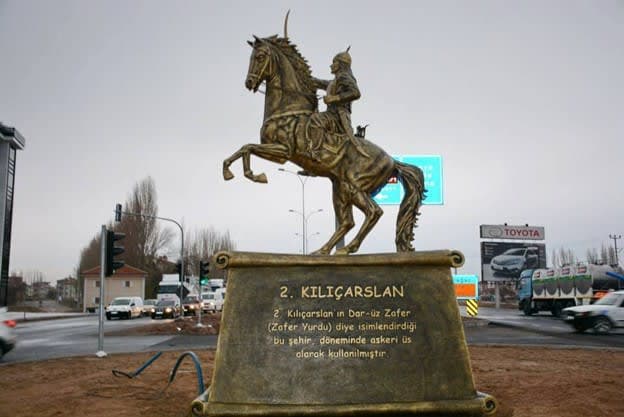

Kilij Arslan was the son of Suleiman ibn Qutulmish, the founder of the Anatolian Seljuk state. The exact date of his birth remains a matter of debate: some sources point to the year 1085, shortly after his father’s capture of Antioch, while others, relying on the age of his children, suggest an earlier date. The young prince received his first baptism of fire as early as 1084, taking part in his father’s campaign to capture Antioch. However, the triumph was short-lived. After Suleiman’s death in June 1086, Kilij Arslan came under the protection of the vizier Hasan ibn Tahir, but in the spring of the following year the sultan of the Great Seljuk Empire, Malik-Shah, took him to Isfahan as a hostage.

The years under supervision in Persia ended only with Malik-Shah’s death in 1092. In the chaos that followed, Kilij Arslan and his brother Kulan Arslan managed to leave Isfahan. Historians debate whether this was a daring escape or a legitimate departure with an army of Turkmens granted by the new sultan, Barkiyaruq, but the result was the same: at the turn of 1092–1093, Kilij Arslan appeared beneath the walls of Nicaea. Abu’l-Qasim, who governed the city, voluntarily handed power over to him, and the rightful heir ascended the throne.

After the death of the dynasty’s founder, the united Seljuk state in Anatolia effectively broke apart into independent principalities. Kilij Arslan had to begin with very little — only Nicaea and its surroundings were under his control. To strengthen his position, he concluded a dynastic alliance by marrying the daughter of Chaka Bey, the powerful bey of Smyrna. Together they planned joint operations against Byzantium, attempting to push the empire away from the Sea of Marmara.
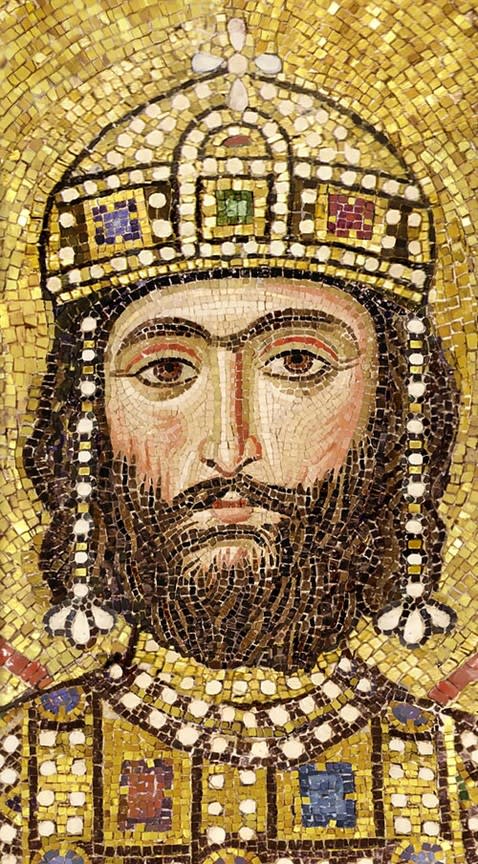
However, Emperor Alexios Komnenos displayed remarkable cunning. Alarmed by the rise of Chaka, who was already besieging Abydos and threatening Constantinople’s sea routes, the basileus managed to sow seeds of doubt in the young sultan’s mind. Kilij Arslan began to see his ambitious father-in-law as a threat to his own authority. In 1095, the sultan invited Chaka to a feast, where, after getting him drunk, he killed him with his own hands. Having freed himself from a rival, Kilij Arslan continued his raids on Byzantine lands while the emperor was occupied with war against the Cumans.

On 21 October 1096, the Seljuks encountered the vanguard of the First Crusade — the so-called “People’s Crusade” led by Peter the Hermit. In the Battle of Civetot, Kilij Arslan’s army set an ambush and almost completely destroyed the crusaders. This easy victory played a cruel trick on the sultan: he overestimated his own strength and underestimated the scale of the threat coming from Europe.
Believing that the “Franks” had been dealt with, in the winter of 1097 he led his main army eastward to besiege Melitene, which was held by the Armenian ruler Gabriel. The siege dragged on, and it was at that very moment that news arrived: enormous forces of professional knights from Europe had crossed into Anatolia and laid siege to Nicaea. Kilij Arslan abandoned everything and hurried to the capital, arriving there only in May 1097. His attempt to break through the siege ring at the southern walls of the city failed because of the crusaders’ numerical superiority. On 19 June 1097, Nicaea surrendered to the Byzantines. The sultan’s family was captured and sent to Constantinople, although they were later released without ransom.
Soon another crushing defeat followed — at the Battle of Dorylaeum on 1 July 1097. Despite showing heroism, Kilij Arslan was forced to retreat. From that moment on, he changed tactics: instead of direct confrontations, he used a “scorched earth” strategy, destroying wells and food supplies along the crusaders’ route. As a result, the sultan lost all the lands near the Aegean and Marmara Seas, and the borders of his state shifted far to the east.
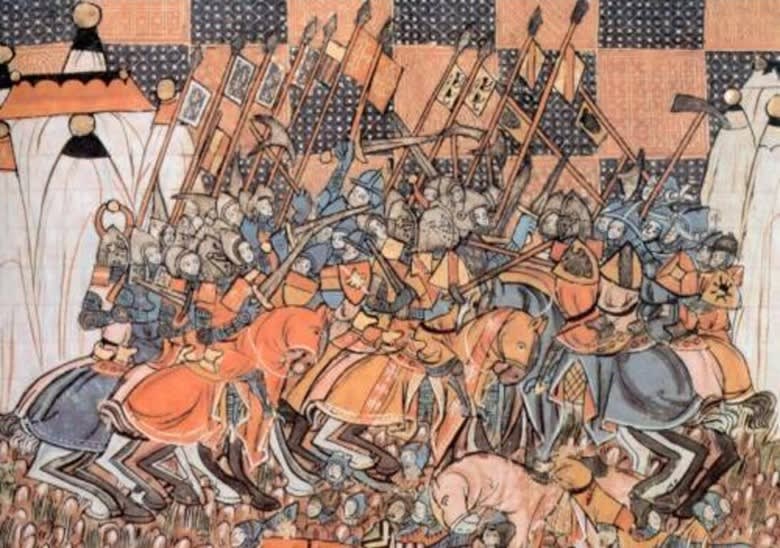

After moving his capital to Konya, or Iconium, Kilij Arslan began preparing for revenge. His chance came in 1101, when new waves of crusaders poured into Anatolia. This time the sultan acted wisely, allying himself with his former enemies — the Danishmendids.
In August 1101, near Merzifon, the first army that had attempted to free Bohemond of Taranto from captivity was defeated. According to chroniclers, more than 100,000 people were killed.

Soon afterward, near Konya, Kilij Arslan destroyed the corps of Count William of Nevers.
The third and final blow was the destruction of the combined forces of Count William IX of Poitiers and Duke Welf IV of Bavaria on the plain of Olosi near Heraclea.
These victories were of enormous significance: the crusader advance through Anatolia was stopped, and the land route from Europe to Palestine was effectively closed for many years.
In 1106, after strengthening his western borders and taking advantage of a new war between Byzantium and the Normans, Kilij Arslan returned to his eastern ambitions. On 2 September 1106, he finally captured Melitene. His influence grew rapidly: almost all the beys of the region submitted to him. Soon he captured Harran and, responding to the appeal of the inhabitants of Mosul, entered the city on 22 March 1107. By ordering the khutbah to be read in his own name, Kilij Arslan openly declared his claim to the title of Great Seljuk Sultan.
This became a direct challenge to Sultan Muhammad Tapar. A coalition of emirs led by Jawali marched against Kilij Arslan. The decisive battle took place on 13 July 1107 on the banks of the Khabur River. In the heat of battle, some of the Anatolian emirs deserted, and the sultan’s ranks wavered. Unwilling to fall into shameful captivity, Kilij Arslan, mounted on his warhorse, plunged into the turbulent waters of the Khabur, hoping to cross to the other bank. However, his heavy armor dragged the commander to the bottom — he drowned together with his horse.
Several days later, his body was found and buried in Mayyafariqin in a tomb known as Kubbāt al-Sulṭān. Remarkably, even his enemies respected him: Christian chroniclers, such as Matthew of Edessa, sincerely mourned his death, calling him a kind and merciful ruler who always showed goodwill toward the Christian believers living in his lands.


