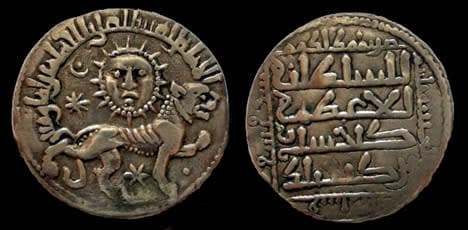

The enthronement of Kaykhusraw II in 1236–1237 was overshadowed by sinister rumors. It was believed that he had not merely inherited the throne, but had also played a role in the premature death of his great father, being implicated in a plot to poison him. After becoming sultan, Kaykhusraw immediately set about strengthening dynastic ties: he married his sister to Malik Aziz, the son of the Ayyubid ruler of Aleppo, and he himself married the latter’s daughter. Later, his harem was joined by Tamar, known as Gürcü Hatun — the daughter of the Georgian queen Rusudan, whose image left a noticeable mark on the culture and art of that period.
Behind the brilliance of these marriage alliances, however, lay the weak character of the young monarch. Kaykhusraw II fell completely under the influence of Saad ad-Din Köpek — an ambitious and cruel nobleman who had effectively cleared his path to the throne. After becoming first minister, Köpek unleashed a reign of terror: prominent statesmen and military commanders were executed at his whim, and their property passed into the hands of the all-powerful emir. This policy bled the state’s administrative apparatus dry. Only in 1239, tired of his favorite’s despotism, did the sultan authorize his removal. Köpek was killed by the emir of Sivas, Hüsam ad-Din Karaca, but the seeds of instability had already taken root.
At first, it seemed that the sultanate was still invincible. The military momentum created by Kayqubad I allowed victories at Diyarbakir and Tarsus. Cilician Armenia, the Empire of Trebizond, and the rulers of Aleppo officially recognized themselves as vassals of Kaykhusraw II. But beneath this outer shell of success, social tension was growing.
The massive influx of refugees — Turkic nomads fleeing the advancing Mongols — created an explosive situation in Anatolia. Huge masses of people were left without land or means of survival. In 1239, this anger erupted into a large-scale uprising led by the Sufi sheikh Baba Ishak. Declaring himself the “messenger of Allah,” he called on the Shiite population to overthrow the “Sunni tyrant.” The uprising was extraordinarily fierce: the rebels defeated government forces and captured Amasya. Only at the cost of immense effort and extraordinary brutality did the sultan manage to suppress the revolt. All participants in the uprising were destroyed; only children under the age of three were spared. This internal bloodshed fatally weakened the army precisely on the eve of the main threat.
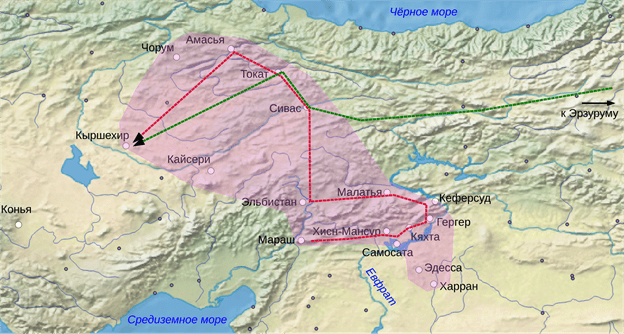

In 1242, the Mongol avalanche reached the borders of the sultanate. The commander Baiju Noyan seized Erzurum with a swift strike. In response, Kaykhusraw II gathered an imposing army, numerically superior to the Mongols, and marched to meet the enemy. The decisive clash took place in 1243 near Mount Köse Dağ.
Despite its numerical advantage, the Seljuk army was demoralized and poorly commanded. The battle ended in catastrophic defeat. Kaykhusraw II fled to Konya before the fighting was even over, effectively abandoning the country to its fate. The Mongols occupied Sivas, Kayseri, and Erzincan without serious resistance. The sultanate had been brought to its knees.

To preserve at least the appearance of power, Kaykhusraw was forced to accept humiliating peace terms. He sent envoys acknowledging vassal dependence to Batu Khan, ruler of the Ulus of Jochi. The annual tribute to the Mongols became an unbearable burden: 12 million silver coins, 500 pieces of silk, 500 camels, and 5,000 sheep. The state was effectively divided in two: the sultan retained authority only over the lands west of the Kızılırmak River, while the eastern provinces passed under the direct administration of Mongol governors.
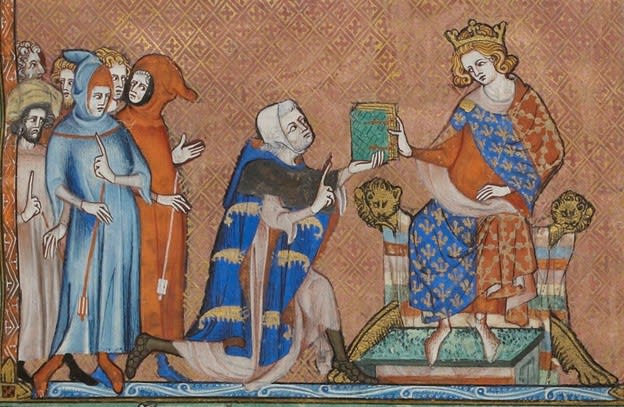
Remarkably, even in this period of decline, the Sultanate of Rum still amazed European travelers with its wealth. Jean de Joinville, who arrived in Cyprus in 1248, wrote that the sultan of Iconium, or Konya, was the richest of the “infidel kings.” Simon de Saint-Quentin, who traveled through Asia Minor, confirmed these words, describing a realm with a hundred flourishing cities. This was the wealth accumulated over decades of peace under Kayqubad I — wealth that was now slowly being drained away to Karakorum.
Kaykhusraw II died in 1246, leaving behind a devastated and dependent country, sunk in debt and internal chaos. His reign became the dividing line after which the greatness of the Seljuks in Anatolia gave way to a long period of decline, preparing the ground for the emergence of new powers in this land.


