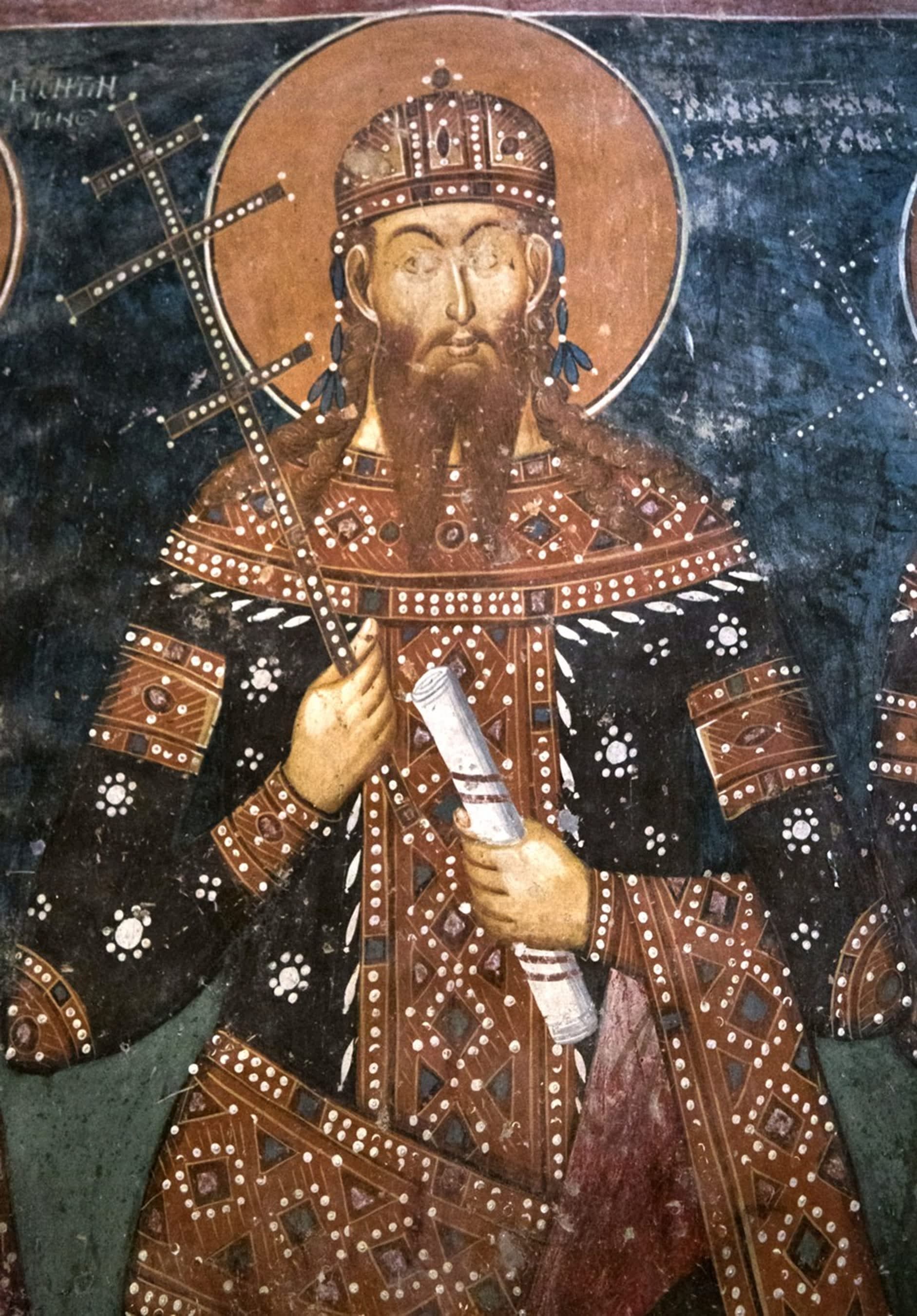

From the moment of his birth, the life of Stefan Uroš V was destined to be shaped by the greatness of his family. He was born as the only and long-awaited son of the powerful ruler Stefan Dušan and Helena of Bulgaria, sister of Tsar Ivan Alexander. The blood of two mighty Balkan dynasties flowed through his veins, and it seemed that the boy was destined for one of the most brilliant futures in Europe.
In 1346, when his father reached the height of his glory and proclaimed himself "Emperor of the Serbs and Greeks," the young Uroš was also elevated to supreme authority.
At approximately ten years of age, he was solemnly crowned King of Serbia — a title that traditionally confirmed his status as the "Junior King" and the officially designated heir to the throne.
However, behind the magnificent ceremonies lay a very different reality: the boy was far too young to govern.
During this period, actual authority over the Serbian territories was concentrated in the hands of his ambitious mother, Helena of Bulgaria, and the calculating court nobility, who had already begun weaving their own networks of intrigue behind the great Dušan's back.


In 1355, the Balkan world was shaken by the sudden death of Stefan Dušan.
The young Uroš, unexpectedly deprived of his father, inherited his magnificent but extraordinarily burdensome title — "Emperor of the Serbs and Greeks."
An enormous empire now rested upon his shoulders, a realm held together only by the iron will and personal authority of the deceased monarch.
The young emperor sincerely and desperately attempted to preserve the state created by his father's genius, but his efforts proved entirely unsuccessful.
He lacked both the political ruthlessness and the military talent necessary to maintain such a vast empire.
As soon as the grip of central authority weakened, the Serbian Empire began to fall apart.
Within a frighteningly short period, the once-unified state of Stefan Dušan deteriorated into a loose confederation of principalities.
Local rulers, sensing the weakness of the throne, rapidly began asserting their independence, acknowledging the authority of the Crown only formally and in words.
The first devastating blow to the country's unity came from a member of the imperial family itself.
In 1356, the young emperor's uncle, Simeon Siniša, Dušan's half-brother, openly declared his ambitions for independence.
Attempting to demonstrate determination and suppress the rebellion before it could gain momentum, Stefan Uroš attacked the separatist's territories.
However, military fortune abandoned the inexperienced monarch.
The seasoned Simeon Siniša completely defeated his nephew's regiments.
The bitter consequence of this defeat was Uroš's forced abandonment of the immensely wealthy southern provinces of Thessaly and Epirus.
The blood of the Nemanjić dynasty had been spilled in civil conflict, opening a Pandora's box of further disintegration.

The catastrophe in the south sent a clear signal to the rest of the nobility: the empire could be torn apart with impunity.
The most terrible and unexpected blow to Uroš came from the betrayal of his own mother.
Helena of Bulgaria, widow of the great Dušan, supported separatism instead of becoming a pillar of strength for her son.
Relying on the assistance and resources of the powerful aristocrat Jovan Uglješa, she effectively carved out her own territories and began governing them entirely independently, ignoring the imperial authority of Uroš.

Her unfortunate example proved contagious.
The empire's outer regions erupted in rebellions led by feudal lords, each eager to obtain a crown of his own.
Enormous territories fell into the hands of ambitious families and nobles: the Dejanović family, the Balšić family, the audacious Nikola Altomanović, and Jovan Uglješa himself, brother of Vukašin Mrnjavčević.
The once-great state was visibly disintegrating.
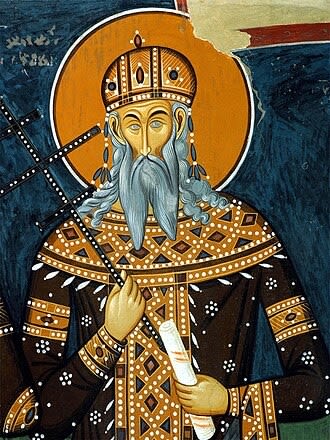
By the end of his sorrowful reign, Stefan Uroš V, nominally the "Emperor of the Serbs and Greeks," found himself trapped in a gilded cage.
Only a miserable fragment of his father's conquests remained under his actual control — a narrow strip of land squeezed between the Šar Mountains and the waters of the Danube.
Stefan Uroš possessed virtually no effective authority.
He had become little more than a pale shadow of a ruler, content with a magnificent title that no longer carried any real meaning.
Yet even this symbolic status irritated the increasingly powerful nobles, who wished to eliminate Uroš from the political stage altogether.
The most determined among them was the powerful King Vukašin Mrnjavčević, who enjoyed the full support of his brothers.
In 1365, Vukašin achieved something almost unimaginable: he forced the weakened Uroš to crown him as co-ruler.
Moreover, a humiliating agreement was established: if the emperor died without children, the Serbian throne would automatically pass to Vukašin's descendants.

But Vukašin was not content merely to wait.
Seeking to lull Uroš into a false sense of security and hypocritically demonstrate his friendship, Vukašin invited the young emperor to accompany him on a hunting expedition in the wild mountain forests near the historic Kosovo Field.
This journey proved fatal.
Far from the eyes of witnesses, deep in the forest wilderness, Vukašin committed a dark act of betrayal — he cold-bloodedly murdered Stefan Uroš.
To conceal the evidence of their crime, the killers acted under the cover of darkness.
During the night, the lifeless body of the last emperor was secretly transported and hastily placed in a tomb at the Church of the Dormition of the Most Holy Mother of God, not far from the grim walls of Petrič Castle.
This occurred in December 1371.
Stefan Uroš V died without children, taking to his grave not only the title of the last Serbian emperor but also bringing an end to the glorious, centuries-old royal dynasty of the Nemanjić family.
With Uroš's death, Serbia effectively ceased to exist as a single, unified state.
In the north of the shattered country, power was seized by Prince Lazar Hrebeljanović, who nevertheless demonstrated political wisdom by refusing to assume the ill-fated titles of emperor or king.
Several years later, in 1377, the Bosnian ruler Tvrtko I, who possessed dynastic claims to the Serbian throne through the female line as a grandson of King Stefan Dragutin, placed a crown upon his head and proclaimed himself King of Serbia, Bosnia, and the Maritime Lands.
However, this was little more than an impressive symbolic gesture — he no longer possessed any genuine authority over the Serbian territories.
The Balkans descended into an era of political fragmentation on the eve of the terrifying Ottoman invasion.
Despite his political failures, the earthly life of Stefan Uroš V left behind a luminous spiritual legacy.
The martyred emperor became the founder of the beautiful Matejče Monastery.
Popular and ecclesiastical memory proved kinder to him than the ruthless laws of politics.
Two hundred and eleven years after his tragic death, the Serbian Orthodox Church canonized the last emperor of the Nemanjić dynasty.
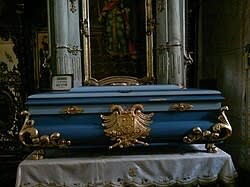
Today, the holy relics of Stefan Uroš V have found their eternal resting place in the peaceful surroundings of Novi Jazak Monastery, nestled in the picturesque Fruška Gora mountain range.
They remain a silent reminder of the twilight of a great era.


