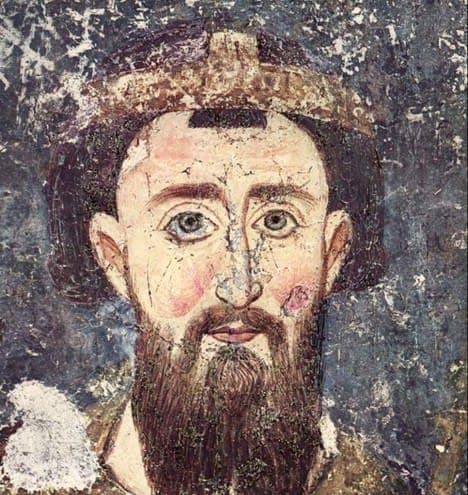

The exact date and place of birth of the man destined to become the first crowned ruler of Serbia remain shrouded in the mists of history. It is believed that Stefan was born around 1166, at the very time when his father, the distinguished military commander and statesman Stefan Nemanja, became Grand Župan of Raška.
In his large family, Stefan was the middle son: his elder brother was Vukan, while his younger brother was Rastko. They also grew up alongside two sisters, Euthymia and Elena.

Stefan's first appearance on the major political stage was recorded in historical sources in 1190. At that time, the Serbs and the powerful Byzantine Empire were engaged in a complex process of reconciliation.
The diplomatic foundation of this peace was a dynastic marriage: around 1191, Stefan married Eudokia, daughter of the Byzantine Emperor Alexios III Angelos.

By the early 1190s, Serbia, then known as Raška, had developed into a powerful and extensive state thanks to the military and diplomatic triumphs of Stefan Nemanja.
In the north, its natural boundary extended across the lands between the Morava and Western Morava rivers, while in the east, its borders reached the town of Vranje. In the south, the territories of Raška encompassed Kosovo, Hvosno (modern-day Metohija), and the lands north of Shkodër. The western frontiers included Duklja, Travunia, and Zahumlje.
As historian Željko Fajfrić observes, Raška had become a genuine regional hegemon.
His marriage to a Byzantine princess brought Stefan the prestigious title of sebastokrator and enormous influence at his father's court.
In 1196, Stefan Nemanja convened a grand assembly in Ras, where he announced his historic decision: he would transfer the throne not to his eldest son Vukan, but to his middle son, Stefan.
The exact reasons behind this decision remain a subject of historical debate.
It is likely that Vukan's adherence to Catholicism played a role, while Stefan's marriage to Eudokia ensured a strong connection with the Byzantine imperial court.
Meanwhile, the youngest son, Rastko, had already chosen a religious path. He had taken monastic vows under the name Sava at a Russian monastery on the holy Mount Athos.

Deeply offended, Vukan retained control over Duklja, Toplica, Hvosno, and Trebinje and proclaimed himself king, setting the stage for years of fratricidal conflict.
Initially, he waited for a favorable opportunity, but in 1198 he began taking action.
He drew inspiration from the example of the Hungarian prince Andrew, who had invaded Croatia, Dalmatia, and Zahumlje while waging war against his own brother, King Emeric.
As historian Vladimir Ćorović notes, Vukan and Andrew quickly established common ground and formed an alliance.
Seeking additional support, Vukan appealed to the Pope, urging him to strengthen the position of Catholicism within his territories.
The Pope dispatched two legates but, demonstrating political foresight, refrained from openly supporting the rebel and also sent envoys to Stefan.
Recognizing the deadly threat posed by the emerging Catholic alliance against him, Stefan made a countermove: he asked the Pope to send him a royal crown.
To demonstrate his loyalty to Rome beyond any doubt, Stefan made a scandalous and public break with Byzantium in 1201.
He expelled his wife Eudokia to Constantinople, publicly accusing her of infidelity and allegedly suffering from scabies.
However, Constantinople chose not to turn the incident into a political crisis, and the marriage was simply considered dissolved.
Vukan and King Emeric of Hungary had no intention of allowing Stefan to be crowned.
In 1202, according to historian Sima Ćirković, their combined forces invaded Raška.
Stefan suffered a crushing defeat and was forced to flee to Bulgaria.
Vukan triumphantly seized the throne of Grand Župan, acknowledging Hungarian suzerainty, while King Emeric immediately added the title "King of Serbia" to his royal titles and annexed the territory east of the Morava.

However, geopolitical fortune is unpredictable.
As early as 1203, war broke out between Hungary and Bulgaria.
The Hungarians were forced to abandon their recently conquered territories, including Braničevo.
Stefan brilliantly exploited the opportunity. He launched a counteroffensive and, following a series of successful battles, regained the title of Grand Župan around 1205.
Vukan was once again pushed back into Duklja.
Their younger brother, the monk Sava Nemanjić, played an enormous role in the eventual reconciliation of the feuding brothers, serving as a spiritual bridge between them.
Relatively little is known about the following years of Stefan's reign, but the diplomatic struggle continued.
In March 1208, Vukan's son George, who governed Duklja independently of Stefan, swore allegiance to the Doge of Venice.
Meanwhile, following the death of the Bulgarian Tsar Kaloyan in 1207, Stefan provided assistance to his fugitive relative Strez.
With the support of Serbian troops, Strez conquered part of Macedonia as far as the Vardar River, establishing the powerful fortress of Prosek as his stronghold.
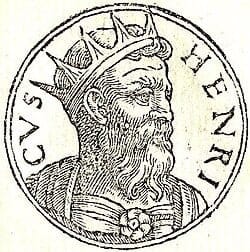
In 1214, a new threat emerged over Serbia: the Bulgarian Tsar Boril and Henry, Emperor of the Latin Empire, formed an alliance for war.
However, Stefan proved himself an outstanding tactician.
Under the cover of darkness, he launched a devastating attack on their camp near Niš and completely defeated the allied forces.
Seeking revenge, Boril and Henry persuaded Strez to switch sides.
Yet fortune favored Serbia. While preparing for his treacherous campaign, Strez unexpectedly died in that same year, 1214, and the planned invasion collapsed.

The territories of the deceased Strez were quickly divided between the Kingdom of Thessalonica and the Despotate of Epirus, with northern Macedonia passing to the latter.
This nearly triggered a war between Stefan and the ruler of Epirus, Michael I Komnenos Doukas.
The conflict resolved itself when Michael was murdered by his own servant in 1215.
His successor, Theodore Komnenos Doukas, preferred peace and soon arranged the marriage of his daughter Anna to Stefan's son Radoslav.

In 1216, the Latin Emperor Henry and King Andrew of Hungary once again attempted to trap Serbia between their forces, summoning Stefan to difficult negotiations in Niš.
Having recognized their intention to overthrow him, Stefan decided to drive a wedge between the allies.
He invited his brother Sava and met King Andrew near present-day Ćuprija.
The diplomacy worked flawlessly.
Andrew abandoned his plans for war and even became a mediator in negotiations with Henry.
Left isolated, Emperor Henry demanded at least a small piece of territory to save face, but Stefan firmly refused. The emperor was forced to withdraw empty-handed.

During this same period, Stefan strengthened his position in the West by marrying Anna Dandolo, granddaughter of the powerful Venetian Doge Enrico Dandolo.
The threat posed by Hungary and the Latin Empire prompted Stefan to take a decisive step.
In 1217, he once again requested a crown from the Pope and finally received it.
This coronation marked a departure from Serbia's traditional Orthodox orientation, provoking internal divisions.
In protest, his brother Sava left Serbia and returned to Mount Athos, supported by a portion of the nobility.
However, this same step also enabled Stefan to definitively incorporate Duklja into his kingdom.
From that moment onward, he proudly bore the title:
"King of all the land of Raška, and Dalmatia, and Travunia, and Zahumlje."
Soon afterward, the political landscape of the Balkans changed dramatically.
The new Latin Emperor, Peter II of Courtenay, died in captivity at the hands of the Epirotes.
The Bulgarian Tsar Boril was blinded by Ivan Asen, while King Andrew of Hungary, returning from the Fifth Crusade, discovered his country devastated and its treasury empty.
Only two major powers remained in the Balkans — Serbia and Epirus.
Realizing that the Western alliance was no longer necessary, Stefan the First-Crowned changed his political direction once again, returning to Orthodoxy.
He reconciled with Sava, and together they conceived an ambitious project: the establishment of an autocephalous, or independent, Serbian Church, which had previously been subordinate to the Archbishop of Ohrid.
Sava traveled to Nicaea, where he secured recognition of the Serbian Church's autocephaly from the emperor and patriarch in 1219.
Sava personally assumed leadership of the new Church, establishing its ecclesiastical hierarchy and introducing worship in the Slavic language.
As a brilliant preacher, he brought many members of the nobility (vlastela) who had been attracted to the Bogomil heresy back into the fold of Orthodoxy.
Seven new bishoprics were established, while the magnificent Žiča Monastery, located near the confluence of the Ibar and Western Morava rivers, became the spiritual heart of the country.
King Stefan generously endowed the monastery with lands and privileges.
Although Stefan's coronation initially enraged King Andrew of Hungary, the exhausted Hungarian kingdom was in no position to wage another war.
Sava once again acted as a negotiator, and relations between the two kingdoms soon improved permanently.
Beyond his achievements in government, Stefan the First-Crowned also went down in history as one of the most important figures in medieval Serbian literature.
His legal and hagiographical writings were distinguished by profound emotional depth and poetic expression.
"Charter of Hilandar Monastery" (1200–1202): A document confirming land grants to the monastery, enriched with poetic descriptions of the sacred site and accounts of events from the life of Stefan Nemanja.
"The Life of Saint Simeon" (begun around 1208, completed in 1216): The first complete and detailed biography of Stefan Nemanja, who had taken the monastic name Simeon. It was Stefan the First-Crowned who first set out to glorify his father as a Serbian saint.
"Charter of Friendship and Trade with Dubrovnik" (1215–1217): An important economic document, whose original is still preserved in Dubrovnik, guaranteeing merchants the right to trade freely.
"Charter of Žiča Monastery" (1219, supplemented in 1224–1227): A unique document whose text was inscribed directly onto the monastery walls, since the original paper copies have not survived.
"Charter of the Monastery of the Holy Mother of God on Mljet" (around 1220): A text in which the king proclaimed himself the divinely chosen successor of his father and vowed to serve the Lord with unwavering devotion.
Toward the end of his life, the king's health was severely weakened by serious illnesses.
Following the example of his father and brother, Stefan renounced worldly affairs and took monastic vows under the name Simon.
The first Serbian king completed his earthly journey in 1227 or 1228.
To his eldest son and heir, Radoslav, he left not merely a kingdom, but a strong and internally organized state, possessing an autocephalous Church and secure external borders.


