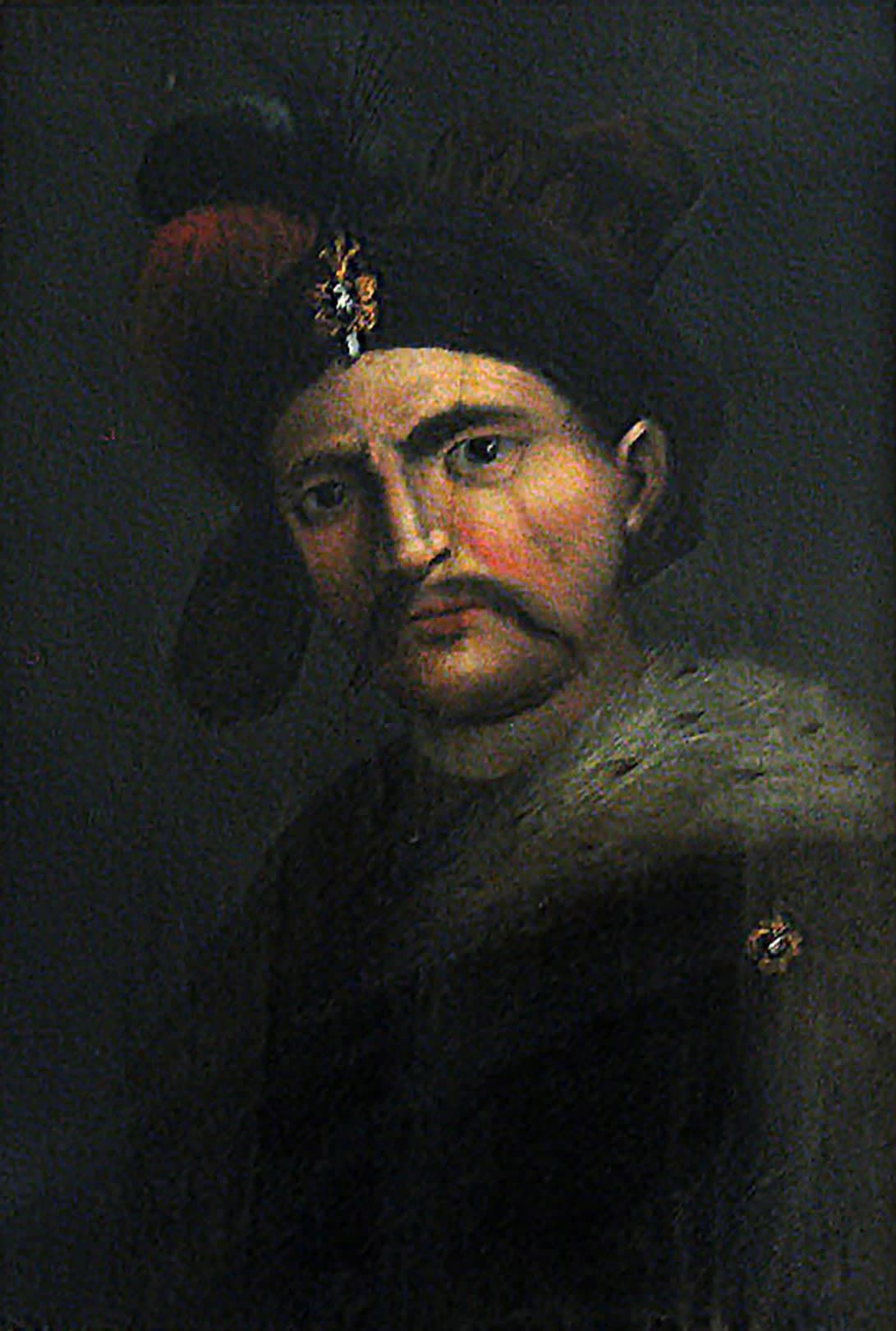

Abbas I the Great, born on January 27, 1571, in the Afghan city of Herat, became one of the most powerful and influential rulers in Safavid history. He ascended the throne at the age of sixteen, when the state was in decline—enfeebled by intertribal strife among the Qizilbash emirs, who regarded him as a puppet. Abbas, however, proved a farsighted ruler who not only restored order but radically reshaped the structure of the state.
Abbas did not stop at subduing the Qizilbash. He also ended the rule of local feudal lords in Gilan, Mazandaran, Sistan, and other regions, strengthening Safavid central authority. To weaken Qizilbash influence he created a corps of court slaves (ghulams), made up of Armenians, Georgians, and Circassians converted to Shiʿi Islam.

These ghulams became an important part of the standing army, counterbalancing the Qizilbash. Even so, most state offices remained in Turkic hands. The Italian traveler Pietro della Valle, who visited the Safavid realm, noted that the only true aristocracy was the Turkoman military elite and that the Persians lived under their unbearable yoke. Yet he also described Abbas as an “extremely shrewd, very lively, and brave” ruler who spoke Azerbaijani and Persian.
Abbas fostered an economic upswing, building roads and bridges and beautifying cities. In 1598 he moved his residence from Qazvin to Isfahan to shield the capital from the Ottomans and tighten control over the Persian Gulf trade routes. The move also helped him consolidate central power, as his loyal troops—chiefly the shahsevan—followed him. In Isfahan he carried out a monetary reform, introducing the abbasi coin, and launched large-scale construction. The heart of the new capital was Naqsh-e Jahan Square, around which rose its chief architectural masterpieces: the Ali Qapu palace where the shah resided, the Imam (Shah) Mosque, the Sheikh Lotfollah Mosque, and the Isfahan bazaar.


Abbas’s wars with the Ottoman Turks were arduous and lasted nearly his entire reign. By the Treaty of Istanbul in 1590 he was forced to cede large territories including Azerbaijan, Georgia, and Armenia in order to concentrate on the Uzbeks.

After successfully reorganizing the army, Abbas opened a new war against the Ottomans in 1603, restoring to Safavid control almost all of Transcaucasia and even extending influence into the North Caucasus. In 1614–1617 the Turks invaded Iran again but were defeated and in 1618 signed the Peace of Marand. War resumed in 1623, and in 1624 Abbas even captured Baghdad. In these wars he used scorched-earth tactics; in 1604 he forcibly resettled more than 250,000 Armenians, along with Muslims, to forestall any potential collusion with the Ottomans. In 1610–1611 he also massacred Kurds in Urmia and Maragha, pursuing an aggressive policy toward Christians, unlike the Ottomans.
Relations with the Uzbeks under ʿAbdallah II were tense. Uzbek raids into Khorasan continued, but the death of their formidable ruler in 1598 gave Abbas his chance. At the Battle of Rabat-i Pariyan in August 1598 he crushed the Uzbek army, using scorched earth and a feigned retreat. This victory stabilized the northeastern frontier.
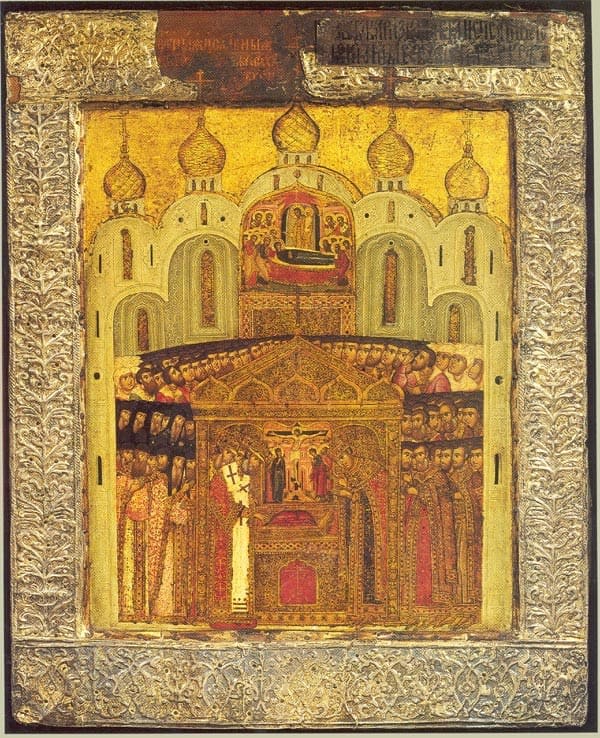
Relations with the Russian state were friendly. As early as 1594 Abbas expressed his wish to be “in firm friendship” with Tsar Fyodor Ivanovich. He was the first to recognize the new Romanov dynasty, extended a loan, and sent as gifts the relic known as the Robe of Christ and a magnificent throne. Abbas also dispatched diplomatic missions to Europe in pursuit of commercial ties.
Abbas was a pragmatist. He promoted Mashhad as the chief center of Shiʿi pilgrimage so that the money would remain in his realm. He also publicly displayed his piety by making, in 1601, his famous pilgrimage on foot from Isfahan to Mashhad.
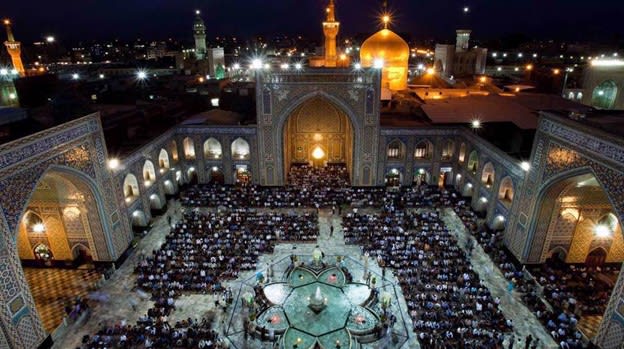

His relationship with the clergy was complex. He strengthened the authority of the shah while allowing the influence of Shiʿi mujtahids to grow. The figure of Abbas I the Great is reflected in the works of European and Asian authors—Pietro della Valle, who praised him as a wise ruler, and Charles de Montesquieu, who called him one of the greatest rulers of his time. The Azerbaijani historian Abbas-Quli Agha Bakikhanov wrote of him as an ideal of justice and wisdom.
Bakikhanov, a nineteenth-century author, wrote of Shah Abbas I: “Shah Abbas, renowned for his wise governance and the ordering of the state, established civil and military rules and laws by which the Persian shahs are guided to this day. Even in European histories, where the worth of sovereigns is examined strictly, Shah Abbas—patron of learning and the arts—has earned the name ‘the Great.’ And the peoples of Asia, for whom the memory of this great man has become the ideal of justice and wisdom, venerate him.”


