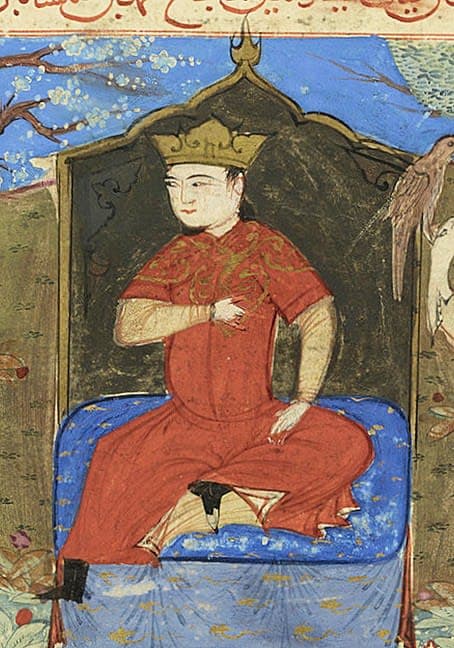

The reign of Muhammad I Tapar was a complex and dramatic chapter in the history of the Great Seljuk Empire, marked by endless civil wars, religious conflicts, and attempts to preserve the fading unity of a vast state. His path to the throne was difficult: for a long time he remained in the shadow of, and in open confrontation with, his half-brother Barkiyaruq. During these exhausting conflicts, Muhammad at first had to content himself with the title of malik and authority over Azerbaijan, but his ambitions demanded more. After another rebellion, which forced him temporarily to retreat into Armenia, fate gave him a chance: in 1104, Barkiyaruq, finally worn down by illness and years of war, agreed to divide the sultanate with his brother. This truce did not last long — in 1105 Barkiyaruq died, and Muhammad I finally became the full and sole sultan on the Baghdad throne.

Despite his status as Great Sultan, Muhammad I ruled in conditions where real power in Khorasan belonged to his brother Ahmad Sanjar, who possessed enormous influence in the eastern part of the empire. Nevertheless, Muhammad actively participated in the geopolitical struggles of his time. In 1107, he intervened in a conflict on the side of Ridwan of Aleppo. In the large-scale Battle of the Khabur, Seljuk troops clashed with Kilij Arslan I, the ambitious ruler of the Sultanate of Konya. The battle ended in the latter’s crushing defeat, and Kilij Arslan himself died during the retreat, temporarily weakening the position of the Seljuks of Konya and strengthening Muhammad’s authority.

The sultan paid special attention to restoring order in Iraq. Together with his vizier, he launched a major military campaign aimed at subduing the Mazyadid ruler Sayf al-Dawla Sadaqa ibn Mansur. This powerful leader, known by the proud title “King of the Arabs,” represented a serious threat to central authority. In fierce clashes, Sadaqa was defeated and killed, allowing Muhammad to stabilize the situation in this strategically important region for a time.
One of the empire’s most bleeding wounds remained the confrontation with the Nizari Ismailis. Muhammad I, as an orthodox Sunni, saw the followers of Hasan ibn Sabbah not only as political enemies, but also as heretics. In 1106, he achieved a significant success — the fortress of Shah-Diz was captured. However, attempts to expand this success turned into diplomatic and military embarrassments.

The sultan ordered the ruler of Tabaristan, the Bavandid Shahriyar IV, to join the campaign against the Ismailis. The proud Shahriyar, angered by the tone of the sultan’s message, gave a sharp refusal. Muhammad’s subsequent attempt to punish the defiant vassal through the forces of Amir Chavli ended in a humiliating Seljuk defeat near Sari at the hands of Shahriyar’s troops and those of his son Qarin III.
This conflict, however, ended in an unexpected reconciliation. Muhammad, appreciating the courage of his opponents, invited Shahriyar’s sons to Isfahan. As a result, Qarin III came to the court and sealed the alliance by marrying the sultan’s daughter, turning dangerous enemies into honored allies.
Yet the main objective — Alamut — remained unreachable. In 1109, a grand expedition led by the vizier Ahmad and Chavli Saqavu against the fortresses of Alamut and Ostāvand ended in complete failure. The Seljuk forces, faced with fanatical resistance and the inaccessibility of the mountains, returned empty-handed, dealing a serious blow to the sultan’s prestige.
In governing the state, Muhammad I relied heavily on the illustrious name of the great Nizam al-Mulk. In 1106–1107, Ahmad ibn Nizam al-Mulk, son of the legendary vizier, appeared at court with a complaint against the governor of Hamadan. The sultan, needing legitimacy and experienced officials, appointed him as his chief minister, having first executed the previous vizier, Saad al-Mulk, on charges of heresy. Ahmad inherited not only the office, but also all the magnificent titles of his father, including Qiwam ad-Din and Nizam al-Mulk.

Ahmad’s tenure was turbulent and ended ambiguously. After a series of failures, including the disaster before Alamut, he was removed and replaced by Khatir al-Mulk. Historical chronicles differ in their assessment of his fate: while Ali ibn al-Athir claims that Ahmad peacefully withdrew from affairs, Anushirvan ibn Khalid paints a darker picture, stating that the sultan threw his once-trusted minister into prison for ten full years.
Muhammad I’s life ended in April 1118. His eldest son, the fourteen-year-old Mahmud, ascended the throne in Isfahan. Despite the existence of four other sons — Tughril, Masud, Suleiman, and Seljuk-Shah — the empire effectively began to pass under the full control of their uncle, Ahmad Sanjar. Muhammad I’s death marked the end of another attempt to preserve centralized authority in the hands of the Baghdad line of the Seljuks, signaling the definitive transfer of dominance to the Khorasan branch of the dynasty. The sultan was buried with honors, leaving behind a state that still preserved its grandeur, but already carried within itself the seeds of future disintegration.


