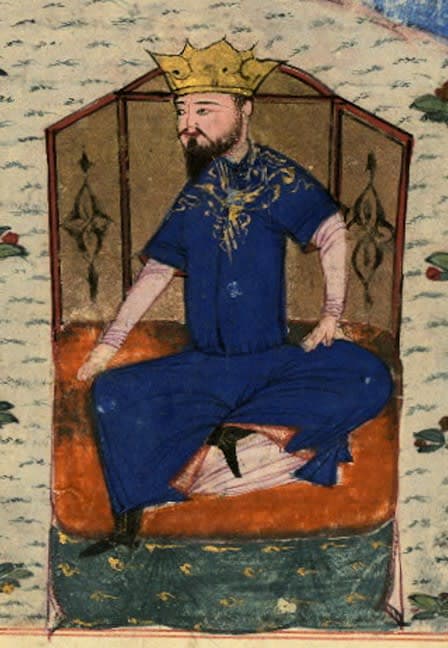

Sanjar was one of the younger sons of the great Malik-Shah I, born to a slave concubine. His appearance on the political stage coincided with an age of great upheavals: the sudden death of his father in 1092 triggered a long and bloody period of civil wars. The young prince had to fight relentlessly for his right to power in endless conflicts against his own brothers and nephews — Mahmud I, Barkiyaruq, Muhammad I, and Malik-Shah II.
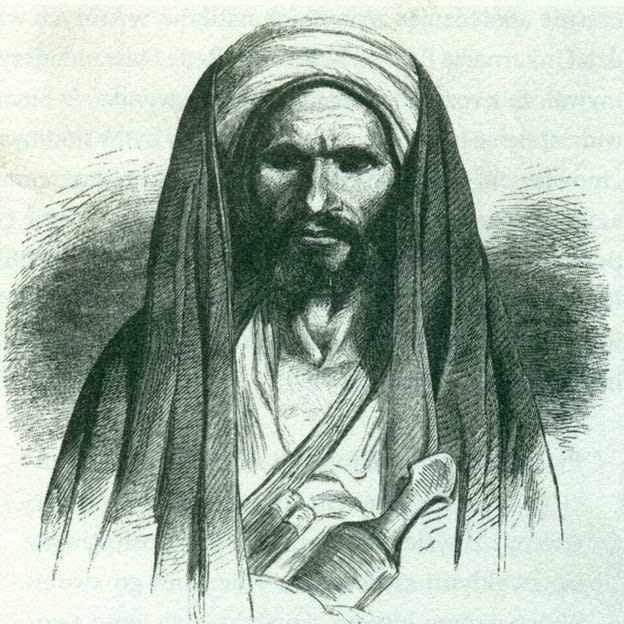
In this sequence of dynastic conflicts, Sanjar proved himself an outstanding strategist and a tenacious leader. From as early as 1097, he firmly established himself as ruler of the vast eastern territories of the Seljuk state. His residence became the brilliant city of Nishapur, which turned into a cultural and political center of the East. Yet the empire was already beginning to crack: a number of ambitious governors raised rebellions, leading inevitably toward fragmentation. The formal end of unity came in 1118, when, after the death of Sanjar’s last half-brother, the once-unified Seljuk domains were officially divided, leaving him the status of “senior” sultan and lord of the eastern lands.
One of the most mysterious chapters of his biography is his campaign against the legendary Assassins of Alamut. As the historian Enno Franzius notes, Sanjar was determined to destroy the Nizari stronghold once and for all. However, Hasan ibn Sabbah, the “Old Man of the Mountain” and a master of psychological warfare, outplayed the sultan without firing a single shot.

According to legend, one morning Sanjar found a dagger inside his locked tent, thrust into the ground right beside his head. A note was attached to the weapon, saying: “That which was driven into the hard earth could just as easily have been plunged into your soft heart.”
Shaken by the fact that the assassins had been able to enter his private quarters without obstruction, the sultan radically changed his tactics. Instead of total destruction, he chose diplomacy: envoys were sent to Hasan ibn Sabbah, and the two sides concluded a pact of mutual non-interference that was observed for many years.
For a long time, Sanjar was considered invincible, but the year 1141 proved fatal for his reputation and for the entire empire. Confronted by a new and formidable force — the Qara Khitai under the leadership of Yelü Dashi — the sultan marched toward Samarkand. In the brutal Battle of the Qatwan Valley, the Seljuk army, regarded as the finest in the Islamic world, suffered a crushing defeat. Sanjar’s power was broken: the great sultan was forced to flee the battlefield accompanied by only fifteen loyal horsemen. This defeat shattered the myth of Seljuk invincibility and opened the way for new conquerors.

The final years of Sanjar’s life were filled with bitterness. In 1153, his former subjects — the Oghuz Turks of Turkestan — rose in rebellion and captured the sultan. For three years, the ruler whose name had once inspired fear from India to Byzantium remained in humiliating captivity. Only in 1156 did he manage to make a daring escape and return to his homeland.
However, the strength and health of the old sultan had been broken. The following year, in 1157, Ahmad Sanjar died of dysentery. With his passing, the glory of the Great Seljuks finally faded. He was buried in Merv, in a grand mausoleum that still rises above the sands near the modern city of Bayramaly in Turkmenistan. This majestic structure with its double dome remains a silent witness to an era when the will of one man united the boundless expanses of the East.


