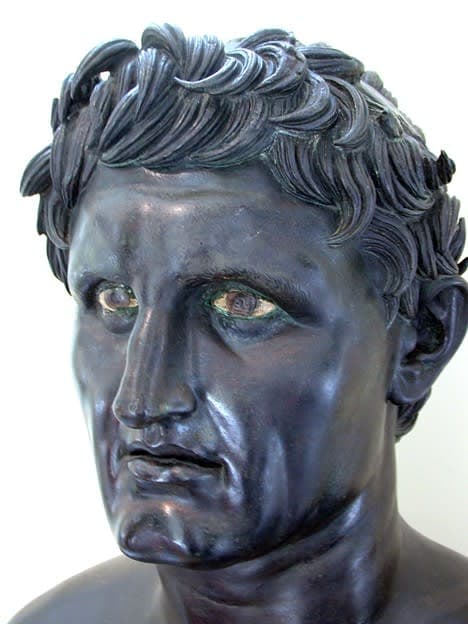
The son of the Macedonian aristocrat Antiochus and his wife Laodice, Seleucus was born in the mid-350s BC. Historians still debate the exact year and place of his birth: Byzantine chroniclers mention the capital, Pella, but modern researchers tend to favor the city of Europus in Bottiaea. The range of proposed birth dates — from 358 to 354 BC — makes him almost the same age as Alexander the Great himself, symbolically predestining their shared fate.
Legend says that Seleucus’s true father was the god Apollo himself. According to tradition, a heavenly being appeared to Laodice in a dream and left her a ring bearing the image of an anchor. When she awoke, she found the ring in reality, and the child born soon afterward had a birthmark in the shape of the same anchor on his thigh — a sign that would later be passed down to all his descendants. Until the age of ten, the young aristocrat grew up in Europus, after which he was sent to Pella to receive an elite education worthy of a future commander. He probably gained his first combat experience as early as 338 BC, at the famous Battle of Chaeronea, where the Macedonian phalanx crushed the Greeks.

When Alexander the Great began his Eastern campaign in 334 BC, Seleucus was among those who crossed the Hellespont. Although he did not play a leading role in the early years, his career steadily advanced. By 326 BC, during the grueling Indian campaign, Seleucus is already mentioned as commander of the elite corps of the hypaspists — the royal shield-bearers. It was he who led the Macedonian infantry in a fierce attack against the war elephants of the Indian king Porus at the Battle of the Hydaspes. This battle, in which the Macedonians showed extraordinary courage, became for Seleucus a school of strategic mastery.
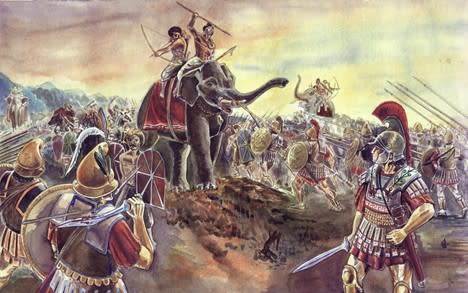

His closeness to Alexander was also confirmed in his personal life: during the grand “wedding at Susa” in 324 BC, Seleucus, unlike many other Diadochi, married not a Persian woman but Apama, the daughter of the Sogdian leader Spitamenes. This union proved unusually durable and politically well-calculated. Another omen of his future greatness occurred in Babylon, when the wind tore the diadem from Alexander’s head and it fell into the water. Seleucus rushed into the river, retrieved the symbol of power, and, so as not to wet it, placed it on his own head. The priests saw this as a sign: Alexander would depart, and Seleucus would become king.
After Alexander’s sudden death in 323 BC, the empire sank into chaos. Seleucus initially received the position of chiliarch under the regent Perdiccas, but soon became disillusioned with his policy. In 321 BC, after the failure of Perdiccas’s Egyptian campaign, Seleucus became one of those who raised the sword against the former leader. In the new division of power at Triparadisus, he received the satrapy of Babylonia. Yet peaceful rule did not follow: the ambitious Antigonus Monophthalmus, striving for sole power, forced Seleucus to flee to Egypt to Ptolemy in 315 BC.
Seleucus spent the years of exile commanding Ptolemy’s fleet and participating in naval operations during the Third War of the Diadochi. The decisive turning point came in 312 BC after the Battle of Gaza. Seizing the moment, Seleucus, with only a thousand warriors, made a daring march across the desert to Babylon. The local population, remembering him as a just ruler, welcomed him as a liberator. With the capture of Babylon began the reckoning of the “Seleucid Era” — a new epoch that would endure for centuries. In the subsequent Babylonian War, he not only defended the city but also defeated the armies of Nicanor and Antigonus, effectively bringing under his control all the “Upper Satrapies” — from Mesopotamia to the borders of India.

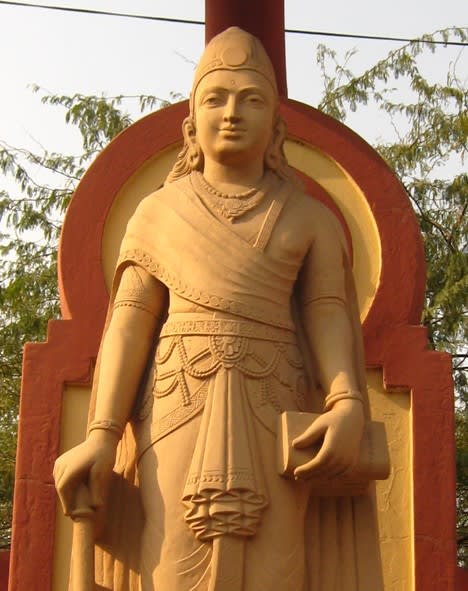
Having secured his rear, Seleucus turned his gaze eastward. Around 305 BC, he crossed the Indus, where he encountered the founder of the great Maurya Empire — Chandragupta. Understanding the futility of a prolonged war at the edge of the world, Seleucus showed diplomatic wisdom. In 303 BC, a peace treaty was concluded: Seleucus ceded part of the eastern territories, including Gedrosia and Arachosia, but in exchange received 500 war elephants — a force that would soon change the fate of the entire Hellenistic world.
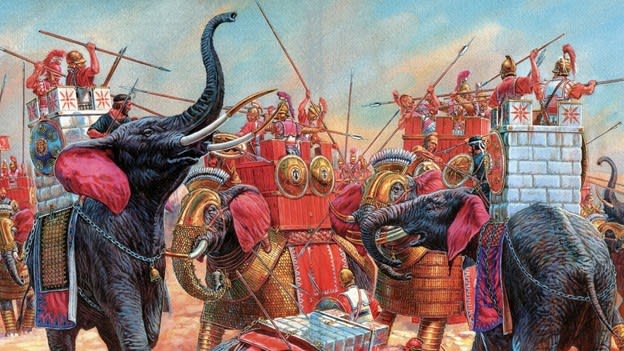
These “living tanks” became the decisive argument in 301 BC at the grand Battle of Ipsus, called the “battle of nations.” The combined forces of Seleucus, Lysimachus, and Cassander clashed with the power of Antigonus Monophthalmus. Seleucus skillfully used his elephants to cut off the cavalry of Demetrius Poliorcetes from the main army, which led to the death of Antigonus and the final collapse of plans to reunify Alexander’s empire. After this victory, Seleucus became known as the “Elephantarch” — the lord of elephants — and added Syria to his possessions.
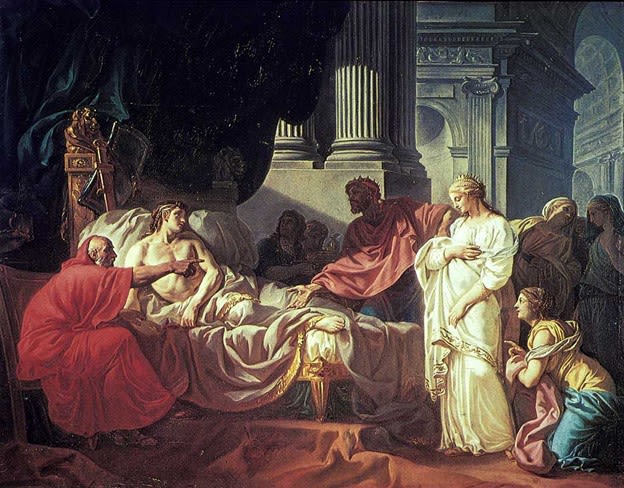
The king’s personal life was no less eventful than his military career. After the death of Apama — or in addition to her, given Macedonian polygamy — he concluded an alliance with Demetrius’s daughter, the beautiful Stratonice. Yet it soon became clear that Seleucus’s son Antiochus had fallen passionately in love with his stepmother. Seeing his heir waste away from unrequited love, Seleucus committed an act that astonished his contemporaries: he officially gave Stratonice as wife to his son and appointed him co-ruler of the eastern regions. This decision saved the dynasty from internal rupture.
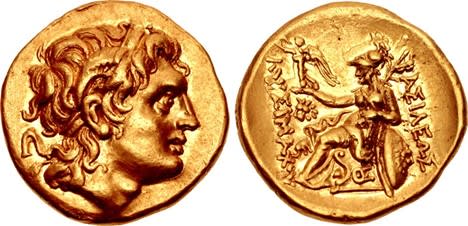
Seleucus’s last great deed was the war against his former ally Lysimachus. In 281 BC, on the plain of Corupedium, the last two veterans of Alexander met in decisive battle. Lysimachus fell, and Seleucus became, in effect, the sole master of almost all the lands of the great conqueror. He was already preparing to cross into Europe, take the Macedonian throne, and end his life in his homeland, but fate decided otherwise. Near the city of Lysimachia, he was treacherously murdered by Ptolemy Ceraunus, a man whom he himself had sheltered at his court.
Seleucus I Nicator left behind not only a colossal state divided into 72 satrapies, but also dozens of new cities. He founded four major centers — Seleucia-on-the-Tigris, Antioch-on-the-Orontes, Seleucia Pieria, and Apamea — which for centuries became strongholds of Greek culture in the East. As an outstanding administrator, he introduced a system of co-rule and a flexible religious policy, identifying himself with Apollo and Zeus, which allowed him to find common ground with both Greeks and Babylonians.
His ashes were buried with honors in Seleucia Pieria, in a specially built temple called the Nicatorion. Contemporaries and descendants saw in him the worthiest of Alexander’s successors — a man who knew how not only to conquer, but also to create, laying the foundation of the Seleucid civilization that would endure for almost 250 years.



