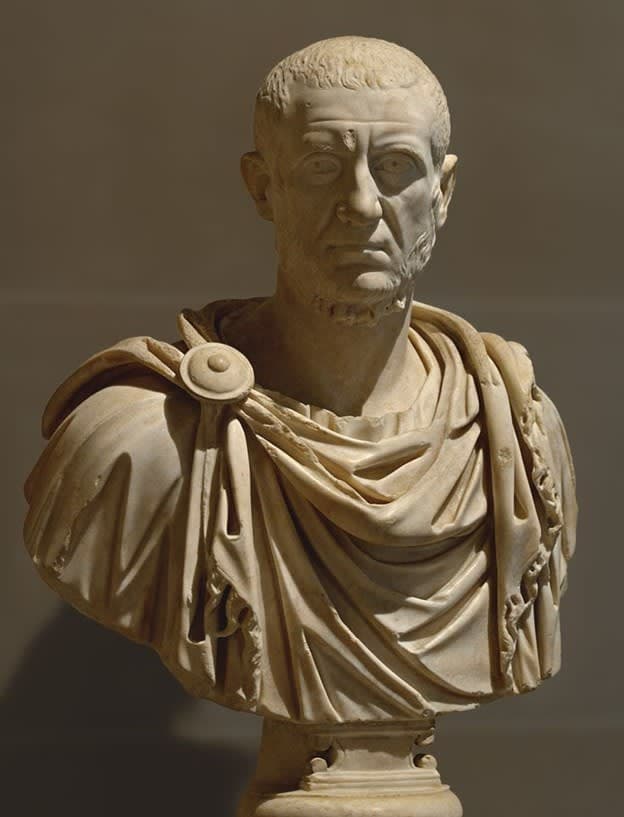
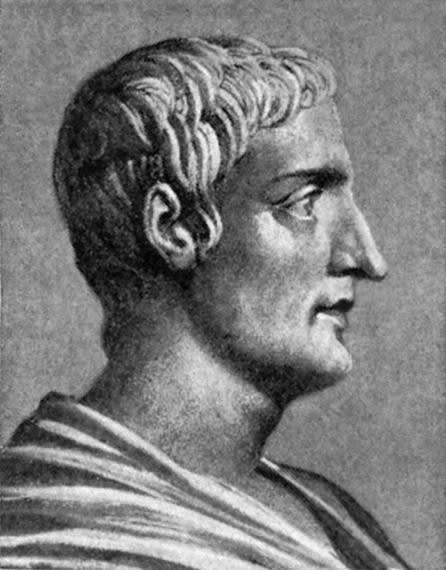
Information about the life of Tacitus before his rise to the summit of power is shrouded in obscurity and is often contradictory. According to the ancient tradition recorded in the Historia Augusta and the works of John Zonaras, Marcus Claudius Tacitus appears before us as a very old man. At the time of his proclamation as emperor, he was supposedly already seventy-five or even seventy-six years old, from which historians derive the date of his birth — around the year 200. However, modern researchers are skeptical of this “venerable age,” believing that ancient authors may have deliberately aged Tacitus in order to create the image of a wise senator-patriarch, seasoned by experience. It is quite possible that in reality he was significantly younger.
His homeland is traditionally considered to have been the city of Interamna in Umbria, located only sixty kilometers from Rome, which emphasized his Italian roots. However, there is also an alternative hypothesis according to which Tacitus, like most rulers of that harsh era, was a native of the stern Danubian provinces. One of the most famous legends connected with his personality was his claim of kinship with the famous first-century historian Publius Cornelius Tacitus. The emperor was so proud of this relationship — even if modern scholars consider it false — that he ordered ten copies of the works of his “ancestor” to be made annually at state expense and placed in libraries, so that the legacy of the great writer would not sink into oblivion.
Tacitus was fabulously wealthy. Flavius Vopiscus estimated his fortune at an incredible 280 million sesterces. He owned extensive landed estates not only in his native Interamna, but also in the distant African provinces of Numidia and Mauretania. At the same time, in private life he was known as a model of frugality and strict morals. It was said that he never drank more than one sextarius of wine a day, loved refined objects made of glass and marble, but forbade his wife to wear precious stones and his fellow citizens to wear garments with a gold stripe. Even in advanced old age, he retained sharp eyesight and a passion for reading, never letting a single night pass without a book or a pen.
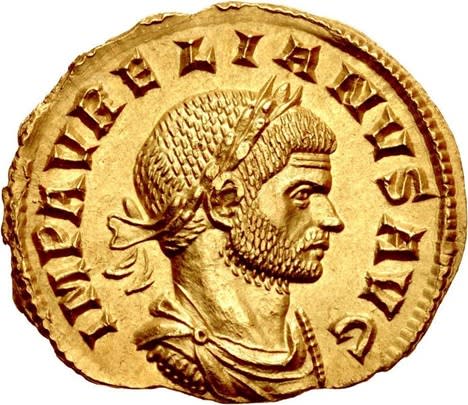
The turning point in the history of the empire was the murder of the great reformer Aurelian in 275. His death as the result of a conspiracy created a dangerous political vacuum. The army, shocked by the death of its leader and having no worthy candidate in mind, took an unprecedented step: the legionaries, through their commanders, appealed to the Senate with a request to choose a new ruler. An astonishing period of “interregnum” began, lasting, according to different estimates, from a month and a half to six months. During this time, the administration of the state was effectively in the hands of the Senate, while numismatic evidence suggests that Aurelian’s widow, Ulpia Severina, also played a significant role in maintaining stability.
The senators hesitated for a long time to assume responsibility, fearing the wrath of the soldiers. A kind of “political ping-pong” took place: the Senate returned the right of choice to the army, and the army returned it to the Senate. Finally, the choice fell on Tacitus, who at that time held the honorary position of princeps senatus. His election was staged as a theatrical act. The Historia Augusta describes how the consul Velius Cornificius Gordianus called for a ruler to be chosen, and the senators unanimously shouted the name of Tacitus. He, following the canons of classical modesty, tried to refuse, citing the weakness of his body and his habit of “shade and peace.” To this the Senate enthusiastically replied: “We choose your spirit, not your body!” This performance was meant to give legitimacy to the new emperor in the eyes of both the aristocracy and the headstrong legions.
Having become emperor in September–November 275, Tacitus first demonstrated loyalty to the memory of his predecessor. He ordered the conspirators who had killed Aurelian, including their leader Mucapor, to be executed, and secured Aurelian’s deification. In his domestic policy, he tried to maintain a balance: on the one hand, he minted coins with inscriptions such as “Restorer of the State” and “Founder of True Liberty,” hinting at the return of power to the Senate; on the other hand, he continued Gallienus’s policy of not allowing senators to hold real command over large military formations.
To strengthen the position of his family, Tacitus appointed his brother — or close relative — Florian as praetorian prefect, making him the second man in the state. Another relative, Maximinus, he appointed governor of the strategically important province of Syria. However, the emperor’s main concern was the external threat. While the Germanic tribes of the Franks and Alemanni were tormenting Gaul, an even sharper crisis erupted in the East. A huge coalition of barbarians, whom Zosimus called “Scythians” — Goths, Sarmatians, Alans, and Heruli — crossed the Maeotian Lake and the Black Sea, falling upon Asia Minor. They ravaged Pontus, Galatia, and Cappadocia, plundering cities and villages.
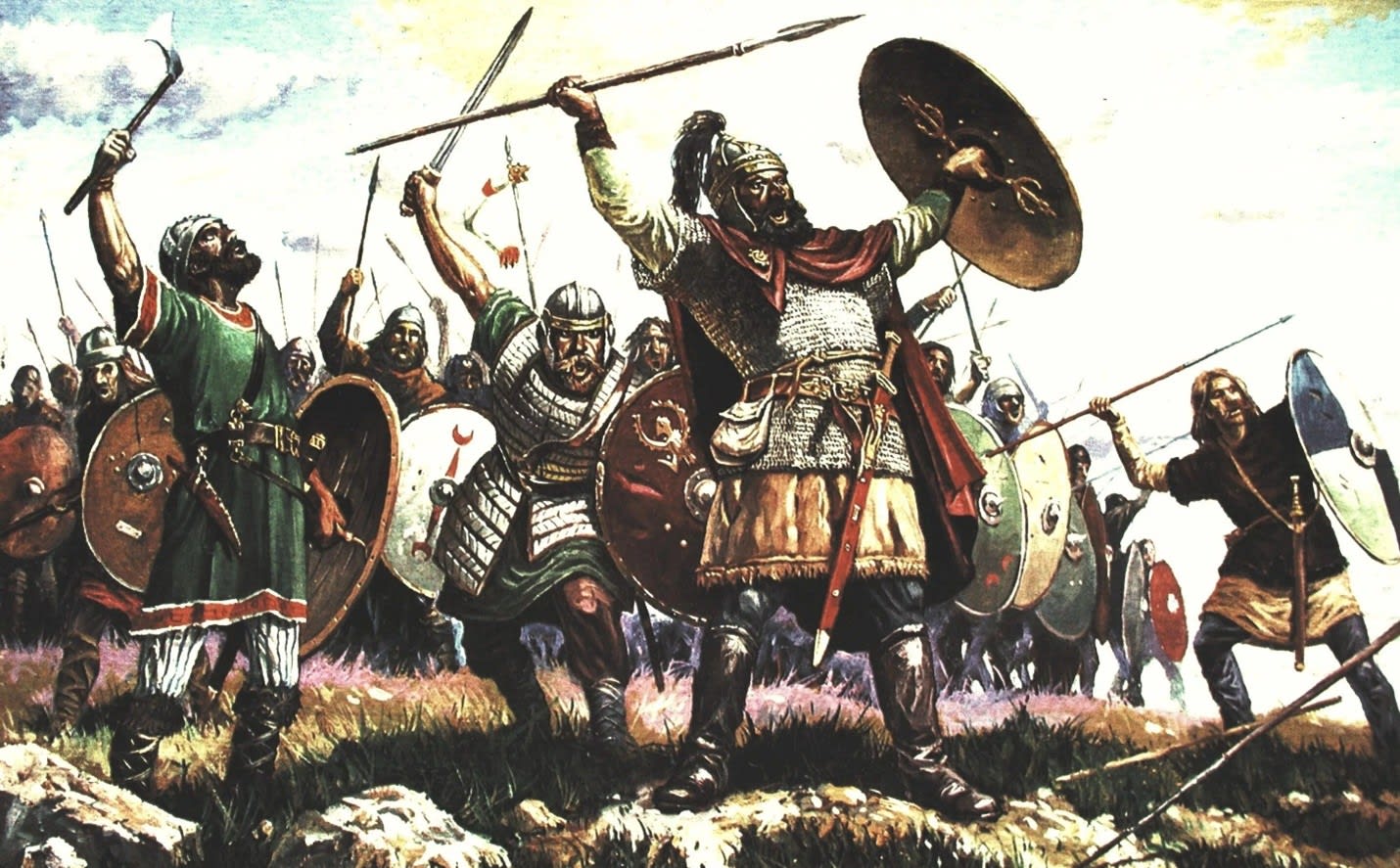
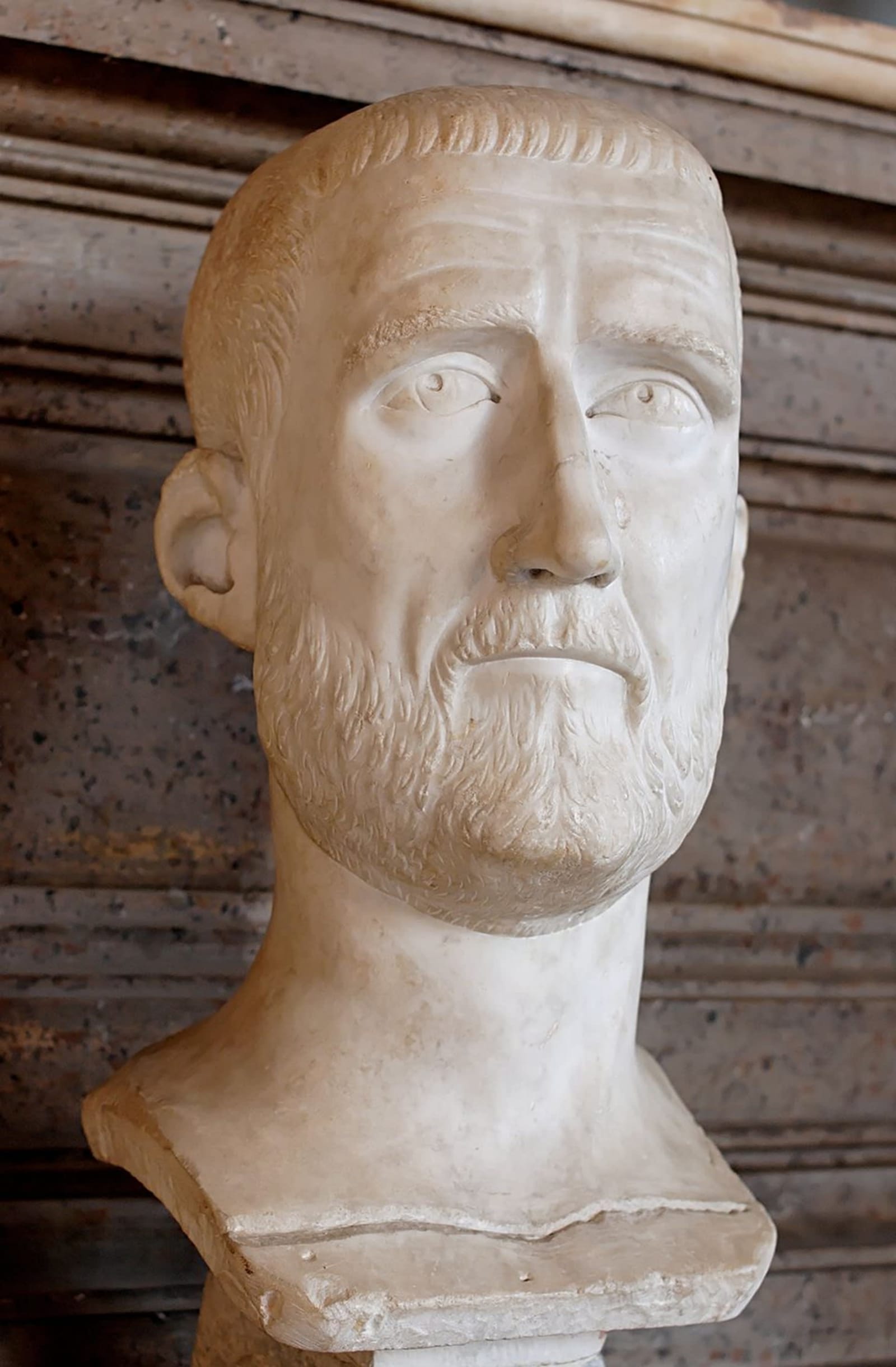
Despite his age, Tacitus personally led the army and set out on campaign together with Florian. The Roman troops won a brilliant victory, crushing the invaders. The emperor assumed the title “Gothicus Maximus,” and the proud inscription VICTORIA GOTHICA appeared on coins. It seemed that the empire had found a new strong leader, capable of combining senatorial wisdom with military fortune.
The victory was short-lived. On the way back to Europe, in June or July 276, Tacitus suddenly died. The circumstances of his death remain disputed. Official sources such as Aurelius Victor and Eutropius speak of a natural death from fever. However, the more detailed accounts of Zosimus and Zonaras paint a picture of bloody retribution.
The cause of the tragedy was Tacitus’s policy of appointments. His appointee in Syria, Maximinus, ruled so harshly that he aroused the hatred of his subordinates and was killed by conspirators. Fearing punishment from the emperor, Maximinus’s killers decided to strike preemptively and dealt with Tacitus himself. Flavius Vopiscus adds drama by reporting that the emperor was “crushed by intrigues” and simply could not find the strength to struggle against the treachery of the soldiers. He died either in Tyana in Cappadocia or in Tarsus.
Tacitus’s reign lasted only a few months, but it was an important symptom of the age. His attempt to revive the authority of the Senate was doomed: even with the full support of the legions, the old aristocracy could no longer control the military machine of the empire. Soon after his death, his brother Florian tried to retain power, but was overthrown and killed by the supporters of Probus — another great military commander.
Marcus Claudius Tacitus remained in history as the last emperor who sincerely tried to restore to the Senate the role of “founder of true liberty.” He did not accept the titles “lord and god,” minted SC — “by decree of the Senate” — on coins, and dreamed of the age of Octavian Augustus. But the reality of the third century required not “spirit,” but “sword,” and with Tacitus’s death the age of the Principate finally receded into the past, giving way to the harsh century of the Dominate.
It is interesting to wonder how the fate of the empire might have unfolded if this “old man from Interamna” — if he really was an old man — had been given more time. Would his mercy and frugality have helped soften the economic crisis? We will never know, but his “Gothic victory” forever remained in the lists of Rome’s triumphs.


