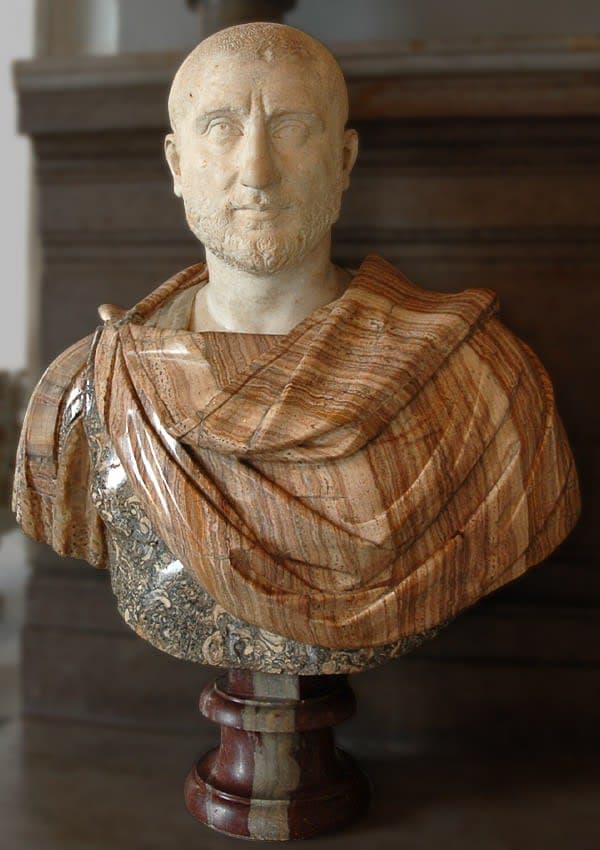

The path of Gordian II began during a turning point in the history of the Roman state. Historians still debate the exact date of his birth: the traditional version, based on the Historia Augusta, points to 191 or 192, claiming that he was forty-six years old at the time of his death. However, modern researchers such as K. D. Grasby tend to believe that he was younger and was born around the year 200. His family roots reached back to the wealthy provinces of Asia Minor — Galatia or Cappadocia — as clearly indicated by the cognomen “Gordian.” The name Marcus Antonius itself was a proud reminder that his ancestors had received Roman citizenship from the hands of the legendary triumvir Mark Antony.

Gordian II was not an ordinary soldier. He was a man of exceptional intellect and profound erudition. Julius Capitolinus praised his phenomenal memory and his achievements in scholarship. A crucial milestone of his youth was his education under the son of the famous Serenus Sammonicus, who, according to legend, bequeathed to his pupil a colossal library of 62,000 scrolls. This knowledge did not remain a dead weight: Gordian was closely connected with the circle of intellectuals of his time. The famous sophist Flavius Philostratus dedicated his work Lives of the Sophists to “the most illustrious consul Antonius Gordianus,” emphasizing that his lineage went back to Herodes Atticus himself, the greatest orator of the second century. Whether he was a direct descendant through his mother — whom legend names as Fabia Orestilla, the great-granddaughter of Antoninus Pius — or whether this was a “kinship of spirit” remains a mystery, but Gordian II remained forever in the annals as a patron of the Muses and philosophy.
Gordian II’s political career unfolded against the backdrop of a kaleidoscope of rapidly changing rulers. Under the eccentric Elagabalus, he held the office of quaestor. Rumors circulated that the priest-emperor had brought him close to himself, tempted by stories of the young aristocrat’s “dissolute lifestyle,” but serious historians believe that Gordian knew how to preserve his dignity even in the most troubled times. The true flourishing of his cursus honorum came during the reign of Alexander Severus. Gordian became famous as urban praetor, demonstrating outstanding abilities in the examination of legal cases, for which he was awarded the rank of suffect consul, probably in 226 or 229.
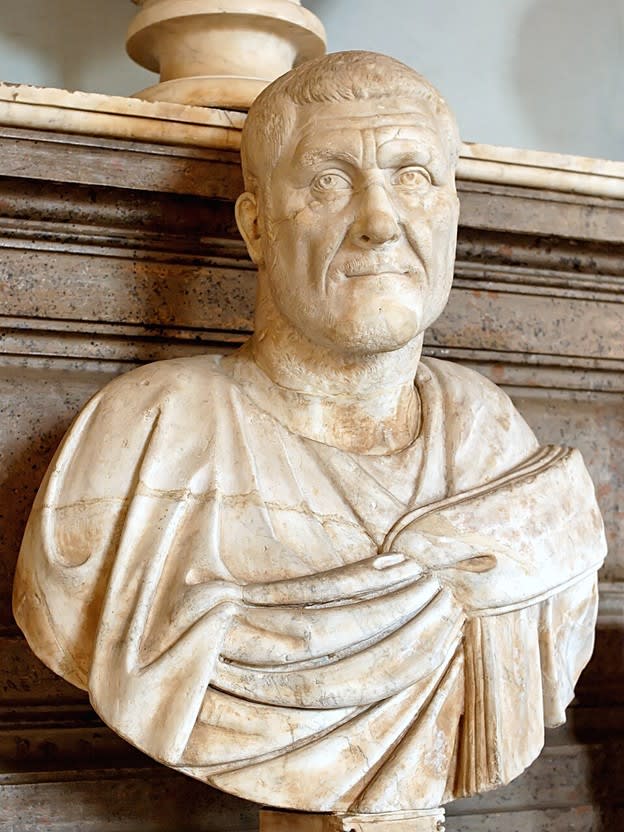
His life during that period is described as a succession of pleasures and luxury. The Historia Augusta, prone to exaggerations and anecdotes, attributed to him twenty-two concubines and countless children, painting the image of an Epicurean who enjoyed every moment. Yet behind this façade stood an experienced administrator. He accompanied his father, Gordian I, in the eastern provinces, possibly serving as legate of the Fourth Scythian Legion in Antioch or governing Achaea around 230. Finally, in 237, fate brought him to Africa, where he became legate under his father, who had been appointed proconsul of that richest of provinces.
In 235, the world of the Severans collapsed. Alexander Severus died in Germany, and the throne was seized by the “barbarian” Maximinus Thrax. For Gordian and his circle, Maximinus was an outsider, a tyrant who had never seen Rome and who squeezed the provinces dry for the sake of his endless wars on the Danube. Discontent accumulated for three years and exploded in the late winter of 238.
In Thysdrus, modern El Djem, African youths driven to despair by taxes killed the imperial procurator. The elder Gordian was proclaimed emperor. Gordian II, who was either nearby or arrived in Carthage slightly later, immediately became his co-ruler. Together they assumed the titles of Augusti and the epithet “Africanus.” It was a bold challenge: the Senate in Rome, inspired by the letters of the Gordians, officially recognized their authority, deified the late Alexander Severus, and declared Maximinus an enemy of the people. The East — from Syria to Egypt — swore allegiance to the new rulers. It seemed that the empire was returning to its aristocratic roots. But in the west, in neighboring Numidia, a mortal enemy lay in wait.
The legate of Numidia, Capelianus, harbored an old personal hatred for Gordian I. Unlike the Gordians, who had no regular troops, Capelianus had at his disposal the Third Augusta Legion — a formidable and disciplined force. When Gordian ordered the legate to lay down his authority, Capelianus answered with a blow.
Less than a month after the beginning of the revolt, the Numidian army appeared at the walls of Carthage. Gordian II took command of the defense. Under his command there was only a handful of regular soldiers — around a thousand men from the urban cohort — and a huge crowd of local inhabitants. Herodian described this clash with bitterness: the Carthaginians, accustomed to luxury, festivals, and many years of peace, went into battle with axes and hunting javelins. Against them stood professional heavy infantry and the legendary Numidian cavalry, who controlled their horses with nothing but a stick.
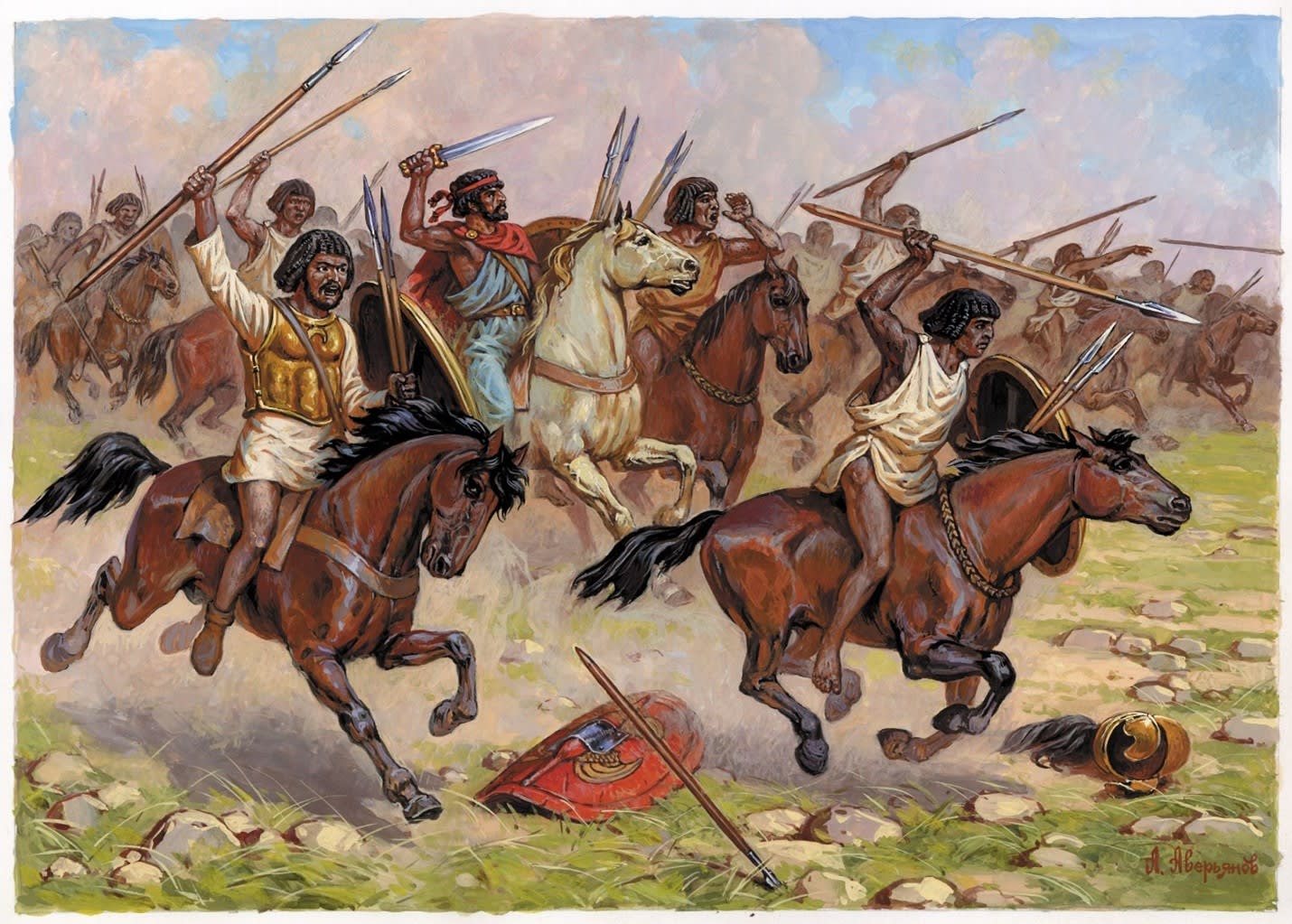
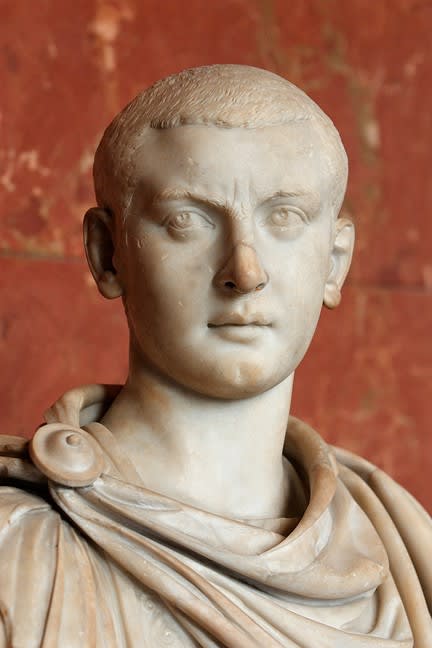
The Battle of Carthage turned into a massacre. The militiamen trampled one another in panic, unable to withstand the assault of the veterans. In this bloody chaos, Gordian II was killed. His body was never found among the thousands of fallen. The elder Gordian, having learned of his son’s death and seeing the enemy approach, committed suicide. Their joint reign lasted only twenty or twenty-two days.
Capelianus unleashed terror in Africa, plundering cities and ravaging fields, but the cause of the Gordians did not perish. In Rome, the uprising continued under the leadership of the Senate’s appointees, Balbinus and Pupienus. The principal heir to the memory of the fallen became the young nephew of Gordian II — Gordian III. When the boy became sole emperor in the middle of 238, one of his first acts was to secure the deification of his uncle.
Gordian II entered history as a “divine” ruler whose brief time in power became a manifesto of Roman culture against military despotism. Although he did not have time to prove himself a great reformer, his name remained a symbol of an age when, even in the darkest times, Rome still remembered its libraries, sophists, and law. His life resembled an ancient tragedy: he possessed every gift of fate except the time to make use of them.


