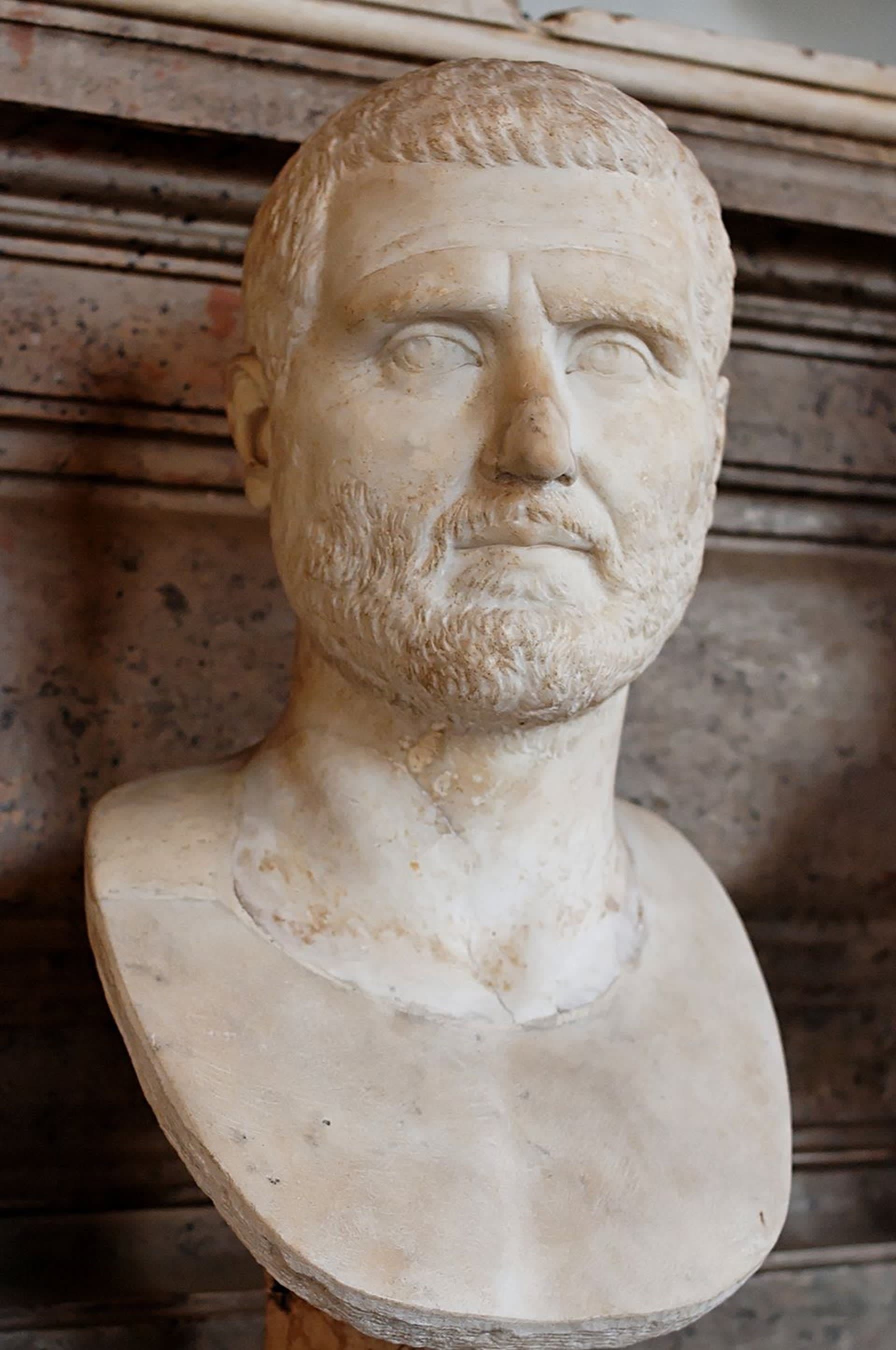
The beginning of Gordian I’s life is shrouded in historical disputes that have not subsided to this day. According to the most widespread version, based on the works of Herodian and Julius Capitolinus, he was born in 158 or 159, which made him a very old man by the time he ascended the throne. However, modern researchers such as K. Grasby tend to “make him younger,” moving his birth date to 178, arguing that the office of proconsul was usually held at around the age of sixty.
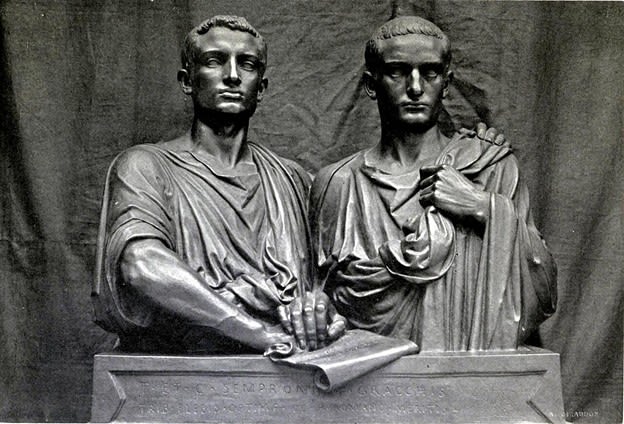
Gordian belonged to an incredibly wealthy and influential family whose roots probably reached back to the eastern provinces of the empire — Galatia, Pontus, or Cappadocia. His very name, Marcus Antonius, indicated that his ancestors had received Roman citizenship back in the time of the triumvir Mark Antony. The Historia Augusta attributed to him kinship with the legendary reformers, the Gracchi brothers, and with Emperor Trajan, although many scholars see this merely as a later falsification designed to ennoble his image. Far more reliable are his connections with the intellectual elite of the time: the famous sophist Flavius Philostratus dedicated his work Lives of the Sophists to Gordian, calling him a descendant of the great orator Herodes Atticus. This kinship, whether by blood or by spirit, emphasized Gordian’s status as one of the most educated and cultured men of his century.
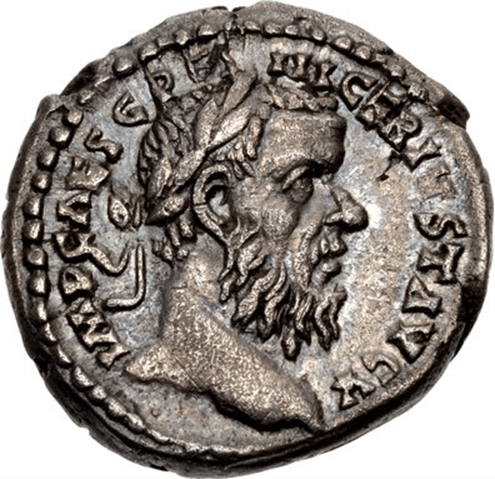
Gordian’s political rise was classical, though not without obstacles. Beginning with the offices of quaestor and aedile, he became famous for his incredible generosity: as aedile, he gave the people twelve magnificent spectacles, sending hundreds of gladiators into the arena at his own expense. Around 190, he reached the praetorship, but afterward his career entered a long lull. It is assumed that under Septimius Severus, Gordian may have fallen into disgrace because of his sympathies for Severus’ rival, Pescennius Niger. Only under Caracalla did he return to high politics, receiving in 216 the post of legatus propraetore of Lower Britain.
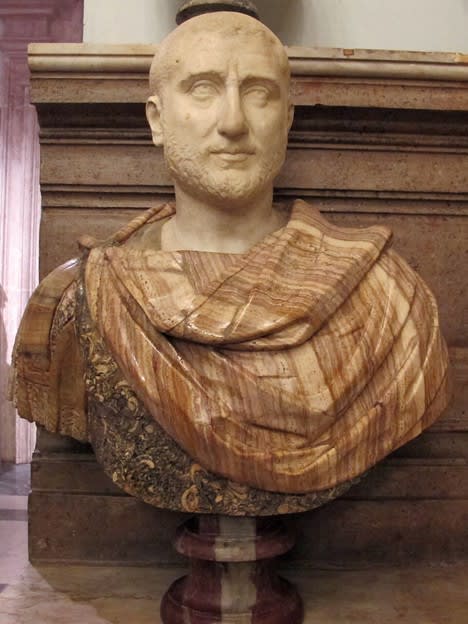
There is a version that the harsh Caracalla sent the refined intellectual to cold Britain as a disguised form of exile, hoping that the severe climate would destroy him. But Gordian endured. Later he held the consulship, probably in 222, and governed Coele-Syria. Finally, in 237, already in old age, he was appointed proconsul of Africa — one of the richest and most prestigious provinces of the empire. His son, Gordian II, went to Africa with him and became his right-hand man.
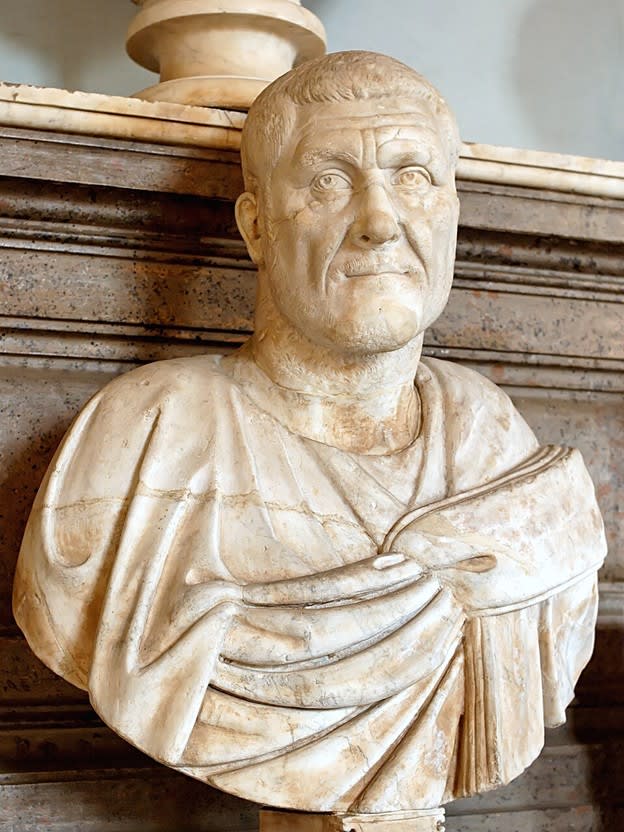
While Gordian enjoyed peace on his African estates, the empire groaned under the oppression of Maximinus Thrax. Maximinus, who had come to power in 235 after the murder of Alexander Severus, squeezed the provinces dry in order to finance his endless wars in the north. Financial pressure reached its peak in February 238. In the African city of Thysdrus, an imperial procurator began mass confiscations and fines against the local nobility.
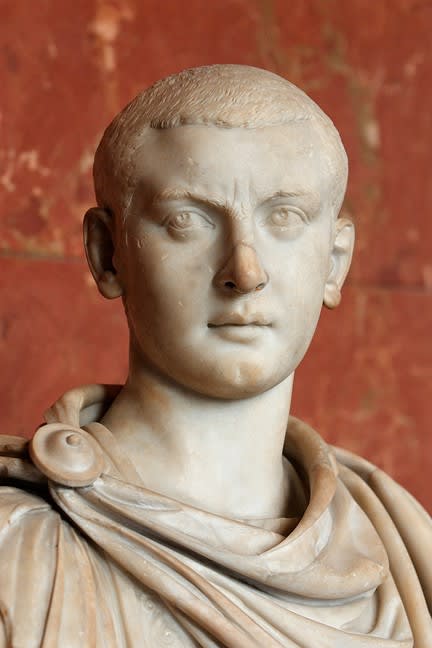
The patience of the provincials snapped. A group of young aristocrats, having armed their tenant farmers, suddenly attacked the procurator and killed him. Realizing that there was no way back, the rebels went to Gordian’s house. They found the eighty-year-old old man resting at midday and literally forced the imperial purple upon him. At first Gordian resisted, understanding the madness of the venture, but in the end he yielded, preferring an honorable death at the hands of Maximinus to immediate death at the hands of his own “benefactors.” His son was immediately proclaimed co-ruler, and both of them solemnly entered Carthage to the cheers of the crowd.
The revolt of the Gordians was not an ordinary military mutiny — it was a “civilian revolution.” Gordian immediately sent an embassy to Rome, carrying letters to the Senate and a secret assignment: to eliminate the Praetorian prefect Vitalianus, the most loyal supporter of Maximinus in the capital. The plot succeeded, Vitalianus was killed, and the Senate, which had long hated the “barbarian on the throne,” enthusiastically recognized the Gordians as legitimate Augusti and declared Maximinus an enemy of the people.
Almost instantly, the uprising took on the character of an empire-wide blaze. The provinces of the Hellenistic East — Asia, Bithynia, Syria, and Egypt — swore allegiance to the Gordians one after another. Coins of that time bore slogans such as “Eternal Rome” and “The Valor of the Augusti.” The Senate formed a committee of twenty men for the defense of Italy, understanding that Maximinus was already leading his legions from the Danube toward Rome. Yet while the senators were making plans, disaster came from another direction — from neighboring Numidia.
Gordian had a personal enemy — Capelianus, the legate of Numidia. When Gordian, having become emperor, ordered him to lay down his authority, Capelianus, who commanded the only regular legion in the region, the Third Augusta, refused. With hardened veterans and Mauretanian cavalry at his disposal, he marched on Carthage.
Gordian II tried to organize a defense, but what could urban militiamen and an unarmed crowd do against professional soldiers? The battle beneath the walls of Carthage turned into a bloody massacre. Gordian II fell in battle, and his body was never found. Having learned of his son’s death and seeing the enemy approach, Gordian I, who had ruled for only twenty or twenty-two days, committed suicide by hanging himself in his palace. This happened in March or April 238.
Despite his lightning-fast fall, Gordian I managed to set in motion the process that led to the death of Maximinus Thrax. His death caused such a wave of grief and anger that the Senate was forced to proclaim his thirteen-year-old grandson emperor — Gordian III. By order of the young emperor, the Third Augusta Legion, guilty of the deaths of his grandfather and uncle, was disbanded, while the Gordians themselves were deified.
In history, Gordian I remained a symbol of the “senatorial renaissance.” Julius Capitolinus describes him as a man of majestic appearance, with beautiful gray hair and a dignified expression. He was the greatest landowner of his time, yet at the same time remained an intellectual, the author of the thirty-book poem Antoniniad. Although his reign lasted less than a month, it proved that the idea of legality and senatorial authority was still alive in the hearts of Romans, who were ready to die for the “type of Latin life” adorned with luxury, leisure, and culture.


