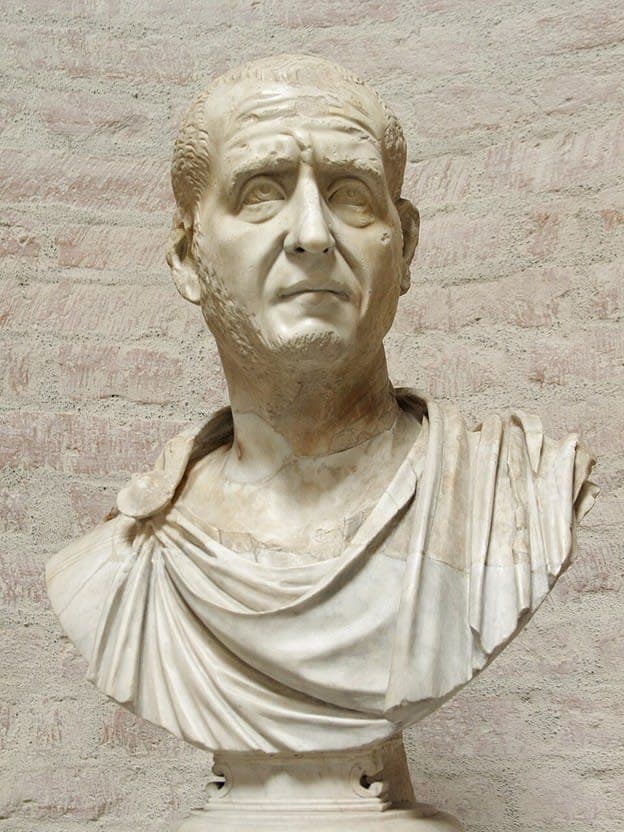

The future emperor was born around 201, although historians allow dates as early as 190, in the Pannonian village of Budalia, located near the strategically important city of Sirmium. Unlike many of those who followed him, Decius was not simply a military upstart: he managed to build a brilliant senatorial career. His names — Messius and Decius — had ancient Oscan roots, hinting at the Italic origin of his family, which had settled on the edge of the empire.
By the time he ascended the throne, Decius was already a mature and experienced statesman. Between 215 and 225, he held the office of quaestor; in 234, he governed Lower Moesia and probably became suffect consul around the same time. In the fateful year 238, he was governor of Tarraconian Spain. Interestingly, during the civil war of that year, Decius remained loyal to Maximinus Thrax, not fearing to go against the will of the Senate. Although after Maximinus’ death he temporarily fell into disfavor, his devotion to duty and discipline was valued so highly that even pro-senatorial historians later wrote about him with consistent respect.

His personal life was also imbued with the spirit of the old aristocracy. His wife, Herennia Cupressenia Etruscilla, came from an ancient Etruscan family and later received the honorable title “Mother of the Camps,” accompanying her husband on his campaigns. From this marriage came two sons, Herennius Etruscus and Hostilian, whom their father dreamed of making the continuators of his new dynasty.
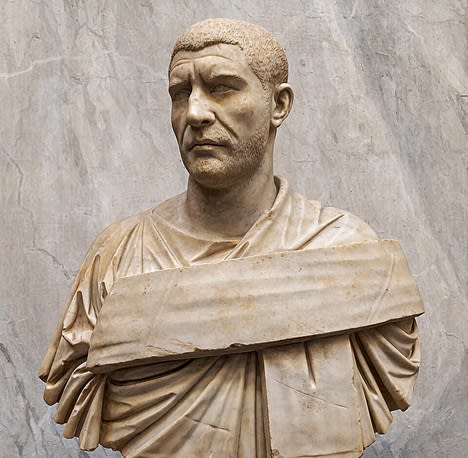
Decius’ return to the great political stage took place under Philip the Arab. The emperor trusted Decius so much that he appointed him prefect of the city of Rome, and in the spring of 249 entrusted him with an almost impossible mission: to go to Moesia and Pannonia in order to suppress the revolt of Pacatianus and repel the raids of the Gepids. Decius showed himself to be almost prophetic: at a meeting of the Senate he predicted the imminent fall of the usurpers at the hands of their own soldiers, which soon indeed happened.
However, as soon as Decius arrived on the Danube, the legions, disappointed in Philip, proclaimed him emperor. Historians often portray him as an “unwilling usurper,” who swore loyalty to Philip in his letters, but the logic of events was inexorable. In the summer of 249, the armies clashed near Verona. Philip died in battle, and in October 249 Decius made his solemn entry into Rome.
After taking power, Decius made a programmatic gesture: he added the cognomen Trajan to his name. This was not merely a tribute to the “best princeps” of the past, but a declaration of a return to the golden age of cooperation between Senate and emperor. Decius proclaimed himself Restitutor Libertatis, “Restorer of Liberty,” abolished Philip’s harsh tax reforms in Egypt, and began large-scale construction in Rome. He restored the Colosseum and built grand baths on the Aventine, seeking to remind the Romans of the greatness of their ancestors.
The central idea of Decius’ reign was the restoration of the pax deorum — the “peace of the gods.” He believed that the empire’s misfortunes were divine punishment for neglecting ancient rituals. In late 249 or early 250, an unprecedented edict was issued: every inhabitant of the empire was required to publicly sacrifice to the gods and taste the sacrificial meat in the presence of a commission.
Those who performed the rite received a special document — a libellus. For the Christian communities, which by that time had already become a noticeable force, this was a catastrophe.
“To the commissioners appointed to supervise the sacrifices... I have always and constantly sacrificed to the gods, and now in your presence I have made a libation, offered sacrifice, and tasted a portion of the sacrificial offering...” — so read the typical text of a libellus.
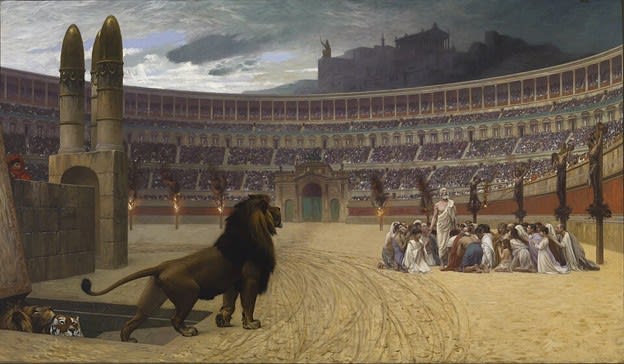

Decius’ persecution was aimed not at the physical extermination of people, but at the destruction of church structures and the return of subjects to the fold of paganism. Among the victims were Pope Fabian, Bishop Babylas of Antioch, and Alexander of Jerusalem. The persecution caused a deep split within the Church itself between the “lapsed” — those who had sacrificed or bought a libellus — and the “confessors,” giving rise to the Novatian schism, which lasted for centuries. By the summer of 250, however, Decius was forced to loosen his grip: the borders of the empire were cracking under barbarian pressure.
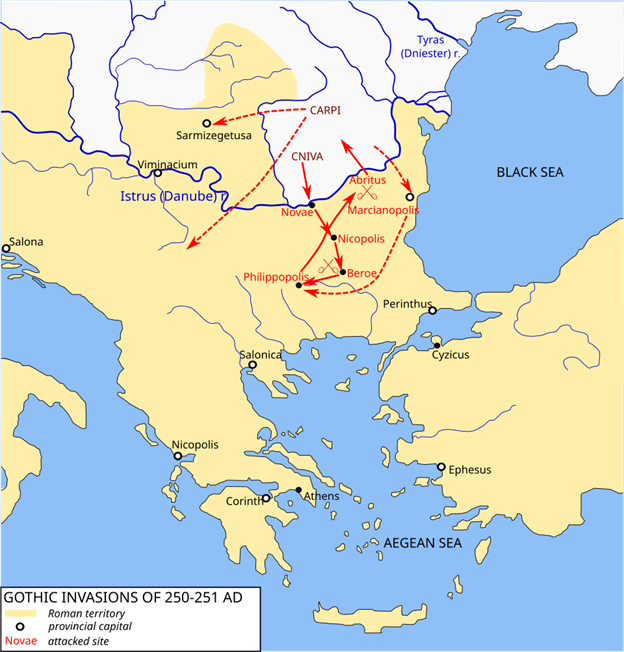
In the winter of 250, the Gothic king Cniva crossed the frozen Danube at the head of a vast army. The “Scythian War” began, and it proved fatal for Decius. The emperor acted energetically: he sent his elder son Herennius Etruscus ahead, while he himself, after strengthening discipline in the legions, drove the Carpi out of Dacia and received the title Dacicus Maximus.
Yet fortune turned against him. At the Battle of Beroe, the Goths inflicted a heavy defeat on the Romans, forcing Decius to retreat for the first time in his career. While the emperor regrouped his forces, Philippopolis fell, and in Rome itself the senator Julius Valens Licinianus attempted to seize power. After suppressing internal revolts, in the spring of 251 Decius and Gallus resumed the hunt for Cniva, who was retreating toward the Danube loaded with plunder.
The decisive clash took place on 1 July 251 at Abritus. At the very beginning of the battle, Herennius Etruscus was struck down by an arrow before his father’s eyes. According to tradition, Decius courageously exclaimed: “Let no one mourn; the loss of one soldier is not a loss to the state.” But the Goths lured the Romans into marshy ground. The heavy infantry became stuck in the swamp, and the battle turned into a slaughter.
Decius Trajan died, becoming the first Roman emperor to fall in battle against an external enemy. His body was never found — it remained forever in the marshes of Dobruja. Ammianus Marcellinus later wrote that the emperor drowned after being thrown by a panicked horse.
Decius’ reign lasted less than two years — only one year, eleven months, and eighteen days — but it left a deep mark on history. His attempt to restore censorship and traditional ideals through the revival of the cult of deified predecessors, represented by the divi coin series, was utopian, yet it was a sincere attempt to save Rome from disintegration.
Christian historians branded him a “savage beast,” seeing his death as divine punishment, while pagan authors praised his mildness in peacetime and energy in war. Decius Trajan remained in memory as a tragic figure: a conservative whose virtues could not withstand the brutal reality of approaching chaos. His face on surviving busts is the face of a man whose brow bears an eternal anxiety for the fate of the empire he so desperately tried to defend.


