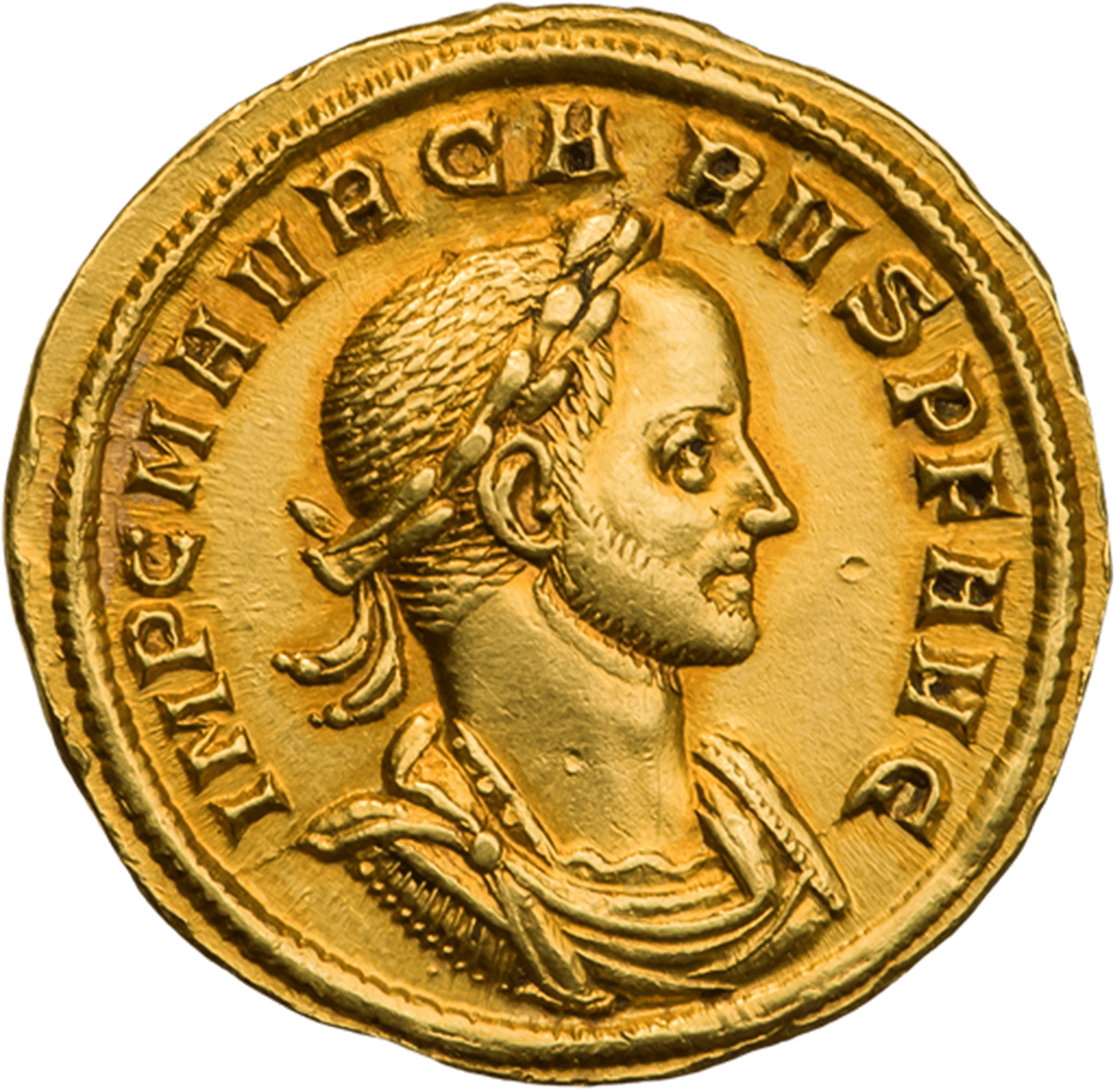
The personality of Marcus Aurelius Carus begins to be surrounded by legends and contradictions from the very moment of his birth. The exact date of his birth remains a matter of debate: Byzantine sources, especially John Malalas, claim that at the time of his death in 283 the emperor was sixty years old, which places his birth in 223 or 224. Modern researchers, however, sometimes shift this date to around 230. His homeland is no less disputed. The Historia Augusta gives a whole range of versions: from birth in Rome itself to Illyrian or even Punic roots. However, most modern historians, relying on the testimony of Aurelius Victor and Eutropius, tend to believe that Carus came from Narbonese Gaul. This distinguished him from the long line of “Illyrian emperors” who had ruled Rome for decades.
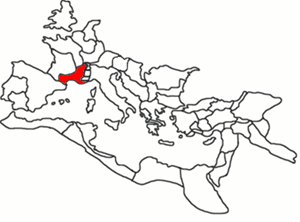

Before putting on the imperial purple, Carus followed the classic path of a statesman. He was a senator, held the post of proconsul of Cilicia, and, according to some reports, learned the art of war under the personal guidance of Emperor Probus. It was Probus, trusting Carus, who appointed him to the key position of prefect of the Praetorian Guard. However, this very appointment proved fatal for the previous ruler. At the end of 282, when the legions in Raetia and Noricum rose in rebellion, they proclaimed Carus as their leader. The Greek tradition portrays him as an unwilling victim of circumstances, who allegedly even asked Probus for dismissal in order to avoid treason, while Latin sources see Carus as a calculating instigator of the revolt. In any case, after the death of Probus in Sirmium, it was Carus who became the full ruler of the empire. Significantly, he did not even ask the Senate for formal approval, merely informing it of the accomplished fact, which emphasized the new, harshly authoritarian style of rule.
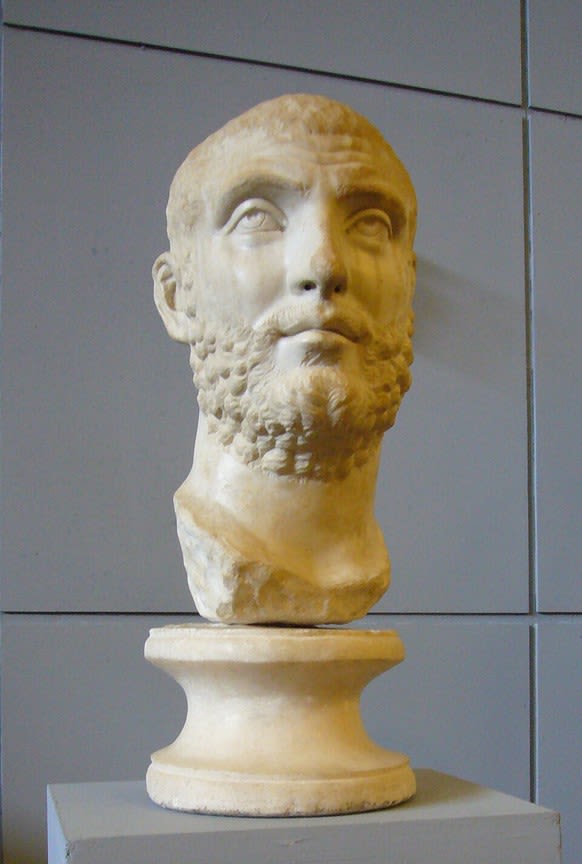
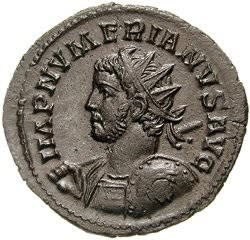
Having become emperor, Carus first concerned himself with the question of succession, deciding to found his own dynasty. He had two adult sons — Marcus Aurelius Carinus and Marcus Aurelius Numerianus — whom he immediately elevated to the titles of Caesars. He soon made the elder, Carinus, a full Augustus and his co-ruler, leaving him to govern the western provinces, while the younger, Numerianus, was to accompany his father on his great campaigns. Carus proved himself a decisive ruler: he severely punished the murderers of Probus and immediately turned to the urgent threats on the frontiers.

The first serious test of his military talent was the invasion of the Sarmatians and Quadi, who crossed the Danube and threatened Pannonia and even Italy itself. Without entering Rome for lavish ceremonies, Carus threw his troops against the enemy. At the end of 282, he inflicted a crushing defeat on the barbarians, as a result of which about sixteen thousand enemy warriors were destroyed. For this success, Carus and his sons received the honorary title “Germanicus Maximus.” The victory was so significant that images of captured Quadi later decorated the coins of Numerianus with the proud inscription “Triumph over the Quadi.”
The main dream of Carus, which neither Aurelian nor Probus had managed to realize, was the final crushing of the Sasanian state. Taking advantage of internal strife in Persia, where King Bahram II faced a rebellion by his brother Hormizd, Carus moved the Roman army eastward. Passing through Thrace and Asia Minor, the emperor reached the Mesopotamian frontier.
A colorful anecdote has survived about Carus’s meeting with Persian ambassadors. It is said that the envoys found the emperor at a modest dinner of mashed peas and salted pork. Carus, dressed like a simple soldier, showed no respect to his guests. On the contrary, he uncovered his bald head and threatened that if Bahram II did not submit, the Persian lands would become as bare as his skull. This display of stern soldierly bluntness merely anticipated his military successes.
The Roman army invaded Persia through Armenia and advanced rapidly along the Tigris. Meeting no serious resistance, Carus captured the enemy capital, Ctesiphon, and then neighboring Seleucia. This was a grand success, for which the emperor received the title “Persicus Maximus.” It seemed that the Roman eagles had once again firmly established themselves in Mesopotamia, and Carus was determined to continue the offensive deep into enemy territory.
However, fate decided otherwise. In late July or early August 283, when Carus was at the zenith of his glory, he suddenly died in his tent. The circumstances of his death are still shrouded in mystical mystery. Official letters of the time, especially those of the secretary Julius Calpurnius, describe a terrifying night storm. The sky blazed with lightning, thunder shook the earth, and in the darkness no one understood what was happening. When the cry of the ruler’s death rang out, the servants, in a burst of grief, set fire to the tent, giving rise to rumors that the emperor had been incinerated by lightning as a sign of divine vengeance for daring to go farther than the prophecy of Ctesiphon allowed.
Modern historians, however, seek more prosaic explanations. Many tend to believe that Carus died of a sudden illness, and that the story of the lightning was merely a poetic cover or the result of an accident during the storm. There is also a version of a conspiracy by the praetorian prefect Arrius Aper, although it faces objections because Numerianus took the throne without any resistance from the army. In any case, after his death Carus was deified, and his brief but energetic reign — a little more than ten months — left a deep mark on Roman history.
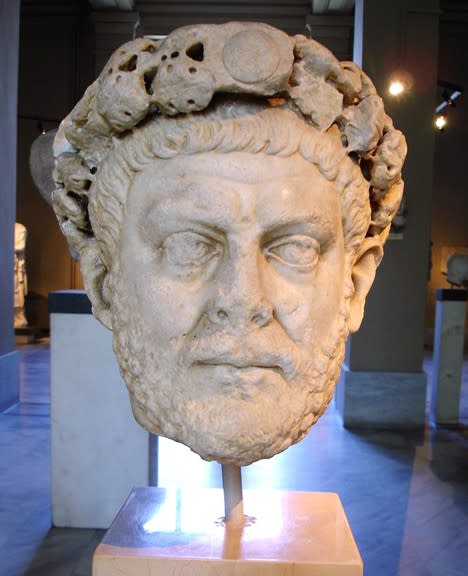
Despite its brevity, the reign of Carus was of great importance. His victory in the East not only raised the morale of the empire but also prepared the ground for the diplomatic successes of the future emperor Diocletian. Carus proved that Rome was still capable of delivering crushing blows against its most powerful enemies. Poets such as Olympius Nemesianus sang of his triumphs, and in the memory of later generations he remained a “good ruler” who, like a meteor, flashed brightly across the political sky, trying to restore Rome to its former greatness.
His death left the empire in the hands of his two sons, but the fragile balance between Carinus in the West and Numerianus in the East was soon broken, leading to a new wave of struggle for power and, ultimately, to the establishment of the Tetrarchy. Carus became the bridge that connected the chaotic age of the “soldier emperors” with the more ordered world of the late Roman Empire.


