
Roger II was born in the shadow of his father's great achievements. As the second son of Roger I the Great and his third wife, Adelaide of Savona, he was not expected to inherit the throne. But fate had other plans: following the premature death of his elder brother Simon in 1105, the ten-year-old Roger II became Count of Sicily.

His youth remains shrouded in mystery, as contemporary chronicles provide few details. It is known that until 1112, the state was governed by his mother and regent, Adelaide of Savona. It was she who made a strategically important decision: she moved the count's residence from Mileto in Calabria to the magnificent city of Palermo in Sicily. This relocation symbolized the shift of the center of power from the mainland to the island. The young Roger's court astonished contemporaries with its remarkable mixture of cultures. In 1109, he even hosted the Norwegian crusader king Sigurd I.
In 1112, Roger II assumed power personally. He devoted the following decade to strengthening Sicily, accumulating such considerable economic and military resources that he was eventually able to dictate terms to mainland Italy. At that time, Apulia, the legacy of Robert Guiscard, was ruled by Roger's cousin, Duke William II, whose reign had plunged the duchy into chaos.
Roger II offered his cousin military assistance and enormous sums of money. However, the price of this "assistance" was high. In 1122, through a series of agreements, William surrendered his shares in Palermo and Messina to Roger, while Calabria was first pledged as collateral and subsequently sold outright. In 1125, in exchange for another substantial financial contribution, the childless William officially recognized Roger II as his heir.
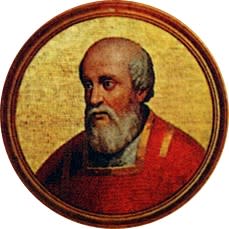
When William of Apulia died on July 25, 1127, Roger II immediately claimed his inheritance. However, it turned out that the deceased duke had made similar promises to another cousin — Bohemond II of Antioch, who was far away in the East — and, more dangerously, to Pope Honorius II, the overlord of the duchy.

Pope Honorius categorically refused to surrender Apulia to Roger, fearing the emergence of an enormous state along the southern borders of the Papal States. He began encouraging the local barons to rebel. Roger responded swiftly. His fleet approached Salerno, the capital of Apulia, which surrendered only after Roger agreed to certain concessions. The count then employed a strategy of bribery: he won over his brother-in-law, Rainulf of Alife, by allowing him to seize a neighbor's lands. Having purchased the loyalty of the barons, Roger established his authority in Apulia and returned to Sicily for the winter.
Taking advantage of his departure, Honorius II assembled an anti-Norman league, which included the city of Troia, Rainulf of Alife, and Prince Robert II of Capua. The pope also excommunicated Roger from the Church. In the spring of 1128, Roger was forced to land in Calabria with a new army.
In July, the opposing forces confronted one another near Bradano. Roger demonstrated remarkable patience: instead of attacking the papal troops, he established a camp and simply waited for two months. During this time, the pope's mercenaries mutinied, his allies quarreled among themselves, and Honorius eventually capitulated. On August 22, 1128, in Benevento, the pope recognized Roger as Duke of Apulia, in exchange for which Roger swore an oath of fealty to him.
By 1129, Roger had silenced the last rebels. He convened a great assembly in Melfi, where all the barons swore allegiance to him and his sons. His greatest achievement was the proclamation of the "Ducal Peace," which completely prohibited private wars between feudal lords.
In 1130, a schism erupted in Rome when two popes were elected simultaneously: Innocent II, recognized by most European kingdoms, and Anacletus II, who retained control of Rome but found himself politically isolated. Roger offered Anacletus II protection in exchange for a royal title.
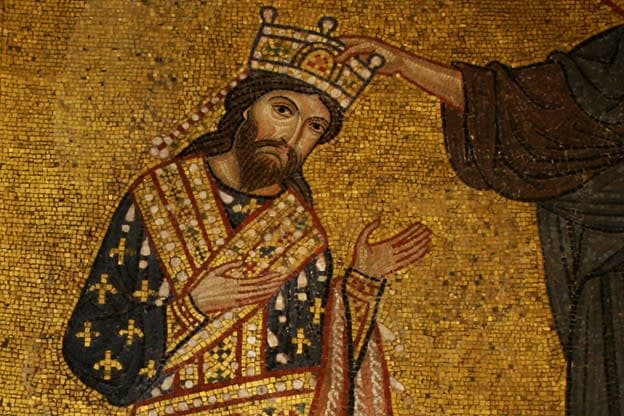
On September 27, 1130, Anacletus issued a papal bull uniting Sicily, Apulia, and Calabria into a single kingdom. On Christmas Day, December 25, 1130, Roger II was anointed and crowned in Palermo Cathedral. Thus, the Kingdom of Sicily was born.

Roger II's coronation provoked outrage throughout Europe. The German emperor Lothair II and the Byzantine basileus John II Komnenos both considered Italy part of their respective spheres of influence. European powers refused to recognize the "antipope's king," while the barons of Southern Italy had no desire to submit to a powerful ruler.
In 1131, a rebellion erupted: Tancred of Conversano and the Prince of Bari captured Brindisi, while the Count of Avellino also declared his independence. Roger suppressed the uprising within two months, confiscated the rebels' lands, and sent Tancred on a crusade.
However, in 1132, a genuine catastrophe struck, triggered by a family drama. The king's sister, Matilda, fled to Sicily to escape the cruelty of her husband, Rainulf of Alife. Enraged, Rainulf joined forces with Robert of Capua and launched a rebellion. Roger marched against them, but on July 24, 1132, at the Battle of Nocera, his army fell into an ambush and suffered a crushing defeat. Accompanied by only four knights, Roger barely managed to escape with his life. News of this disaster sparked rebellions throughout Apulia. By the end of the year, the king had lost almost all his mainland possessions.
Meanwhile, the German king Lothair II invaded Italy. He drove out the antipope, had himself crowned emperor, and returned across the Alps, leaving the rebels to fend for themselves. This presented Sicily with an opportunity. In the spring of 1133, Roger II landed on the mainland at the head of a formidable army, whose core consisted of Sicilian Muslims. Furious at the betrayal, the king showed no mercy: cities were burned, and rebellious barons were executed. By 1134, terror had gripped the region. Robert of Capua fled, while Rainulf of Alife begged for forgiveness.
To consolidate his success, Roger granted titles to his sons: Roger III became Prince of Apulia, Tancred became Prince of Bari, and Alfonso became Prince of Capua.

No sooner had the king fallen ill in early 1135 than his enemies raised their heads again. Robert of Capua, Duke Sergius VII of Naples, and the tireless Rainulf of Alife launched another rebellion with the support of the Pisan fleet. Roger laid siege to Naples, and the desperate rebels appealed to Emperor Lothair II for assistance.
In 1136, Lothair launched a massive invasion. His army, divided into two columns, swept through Italy like a relentless force, bribing and intimidating cities into submission. Robert regained Capua, and in May 1137, the German forces united at Bari. Lothair even went so far as to elevate Rainulf to the rank of Duke of Apulia.
The situation appeared hopeless, but Roger II demonstrated extraordinary patience. Throughout the war, he remained in Sicily, allowing the Germans to devastate the mainland. He knew that the emperor's vassals would eventually want to return home. And so it happened: in August 1137, exhausted by the heat and the lack of plunder, the German army withdrew from Italy.
As soon as the Germans disappeared beyond the mountains, Roger launched his counteroffensive. In October, he burned the rebellious city of Capua. Duke Sergius VII of Naples surrendered, and after his death in battle while fighting for the king, the ancient Duchy of Naples was permanently abolished and incorporated into the crown.
Only one enemy remained — Roger's despised brother-in-law, Rainulf of Alife. Although Rainulf inflicted another defeat on Roger at the Battle of Rignano on October 30, 1137, the rebellion was already approaching its end.
The turning point came with the sudden deaths of the king's principal enemies. Emperor Lothair II died in late 1137, Antipope Anacletus II in January 1138, and Rainulf of Alife himself in April 1139.
The death of the antipope allowed Roger II to recognize the legitimate Pope Innocent II without losing face. However, the pope nevertheless excommunicated Roger and personally led an army against him. On July 22, 1139, a historic battle took place near Galluccio: the papal troops were defeated, and Innocent II himself was captured by Roger.
On July 25, 1139, the defeated pope formally and solemnly recognized Roger II as King of Sicily, Apulia, and Capua.

Roger now had a free hand. He approached Troia, where Rainulf had been buried, and refused to accept the city's surrender as long as the traitor's corpse continued to defile its soil. Terrified, the townspeople exhumed Rainulf's body, dragged it through the streets, and threw it into a drainage ditch. Only later did the king permit the remains to be buried.
Roger treated the inhabitants of Bari, who had stubbornly resisted him, with equal severity. He initially deceived them with honorable terms of surrender, only to hang their prince and order his advisers to be blinded.
By 1139, an extraordinary task had been accomplished. The scattered Norman counties and independent cities such as Naples, Amalfi, and Salerno had all been forged into a unified Kingdom of Sicily. The state had survived confrontation with two empires and the Papacy. Roger II had transformed himself from an island count into one of the most feared and powerful monarchs of medieval Europe.
Having conquered power through the sword, Roger II understood that maintaining it required an exceptionally sophisticated system of government. The newly established Kingdom of Sicily became a remarkable phenomenon in Europe: it lacked the traditional fragmentation of feudal society, while royal authority achieved a degree of centralization unprecedented for the twelfth century.
Sicily remained the heart and greatest treasure of the kingdom. Continuing his father's enlightened policies, Roger II elevated religious tolerance to the level of state ideology. Catholics, Orthodox Greeks, and Muslims lived there with fully equal rights. The king generously endowed both Latin and Greek monasteries. The latter continued to worship according to the Byzantine rite and in their native language, while only formally acknowledging the authority of Catholic church leaders.
The state administration represented an astonishing synthesis of cultures. At the head of the royal administration stood a member of the Greek community who proudly bore the Arabic title "Emir of Emirs." Together with the king's closest advisers, he formed the Royal Curia, the highest institution of secular and judicial authority.
Two land administration offices, known by the Arabic term diwans, operated under its authority. Their officials were predominantly Muslims, who expertly maintained records, collected customs duties, and administered feudal taxes. There was also a financial department known as the Camera, staffed by Greeks.
At the local level, administration was entrusted to chamberlains and regional governors. The king consistently appointed officials from whichever religious community predominated in a particular district. This policy helped prevent ethnic tensions.
To suppress corruption, Roger allowed anyone, even the lowest-ranking official, to submit complaints directly to the monarch or the Royal Curia. Criminal justice was administered by traveling justiciars, assisted by boni homines ("good men") — a precursor to the jury system that included both Christians and Muslims.
Roger paid particular attention to land ownership and the military. Under Byzantine influence, many Norman knights received estates not in exchange for military service but as hereditary possessions. Serfdom in its classical form was almost nonexistent: lands were frequently leased to free Greek peasants.
Most importantly, Roger prohibited subinfeudation — the feudal principle that "the vassal of my vassal is not my vassal." Any transfer or sale of land by a knight required the king's personal approval. Loyalty to a feudal lord was recognized only when it did not conflict with loyalty to the monarch.
This deprived the barons of the opportunity to assemble private armies and transformed the relatively land-poor Sicilian knighthood into a loyal and devoted pillar of the crown.
The culmination of Roger's political genius was his legislation. In July 1140, he summoned his vassals to a great assembly in the town of Ariano. There, the so-called Assizes of Ariano were adopted. Two copies of this document, discovered only in the nineteenth century in the archives of the Vatican and Monte Cassino, continue to astonish historians.

The Assizes recognized the right of every people within the kingdom to be judged according to their ancient customs, but with one crucial condition: local laws lost their validity whenever they contradicted a royal decree.
Roger proclaimed an idea that was revolutionary for the West but familiar in the East: only the king, as the bearer of divinely sanctioned authority, possessed the right to create, interpret, and abolish laws.
Any act of disobedience toward the monarch was treated not merely as treason but also as sacrilege. The concept of treason was expanded to unprecedented proportions. Conspiracies against officials of the Royal Curia, cowardice in battle, refusal to support the king's army, and even inciting a crowd were punishable by death.
This legal code effectively anticipated European absolutism by several centuries.
Immediately after the assembly in Ariano, Roger introduced the ducale, a unified coinage for the entire country. He also forced the mainland barons to renew their legal titles to land: from that moment onward, they held their estates not by right of conquest or the sword but exclusively through royal grants.

Roger thought like a Byzantine emperor. In official documents, he was styled Rex ("King"), a title rendered in Sicily as Basileus. Possessing the status of papal legate, he personally established dioceses.
The obverse of his ducale did not bear the image of Saint Peter, which would have symbolized submission to the pope, but rather the image of Christ Himself. In the famous mosaic in the Church of Martorana, Roger is depicted receiving his crown directly from the hands of the Savior.
Having become master of Southern Italy, Roger turned his attention eastward, toward the Crusader states. Sicily had its own grievances against Jerusalem.
Back in 1112, Roger's mother, Adelaide of Savona, had married King Baldwin I of Jerusalem. According to their agreement, the young Roger was to become heir to the Kingdom of Jerusalem if the couple had no children.
However, in 1117, Baldwin annulled the marriage and disgracefully sent Adelaide home without even returning her dowry. Roger never forgot this humiliation. He regarded the Kingdom of Jerusalem and the Second Crusade with icy hostility.

Roger had particular ambitions concerning the Principality of Antioch. Founded by his relatives, it appeared to him to be a legitimate prize. When Prince Bohemond II died in 1130, leaving only his daughter Constance, Roger asserted his own claims.
In 1135, he even attempted to abduct Constance's prospective husband, Raymond of Poitiers, and in 1138, he took the Latin Patriarch of Antioch hostage.
These imperial ambitions brought Roger into direct confrontation with Byzantium, which considered Antioch part of its own sphere of authority. The Byzantine emperor John II Komnenos, followed by his son Manuel I, dreamed of driving the Normans out of Southern Italy. To achieve this, they even concluded an almost unimaginable alliance with the German emperor Conrad III.

When Conrad III became entangled in the Second Crusade in 1147, while Manuel I was occupied with the passage of the crusaders through the Balkans, the Sicilian king launched a devastating preemptive attack. Incidentally, Roger had mockingly offered his ships to the French king Louis VII, hoping to cause trouble for the Byzantines.
The brilliant Sicilian naval commander, Admiral George of Antioch, captured the Byzantine island of Corfu, landed in Greece, and brutally devastated the wealthiest centers of silk production — Athens, Thebes, and Corinth.

The enraged Manuel I allied himself with the Venetians in an attempt to destroy Sicily. However, nature itself seemed to favor Roger: storms, the death of the Venetian doge, and attacks by the Cumans disrupted the plans of his enemies.
The Byzantines managed to recapture Corfu only in August 1149, but an uprising in Serbia forced them to abandon their campaign.
Meanwhile, in the summer of 1149, the elusive George of Antioch carried out a daring naval raid through the Dardanelles, sailing directly beneath the walls of Constantinople itself and bombarding the imperial palace.
By 1152, the ring of enemies was tightening once again. Manuel I, Conrad III, Venice, and Pope Eugene III were preparing to crush Sicily. However, the sudden death of the German emperor disrupted their plans.
Roger II emerged victorious from this monumental struggle, preserving his kingdom against the combined threat of two empires.

While wars raged across Europe, the Sicilian fleet systematically brought the coast of North Africa under its control.
In 1146, Tripoli fell. Gabès was captured in 1147. In 1148, the Sicilians triumphantly entered Mahdia, Sousse, and Sfax.
Thus emerged the unique "Norman Kingdom of Africa." These conquests transformed Sicily into the undisputed dominant power of the Central Mediterranean. Enormous wealth began flowing into Roger's treasury, as these ports marked the northern termini of the trans-Saharan gold caravan routes.
Roger II was more than a warrior — he was an intellectual, a true Renaissance ruler centuries before the Renaissance itself. Raised in cosmopolitan Palermo, he spoke Greek and Arabic fluently and elegantly.
During the 1140s, his court became an international center of scholarship. Mathematicians, philosophers, and physicians from Europe and the Islamic world gathered there.
The king's closest intellectual companion was the Arab scholar al-Idrisi. By Roger's order, he headed a commission of geographers whose work resulted in a monumental treatise, The Entertainment for One Who Longs to Travel the World, which became famous as the Book of Roger.
It was the most accurate and comprehensive geographical treatise of the pre-Columbian era. Alongside it stood another marvel: a massive planisphere cast from pure silver, depicting the known lands and seas. Unfortunately, this extraordinary map has been lost to history.
Al-Idrisi wrote about his king with admiration, marveling at his seemingly boundless knowledge and engineering talent.
The intellectual king also left a magnificent architectural legacy.
At his expense, the monumental Cathedral of Cefalù, the monastery of San Giovanni degli Eremiti, and the gold-adorned Palatine Chapel in Palermo were constructed.
These buildings embodied an extraordinary architectural style that combined the austere strength of Norman Romanesque architecture, the refined beauty of Byzantine mosaics, and the intricate elegance of Arab decorative carving.
Contemporary chronicles reveal little about the final years of the founder of the Kingdom of Sicily. It is known only that the aging monarch's health was gradually deteriorating.
Realizing that his time was drawing to an end, Roger II solemnly crowned his only surviving son, William, on Easter in 1151, gradually transferring to him the responsibilities of governing his vast kingdom.

The great king, who united Norman courage, Byzantine grandeur, and Eastern wisdom, died in Palermo on February 26, 1154.
His body was laid to rest in the cathedral of the capital, inside a magnificent sarcophagus made of purple porphyry — a stone worthy of true Roman emperors.
In later years, this cathedral would become the resting place of other great rulers: beside Roger would lie his daughter Constance, his son-in-law Henry VI, and his brilliant grandson, Holy Roman Emperor Frederick II.
Yet it was Roger II of Hauteville who laid the foundations of this greatness — a count who became a king, the creator of one of the most extraordinary states of the Middle Ages.


