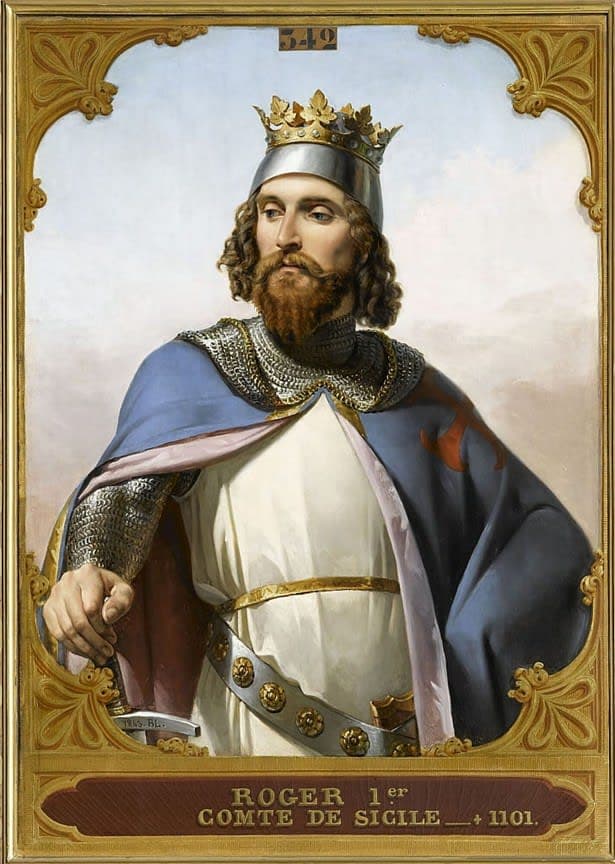
Roger's story begins in the shadow of his illustrious brothers. He was the twelfth son of Tancred of Hauteville and the seventh child from his second marriage to Fressenda. While his elder brothers — William Iron Arm, Drogo, and Humphrey — were already reshaping the political map of Southern Italy, Roger remained in Normandy until his mother's death. Only in 1057, at the age of 26, did he arrive in Melfi.
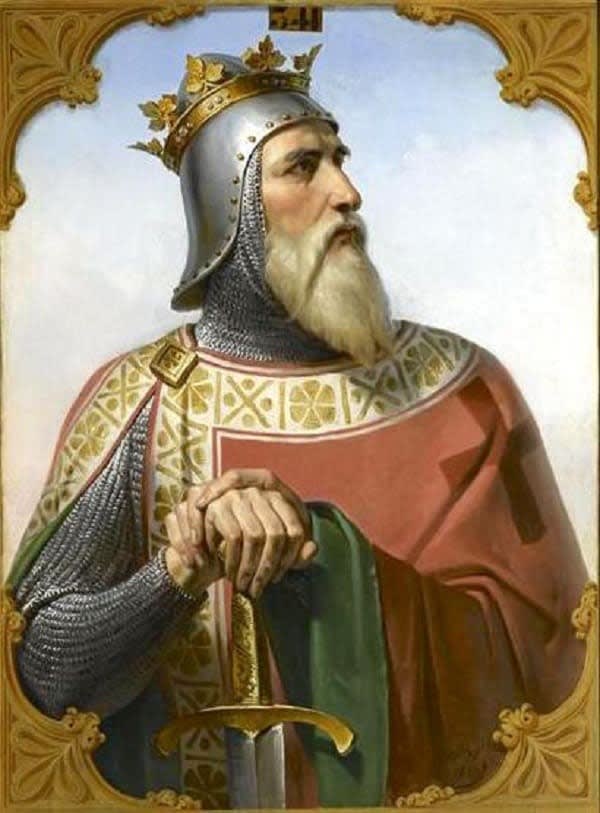
He was welcomed by his elder brother, Robert Guiscard, who had just become Count of Apulia. However, being the count's brother did not guarantee an easy life. Roger was given command of only 60 knights and sent to Calabria, where he had to fight fiercely to carve out his own territories. Establishing himself in the castle of Niciforo, Roger led a life that contemporaries, including the chronicler Geoffrey Malaterra, openly described as that of a robber. He raided mountain valleys, plundered local populations, and displayed the very Norman ferocity that would later make all of Sicily tremble.
Relations between Roger and Guiscard were complicated, combining loyalty with intense rivalry. In 1057, Roger helped his brother suppress a rebellion of the barons in Apulia and participated in the prolonged siege of Reggio. According to chroniclers, Roger acted "like a faithful bee," handing over most of his spoils to his elder brother. However, when Guiscard refused to provide Roger with money to pay his soldiers, the younger brother revealed his independent character. Enraged, he abandoned Robert and entered the service of another brother — William of the Principate.
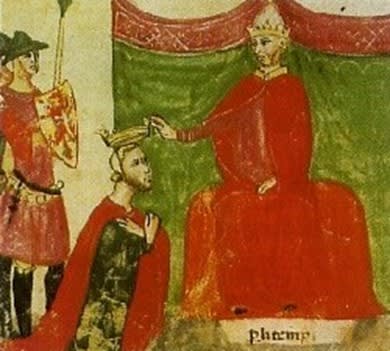
In early 1058, Roger received the castle of Scalea, which became the base for his guerrilla warfare against Guiscard himself. These were harsh times: Roger lived by outright banditry, stealing horses in Amalfi and robbing merchants along the roads. However, the famine that struck Calabria in the spring of that year, together with a widespread uprising of the local population in Nicastro, forced the brothers to set aside their grievances. They reached an agreement to divide Calabria: everything already conquered, as well as all territories yet to be captured between Squillace and Reggio, would be shared equally.
By 1060, the brothers' combined efforts had brought down the last Byzantine strongholds in Calabria — Rossano, Gerace, and finally Reggio. During the siege of Reggio, Roger distinguished himself both as an innovator, introducing the use of siege engines, and as a hero, personally fighting a Byzantine giant in single combat. Calabria was conquered, and Roger established his residence in the town of Mileto.
But the brothers had already turned their attention across the strait, toward the wealthy and mysterious island of Sicily. As early as 1059, Pope Nicholas II, seeking Norman support, had granted Robert Guiscard the title of duke not only of Apulia and Calabria but also of Sicily, which had been under Arab rule for two centuries. This was an "investment in the future," based on questionable documents, but it provided the Normans with a moral justification for a holy war.
Sicily itself was deeply divided, torn apart by conflicts among three emirs. A favorable opportunity emerged in February 1061, when Emir Ibn al-Timnah, having been defeated by his brother-in-law, personally traveled to Calabria to seek Roger's assistance, promising to recognize Norman authority in return. It was the perfect pretext.
The first landing in February 1061 was daring: Roger, accompanied by 160 knights, advanced along the northern coast, capturing Rometta and Milazzo. However, the true triumph came with the capture of Messina in May of the same year. Roger deceived the Arab fleet by landing south of its main forces and seized the city almost without resistance. Messina became the Norman bridgehead on the island, and it was here that Roger laid the foundation stone of the cathedral.
Nevertheless, the road to victory was far from straightforward. The campaign against Enna that same year demonstrated the enormous difficulty of the undertaking. Despite a brilliant victory in open battle, in which 700 Normans allegedly defeated an army of 15,000 soldiers under Ibn al-Hawwas, the seemingly impregnable fortress perched atop a rocky height remained in Arab hands. The arrival of winter forced the Normans to withdraw.
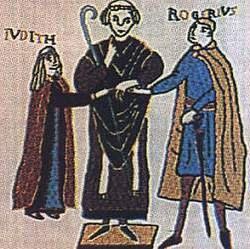
The year 1062 brought Roger some of his most difficult trials. While he was celebrating his marriage to Judith d'Évreux, a new conflict erupted in Calabria between him and Guiscard over the division of territories. The dispute escalated into the siege of Mileto and a tragicomic incident in Gerace, where Guiscard narrowly escaped death at the hands of an enraged crowd, saved only by his brother's intervention. The brothers eventually reconciled once again, dividing Calabria into a patchwork of interspersed territories. Although this arrangement prevented Roger from establishing a unified domain, it provided him with the resources necessary to continue the war in Sicily.
Meanwhile, the Greek population of Troina in Sicily rose in rebellion. Roger, his young wife Judith, and their small garrison found themselves trapped inside the citadel for four long months. The winter pushed them beyond the limits of human endurance: the Normans ate all their horses, shivered in the bitter cold while sharing a single cloak between two people, and suffered from severe hunger. Only thanks to Judith's iron discipline — she personally inspected the guard posts — and Roger's sudden nighttime attack against drunken Arab sentries did they manage to regain control of the town.
In 1063, the legendary Battle of Cerami took place. A combined army of Arabs from Sicily and North Africa confronted a small Norman force. Roger commanded only 136 knights against thousands of enemies. According to legend, at the most critical moment of the battle, a horseman riding a white horse and carrying a banner appeared in the sky — Saint George himself. Belief in divine protection multiplied the Normans' strength, and the Arab army was completely defeated. This victory finally convinced Roger of his destiny.
After an unsuccessful attempt to capture Palermo in 1064 — when the knights were overcome not by their enemies but by tarantula bites — Roger adopted a strategy of attrition. In 1068, at the Battle of Misilmeri, the Normans once again defeated the superior forces of the Tunisian prince Ayyub. To demoralize the inhabitants of Palermo, Roger used captured carrier pigeons: he tied bloodstained strips of cloth to their legs and released the birds. These ominous messengers informed the townspeople that no further assistance could be expected.
The climax came in 1071–1072. Following the capture of Byzantine Bari, Robert Guiscard was finally able to concentrate the full strength of his fleet and army on Sicily. Palermo — the wealthiest city, the "Golden Shell" of the Mediterranean — was blockaded by land and sea.
The siege lasted five months. Hunger began to weaken the defenders. On January 5, 1072, the decisive assault commenced. While Roger attacked al-Qasr, the central fortified district, Guiscard's soldiers secretly climbed the walls of al-Khalisa, the coastal quarter. By evening, the gates had been opened. On January 6, 1072, the Feast of the Epiphany, Roger and Robert triumphantly entered the city.
The terms of surrender were surprisingly lenient for their time: Muslims were guaranteed freedom of religion and the preservation of their laws in exchange for loyalty. The Friday Mosque was converted back into the Cathedral of the Assumption of the Virgin Mary, where the Greek Archbishop Nicodemus celebrated the first liturgy in centuries.
In Palermo, the brothers finally divided their authority. Guiscard, as overlord, retained strategically important locations — Palermo and half of Messina — while Roger was officially granted the title of Great Count of Sicily. From that moment onward, the conquest of the island became Roger's personal responsibility. He had transformed from a landless knight into the legitimate and formidable ruler of an emerging state.
The capture of Palermo in 1072 was a magnificent triumph, but it was far from the end of the conquest. Paradoxically, the subjugation of the remaining territories of Sicily would take another eighteen years. The reason lay in the enormous imbalance of forces: Roger's army still consisted of only a few hundred knights, surrounded by the island's vast Arab population. Understanding this, Roger adopted a cautious strategy. He combined swift, targeted raids with sophisticated diplomacy, persuading Arab emirs to join his side, allowing them to retain local authority or granting them feudal estates in Calabria. Major military campaigns were undertaken only when victory appeared virtually certain.
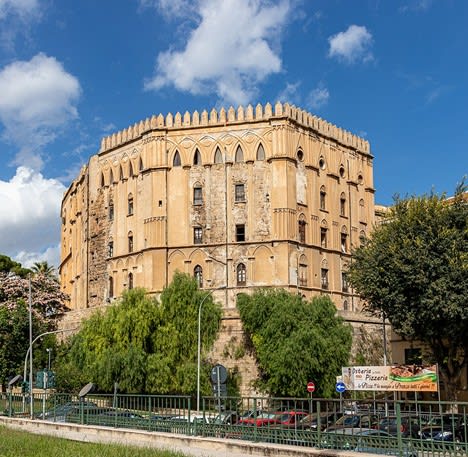
Yet even with such caution, the Normans could not avoid devastating setbacks. In the summer of 1072, the Norman army suffered a severe loss when Roger's fearless nephew, Serlo of Hauteville, fell into an Arab ambush and died heroically. In 1076, while Roger was absent from the island, his son-in-law Hugh of Jersey independently marched from Catania toward Syracuse, only to suffer a crushing defeat at the hands of the local emir. In 1081, the same emir of Syracuse exploited an act of treachery to capture Catania. The situation was saved only by the decisive actions of Roger's illegitimate son Jordan and the commanders Robert de Sourdeval and Elias Cartomensis, who managed to recapture the city.
Every advance demanded extraordinary ingenuity from Roger.
In 1075, Tunisian pirates besieged the citadel of Mazara. Under cover of darkness, the Great Count secretly entered the fortress with his detachment. At dawn, he launched such a furious attack against the enemy that only a handful of pirates managed to escape aboard their ships. This triumph is still commemorated in the decorations of Mazara's cathedral portal.
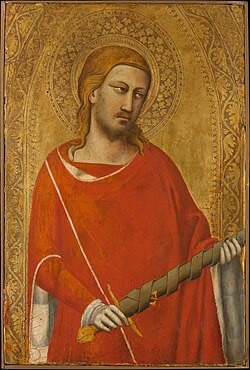
In May 1077, Roger laid siege to Trapani. The siege threatened to drag on, but everything was decided by a daring maneuver carried out by his son Jordan. During the night, Jordan landed with a hundred knights on the peninsula where the townspeople grazed their livestock. At dawn, he killed the guards and drove away all the herds. Deprived of their food supplies, the inhabitants of Trapani surrendered. Soon afterward, the supposedly impregnable fortress of Erice also capitulated. Amazed by their success, the Normans attributed their victory to the divine intervention of Saint Julian, the patron saint of hunters. In his honor, Erice bore the name Monte San Giuliano until 1934.
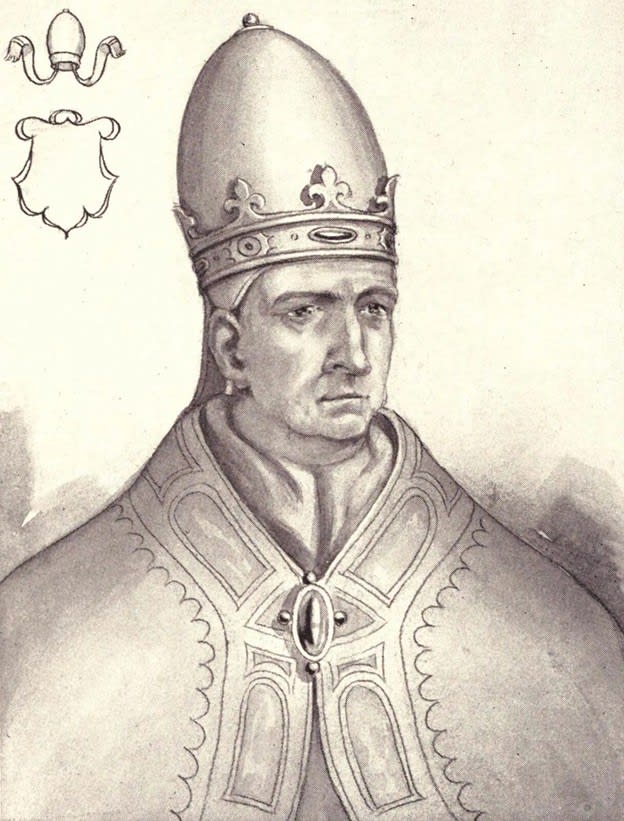
In 1078, it was Taormina's turn — a fortress that had resisted even the Arabs longer than any other, remaining Byzantine until 902. Roger chose not to sacrifice his soldiers in a direct assault. Instead, he constructed a ring of 22 castles around the city, completely cutting off its communications, and blocked the harbor against the Tunisian fleet. Strangled by the blockade, the emir of Taormina surrendered.
Roger's most formidable and persistent enemy on the island was Benarvet, the emir of Syracuse and Noto, probably identified as Ibn al-Wardi. Breaking a fragile truce in 1085, Benarvet's fleet attacked the Calabrian town of Nicotera, devastated a convent, and carried its nuns away into slavery. Roger's fury was immense. He besieged Syracuse by land, placing Jordan in command of the army, while personally leading his fleet against Benarvet.
In the ensuing naval battle, Norman crossbowmen unleashed a deadly barrage, shooting Arab archers from beyond their effective range. In desperation, Benarvet attempted to board Roger's flagship, but, seriously wounded, he fell into the water and drowned. Deprived of its commander, the Arab fleet was destroyed. The siege of Syracuse lasted from May to September 1085 (or 1086), after which the city surrendered and the emir's family fled to Noto.
By this point, only the southern territories and the completely isolated emirate of Enna remained independent. On July 25, 1086, Roger captured Agrigento, taking prisoner the family of Ibn Hamud, the emir of Enna. In early 1087, Roger approached Enna itself. A secret meeting took place between the two rulers.
The emir was willing to surrender the city and even convert to Christianity, but he was terrified of revenge from his own people. The rulers therefore staged a brilliant diplomatic performance: Ibn Hamud supposedly set out on a military expedition, "accidentally" encountered an enormous Norman army, and was "forced" to surrender. Upon learning this, Enna's garrison laid down its weapons without a fight. Ibn Hamud converted to Christianity, received wealthy estates in Calabria, and departed the island with honor.
The final centers of resistance gradually disappeared: Butera fell in 1088, and in February 1090, the inhabitants of Noto surrendered voluntarily. To permanently secure his waters against pirates, Roger led an expedition to Malta and Gozo in 1091. The islands submitted, retaining their self-government and laws, while Roger laid the foundation of the cathedral in Mdina, Malta's old capital. The conquest was complete.
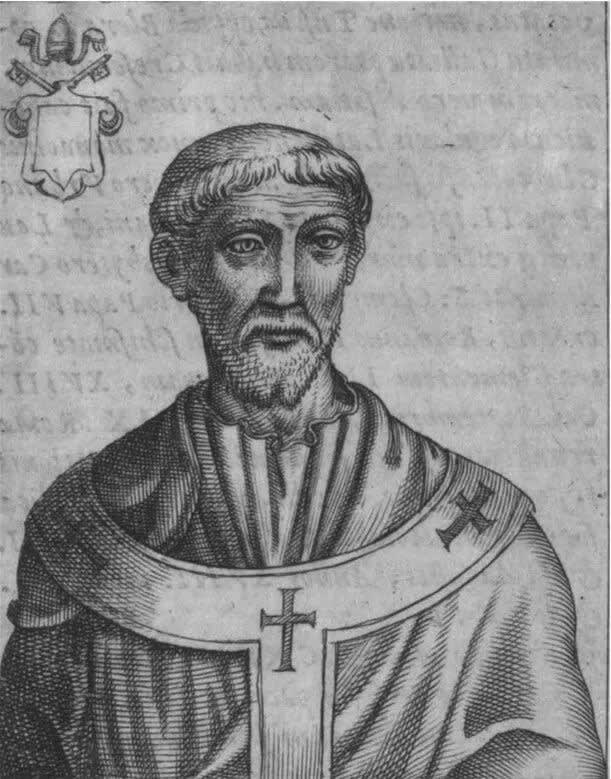
On paper, according to the decision of Pope Nicholas II, the supreme overlord of Southern Italy held the title of Duke of Apulia, Calabria, and Sicily. Initially, this was Robert Guiscard, to whom Roger remained a loyal vassal throughout the years. He shared Calabria and northeastern Sicily equally with his brother, while leaving Palermo entirely under Guiscard's authority.
However, following Robert Guiscard's death, the political landscape changed dramatically. Guiscard's heir, Roger I Borsa, lacked his father's determination and immediately faced claims from his elder half-brother, Bohemond of Taranto. In September 1085, Roger of Sicily formally swore allegiance to his nephew Borsa. However, his loyalty was not given without compensation: in return, the Great Count received exclusive ownership of all the castles in Calabria that he had previously shared with Guiscard.
When Bohemond, allied with Prince Jordan I of Capua, declared war on Borsa and captured the towns of Oria, Taranto, and Otranto, it was Roger of Sicily who assumed the role of supreme arbitrator. He reconciled the brothers, effectively legitimizing the establishment of an independent Principality of Taranto for Bohemond.
In 1087, war broke out again when Bohemond captured Cosenza. Roger of Sicily once more led his troops into the conflict, drove Bohemond back, and forced his nephews to negotiate. Cosenza was ceded to Bohemond, who later exchanged it for Bari, while Roger of Sicily demanded and received the remaining half of Palermo as compensation for his assistance. Bohemond's departure for the First Crusade brought stability to the region, but the authority of the official duke, Borsa, had been permanently undermined.
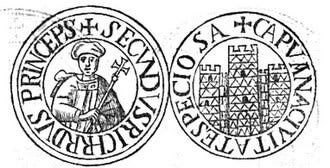
Roger's influence reached its height in 1098, when the exiled Prince Richard II of Capua requested his assistance. Both Rogers — Borsa and the Count of Sicily — led their armies to the walls of Capua. After a forty-day siege, the city fell, and Richard was restored to his throne as a vassal of the Duke of Apulia. By the end of his life, the Great Count of Sicily, although formally only a vassal of his nephew, had become the de facto supreme leader, political kingmaker, and most powerful ruler throughout the Norman South.
Roger's true greatness was revealed not on the battlefield but in his administration of the conquered country. The Normans in Sicily were a tiny minority among the island's Orthodox Greeks and Muslim Arabs. Realizing that the island could not be held by the sword alone, Roger adopted a policy of ethnic and religious tolerance that was unprecedented for the Middle Ages.
The state operated in three languages: Latin, Greek, and Arabic. Local Muslim emirs and qaids who recognized the count's authority retained their positions. Arabs collected taxes, administered customs, and, most remarkably, served in large numbers in the Norman army. Their units even participated in the siege of Capua in 1098.
Roger strictly forbade Catholic missionaries from preaching among Muslims in order to prevent religious hostility. Mosques remained untouched, except for those that had originally been churches before the Arab conquest. Thanks to this policy, the Arabs accepted the new government, contributing to the flourishing of Sicily's unique Arab-Norman cultural style. Two local uprisings, in Cinisi and Jato, were caused by abuses committed by officials rather than religious animosity.
Roger treated the Greeks with equal consideration. While the Normans on the mainland aggressively suppressed Byzantine religious practices, Roger personally financed the construction of 21 Basilian (Greek) monasteries in Sicily, bringing monks there from Calabria. By comparison, he founded only eleven Benedictine (Latin) monasteries.
The Greeks were free to worship according to their own traditions, provided that they formally recognized the authority of Latin bishops. In Palermo, the head of the Greek community proudly held the elaborate Arabic title "Emir of Emirs." Although Roger gradually replaced vacant episcopal positions with Catholic bishops — Catania was the last Greek diocese to receive a Latin bishop, only in 1103 — complete freedom of religious rites was preserved throughout the twelfth century.
Among his own vassals, Roger pursued a policy of an "iron fist in a velvet glove." He prevented the barons from accumulating vast estates and restricted the development of a complex feudal hierarchy. Throughout his reign, he faced only two rebellions.
The first was launched in 1082 by Ingelmar, who had married the widow of Serlo of Hauteville. The rebellion was quickly suppressed, Ingelmar was exiled, and the lands were left in his wife's possession.
The second rebellion, in 1083, struck at Roger's very heart: his beloved son Jordan rose against him. Taking advantage of his father's absence, Jordan seized Mistretta and San Marco d'Alunzio. The Great Count returned with lightning speed. To teach the entire island a lesson, Roger ordered twelve of Jordan's advisers to be blinded. He imprisoned his son, later pardoned him, but never trusted him again.
Having consolidated his control over the South, Roger became the Holy See's principal partner in the region. In 1088, Pope Urban II, unable to gain access to Rome, personally traveled to Roger in Troina to request military assistance. This meeting resulted in the unofficial transfer of unprecedented powers to the count in the administration of the Church in Sicily.
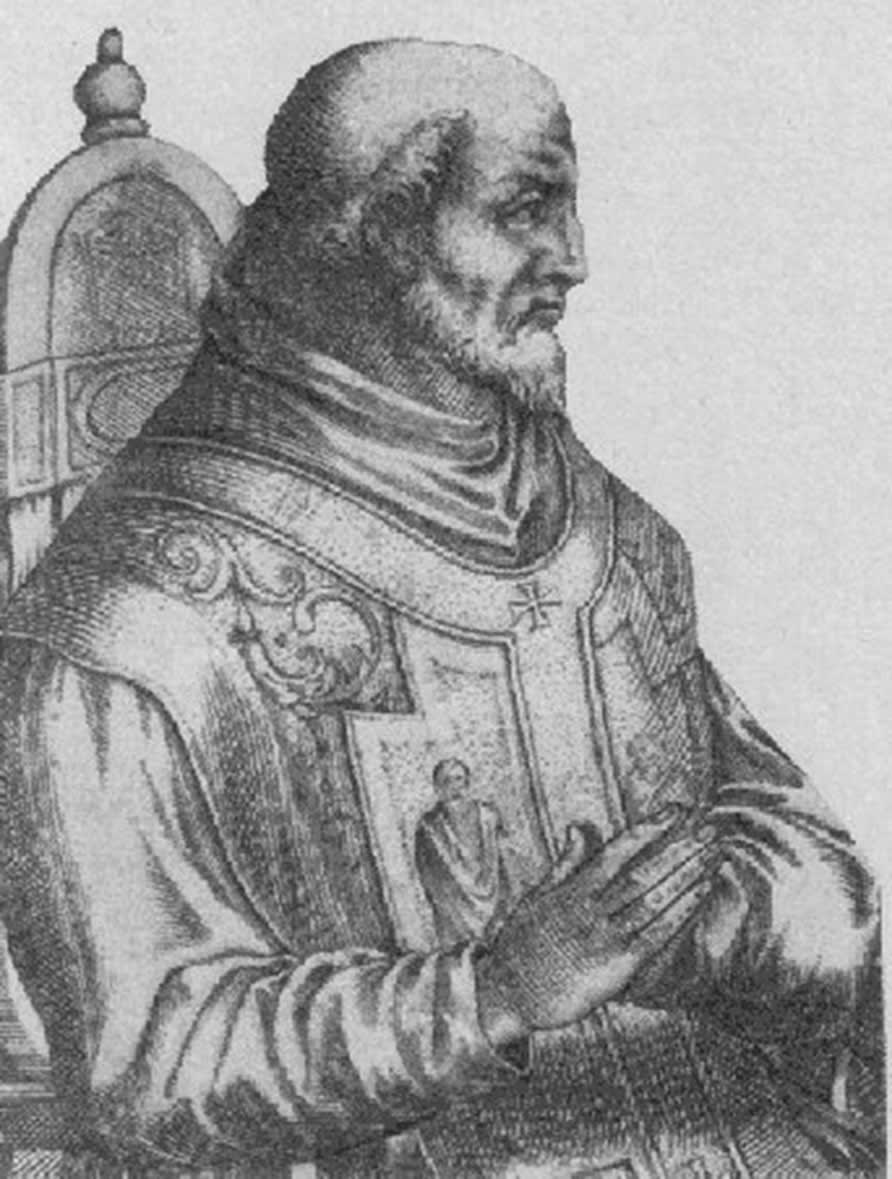
However, in 1097, the pope made a serious mistake: without consulting the count, he appointed Robert, Bishop of Troina, as his papal legate in Sicily. Roger's response shocked Europe — he ordered the arrest of the Pope's legate.
The conflict was resolved only in 1098, during the famous siege of Capua. Urban II visited Roger's military camp, and on July 5, 1098, issued a historic papal bull establishing what became known as the "Sicilian Legation."
Under this document, the pope pledged never to appoint legates in Sicily without the count's consent. Moreover, Roger himself and his heirs were granted the powers of papal legates. They received the right to decide ecclesiastical matters independently within their territories and personally determine which Sicilian bishops would attend church councils.
This arrangement gave the Norman rulers of Sicily a degree of authority over their national church that even the emperors of the Holy Roman Empire could scarcely have imagined. This unique privilege was subsequently confirmed by Popes Honorius II in 1128, Innocent II in 1139, and Adrian IV in 1156. Only in 1192 did King Tancred surrender it to Pope Celestine III in exchange for recognition of his claim to the crown.
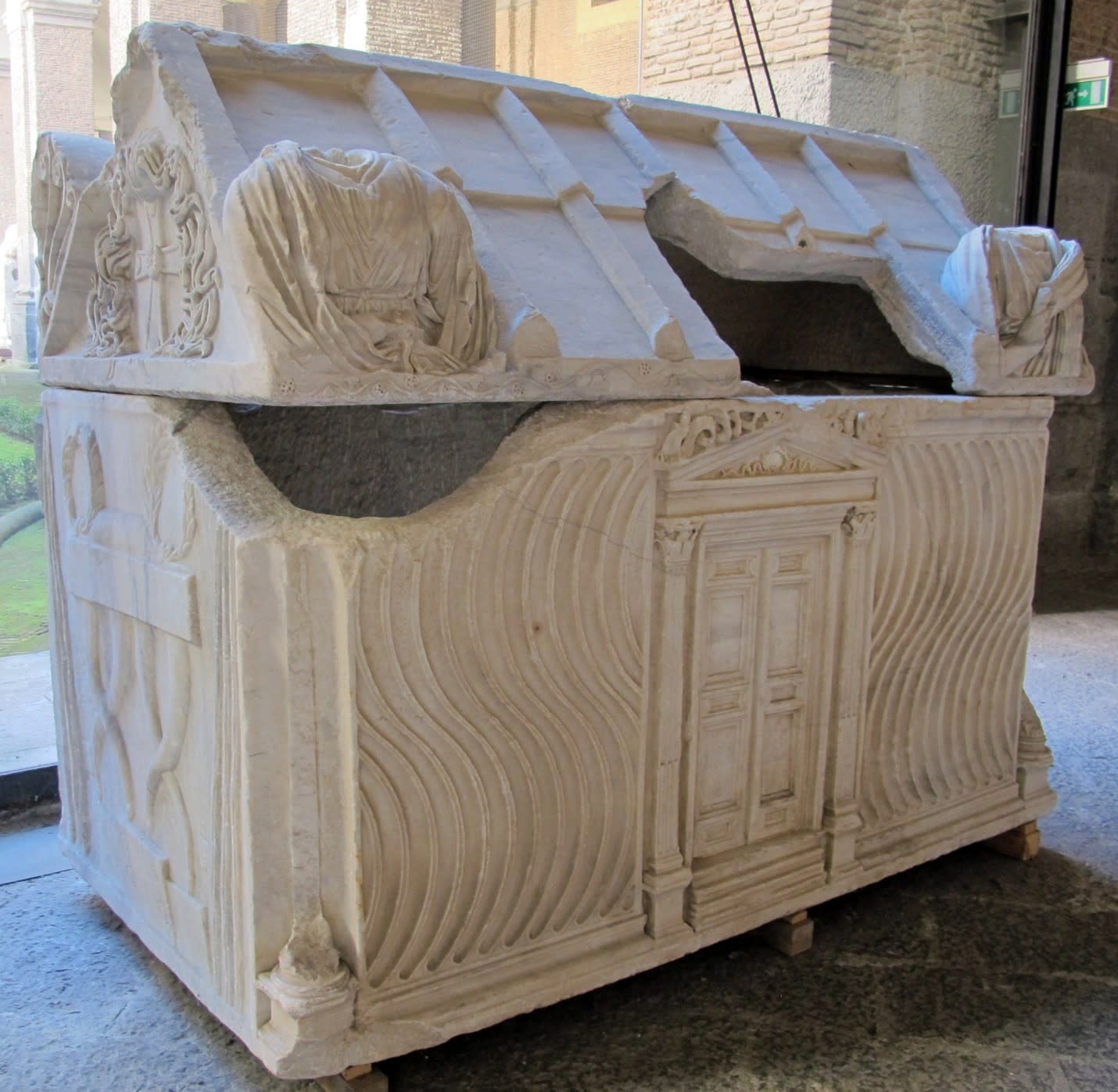
Roger I, Great Count of Sicily, died on June 22, 1101, at his residence in Mileto. He was buried in the monastic Church of the Holy Trinity. Centuries later, the earthquake of 1783 destroyed the church, but the great Norman's surviving sarcophagus is now preserved in the Archaeological Museum of Naples.
His title was inherited by Simon, the eldest son from his third marriage. When Simon died in 1105, power passed to his younger brother, Roger II, who was destined to become the first King of Sicily.


