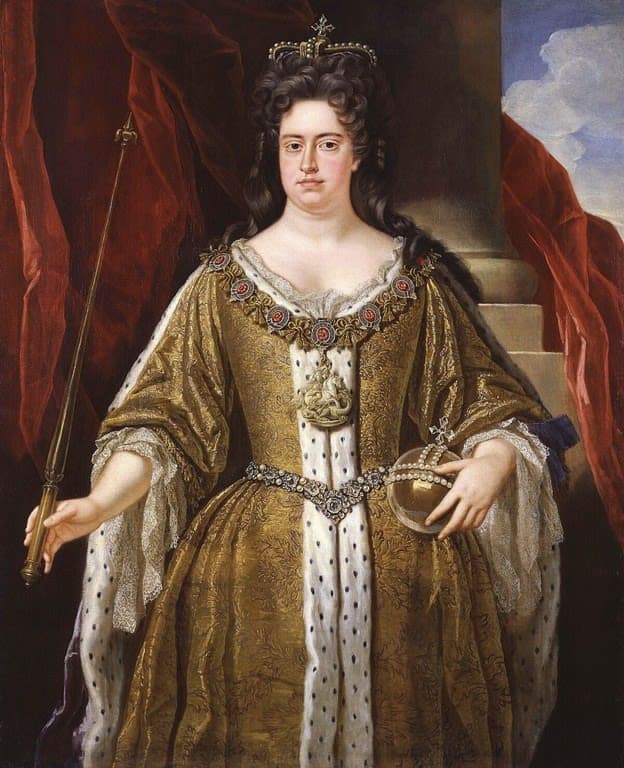

Princess Anne was born on 6 February 1665 at St James’s Palace in London. She was the fourth child and second daughter of James, Duke of York (the future King James II), and his first wife, Anne Hyde. Only Anne and her elder sister Mary survived to adulthood.
As a child Anne, who suffered from an eye ailment, was sent to France for treatment. She lived first with her grandmother, Queen Henrietta Maria, and then with her aunt, the Duchess of Orléans. After her aunt’s death in 1670 Anne returned to England; the following year her mother died.
At the direction of her uncle, King Charles II, Anne and Mary were brought up in the Protestant tradition, despite their parents’ Catholicism a decision that proved pivotal in their destinies. In youth Anne became acquainted with Sarah Jennings, who later became her close friend and influential adviser. Sarah married John Churchill, the future Duke of Marlborough, who would become one of Anne’s principal commanders.
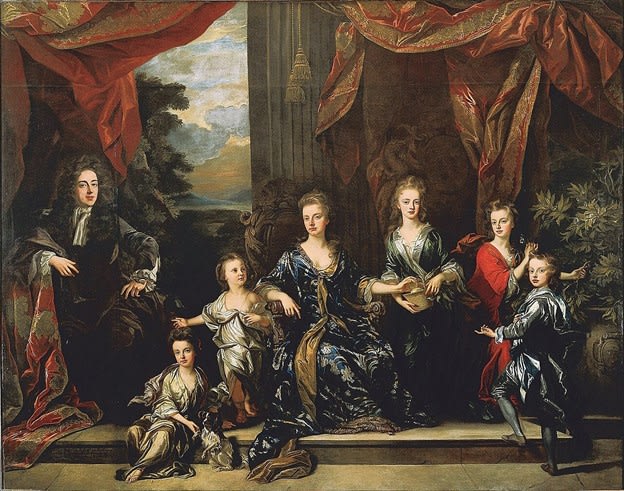
In 1673 Anne’s father, the Duke of York, openly embraced Catholicism and married Mary of Modena. Since Charles II had no legitimate children, Mary and Anne followed him in the line of succession.
In 1685 Anne’s father ascended the throne as James II. He pursued policies aimed at strengthening Catholicism, arousing widespread discontent. A Protestant, Anne shared the nation’s anxieties. In June 1688 James had a son, dashing Protestant hopes that Mary would inherit the throne. Many including Anne were convinced the infant had been smuggled in to ensure a Catholic heir.
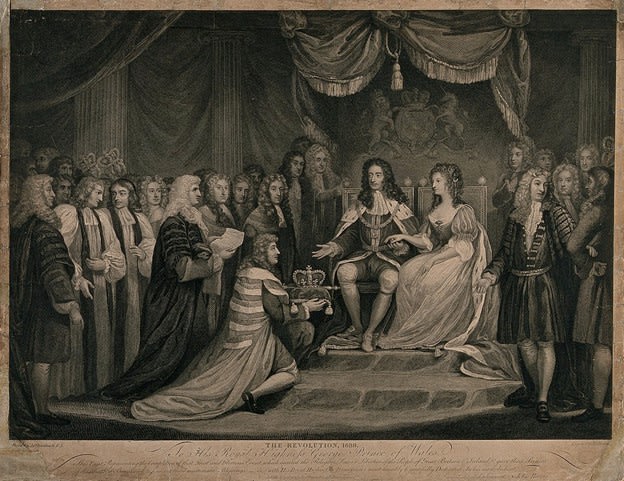
In November 1688 Mary’s husband, William of Orange, invaded England, launching the “Glorious Revolution.” Advised by the Churchills, Anne left her father and sided with William. On 24 November her husband, Prince George, followed suit. James II fled to France, and in January 1689 parliament proclaimed William and Mary joint sovereigns.
After the accession relations between Anne and her sister and brother-in-law deteriorated. William and Mary were unwilling to grant her financial independence, fearing she might become a focus of opposition. Tensions between the sisters rose when Anne refused to dismiss her friend Sarah Churchill from court. After Mary’s death from smallpox in 1694, however, William and Anne were publicly reconciled. On William’s death in 1702, Anne came to the throne. One of her chief aims was the union of England and Scotland. In 1701 the English parliament passed the Act of Settlement excluding Catholics from the succession, which angered Scotland. After lengthy negotiations and mutual threats, on 1 May 1707 England and Scotland were united into the single Kingdom of Great Britain with a common parliament.
On 1 August 1714 Anne, having ascended the throne, became the first queen of Great Britain. In her first speech to parliament, she declared that her “heart is entirely English,” a sentiment that won her popularity.
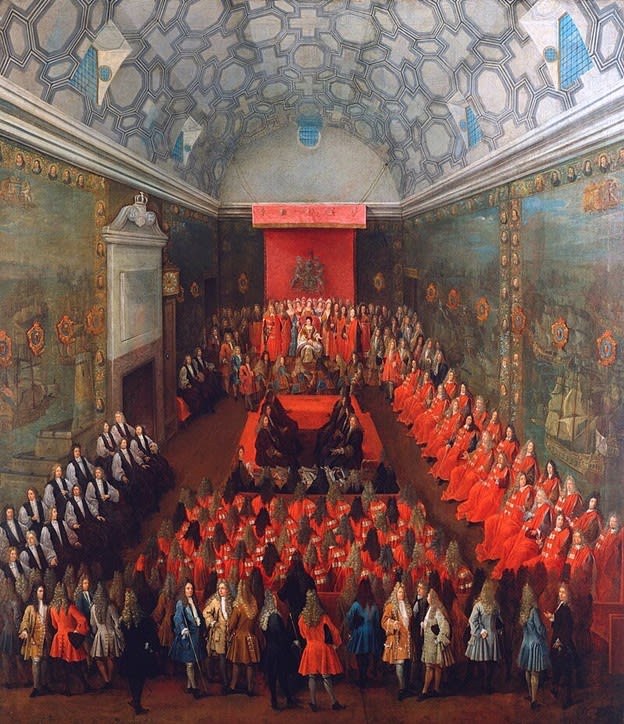
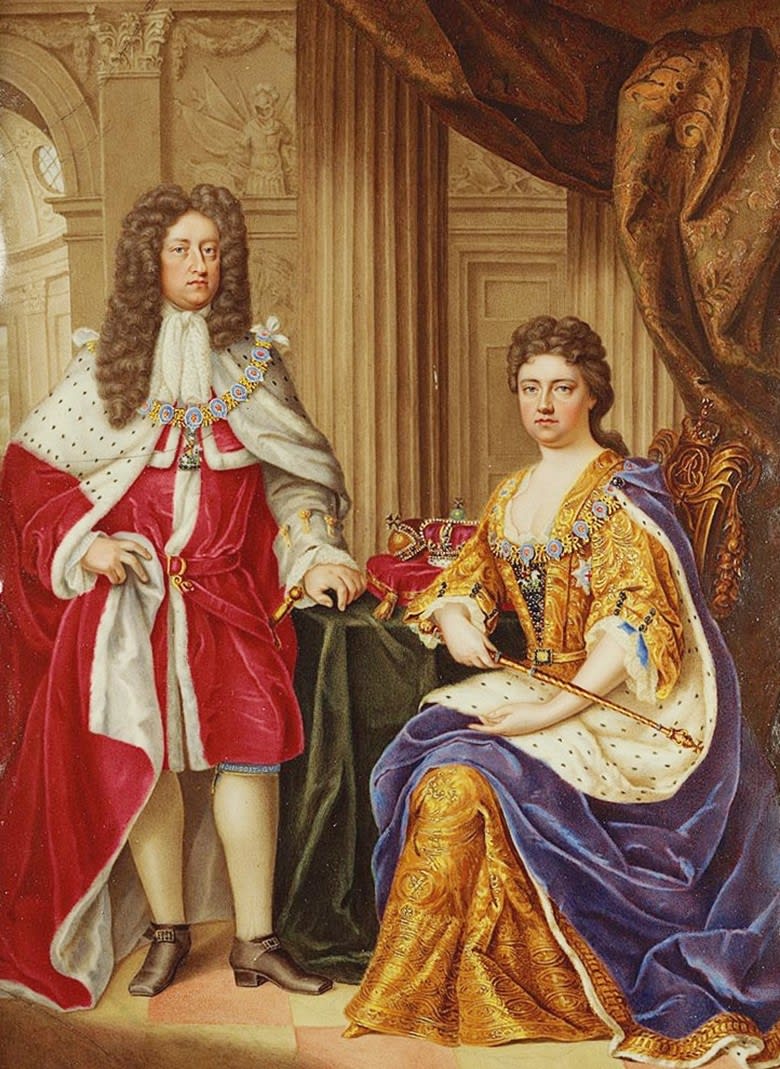
Anne’s reign was marked by the development of the two-party system. She favored the Tories, but her principal ministers Lord Treasurer Godolphin and the Duke of Marlborough were compelled to work with the Whigs, who advocated continuing the War of the Spanish Succession. The queen’s relationship with the Duchess of Marlborough, who constantly pressured her, deteriorated, and a new favorite, Abigail Hill, came to the fore.
The death of her husband, Prince George, in 1708 was a heavy blow to Anne. She grew more vulnerable to political pressure, and the Whigs briefly gained control of the government. Soon, however, amid public weariness with the war, Anne dismissed the Whig ministers and formed a new administration under Robert Harley, which opened peace talks with France.

The Treaty of Utrecht, signed in 1713, ended the War of the Spanish Succession. It also confirmed that, after Anne’s death, the crown would pass to the Hanoverian line, since her only surviving child, William, Duke of Gloucester, had died in 1700 at the age of eleven.
Anne’s health declined due to gout and other ailments, and her last years were clouded by political intrigue and personal tragedy. She died on 1 August 1714. As her designated successor, Sophia of Hanover, had predeceased her, the throne passed to Sophia’s son, George I, inaugurating the Hanoverian dynasty in Great Britain.


