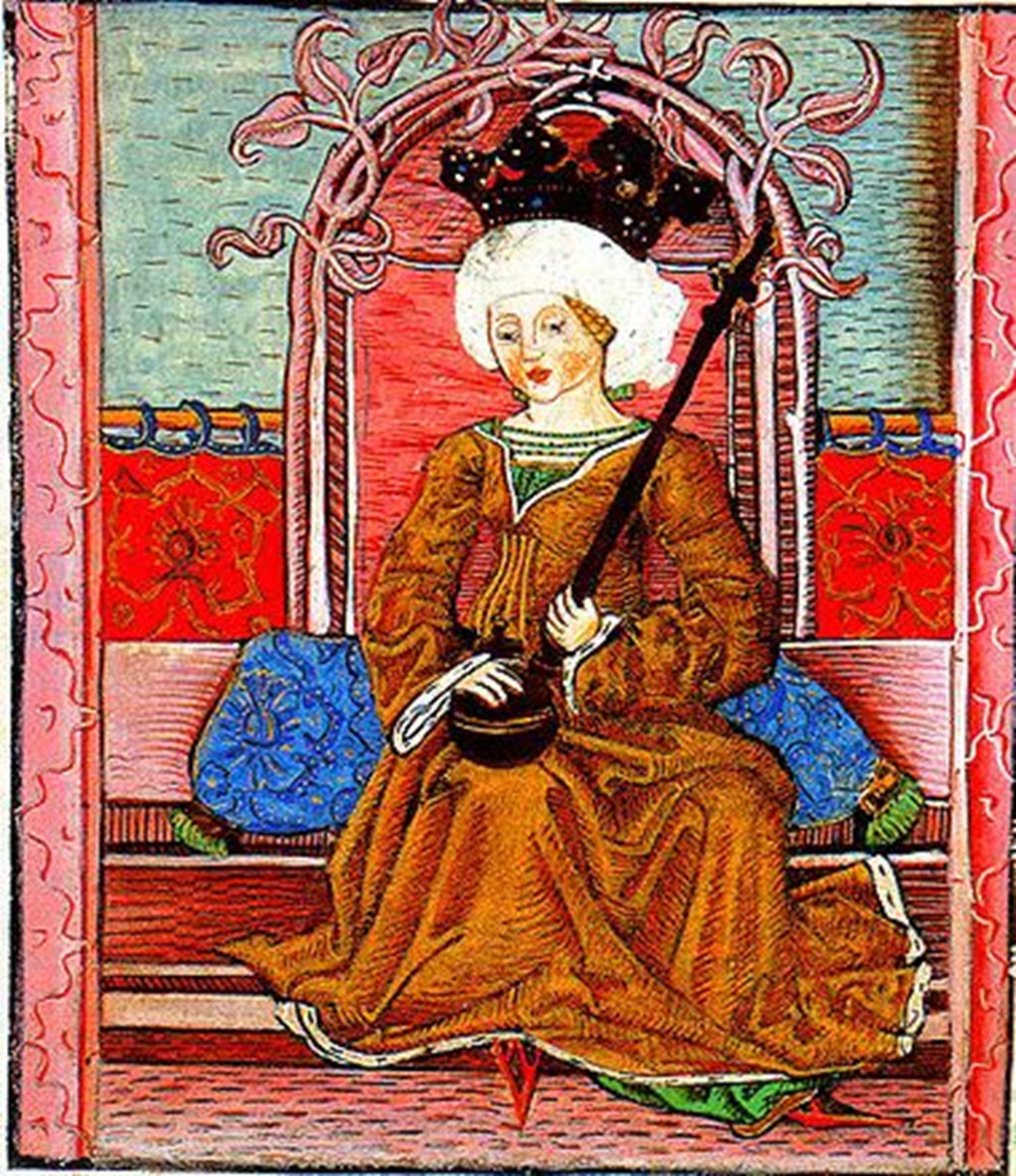

The story of Mary, who became Queen of Hungary at a young age, is filled with dramatic events, political intrigues, and a relentless struggle for survival.
She was born in the second half of 1371 and was the second daughter of Louis I the Great, King of Hungary, Croatia, and Poland, and his second wife, Elizabeth of Bosnia. The royal couple had three children in total.
Mary's parents had waited nearly ten years for children. Their firstborn daughter, Catherine, was born only in 1370. Approximately three years after Mary's birth, the royal couple welcomed their third daughter, Jadwiga.
Since Louis had no male heirs, his daughters were expected to inherit the crowns of Hungary, Croatia, and Poland, as well as dynastic claims to the thrones of Naples and Provence.
This circumstance made the princesses highly desirable brides among Europe's ruling dynasties.
Even before Mary had reached her first birthday, her future had already been determined: her father arranged her marriage to Sigismund, son of Holy Roman Emperor Charles IV.
Louis reaffirmed this agreement in June 1373.
It is important to note that Mary and Sigismund were closely related. Elizabeth of Poland, Mary's paternal grandmother, was the sister of Casimir III, Sigismund's great-grandfather.
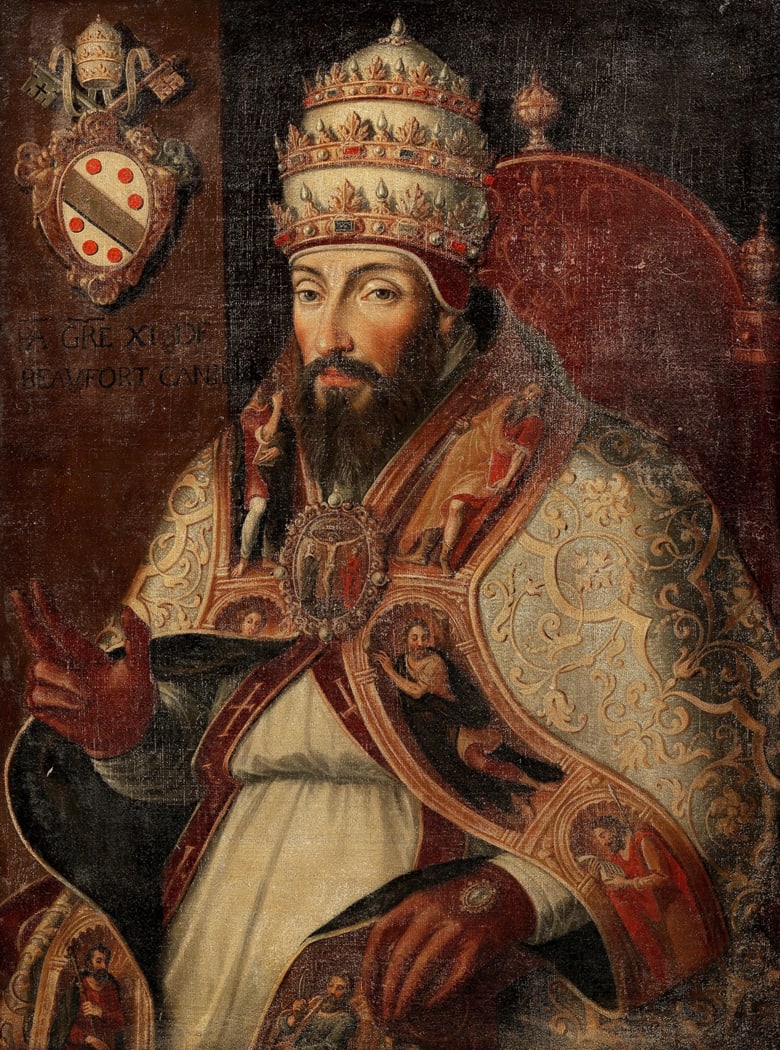
Such a marriage required papal approval, which was granted by Gregory XI on December 6, 1374.
In the spring of 1375, on April 14, the leading Hungarian and Polish lords formally confirmed King Louis's promise to marry Mary to Sigismund.

In the second half of 1378, Mary's elder sister Catherine, who had been betrothed to Louis of Orléans, died.
A year later, in Zvolen, Louis the Great reaffirmed the agreement concerning the marriage of Mary and Sigismund during a meeting with Wenceslaus IV, King of the Romans and Sigismund's brother.
During the same meeting, the monarchs recognized Urban VI as the legitimate pope, rejecting the candidacy of Clement VII.
The formal engagement of Mary and Sigismund took place in Trnava in 1379.
Having received the title of Margrave of Brandenburg, Sigismund traveled to Hungary.

Louis was determined to secure the future of his daughters.
In September 1379, he summoned the Polish prelates and nobility to Kassa, seeking confirmation of Mary's rights to the Polish throne.
The contemporary chronicler Jan of Czarnków, who was prejudiced against Louis, claimed that the Poles' consent had been obtained through coercion.
According to his account, the king ordered the city gates to be closed and prevented the delegates from leaving until they yielded to his demands.
However, in early 1380, during a meeting with Duke Leopold III of Austria, Louis hinted at a different plan.
According to his statements, his younger daughter Jadwiga, who had been promised in marriage to Leopold's son William, was to become Queen of Hungary.
In the summer of 1382, on July 25, a delegation of Polish nobles once again swore allegiance to Sigismund and Mary at Louis's insistence.
Historians disagree about Louis's true intentions.
Oskar Halecki believed that the king intended to divide his territories between Mary and Jadwiga.
Pál Engel and Claude Michaud, however, argue that the seriously ill monarch intended to bequeath both kingdoms — Hungary and Poland — to Mary and her fiancé Sigismund.

Louis the Great died on September 10, 1382.
On September 17, the day after his funeral, Mary's coronation took place in Székesfehérvár.
Cardinal Demetrius, Archbishop of Esztergom, placed the Crown of Saint Stephen upon her head, proclaiming Mary "King" of Hungary.
This hastily arranged ceremony, conducted without Sigismund's participation, and the use of the masculine royal title clearly demonstrated the intention of the queen mother and her allies to emphasize Mary's independent status as a sovereign monarch.
They may also have hoped to delay or prevent her fiancé's coronation.
Elizabeth of Bosnia assumed the responsibilities of regent for the young queen.
Her principal advisers were Nicholas Garai, Palatine of Hungary, and Cardinal Demetrius.
Most of the late king's courtiers retained their positions at the new royal court.
The exceptions were the Zudar brothers: George, the chief cupbearer, and Peter, the voivode of Rus'.
The Polish historian Jan Długosz claimed that the brothers had surrendered fortresses to the Lithuanians in exchange for large sums of money.
The queen mother ordered Peter Zudar's arrest before November 1.
However, in the charter she issued to justify this decision, she cited only his "manifest disloyalty," providing no further explanation.

Although all royal charters issued during the first six months of Mary's reign emphasized her legitimate right to inherit her father's throne, many Hungarian noblemen opposed the rule of a woman.
They regarded Charles III, King of Naples and the last representative of the male line of the Angevin-Sicilian dynasty, as the rightful heir.
Charles himself, however, could not openly assert his claim.
His Neapolitan crown was being challenged by Louis I of Anjou, uncle of the French king Charles VI, who had invaded southern Italy the previous year.

The situation in Poland was equally tense.
On November 25, 1382, the nobles of Greater Poland, meeting in the town of Radomsko, expressed their willingness to recognize either Mary or Jadwiga as queen, but imposed one essential condition: the monarch and her husband had to reside in Poland.
A similar decision was adopted on December 12 by the nobles of Lesser Poland at an assembly in Wiślica.
In exchange for Elizabeth's acceptance of this condition, the Polish nobles promised not to consider any other candidates for the throne.
Upon learning of these developments, Sigismund, who was in Poland at the time, hastened to return to Hungary.
However, the Polish aristocracy remained deeply divided.
Bodzanta, Archbishop of Gniezno, the Nałęcz family, and their supporters in Greater Poland favored the candidacy of Duke Siemowit IV of Płock.
Seeking to prevent a civil war, Elizabeth dispatched representatives to an assembly of Polish nobles in Sieradz in late February 1383.
On March 28, these representatives officially released the Poles from their oath of allegiance to Mary, sworn in 1382, and announced Elizabeth's decision to send her younger daughter Jadwiga to Poland.

In the spring of 1383, the Croatian nobleman John of Palisna, Prior of Vrana, launched a rebellion against Mary and Elizabeth.
The queens appointed Stephen II Lackfi as Ban of Croatia.
Royal forces besieged Vrana, forcing the rebel leader to flee to Bosnia.
On November 4, the town surrendered to Mary, who was personally present at the siege alongside her mother.
To strengthen her position against Charles III of Naples, Elizabeth sent envoys to France to negotiate Mary's marriage to Louis of Orléans, younger brother of Charles VI and former fiancé of the deceased Catherine.
Mary and Elizabeth were unable to leave Croatia and Slavonia until the beginning of the following year.
Upon returning to Hungary, the queen mother dismissed Stephen Lackfi and appointed Thomas Szentgyörgyi in his place.
In May 1384, the newly appointed official ruthlessly suppressed a conspiracy against the queens in Zadar.

The queens convened the Hungarian National Assembly for the first time since the early 1350s to examine the grievances of the nobility.
On June 22, 1384, Mary confirmed her father's decrees of 1351, thereby reaffirming the privileges of the Hungarian aristocracy.
However, plans to marry Mary to a French prince caused a serious division among the Hungarian nobles.
The Lackfi family, Nicholas Zámbó, Nicholas Szécsi, and other close associates of Louis the Great continued to support Sigismund's candidacy, in accordance with the wishes of the deceased king.
In August 1384, Elizabeth dismissed them from their offices, replacing them with supporters of Nicholas Garai.
The Hungarian clergy also opposed the proposed French alliance, since the French supported Clement VII, whom Hungary regarded as an antipope.
Amid the growing tensions, Jadwiga departed for Poland, where she was crowned on October 16, 1384.
She was accompanied by Cardinal Demetrius, who returned to Hungary after the coronation but refused to appear at the royal court.
This paralyzed the functioning of the royal government, since the cardinal was the keeper of the royal seal.

Louis I of Anjou died on September 20, 1384, allowing his opponent, Charles III of Naples, to consolidate his authority in southern Italy.
Charles's strengthening position encouraged the consolidation of a noble faction supporting his claim to the Hungarian throne.
This faction was led by John Horvat, Ban of Macsó, and his brother Paul, Bishop of Zagreb.
Sigismund of Luxembourg attempted to persuade Elizabeth to consent to his marriage to Mary, but she refused.
At the end of 1385, he left Hungary.
Fearing for the future, Elizabeth attempted to negotiate with the opposition, but a meeting in Požega in the spring of 1385 produced no results.
In May, a French delegation arrived in Hungary.
Contrary to the wishes of her deceased husband, Elizabeth arranged Mary's engagement to Louis of Orléans.
According to the chronicler Jean Froissart, Louis immediately began styling himself "Louis of France, King of Hungary."
That same month, the queen mother accused Stephen Lackfi of treason and removed him from office.
She sent letters to Zagreb and other cities, forbidding them from providing assistance to Lackfi, Bishop Paul, or their relatives.
In August, the Horvat brothers and their allies offered the Hungarian crown to Charles III of Naples and invited him into the country.
During the same period, Mary approved Tvrtko I's acquisition of the city of Kotor in Dalmatia.
Meanwhile, Sigismund, accompanied by his cousins Jobst and Prokop of Moravia, invaded Upper Hungary and occupied Pozsony County.
Elizabeth was forced to make concessions to the opposition.
She dismissed Nicholas Garai, replacing him with Nicholas Szécsi, and appointed Stephen Lackfi as Voivode of Transylvania and Nicholas Zámbó as treasurer.

The reign of Charles III in Hungary, where he ruled under the name Charles II, proved short-lived.
Elizabeth refused to accept Mary's removal from power.
On February 7, 1386, Charles arrived at the palace at Elizabeth's invitation, where an assassination attempt was carried out against him.
The king suffered a severe stab wound in an attack ordered by Elizabeth.
He was transported to Visegrád, where he died on February 24.
Fourteen-year-old Mary once again became queen, with Elizabeth returning to her position as regent.
In April, Sigismund returned to Hungary accompanied by his brother Wenceslaus.
Under the Treaty of Győr, Elizabeth was forced to recognize Sigismund as Mary's future co-ruler.
However, the Neapolitan faction refused to surrender.
Following the assassination of Charles III, a rebellion against Elizabeth erupted, with Croatia becoming its principal center.
The Croats proclaimed Charles II's son, Ladislaus, their king. He would continue unsuccessfully struggling for the Hungarian throne for many years.
Attempting to resolve the conflict, Elizabeth and Mary traveled to Croatia, accompanied by Nicholas Garai and an armed escort.
This decision proved fatal.
On July 25, the royal escort fell into an ambush.
The guards were slaughtered, Nicholas Garai was killed, and Mary and her mother were taken prisoner.
They were imprisoned in the castle of the Bishop of Zagreb at Gomnec (Bosiljevo).
Elizabeth desperately begged her captors to spare her daughter's life.
The kingdom was left without a ruler, and power passed into the hands of the barons.
They convened an assembly in Székesfehérvár and offered the Croats a compromise, but their efforts failed.
The royal prisoners were transferred to Novigrad Castle near Zadar.
Elizabeth attempted to secretly request assistance from Venice, but her letters were intercepted.
Margaret of Durazzo, widow of Charles II, thirsted for revenge, even though she had previously opposed her husband's ambitions to become King of Hungary.
On January 16, 1387, Elizabeth was strangled in prison before Mary's eyes, on the orders of her jailer, John of Palisna.
Mary was liberated in January 1387 by the troops of her husband Sigismund.
On March 31 of that year, Sigismund was crowned King of Hungary.
Mary eventually succeeded in reconciling with the Croats, but she never forgave Sigismund for her mother's death, even though he had punished the murderers.
The royal couple lived separately, each maintaining an independent court.
Queen Mary died on May 17, 1395, at the age of twenty-four.
She was in the final stages of pregnancy when she fell from a horse during a riding excursion, suffering fatal injuries.
Her sister Jadwiga attempted to assert her claim to the Hungarian throne, citing the agreement of 1384.
However, Sigismund retained his authority without difficulty.


