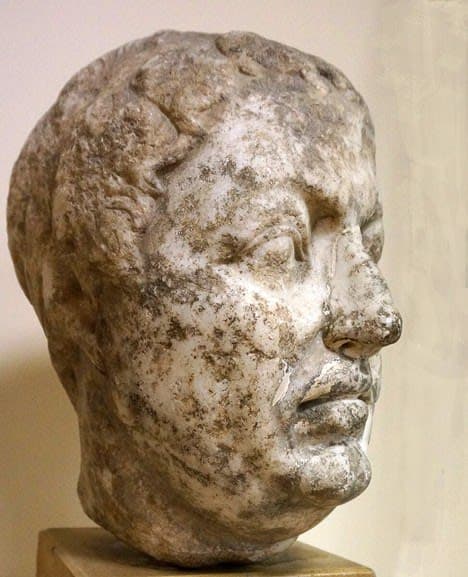

The history of Ptolemy VIII began in the shadow of his elder brother, Ptolemy VI Philometor. After the death of their father, Ptolemy V Epiphanes, in 180 BC, the throne was inherited by the underage Philometor. However, fate decreed that Egypt became entangled in an exhausting war with the Seleucid king Antiochus Epiphanes. When in 170 BC Antiochus captured Memphis and effectively made the elder brother his puppet co-ruler, proud Alexandria rebelled. The inhabitants refused to recognize the authority of the captive king and proclaimed the younger brother — the future Euergetes — as their ruler.

This event marked the beginning of a long and painful period of dual power. Egypt was split, with the government in Memphis opposing the Alexandrian court. Both brothers, being young and inexperienced, became hostages in the hands of ambitious courtiers. The characters of the brothers were polar opposites: if Philometor was distinguished by gentleness and a tendency toward forgiveness, Ptolemy VIII already displayed the traits that would make him the “darkest figure” of the dynasty — his suspicion, persistence, and readiness for violence. The quarrels between the brothers ultimately forced Rome to intervene. In 164–163 BC Roman envoys insisted on a division of territories: Philometor remained ruler of Egypt and Cyprus, while Euergetes received Cyrenaica.
A curious episode of this period is connected with the cultural rivalry between the Ptolemies and the rulers of Pergamon. Pliny the Elder preserved a tradition about how the Egyptian king (presumably Ptolemy VIII or his brother), fearing that the library of Eumenes II in Pergamon would surpass that of Alexandria, imposed a ban on the export of papyrus. This forced embargo led to the invention in Pergamon of a new writing material — parchment. Although historians dispute which of the Ptolemies was responsible for this decision, the fact itself underscores that even amid civil wars the kings of Egypt attached enormous importance to the prestige of their book collection.

Ptolemy VIII did not reconcile himself to the loss of Cyprus. In 162 BC he personally went to Rome to challenge the territorial division. The historian Polybius, a witness of those events, described the Senate session as a genuine diplomatic duel. Euergetes complained of injustice and even of threats to his life allegedly coming from his brother. Rome, pursuing its own interests and unwilling to see Egypt strong and unified, formally supported the claims of the younger Ptolemy but refused to provide him with military assistance.

Euergetes’ attempts to seize Cyprus with mercenary forces repeatedly failed, and in his own Cyrenaica a rebellion broke out, fueled from Alexandria. In 155 BC an event occurred that changed the course of history: an attempt was made on Euergetes’ life. Miraculously surviving, he drew up the famous “Testament of Ptolemy Euergetes,” in which he declared the Roman people heirs to his kingdom in the event of his childless death. This was a brilliant and cunning move, for Rome now had a direct stake in the security and stability of Euergetes’ rule.
The climax of the conflict came in 154 BC, when Euergetes finally invaded Cyprus but was defeated by Philometor in the city of Lapethus. There, instead of executing his brother, Philometor forgave Ptolemy VIII, restored him to Cyrenaica, promised annual grain supplies, and even offered the hand of his daughter. Until Philometor’s death in 145 BC, Euergetes did not dare openly to claim the Egyptian throne again.
The death of Philometor in Syria opened the path for Euergetes to the long-desired throne. In Alexandria his widow Cleopatra II ruled with the young heir. However, with the support of the Roman legate Lucius Minucius Thermus, Euergetes entered the city. Justin describes his accession with the murder of his young nephew, who was killed in his mother’s arms on the very day of Euergetes’ wedding to Cleopatra II.

Having become the full pharaoh, he adopted the epithet Euergetes (“Benefactor”), but the people, remembering the repressions, nicknamed him Kakergetes (“Malefactor”). By that time his appearance had become grotesque: because of excessive corpulence he was called Physcon (“Potbelly”). Sources describe him as having an enormous belly, clad in transparent, almost pharaonic garments, which provoked ridicule among the Greeks and horror among his subjects.
His rule in Alexandria began with terror. He persecuted the intelligentsia, which led to the mass flight of scholars and artists from Egypt, paradoxically causing a cultural renaissance in other Greek cities. He also attempted to deal with the Jews of Alexandria, who had supported his brother, planning to throw them under the feet of drunken elephants, but according to tradition the animals turned against his own attendants, which was perceived as a divine sign.
Physcon’s personal life was no less turbulent than his politics. Having married his sister Cleopatra II, he soon became infatuated with her daughter (his niece) Cleopatra III. After raping her and officially taking her as his wife, he created an unprecedented union: documents of that time mention two queens simultaneously — the “Sister” and the “Wife.” This led to a bloody civil conflict.
In 131–130 BC the Alexandrians, driven to despair by the king’s cruelty, set fire to the palace. Physcon fled to Cyprus with Cleopatra III, while Cleopatra II remained to rule in Alexandria. In a fit of mad fury, Euergetes killed his son by his sister, Ptolemy Memphites, and sent his dismembered body to his mother as a “birthday gift.”
Despite these monstrous acts, Euergetes proved resilient. By 129 BC his forces under the command of Lochus recaptured Alexandria. Cleopatra II fled to Syria, but several years later, in 124 BC, the unbelievable occurred: brother and sister reconciled. Cleopatra returned to Egypt as co-ruler.
Remarkably, the final years of Physcon’s life passed under the sign of stability. In 118 BC the famous Amnesty Decree was issued, forgiving crimes, tax arrears, and restoring property to refugees. The king also engaged actively in construction: he completed work on the great temple at Edfu and built on the island of Philae, at Kom Ombo, and at Medinet Habu.

Ptolemy VIII Euergetes died on June 28, 116 BC at about the age of sixty-five, having lived longer than most of his predecessors. He left behind a book of memoirs and a country exhausted but still rich and powerful, transferring authority to Cleopatra III and her sons.


