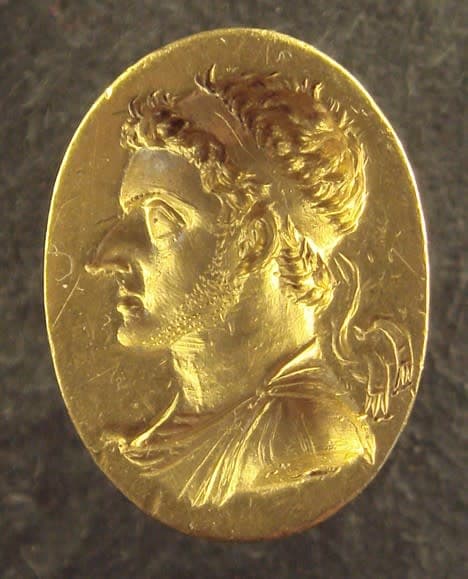

The reign of Ptolemy VI Philometor represents one of the most dramatic and eventful chapters in the history of Hellenistic Egypt, marked not only by external wars and internal strife but also by the unprecedented intervention of Rome in the affairs of the East. As the eldest son of Ptolemy V Epiphanes and Cleopatra I, daughter of the Syrian king Antiochus III, the young heir ascended the throne at a minor age after the sudden death of his father. The initial period of his rule passed under the wise regency of his mother, Cleopatra I, who managed to preserve stability in the country by maintaining friendly relations with Rome and avoiding open conflict with the Seleucids, despite the warlike plans of her late husband.

However, this period of stability was cut short by the death of the queen mother, which occurred suddenly and did not allow her to appoint authoritative successors. Power in Alexandria was seized by ambitious courtiers — the eunuch Eulaeus, probably originating from Khuzestan, and the Syrian Lenaeus. These former slaves, seeking to strengthen their positions and avoid Roman interference, hastened the proclamation of Ptolemy VI’s coming of age, although he had barely turned fifteen at the time. The official ceremony — the anakleteria — took place in 172 BC, which became the occasion for visits from envoys from Rome and Syria, eager to “renew friendship” with the young monarch. It was during this period that the king acquired the epithet Philometor (“Loving his mother”), emphasizing his deep attachment to Cleopatra I and her role in his life.

The peaceful course of affairs was disrupted by the adventurist policy of the regents, who decided to restore Coele-Syria to Egypt. This gave the Syrian king Antiochus IV Epiphanes a pretext to strike preemptively. While Rome was distracted by the war with Perseus of Macedon, Antiochus in 170 BC defeated the Egyptian army before it had even managed to cross the desert. Capturing the strategically important Pelusium by means of military cunning or by violating a truce, Antiochus for the first time since Alexander the Great invaded deep into Egypt and occupied Memphis. Ptolemy VI, on the advice of Eulaeus, attempted to flee to the sacred island of Samothrace but was captured by his uncle Antiochus, who received him with ostentatious cordiality. There is evidence, confirmed by coin finds, that in Memphis Antiochus may have been crowned as pharaoh, although historians dispute whether this was a serious political act or merely the whim of the eccentric Syrian king.

Meanwhile, an uprising broke out in Alexandria: the populace overthrew the hated courtiers and elevated the captive king’s younger brother, later known as Ptolemy VIII Euergetes II, to the throne. Thus a dual power emerged in Egypt. Antiochus IV, unwilling to storm the fortified Alexandria, left the country divided: Philometor ruled in Memphis under his protection, while Euergetes ruled in Alexandria. However, the brothers soon reached an understanding, probably through the mediation of their sister Cleopatra, and concluded an agreement on joint rule. This reunification provoked a second invasion by Antiochus in 168 BC. His fleet captured Cyprus, and he himself again advanced on Alexandria.

Salvation came from Rome. After the victory at the Battle of Pydna (22 June 168 BC), the Senate dispatched Gaius Popillius Laenas to Egypt. In the famous scene on the outskirts of Alexandria, the Roman drew a circle around Antiochus with his staff and demanded an answer regarding the withdrawal of troops before the king stepped outside it. Intimidated by Roman power, Antiochus complied, leaving Egypt and Cyprus. For the next five years the brothers ruled jointly, although their alliance was undermined by intrigues and profound differences in character. Ptolemy VI Philometor, according to Polybius, was a gentle, humane, and compromise-inclined ruler. His brother, by contrast, was distinguished by cruelty and ambition. Internal strife was fueled by rebellions such as that of Dionysius-Petosarapis, who sought to set the brothers against one another and incite the Egyptian population against Greek domination.
In 164 BC Ptolemy VI was expelled by his brother and fled to Rome. His visit was staged with deliberate modesty: the king walked on foot in the clothes of a poor traveler and lodged with a simple painter in order to arouse the Senate’s sympathy. Rome decided to divide the brothers’ possessions: Philometor received Egypt and Cyprus, while Euergetes obtained Cyrenaica. Soon the Alexandrians, weary of the tyranny of the younger brother, recalled Philometor. From 163 BC he became the sole ruler of Egypt, officially incorporating the name of his wife Cleopatra into his titulary.
The peaceful period was marked by active construction: the king visited the temples of Memphis and the island of Philae, completed the gates at Edfu, and adorned sanctuaries in Karnak and Esna. The Ptolemaic court even pursued an offensive policy in the south, advancing toward the Second Cataract of the Nile. However, hostility with his brother did not subside. Ptolemy Euergetes, having secured the support of part of the Roman Senate, demanded the transfer of Cyprus to him. The conflict reached its peak in 154 BC, when Philometor captured his brother on Cyprus but displayed remarkable magnanimity: he not only forgave him but also confirmed his rule over Cyrenaica, promised grain supplies, and offered the hand of his daughter in marriage. For this nobility, Marcus Porcius Cato the Elder called him in the Senate “the best and most beneficent of kings.”

The final years of Ptolemy VI’s life were connected with the struggle for influence in Syria. At first he supported the claimant Alexander Balas against Demetrius I, giving him his daughter Cleopatra Thea in marriage. However, soon disappointed in Alexander and having learned of an attempt on his life, Ptolemy switched to the side of the young Demetrius II. The inhabitants of Antioch were so impressed by Ptolemy’s justice that they offered him the crown of Syria, but he refused, unwilling to provoke Rome, and persuaded them to accept Demetrius instead.
The final act of this story unfolded in 145 BC at the Battle of the Oenoparas River. Alexander Balas was defeated, but Ptolemy VI received a mortal wound when his horse, frightened by the roar of an elephant, threw its rider, after which enemies inflicted numerous head wounds upon the king. For five days he lay unconscious and died in the care of physicians, having lived long enough before death to see the severed head of his enemy Alexander. Ptolemy VI Philometor died in the 36th year of his reign at the age of about forty-two.


