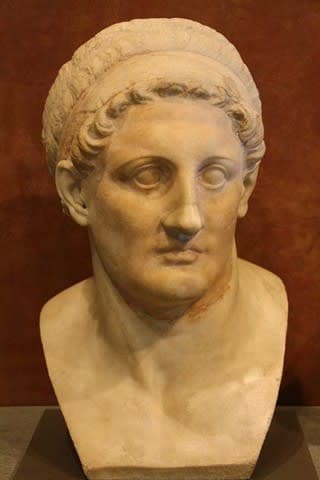

The history of Ptolemy, the future founder of the Hellenistic dynasty in Egypt, begins in the harsh lands of Upper Macedonia, in the region of Eordaea. His name, derived from the Greek polemos (“war”), seemed to predetermine his future fate. Ptolemy’s father was Lagus, a man of noble lineage whose prosperity rested on extensive landholdings, though he himself did not win great fame in the chronicles. His mother, Arsinoe, belonged to a collateral branch of the ruling Macedonian Argead dynasty, which gave Ptolemy the right to claim a high position at court. However, another, bolder version of his origin also existed, gaining traction during the Wars of the Diadochi: it was whispered that Ptolemy was the illegitimate son of King Philip II himself. This legend was probably intended to legitimize his claims to power as a “brother of Alexander,” binding him by blood to the great conqueror.
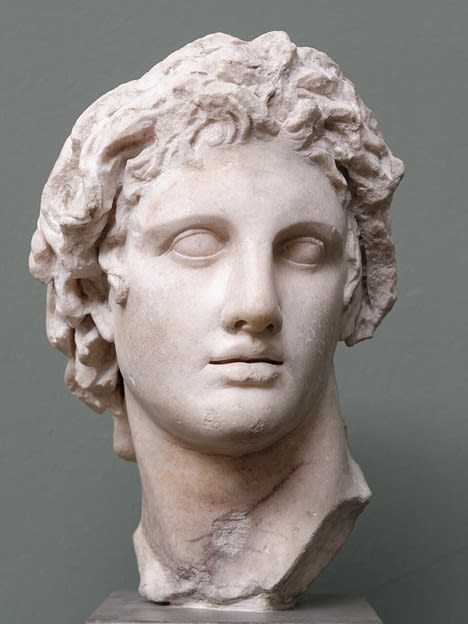
The exact date of his birth remains a matter of debate. Relying on Lucian’s treatise The Long-Lived, which states that Ptolemy lived 84 years, historians place his birth in 367 or 366 BCE. This makes him significantly older than Alexander the Great — by approximately 10–11 years, a conclusion supported by modern scholarship. Despite the age difference, Ptolemy entered the circle of the young prince’s closest friends. This friendship nearly cost him his career during Philip II’s lifetime, for his participation in the adventurous attempt by Alexander to marry Ada, daughter of the Persian satrap Pixodarus, led to Ptolemy’s exile from Macedonia along with Harpalus, Nearchus, and other companions. Only after Alexander’s accession to the throne in 336 BCE did he return from exile, showered with the highest honors and occupying a place among the most trusted associates of the new monarch.
At the beginning of the great campaign in Asia, Ptolemy performed the modest yet highly responsible role of edeatar — the royal food taster, protecting Alexander from possible poisoning. However, his military talent could not remain unnoticed for long. His name is first mentioned as a warrior in connection with the pursuit of Darius III after the Battle of Issus in 333 BCE, where he fought as an ordinary Companion cavalryman.


A turning point came at the Persian Gates at the beginning of 330 BCE. Alexander entrusted Ptolemy with a detachment of 3,000 men to cut off the retreating satrap Ariobarzanes, a task he accomplished brilliantly, virtually annihilating the enemy. In the autumn of that same year, after the execution of Alexander’s bodyguard Demetrius for participation in the conspiracy of Philotas, Ptolemy assumed the honorable post of one of the seven somatophylakes (royal bodyguards). From that moment, he became an integral part of the highest military leadership of the Macedonian army.
In 329 BCE, Ptolemy led his first independent major expedition. He was tasked with capturing Bessus, the self-proclaimed Persian king. Displaying remarkable energy, Ptolemy covered in four days the distance to Nautaca that normally required ten. Confronting the wavering Persian leaders Spitamenes and Dataphernes, he acted decisively, surrounding their camp and forcing them under threat of destruction to surrender the captive. Bessus, bound in a collar, was handed over to Ptolemy, marking the final collapse of the remnants of Persian resistance.
The Indian campaign became the pinnacle of Ptolemy’s military glory within the great Macedonian army. He proved himself not only a strategist capable of commanding a third of the entire force, but also a fearless fighter. In a clash with the Indians in the land of the Aspasioi, Ptolemy personally engaged in single combat with an enemy prince. When his horse could not climb a steep hill, Ptolemy dismounted and, fighting on foot, pierced the Indian leader’s thigh with a spear, stripping off his armor before the astonished eyes of the enemy.
His military cunning repeatedly saved the situation. During the capture of the supposedly impregnable Rock of Aornos, it was Ptolemy who led a detachment of light infantry along secret paths to the summit and lit a signal fire, marking the way to victory for Alexander. At the Battle of the Hydaspes he commanded the troops that distracted King Porus, enabling the successful crossing of the main forces. During the siege of Sangala, foreseeing a breakout attempt, Ptolemy ordered the route to be blocked with abandoned wagons and planted spears, which allowed the fugitives to be slaughtered in the silence of the night.

But Ptolemy was valuable to Alexander not only on the battlefield. He became the “voice of reason” for the impulsive monarch. It was he who tried to lead the drunken Cleitus the Black away during the fatal quarrel in Maracanda, and later he, together with a few companions, found the courage to persuade the exhausted king to turn the army back from the banks of the Hyphasis. The king’s trust in him was boundless: after the discovery of the “Pages’ Conspiracy,” Ptolemy effectively became the second authority in matters of security. Legends say that when Ptolemy was wounded by a poisoned arrow in India, Alexander personally kept vigil at his bedside and, guided by a prophetic dream, found the antidotal herb that saved his friend’s life.
Alexander’s death in June 323 BCE in Babylon plunged the empire into chaos. At the council of the Diadochi, Ptolemy adopted a hard line: he opposed the appointment of weak heirs, whether the feeble-minded Philip III Arrhidaeus or Roxana’s unborn son. He proposed instead that power be entrusted to the generals themselves. However, when the idea of preserving the formal unity of the empire under the regency of Perdiccas prevailed, Ptolemy demonstrated remarkable political foresight.


Realizing that the struggle for central power would be bloody and futile, he concentrated his efforts on securing a concrete, defensible, and wealthy territory — Egypt. Appointed satrap of this province, he immediately set out for Alexandria. His path to sole rule began with the elimination of Cleomenes, the financial administrator left behind by Alexander. Ptolemy saw in him a spy of Perdiccas and a dangerous rival. Exploiting local discontent and accusing Cleomenes of abuses, Ptolemy executed him and seized the enormous treasury of 8,000 talents.

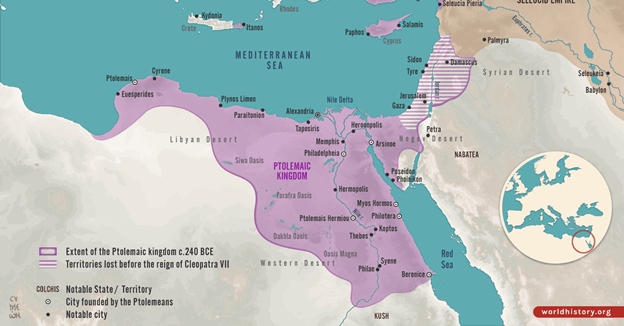
To win over the Egyptians, Ptolemy began by showing respect for their ancient gods: he allocated funds for the burial of the Apis bull and initiated the restoration of temples at Karnak and Luxor. His power strengthened not only within Egypt but beyond its borders. In 322 BCE, he took advantage of civil strife in Cyrenaica and dispatched troops there under the command of Ophellas. After the defeat of the Spartan mercenary Thibron, the wealthy Cyrene was annexed to Ptolemy’s possessions, becoming his western stronghold.
The most important act in legitimizing his power, Ptolemy believed, was possession of the body of Alexander the Great. In 322 BCE, when the funeral cortege was traveling from Babylon to Macedonia, Ptolemy intercepted it in Syria. Persuading Arrhidaeus, who was responsible for the transport, to change the route, he brought the sarcophagus to Egypt. At first the body was placed in Memphis, and later it was transferred to a magnificent mausoleum in Alexandria. This audacious act became an open challenge to the regent Perdiccas and turned Egypt into the sacred center of the Hellenistic world.

Enraged, Perdiccas in the spring of 321 BCE marched on Egypt with the full might of the royal army. However, Ptolemy, thanks to his mildness and fairness, had already won the sympathies of many Macedonian veterans, who saw in him the true successor of Alexander. In the battle at the Camel Fort, Ptolemy personally fought on the walls, blinding an enemy elephant with a long spear. Perdiccas’s attempt to force the Nile ended in catastrophe, and more than 2,000 soldiers drowned or were torn apart by crocodiles. This fiasco led to a conspiracy within Perdiccas’s army, and he was killed by his own officers.
After this victory, Ptolemy was offered the post of regent of the entire empire, but he, maintaining his composure, refused, preferring to remain master of his prosperous “domain.” At the conference at Triparadeisos, his rights to Egypt and Cyrenaica were confirmed. Consolidating his success, in 320 BCE Ptolemy seized Coele-Syria and Phoenicia, capturing the satrap Laomedon. Even Jerusalem fell to Ptolemy; knowing Jewish customs, he entered the city on the Sabbath under the pretext of offering sacrifice and took it without a fight.
By 316 BCE, the political landscape had changed. Antigonus the One-Eyed, having crushed Eumenes, laid claim to absolute power in Asia. Seleucus, expelled from Babylon, fled to Egypt and warned Ptolemy of Antigonus’s boundless ambitions. Realizing the threat, Ptolemy formed an alliance with Cassander and Lysimachus, demanding that Antigonus divide the lands. His refusal led to a long and exhausting war.

Antigonus invaded Syria and besieged Tyre, depriving Ptolemy of his Phoenician bases. In response, Ptolemy shifted the fighting to the sea and the islands. In 313 BCE he personally suppressed a revolt in Cyprus, executing the rebellious rulers and making the island his principal naval base under the command of his brother Menelaus. Despite the temporary loss of control over Cyrene, where Ophellas seized power, Ptolemy continued to act swiftly: he launched raids into Cilicia and Upper Syria, devastating Antigonus’s ports and demonstrating that Egypt could not be broken either by land or by sea.
In 313 or 312 BCE, Ptolemy, understanding that the best defense is offense, marched out of Alexandria at the head of an impressive army. He was accompanied by Seleucus, eager to recover his lost Babylon. Crossing the desert and passing Pelusium, Ptolemy’s Macedonian phalanxes approached Gaza, where Demetrius, the young and ambitious son of Antigonus the One-Eyed, awaited them. Demetrius’s experienced advisers, including Alexander’s veterans Nearchus and Peithon, unanimously urged the youth to avoid battle, pointing to Ptolemy’s numerical superiority and colossal experience. But Demetrius, blinded by a thirst for personal glory, rejected their arguments.
Both sides possessed considerable forces: Demetrius had 15,000 infantry, powerful cavalry, and 43 war elephants. Ptolemy, meanwhile, brought 18,000 infantry and 4,000 cavalry, but his chief advantage was not the size of his army but military cunning. The battle unfolded on a coastal plain. Demetrius planned to crush Ptolemy’s left flank with a massive cavalry strike, pressing the enemy against the sea. However, Ptolemy and Seleucus, having deciphered this plan, instantly redeployed their lines, shifting their most capable units to the threatened sector.
The battle began with a furious cavalry clash, in which commanders fought side by side with their soldiers. The decisive moment came when Demetrius committed his elephants. He hoped these “living tanks” would smash the Egyptian phalanx, but Ptolemy had prepared a trap: he placed in front of his line a concealed “minefield” of caltrops and obstacles. The elephant drivers fell under a hail of arrows and stones, and the maddened animals were captured. Seeing the collapse of his main force, Demetrius’s cavalry wavered and fled. Demetrius’s losses were catastrophic: 500 dead and 8,000 captured, whom Ptolemy magnanimously yet strategically resettled throughout the nomes of Egypt. Ptolemy released Demetrius himself with honors, returning his baggage train and attendants.

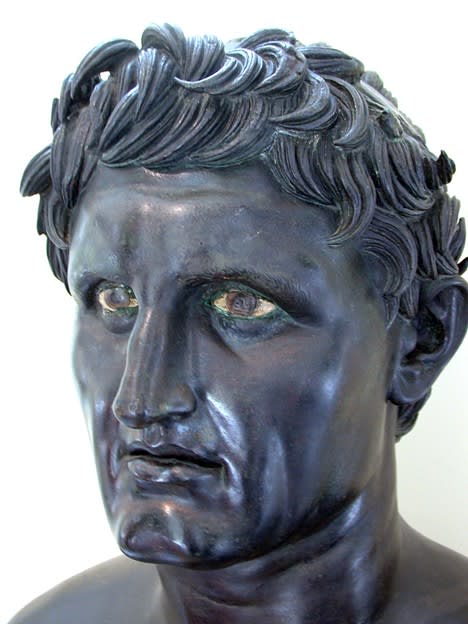
The victory at Gaza had tectonic consequences. It was after this that Ptolemy provided Seleucus with a small detachment (only a thousand infantry and two hundred cavalry), with which he departed into the depths of Asia and eventually founded the great Seleucid state. But the fortune of the Diadochi was fickle. Soon Ptolemy’s general Cilles suffered an unexpected defeat at the hands of the resurgent Demetrius. Learning that Antigonus himself had crossed the Taurus with the main forces, Ptolemy displayed his famous caution. Unwilling to risk everything for Syria, he decided to withdraw to Egypt.
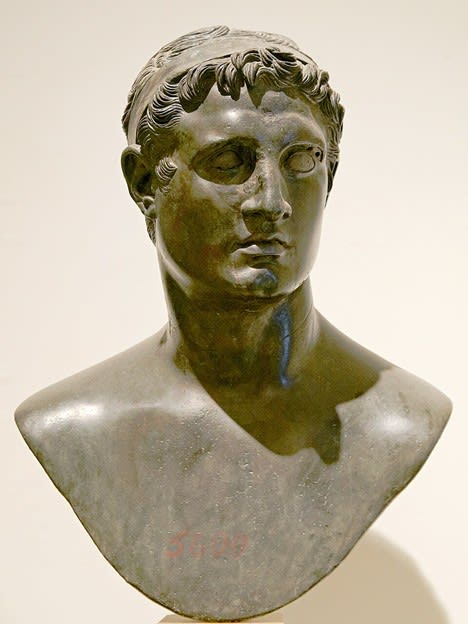
Before departing, Ptolemy ordered the walls of Acre, Joppa, Samaria, and Gaza to be demolished, turning Coele-Syria into a buffer zone. All the rich booty and thousands of captives were transported to the Nile Valley. In 311 BCE a temporary peace was concluded, confirming the partition of the empire, but this was only a brief pause. The death of the young heir Alexander IV soon finally freed the hands of the Diadochi, although Ptolemy for several more years continued to mint coins in the name of the deceased boy-king, awaiting the ideal moment for coronation.
In the years after the peace, Ptolemy devoted himself to the creation of a maritime empire. His fleet plied the waters of Lycia and Cilicia, seizing coastal cities. In 309 BCE he personally directed the assault on Xanthus and Caunus in Caria. It was precisely at this time, on the island of Cos, that a son was born to him — the future Ptolemy II Philadelphus.
Ptolemy made a bold attempt to gain a foothold in Greece itself. Landing in the Peloponnese in 308 BCE, he took Sicyon, Megara, and Corinth. However, the Greeks, who had promised provisions and money, proved to be unreliable allies. Disappointed by their passivity, Ptolemy, faithful to his rule of not becoming entangled in hopeless adventures, left garrisons at key points and returned to Egypt. Around the same time, Antigonus thwarted his plan to marry Cleopatra, the sister of Alexander the Great, by ordering her killed at Sardis. This unrealized marriage could have united Ptolemaic blood with the house of Philip II, but fate decreed otherwise.
At the same time, good news arrived from the west, for Ptolemy’s stepson, Magas, managed to restore rebellious Cyrenaica to Egyptian rule after the death of the tyrant Ophellas. The borders of the state once again became stable and secure.

In 306 BCE, the conflict with the Antigonids reached its climax in the battle for Cyprus. Demetrius, nicknamed for his siege engines Poliorcetes (“the Besieger”), landed on the island and shut up Ptolemy’s brother, Menelaus, in Salamis. Ptolemy hastened to the rescue with a huge fleet of 140 warships and 200 transport vessels.
The Battle of Salamis became one of the greatest naval engagements of antiquity. Demetrius, employing catapults on the decks and personally taking part in boarding fights, utterly smashed the Egyptian fleet. Ptolemy lost almost all his ships; 8,000 soldiers were taken captive. Menelaus was forced to surrender Cyprus. It was a crushing defeat that seemed to open the way for Antigonus to the very heart of Egypt.
Antigonus the One-Eyed, inspired by his son’s success, immediately marched on Egypt with an army of 80,000 men and a fleet. But Egypt was defended not only by warriors, but by nature itself. Powerful winter storms scattered Demetrius’s fleet, and the flooding of the Nile together with Ptolemy’s fortifications made a crossing impossible. Ptolemy, using gold, began actively bribing away Antigonus’s mercenaries. Hunger and the elements forced the invaders to retreat empty-handed.
The failure of Antigonus’s invasion became a moment of triumph. In 305 BCE (although Egyptian chronicles would later count from Alexander’s death itself), Ptolemy I officially proclaimed himself king of Egypt. Now he was no longer merely a governor, but a pharaoh, equal in status to any other Diadoch.
His influence extended far beyond the Nile Valley. When Demetrius in 304 BCE besieged Rhodes, Ptolemy organized an uninterrupted supply of food and weapons to the island, enabling the Rhodians to endure the legendary year-long siege. In gratitude, the inhabitants of the island rendered him divine honors and called him by the name under which he entered the ages — Soter (“Savior”). Thus ended the period of uncertainty, and the Kingdom of the Ptolemies became firmly established on the map of the world, becoming a beacon of culture and strength in the coming era of Hellenism.
At the turn of the century, in 302 BCE, the clouds over the realm of Antigonus the One-Eyed finally thickened. Realizing that alone they would fall victim to the ambitions of the “Ocean,” the great Diadochi — Cassander, Lysimachus, Seleucus, and Ptolemy — concluded a new, decisive coalition. While the main allied forces concentrated in Asia Minor, Ptolemy for the third time invaded Coele-Syria. However, his old caution played a trick on him again, and having received false news of Antigonus’s victory and his march on Syria, Ptolemy hastily withdrew, abandoning the conquered lands.
In fact, in 301 BCE at Ipsus there occurred the “battle of nations” of the ancient world. Antigonus fell under the blows of Seleucus and Lysimachus, and his empire was divided among the victors. It was precisely here that the conflict was born that would torment the Hellenistic world for centuries. The allies, considering Ptolemy a deserter who had not participated in the main battle, deprived him of his rights to Coele-Syria, transferring it to Seleucus. Ptolemy, however, paid no attention to this agreement and for the fourth time occupied the region. Seleucus, remembering the old friendship and Ptolemy’s help after Gaza, did not dare to wage open war, but the seed of discord over disputes for Palestine and Phoenicia had been sown. For Egypt these lands were invaluable not only as a defensive “glacis,” but also as a source of Lebanese cedar, which the treeless Nile Valley desperately needed.


The second half of Ptolemy’s reign passed in a complex diplomatic game. He virtuously used his numerous daughters as an instrument of foreign policy, weaving a web of alliances across the Mediterranean. Arsinoe was married to Lysimachus, Lysandra to Cassander’s son (and later to Lysimachus’s son), Ptolemais became the wife of his old enemy Demetrius, and Antigonus’s stepdaughter became the spouse of the Epirote king Pyrrhus.
It was Ptolemy who helped the young Pyrrhus with money and troops to regain the throne of Epirus, making him his loyal ally against Demetrius. When, in 295–294 BCE, Demetrius became bogged down in Greek affairs, Ptolemy struck like lightning and regained Cyprus. Salamis fell after a long siege, but Soter once again showed nobility, releasing Demetrius’s family with gifts and honors. By 287 BCE, the Egyptian fleet had fully restored dominance in the Aegean Sea, regaining a protectorate over the League of the Cycladic Islands and making the ports of Phoenicia and Cyprus impregnable.
Ptolemy understood that the solidity of his throne depended on peace between the Macedonian elite and the Egyptian population. He did not seek a radical breaking of traditions: Egyptians remained the main labor force, and their taxes the foundation of the state’s power. The king presented himself as a benefactor and protector, equally just to all his subjects.
The government residence was transferred from ancient Memphis to Alexandria, which, thanks to its location, became the ideal bridge between Egypt and the Mediterranean world. In Upper Egypt, Ptolemais was founded — a center of Greek culture intended to counterbalance the influence of ancient Thebes. The support of power was provided by military settlers (cleruchs) — Macedonians and Greeks who received plots of land in exchange for service. This created a loyal army whose interests were inseparably tied to Egyptian soil.
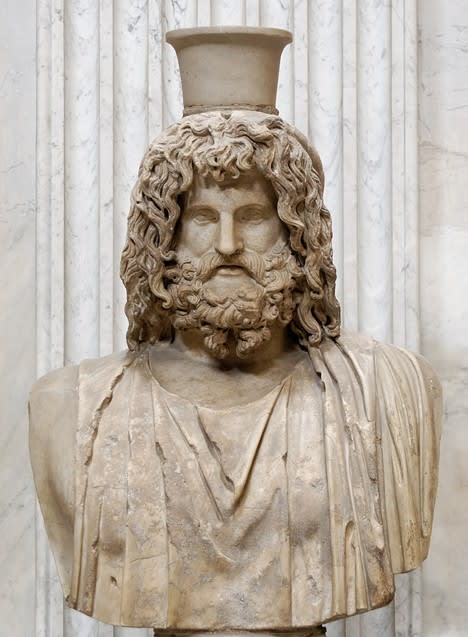
To unite the two peoples spiritually, Ptolemy introduced the cult of Serapis. According to legend, a youth appeared to the king in a dream, commanding him to bring his idol from Sinope. The Egyptian priest Manetho and the Greek Timotheus of Eleusis declared this god to be the embodiment of Osiris-Apis (User-Hapi). The new god, combining features of Zeus, Asclepius, and Pluto, became the patron of the dynasty and quickly gained popularity among both Greeks and Egyptians.
But the chief monument to Ptolemy became the Mouseion (Temple of the Muses) and the great Library of Alexandria. Inviting the greatest minds of his time — Demetrius of Phalerum, Strato, the mathematician Euclid, and the philologist Zenodotus — Ptolemy turned his capital into an intellectual laboratory. Here the foundations of medicine (Herophilus and Erasistratus), mathematics, and philology were laid. The Library, collecting hundreds of thousands of scrolls, became the repository of all human memory. The architect Sostratus of Cnidus raised on the island of Pharos a gigantic lighthouse that became a symbol of enlightenment and the power of the new realm.


Ptolemy was not only a warrior but also a man of letters. In his later years he took up the writing of memoirs about Alexander the Great. Drawing on the official Ephemerides and his own notes, he produced a work distinguished by sobriety and objectivity, which later became the principal source for Arrian. He consciously avoided excessive romanticization, striving to leave posterity an honest soldier’s account of his commander.

When the time came to choose a successor, Ptolemy faced a dynastic crisis. An influential faction supported his elder son Ptolemy Ceraunus (the grandson of Antipater), but the king, listening to his heart and to the counsel of Berenice, chose the younger son — the future Ptolemy II Philadelphus. In 285 BCE Ptolemy I performed an unprecedented act: he officially declared his son co-ruler and voluntarily laid down the crown, declaring that “to be the father of a king is better than to possess any kingdom.” He continued to serve his son as an adviser, setting an example of filial respect and state wisdom.
At the end of 283 BCE (or at the beginning of 282), Ptolemy I Soter died peacefully in his bed. He was the only one of the great Diadochi to whom fate granted a quiet death surrounded by loved ones, rather than on the battlefield.
Ptolemy I left behind the most stable and prosperous state of all the fragments of Alexander’s empire. Over forty years of rule (17 years as satrap and 23 years as king) he transformed Egypt into the leading power of the Mediterranean. His modesty in everyday life — he often repeated that “it befits a king to enrich others, not himself” — and his strategic genius laid the foundation for a dynasty that ruled for three centuries. Statues of Soter in Athens and Olympia, divine honors on Rhodes, and eternal memory in Alexandria became a deserved reward for the man who rose from a simple bodyguard to the creator of an entire world.


