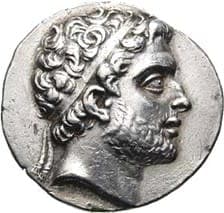
Upon ascending the throne, the young and ambitious monarch immediately found himself at the center of an extraordinarily complex web of political intrigue. By 220 BC, Macedonia had inevitably been drawn into the so-called Social War.
Fighting alongside the Achaeans, Philip directed his army against the Aetolian League. In the winter of 218 BC, displaying exceptional organizational ability, the king led a highly trained army of 15,000 men in a rapid invasion of the Peloponnese.
The campaign ended in brilliant success. Macedonian forces carried out a series of victorious and tactically precise operations against the combined armies of the Aetolians, Eleans, and Spartans.
Maintaining the strategic initiative, in the summer of the same year the Macedonian army landed directly in Aetolia and dealt the enemy a devastating blow by capturing and mercilessly plundering Thermon, the sacred and political center of the Aetolian League.
The geopolitical horizon, however, was rapidly expanding, and local Greek conflicts soon became secondary.
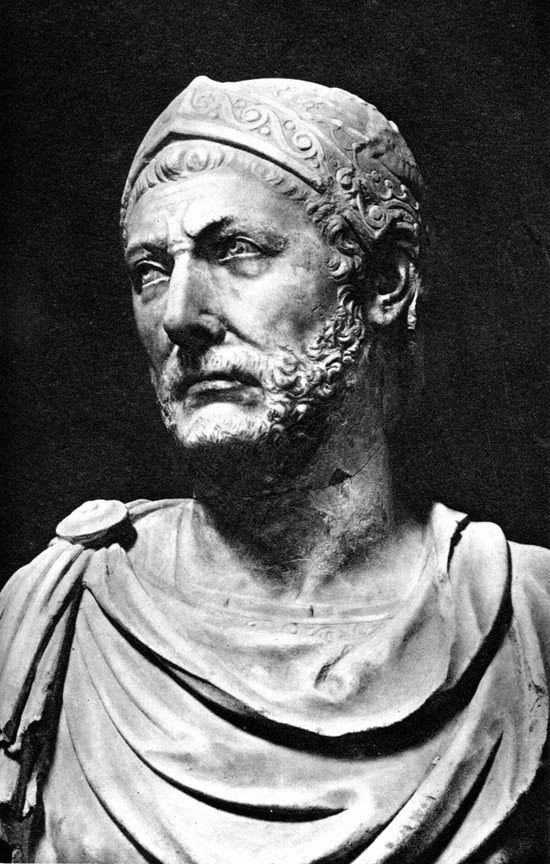
In 217 BC, while stationed in a military camp during the difficult siege of Phthiotic Thebes, Philip V received astonishing news: the Carthaginian commander Hannibal had inflicted a catastrophic defeat upon the seemingly invincible Roman legions at Lake Trasimene.
Sensing the shift in the balance of power, the Macedonian ruler immediately brought military operations in Greece to an end, concluded a hasty but necessary peace with the Aetolians, and turned his attention westward.
His new strategic objective was a struggle with Rome for control of the wealthy Illyrian territories.
Already in 216 BC, the Macedonian fleet launched a daring, although ultimately unsuccessful, attempt to capture Apollonia.
Understanding that defeating Rome alone would be extraordinarily difficult, Philip V took an unprecedented diplomatic step the following year by concluding a direct anti-Roman alliance with Hannibal himself.
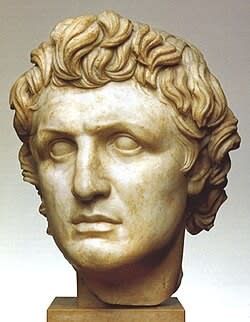
In the summer of 214 BC, a Macedonian armada numbering 120 warships once again appeared menacingly off the coast of Illyria.
The Macedonians moved with remarkable speed. The city of Oricum fell under their assault, while Apollonia was placed under close siege.
Yet Rome, even while bleeding from its war against Carthage, remained a formidable opponent.
The Roman praetor Marcus Valerius Laevinus organized a sudden and devastating counterattack, liberated Oricum, and forced Philip V to flee, abandoning part of his fleet.
These dramatic events became the spark that ignited the First Macedonian War.
A powerful coalition formed against the Macedonian king. Rome was now joined by the vengeful Aetolian League, the wealthy Kingdom of Pergamon, Sparta, and Elis.
Despite the overwhelming numerical superiority of his enemies, Philip V demonstrated remarkable military endurance.
In 213 BC, his forces steadily and methodically pushed back their opponents in Illyria.
In 209 BC, he carried out a rapid march into the Peloponnese to assist his old allies, the Achaeans.
In 207 BC, he launched another major punitive expedition into Aetolia, devastating Thermon for a second time.
The Aetolians, realizing that Rome, preoccupied with Hannibal, had effectively abandoned them to their fate, lost their will to continue the struggle and requested peace in 205 BC.
Soon afterward, exhausted by inconclusive fighting in the Balkans, Rome followed their example and signed a peace treaty that essentially confirmed the existing status quo.
No sooner had Philip escaped the Roman threat than the tireless king turned his attention eastward and began a major expansion into the Aegean basin.
In 202 BC, he concluded a secret agreement with the powerful Seleucid ruler Antiochus III.
The purpose of this cynical but pragmatic alliance was to divide the enormous possessions of a weakened Egypt between them.
Seizing the opportunity, Philip rapidly captured Greek cities in Thrace and established control over strategically important regions around the Hellespont and Propontis, territories that had previously belonged to the young Ptolemy V Epiphanes.
Such a dramatic disruption of the regional balance of power terrified Macedonia’s neighbors.
The wealthy commercial republic of Rhodes immediately declared war, and it was soon joined by the alarmed Pergamene king Attalus I.
In 201 BC, at the great naval Battle of Lade, the Macedonian fleet decisively defeated the allied squadrons.
Encouraged by this victory, Philip invaded the territories of Pergamon and subjected them to ruthless devastation.
Fortune, however, was changeable.
In the summer of the same year, the combined fleet of Rhodes and its allies took revenge by inflicting a severe defeat upon the Macedonians in the waters near the island of Chios.
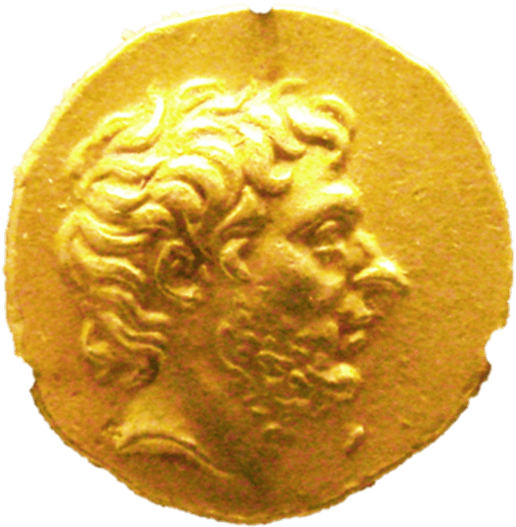
The events in the east were merely the prelude to the greatest tragedy of Philip’s life.
Leaving part of his army behind to secure his conquests in Caria, the king returned triumphantly to Macedonia in 200 BC.
Instead of rest, however, he was confronted by a stern Roman embassy, which, taking advantage of complaints from the Greek states, presented him with an ultimatum and declared the Second Macedonian War.
Philip’s diplomatic isolation increased at an alarming speed.
In September 199 BC, the Aetolian League once again joined the anti-Macedonian coalition led by Rome.
The disaster became irreversible in June 198 BC, when the talented Roman consul Titus Quinctius Flamininus broke through the layered Macedonian defenses along the River Aous and advanced triumphantly into Thessaly.
Witnessing the success of the Roman legions, the Achaean League betrayed Philip in October of the same year and defected to Rome.
The once-powerful Philip V was left completely alone against the greatest military machine of the ancient world.
The final confrontation came in June 197 BC, on the hills of Cynoscephalae.
The Macedonian phalanx, unable to match the flexibility and maneuverability of the Roman manipular system, was destroyed.
Broken by defeat, Philip sued for peace.
The Roman Senate accepted his request, but the price was devastating.
Under the terms of the settlement, Philip lost all his possessions in Greece, Caria, and the regions around the straits. He was forced to surrender almost his entire war fleet and was required to pay an enormous indemnity.
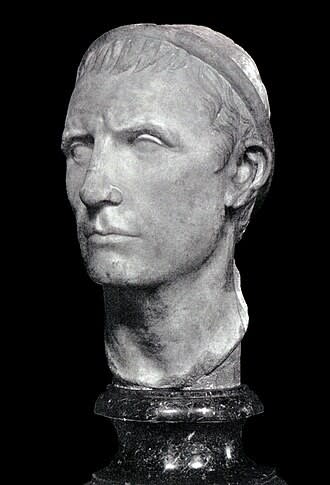
Humiliated but not broken, Philip devoted the final years of his life to restoring at least part of his homeland’s former strength.
Reluctantly, in 191 BC, he acted as a loyal ally of Rome, assisting the legions in their war against his former partner Antiochus III.
In 185 BC, the aging monarch conducted a successful campaign in Thrace against the Odrysian tribes and captured the strategically important city of Philippopolis.
Until his final breath, the king remained concerned with the security of Macedonia’s frontiers.
In 179 BC, while preparing a major preventive campaign against the Dardanians, Philip V died suddenly.
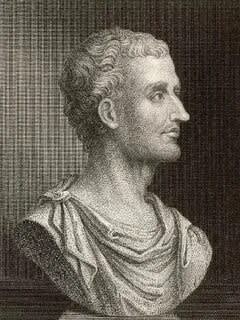
The historical assessment of this remarkable ruler was later distorted in an unjust and highly one-sided manner.
In classical Greek and Roman literature, particularly in the works of Polybius and Livy, Philip V appears as a cruel and treacherous tyrant who inspired universal hatred throughout Greece and who, in old age, supposedly degenerated into a paranoid ruler consumed by cruelty and suspicion.
Such judgments, however, should be treated with considerable caution.
Ancient authors often reflected the perspective of states that were fundamentally hostile toward an independent Macedonia, which they tended to portray as an authoritarian “evil empire.”
In reality, Philip V, continuing the policies of his predecessor Antigonus III Doson, pursued a fundamentally different and more progressive approach toward Greece, showing considerable respect for the sovereignty of its independent poleis and federal leagues.
From the earliest years of his long reign, Philip established himself as a sophisticated diplomat and an exceptionally gifted commander.
His balanced and farsighted policies during the Social War, as well as his brilliant tactical maneuvers during the campaigns in Aetolia and the Peloponnese in 219–218 BC, clearly demonstrated his military talent.
As hegemon of the Hellenic League, Philip carefully observed the terms of the alliance and made considerable efforts to preserve general peace in the Balkans.
Even during the fiercest wars, he repeatedly demonstrated restraint and clemency toward defeated enemies.
In the scale of his political talent and statecraft, Philip V deserves to stand beside such figures as Philip II and Alexander the Great, whose immortal examples he sincerely attempted to emulate.
The personal tragedy of Philip V, however, lay in the fact that he lived in an entirely different and far more ruthless age.
The aging Hellenistic kingdoms of the eastern Mediterranean, weakened by endless internal conflicts, were giving way to a young, aggressive, and relentless Rome.
Macedonia became the first major Hellenistic kingdom to confront Roman expansion directly.
Philip had no historical precedent to guide him in dealing with such a fundamentally new type of enemy, and he recognized far too late the enormous existential threat carried eastward by the Roman legions.
That fatal delay caused him to lose the diplomatic struggle.
And once Macedonia had lost diplomatically, military defeat became increasingly inevitable.
The consequences would permanently transform the destiny of the ancient world.


