The future ruler of Rome was born around 396.
Although his exact origins remain a matter of historical debate, he is generally believed to have belonged to one of the most noble and influential Roman families of the period — the patrician Anicii.
His family tree was filled with prominent figures. Petronius was related to the later emperor Olybrius, while his father was most likely Anicius Probinus, proconsul of Africa.
His grandfather was Sextus Claudius Petronius Probus, a powerful statesman and consul of the second half of the fourth century, who was married to Anicia Faltonia Proba.
Before entering the deadly struggle for supreme power, Petronius Maximus built a brilliant and almost flawless career as a Roman senator.
According to the testimony of Olympiodorus, he began his career around 411 with the office of praetor.
By the final period of the empire, this position had become largely ceremonial, while imposing a considerable financial burden on its holder through the obligation to organize lavish circus games.
Maximus successfully fulfilled this responsibility by staging the praetorian games.
Around 415, when he had barely reached the age of eighteen, he became a tribune and notary, a relatively junior secretarial position at the imperial court.
Between 416 and 419, however, his rapid rise began.
Petronius became Count of the Sacred Largesses of the West, placing him in control of the taxation system and the administration of state enterprises.
From January or February 420 until August or September 421, he held the prestigious office of Urban Prefect of Rome.
After a short interruption, he returned to the office and appears to have held it again until approximately 439.
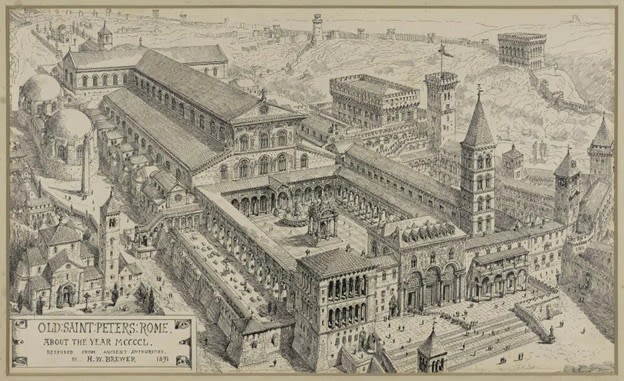
It was during this period that a large-scale restoration of the Old St. Peter’s Basilica was carried out under his supervision.
Alongside his administration of the capital, between 421 and 439 he also served as Praetorian Prefect of the West.
The crowning achievement of his early career came with the consulship of 433, which he shared with the Eastern emperor Theodosius II.
From August 439 to February 441, Maximus served as Praetorian Prefect of Italy, while the equivalent office in Gaul was held by the future emperor Eparchius Avitus.
In 443, he became consul for a second time, this time together with Flavius Paterius.
His enormous wealth and influence enabled him, between 443 and 445, to construct his own forum on Rome’s Caelian Hill, situated between the Via Labicana and the Basilica of St. Clement.
Until the celebrated general Flavius Aetius attained the consulship, Petronius Maximus remained one of the most powerful men in Rome.
By 10 December 445, his elevated status had been formally recognized: the earliest surviving document addressing him by the supreme honorary title of patrician dates from that day.
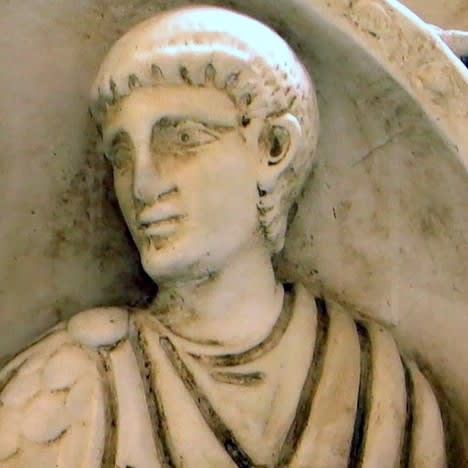
Yet it was precisely at the height of his power that a deep and destructive rivalry developed between Maximus, the civilian administrator, and Flavius Aetius, the military master of the West.
The conflict between these two powerful patricians ultimately set in motion a chain of bloody events that fatally weakened the Western Roman Empire and cleared Maximus’s path to the throne through two spectacular murders: first Aetius himself in 454, and then the weak-willed emperor Valentinian III in the spring of 455.
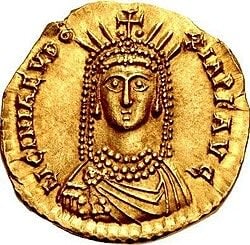
The catalyst for the catastrophe was a personal tragedy described by Procopius of Caesarea.
According to his account, Maximus had an exceptionally beautiful and virtuous wife.
Emperor Valentinian III became obsessed with her and, after she firmly rejected his advances, resorted to a vile deception.
He invited Petronius to the palace for a game of chess, agreeing that the loser would pay a penalty in gold.
Valentinian won and took Maximus’s personal signet ring as security.
Using the ring, he immediately sent servants to the senator’s wife with a false message supposedly from her husband ordering her to come to the palace at once to pay her respects to Empress Licinia Eudoxia.
Suspecting nothing, the woman came to the palace, where she was led to a secluded room and brutally raped by the emperor.
When she returned home, humiliated and devastated, she accused Maximus of betrayal, believing that he himself had handed her over to the emperor.
Maximus swore revenge, but his cold and calculating mind understood that as long as the great general Aetius — the principal pillar of the throne — remained alive, it would be impossible to reach the emperor.
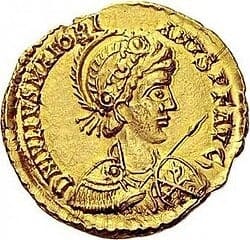
According to the historian John of Antioch, Petronius Maximus entered into a secret conspiracy with Heraclius, the primicerius sacri cubiculi, or chief eunuch of the imperial bedchamber.
Heraclius had long and unsuccessfully competed with Aetius for influence over the weak emperor.
The conspirators began systematically poisoning Valentinian’s mind, convincing him that Aetius was preparing a coup.
There was indeed some basis for suspicion.
Aetius intended to marry his son Gaudentius to the emperor’s daughter Eudocia, and he had already reached an agreement with Valentinian on the matter.
By distorting these facts, Maximus and Heraclius achieved their goal.
The emperor became convinced that Aetius had betrayed him and resolved to have him killed.
On 21 September 454, during an audience, Valentinian personally struck Aetius in the chest with a sword, while palace officials led by Heraclius finished off the great general.
At the same time, Praetorian Prefect Boethius was also killed.
To complete the bloody purge, the emperor lured Aetius’s most influential supporters to the palace and had them murdered one by one.
This treachery shocked both Romans and barbarians.
According to a famous story, when Valentinian later asked a wise Roman whether he had acted correctly in killing Aetius, the man replied that he could not judge whether the act was good or bad, but he knew for certain that the emperor had cut off his right hand with his left.
The death of the commander-in-chief did not bring Maximus the offices he desired.
When he asked Valentinian to appoint him consul and transfer to him the authority formerly held by Aetius, the emperor, following the advice of Heraclius, refused.
Enraged, Maximus, according to John of Antioch, decided to act immediately.
He won over Optila and Thraustila, two Scythian bodyguards who had previously served under Aetius.
Maximus convinced them that Valentinian alone was responsible for their former commander’s death and offered them a generous reward for revenge.
On 16 March 455, Valentinian arrived at the Campus Martius to practice archery.
As soon as he dismounted, Optila struck him violently in the temple.
When the emperor turned around, Optila dealt the fatal blow.
At the same moment, Thraustila stabbed the hated eunuch Heraclius to death.
The two men then removed the imperial diadem and robe from Valentinian’s body and delivered them to Maximus.
Valentinian’s sudden death left the empire without a legitimate heir.
Three factions immediately competed for the throne.
The military supported Majorian, a former associate of Aetius and a favorite of the widowed empress Licinia Eudoxia.
Another section of the army supported Maximianus, a former domesticus and son of the wealthy Egyptian merchant Domninus.
The Senate, meanwhile, supported Petronius Maximus.
Possessing immense wealth and extensive experience in political intrigue and bribery, Maximus simply purchased the loyalty of key palace officials.
The very next day, 17 March 455, he proclaimed himself emperor.
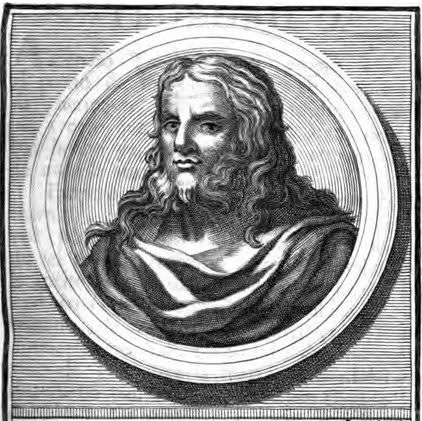
After becoming ruler of the West, Maximus took desperate measures to legitimize his seizure of power.
He forced Valentinian’s widow, Licinia Eudoxia, to marry him.
The empress deeply despised Maximus and had strong reasons to suspect him of organizing her husband’s murder.
Prosper of Aquitaine even reports that Maximus cruelly forbade her from mourning the dead Valentinian.
Licinia’s suspicions only intensified because the new emperor not only refused to punish Optila and Thraustila but rewarded and promoted them.
The foreign-policy situation was equally disastrous.
Constantinople categorically refused to recognize Petronius Maximus as the legitimate ruler of the West.
Seeking any possible source of support, Maximus appointed Eparchius Avitus magister militum in Gaul and sent him to Tolosa to beg the Visigothic king Theodoric II for military assistance.
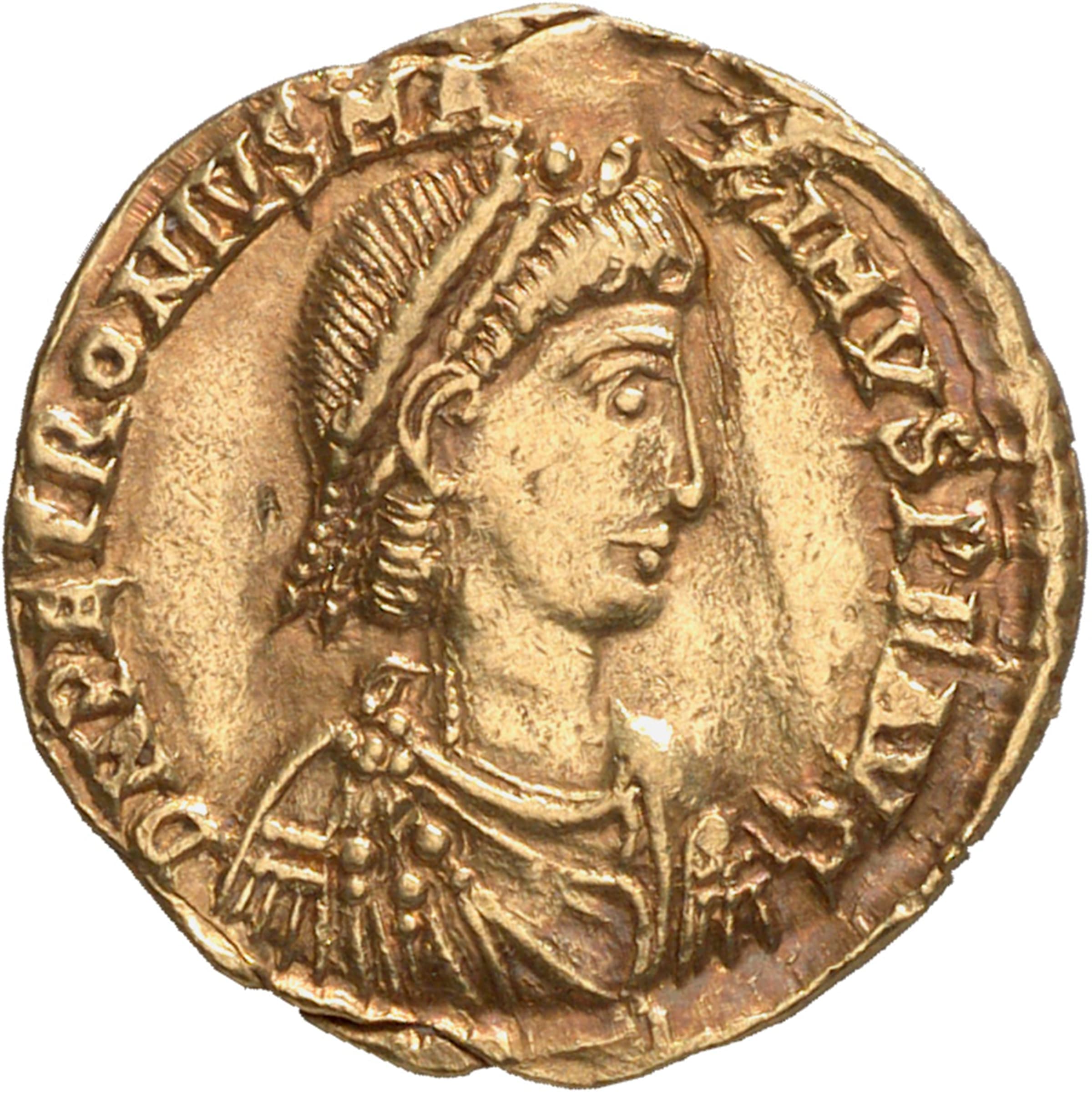
Meanwhile, Rome began hurriedly minting gold coins to finance bribes and military salaries.
Significantly, no bronze or silver coins are known from Maximus’s seventy-eight-day reign — only gold coins, distributed in an atmosphere of panic.
Maximus’s fatal mistake was his interference with the diplomatic agreements made by the previous emperor.
He cancelled the engagement between Eudocia, daughter of Licinia Eudoxia, and Huneric, son of the formidable Vandal king Genseric.
This gave the Vandals an ideal pretext for war.
The furious Genseric immediately began preparations for a large-scale invasion of Italy.
The widowed Licinia Eudoxia, having little hope of assistance from the Eastern Empire — her father Theodosius II and her aunt Pulcheria were already dead — reportedly resorted to a desperate measure.
According to later tradition, seeking revenge for Valentinian’s death, she herself called upon the Vandals to attack Rome.
In May 455, terrifying news reached the Eternal City: Genseric’s fleet was sailing toward the Italian coast.
Rome was gripped by indescribable panic, and its inhabitants fled the capital in large numbers.
Eparchius Avitus and the promised Visigothic reinforcements had not yet arrived.
Realizing that the city could not be defended — and, according to the historian Edward Gibbon, having known about the invasion beforehand but awaited it with criminal indifference — the usurping emperor decided to save his own life and urged the Senate to flee with him.
On 31 May 455, Petronius Maximus attempted to escape Rome secretly.
However, in the streets he was overtaken by a crowd of citizens driven mad by fear and rage.
The emperor was stoned to death.
Accounts of his murder differ.
The historian Jordanes claims that the fatal blow was struck by a Roman soldier named Ursus.
Other sources describe a dispute between a Burgundian and a Roman soldier over who deserved credit for killing him.
Prosper of Aquitaine, meanwhile, blamed Maximus’s rebellious servants.
Whatever the exact circumstances, the deposed emperor’s body was torn to pieces by the crowd and thrown into the muddy waters of the Tiber.
His son from his first marriage, Palladius, whom Maximus had proclaimed Caesar and married to his stepsister, shared his father’s fate and was also killed.
The reign of Petronius Maximus lasted exactly 78 days.
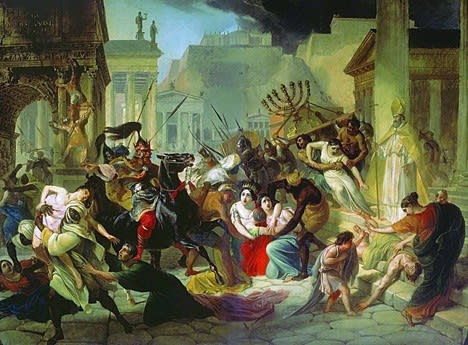
Only three days after Maximus’s death, on 2 June, Genseric advanced from Ostia and entered a completely defenseless Rome.
The only force that came out to meet the invaders was a procession of unarmed clergy led by Pope Leo I.
Through the pontiff’s appeals, Genseric agreed not to carry out a general massacre or set the city on fire.
Rome, however, was subjected to a merciless sack lasting fourteen days and nights.
The Vandals systematically stripped the imperial palaces, removed the gilded roof from the Capitoline Temple, seized the legendary treasures brought from Jerusalem by Emperor Titus decades earlier, and loaded the enormous wealth onto their ships.
Together with the gold, the vengeful Empress Licinia Eudoxia and her daughters Placidia and Eudocia were taken as captives to Carthage.