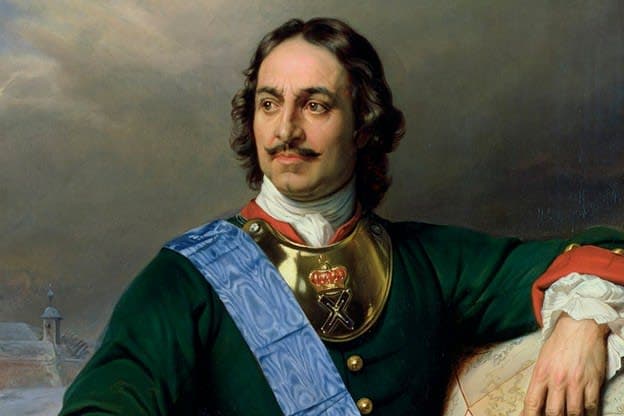

Peter I, the future emperor of the Russian Empire, was born on the night of May 30 (June 9), 1672. The exact place of his birth has not been established, although historians often name the Terem Palace of the Moscow Kremlin or the suburban villages of Kolomenskoye and Izmailovo. Peter was the 14th child of Tsar Alexei Mikhailovich, but the first by his second wife, Natalya Naryshkina. On June 29, the feast day of the Holy Apostles Peter and Paul, the tsarevich was baptized and named Peter a name that had not previously occurred either in the Romanov family or among the Naryshkins.
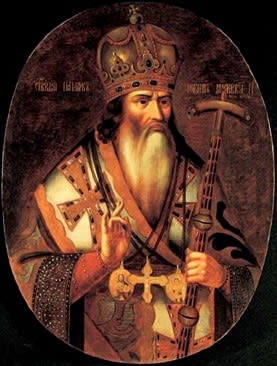
In 1676, when Peter was only three and a half years old, his father died. The guardian of the tsarevich became his half-brother and the new tsar, Fyodor Alekseyevich. Peter’s education turned out to be weak, which strongly affected his literacy. The then Patriarch Joachim, fearing “foreign influence,” removed from the education of the tsar’s children the more learned pupils of Simeon of Polotsk, and Peter was placed under the care of the dyaks Nikita Zotov and Afanasy Nesterov. At that time there were still no universities or secondary schools in Russia, and basic education was available only to a limited circle of people. Despite the deficiencies in theory, Peter later made up for them with rich practical experience, which became a characteristic feature of his personality.
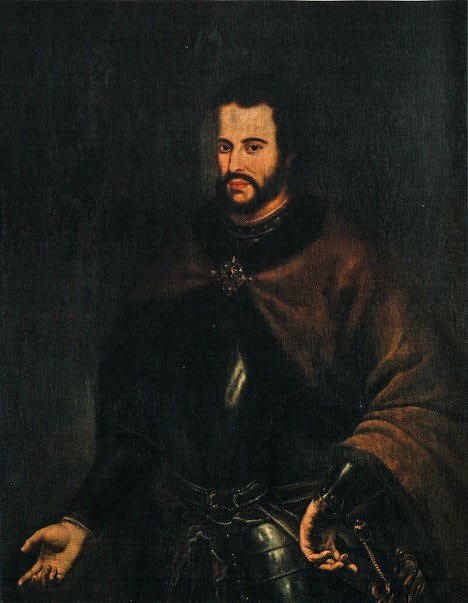
The death of Tsar Alexei Mikhailovich led to the Naryshkin family, to which Peter’s mother belonged, being pushed into the background. Tsaritsa Natalya Kirillovna, together with her son, was forced to move to the village of Preobrazhenskoye near Moscow.
In 1682, after the death of the childless Tsar Fyodor III, the question of succession arose. The candidates were the sickly Ivan V and the minor Peter. With the support of Patriarch Joachim, Peter’s supporters from the Naryshkin clan proclaimed him tsar, bypassing the traditional order of inheritance. In fact, the Naryshkin clan came to power under the leadership of Artamon Matveyev, who had been recalled from exile.
However, the relatives of the tsarevich Ivan, the Miloslavskys, saw in this an infringement of their interests. Instigated by them, the streltsy, of whom there were more than 20,000 in Moscow, rose in rebellion on May 15 (25), 1682. They marched to the Kremlin, spreading rumors that the Naryshkins had strangled the tsarevich Ivan. Despite attempts by Tsaritsa Natalya Kirillovna to calm them, the riot did not subside. As a result, many of Peter’s supporters were brutally killed, including Artamon Matveyev and two of the Naryshkin brothers.


The uprising led to a compromise. On May 26 the streltsy demanded that Ivan be recognized as the first tsar and Peter as the second. Three days later they insisted that their sister, Tsarevna Sophia Alekseyevna, take upon herself the governance of the state due to the youth of the brothers. For the young tsars, a special two-seated throne was even made with a little window through which Sophia and her intimates gave them prompts during official ceremonies. Peter and his mother were forced to leave the court and go to the suburban village of Preobrazhenskoye.

Far from the intrigues of the Moscow court, in the villages of Preobrazhenskoye and Semyonovskoye, Peter found his true vocation. He plunged headlong into military affairs, creating from his peers a “toy” army. By 1686 he already had his own artillery, which was operated by adult servants. Peter himself began as a drummer. Over time, the “toy” regiments were transformed into the Preobrazhensky and Semyonovsky Regiments the future core of the Russian Guards.
On the bank of the Yauza River a “toy town” was built, named Preshburg in honor of the famous Austrian fortress. Peter took personal part in the construction. The first “toy” vessels also appeared there. Under the guidance of the Dutchman Timmerman, Peter studied arithmetic, geometry, and the military sciences. During one of his walks, he found in the Linen Yard in the village of Izmailovo an English boat, which later became a symbol of his passion for the fleet. Realizing that the Yauza was too small, he went to Pereslavl-Zalessky, where on Lake Pleshcheyevo he laid the first Russian shipyard.
To study military affairs Peter became a frequent visitor to the German Sloboda, where foreigners lived. There he met his future associates Franz Lefort and Patrick Gordon, mastered Western customs, including pipe smoking, and began a romance with Anna Mons.

Peter’s activity greatly alarmed Tsarevna Sophia. Her position was weakened after the unsuccessful campaigns against the Crimean Tatars in 1687 and 1689, which were led by her favorite, Vasily Golitsyn. The culmination of the confrontation was the conflict of July 8 (18), 1689, when Peter publicly forbade Sophia to go in the religious procession.

The decisive event occurred on August 7 (17), 1689. Rumors of an impending attack by Peter on Moscow forced him to flee to the Trinity–Sergius Monastery. His “toy” regiments followed him. When Peter demanded that the streltsy regiments send their commanders to him, the majority of the troops obeyed the lawful tsar. Sophia was forced to admit defeat and was confined to the Novodevichy Convent. Her supporter, Fyodor Shaklovity, was executed. Peter’s elder brother, Ivan V, who nominally remained co-ruler, in fact transferred all power to Peter and no longer took part in governing the country.
After Sophia’s overthrow, power passed into the hands of a government formed by Natalya Kirillovna. However, Peter, although he considered state affairs boring, gradually achieved full control over the most important decisions. His chief priority became the war with the Ottoman Empire.
Peter I rejected campaigns against Crimea and decided to strike at the Turkish fortress of Azov on the Don. The first Azov campaign of 1695 failed due to the absence of a fleet. However, Peter did not give up. In an incredibly short time, an entire flotilla was built in Voronezh, including the 36-gun ship Apostle Peter. In May 1696 the Russian army, with the support of the fleet, blockaded Azov from the sea. On July 19 (29) the fortress capitulated, opening for Russia its first access to the southern seas. To finance the construction of the fleet, new taxes were introduced, and landowners were united into “kumpanstva,” which were obliged to build ships at their own expense.


To prepare for a full-scale war and master European technologies, Peter I in March 1697 sent the Grand Embassy to Western Europe. Its main goal was to find allies against the Ottoman Empire. In the embassy, numbering 250 people, the tsar himself was present incognito, introducing himself as sergeant (uryadnik) Pyotr Mikhailov.
During the journey Peter visited Riga, Königsberg, Brandenburg, Holland, England, and Austria. He was interested above all in the technical achievements of the West. In Holland he worked as a carpenter at the shipyards of the East India Company, helping to build a ship. In England he visited factories, arsenals, and even Parliament, where, according to legend, he was struck that “the sons of the fatherland speak the plain truth to the king.”

The Grand Embassy did not achieve its main goal, because the European powers were preparing for the War of the Spanish Succession and were not interested in fighting the Ottoman Empire. However, this journey had enormous significance. It allowed Peter to recruit hundreds of foreign specialists, to purchase the necessary equipment, and, most importantly, to reorient Russia’s foreign policy from the southern direction to the northern one. It was precisely this reorientation that created the prerequisites for the future Northern War and the struggle for access to the Baltic Sea.
In July 1698 the Grand Embassy was urgently interrupted by news of a new streltsy revolt in Moscow. Although the uprising was suppressed before his arrival, Peter, returning to the capital on August 25, immediately began a large-scale investigation. As a result of the inquiry, about 800 streltsy were executed, and then several hundred more. Tsarevna Sophia, who, as it turned out, stood behind the plot, was tonsured a nun under the name Susanna and confined to the Novodevichy Convent. The same fate befell her sister Martha and Peter’s unloved wife, Eudokia Lopukhina, who was forcibly sent to a convent despite the patriarch’s resistance.

Returning from abroad, Peter I began his transformative activity, which at first affected the external signs of old Russian life. In his Preobrazhensky Palace he personally began shaving the beards of the grandees. On August 29, 1698, the famous decree was issued, forbidding the wearing of beards and prescribing the wearing of “German dress.” He sought to make Russia resemble European countries, which he stated openly.
In 1699 Peter carried out another important reform: he introduced the Julian calendar and established the beginning of the New Year on January 1 instead of September 1. His decree stated that this was done “as a sign of a good beginning and merriment.” This reform, along with beard shaving and the change of dress, marked a break with centuries-old traditions and the beginning of a new stage in Russian history.
Military reforms became one of Peter’s main priorities. The Kozhukhovo maneuvers of 1694 and the Azov campaigns convinced him of the inefficiency of the old streltsy army. In 1698 he disbanded the streltsy, leaving only four regular regiments the Preobrazhensky, Semyonovsky, Lefortovsky, and Butyrsky which became the nucleus of the new army. In 1699 the first conscription was carried out and the training of recruits began according to the European model.
In 1699 the Northern Alliance against Sweden was formed, which, in addition to Russia, included Denmark, Saxony, and the Polish–Lithuanian Commonwealth. The main goal for Russia was the restoration of lands and obtaining access to the Baltic Sea. After the conclusion of peace with the Ottoman Empire, Russia on August 19, 1700, declared war on Sweden, taking advantage of the pretext of an affront inflicted on Peter in Riga.
The beginning of the Great Northern War turned out to be discouraging. On November 19, 1700, the newly recruited Russian army suffered a crushing defeat in the Battle of Narva. The Swedish king Charles XII, considering Russia weakened, directed his forces against Saxony. However, Peter I did not surrender. He continued his reforms, and already in 1702, his guards took the Swedish fortress Noteburg, renamed Shlisselburg.


In the spring of 1703, the Russian army captured the fortress of Nyenschantz at the mouth of the Neva. This event became a turning point. On May 16 (27), 1703, by the tsar’s decree, the construction of the new capital, St. Petersburg, began, and on Kotlin Island the naval base of Kronstadt was laid. Thus, Russia again obtained access to the Baltic Sea.
In 1704 the Russian troops took Derpt and Narva, strengthening their positions in the Baltics. In 1706 Charles XII, having defeated Saxony, began his fateful campaign against Russia. The new Russian army was already entirely different experienced and well trained. Peter personally took part in the battles, displaying generalship talent. In the Battle of Lesnaya on September 28, 1708, a Russian corps defeated the Swedish corps of Lewenhaupt, which was carrying reinforcements and supplies. Peter called this victory “the mother of the Battle of Poltava.”

The culmination of the war was the Battle of Poltava on June 27, 1709, where the Swedish army was utterly routed. This defeat put an end to Sweden’s dominance in Europe.

In 1710 Turkey intervened in the war. After defeat in the Prut campaign of 1711, Peter was forced to conclude the Treaty of the Prut, under which Russia returned Azov to Turkey and lost access to the Sea of Azov, in order to avoid complete defeat. However, this allowed him to concentrate on the war with Sweden. In 1713 the Swedes lost all their possessions on the European continent. Russia’s young Baltic fleet won its first major victory in the Battle of Gangut in 1714.

On August 30 (September 10), 1721, the Treaty of Nystad was concluded, which ended the 21-year war. Russia obtained access to the Baltic Sea, annexing Ingria, part of Karelia, Estland, and Livland. In honor of this victory, on October 22, 1721, Peter I accepted the titles of Father of the Fatherland and Emperor of All Russia, and the Russian Tsardom became the Russian Empire.
Russia’s expansion eastward continued under Peter I as well. In 1716 the expedition of Bukholtz founded fortresses on the Irtysh, including the future Omsk. Attempts were made to penetrate into Central Asia, but the detachment of Bekovich-Cherkassky was destroyed by the khan of Khiva. In Peter’s reign Kamchatka was annexed to Russia, and he even planned an expedition across the Pacific Ocean to America, but did not have time to carry it out.
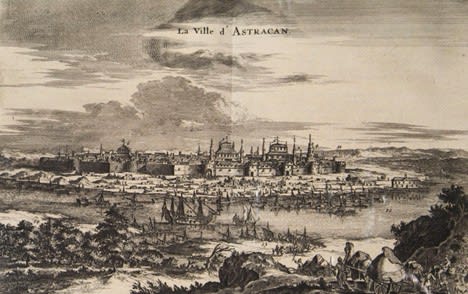
Peter’s largest eastern enterprise was the Caspian (or Persian) campaign of 1722–1724. Taking advantage of Persia’s collapse, Peter sent a 22,000-strong detachment from Astrakhan. In August 1722 Derbent was taken, and in 1723 Baku and other coastal cities.
On September 12, 1723, the St. Petersburg Treaty with Persia was signed, under which Russia received the western and southern coasts of the Caspian with the cities of Derbent and Baku, as well as the provinces of Gilan, Mazandaran, and Astrabad. Thus, Russia obtained access to the Caspian Sea and strengthened its positions in the Caucasus. However, these territories proved difficult to hold and were lost after Peter’s death due to high losses from disease.
By the end of Peter I’s reign, the population of Russia, according to contemporary estimates, reached 15 million people, which made it the second most populous country in Europe after France. According to the Soviet historian Yaroslav Vodarsky, during Peter’s reign the male population grew from 5.6 to 7.8 million people.
Peter divided all his domestic policy into two periods, 1695–1715 and 1715–1725. The first stage was characterized by haste and was dictated by the needs of the Northern War. The main efforts were directed to raising funds and creating the army and fleet. In the second stage the reforms became more systematic. Historians still argue whether these transformations were revolutionary or merely continued trends that had originated in the 17th century.
Peter perfectly understood the need for enlightenment. He introduced compulsory education for the nobility and clergy and created a new system of education. The first secular educational institutions were opened the School of Mathematical and Navigational Sciences, and the artillery, engineering, medical, and naval academies. In the provinces tsifirnye (cipher/arithmetic) schools appeared, and for soldiers’ children, garrison schools. In 1724 the draft statute of the Academy of Sciences was approved.
Peter also developed printing; during his reign, twice as many books were printed as in the entire previous history of Russian printing. He introduced a new civil script, simplifying the alphabet.
Everyday life also changed. The construction of St. Petersburg with its stone buildings and carefully designed layout created an entirely new urban environment. By a decree of 1718, assemblies a new form of secular socializing where nobles could freely dance and converse, unlike earlier feasts were introduced.
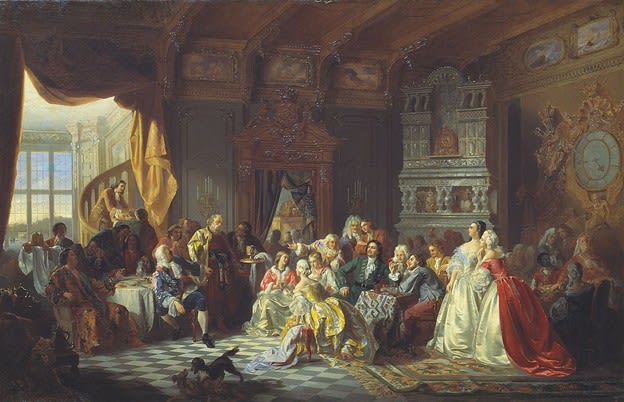
Peter also sought to change the position of women in society: he prohibited forced marriages, granted brides the right to break off an engagement, and introduced the mandatory participation of women in public celebrations.
In the economy Peter I became an adherent of mercantilism and strove to make Russia self-sufficient. He actively developed geological prospecting, which led to the discovery of deposits in the Urals. By the end of his reign there were 233 factories operating in the country, which made it possible gradually to abandon imports.
Despite all the successes, Peter’s transformations were achieved at the cost of harsh and violent methods. As A. S. Pushkin wrote, many of Peter’s decrees “were cruel, capricious, and seem to have been written with a knout.” The reforms led to the strengthening of absolutism and serfdom. Peasants were bound to the land of their landlords, and the landlords’ power over them grew significantly.
Such measures aroused discontent and led to numerous uprisings in Astrakhan in 1705, on the Don under the leadership of Kondraty Bulavin in 1707, and the Bashkir uprising of 1704–1711. All of them were brutally suppressed.

To combat dissent the Secret Chancellery was created, which dealt with political cases. Peter was merciless toward those who opposed his reforms. Victims of the repressions included even his son, Alexei Petrovich, whom Peter accused of conspiracy and sentenced to death. Particularly cruel was the treatment of the Old Believers: although Peter declared religious tolerance, Old Believers were subjected to double taxation, and their leaders were executed. The Old Believers considered Peter the Antichrist because of his transformations, including the change of the calendar.

In the last years of his life Peter I was seriously ill. In the summer of 1724 his condition worsened, but he continued to deal with state affairs. In the winter of 1725, while rescuing a boat with soldiers, he caught a severe chill. On January 28 (February 8), 1725, in his Winter Palace, he died in terrible agony.

His death raised the question of a successor. The Senate and the Synod, which met on the night before his death, decided to transfer the throne to his wife, Ekaterina Alekseyevna, who became the first Russian empress.
Peter I was buried in the Peter and Paul Cathedral in St. Petersburg. The autopsy showed that the cause of death was inflammation of the bladder, which had progressed to gangrene.


