The story of Perdiccas’s rise to the throne began with a dynastic crisis. His father, the famous Alexander I, who had ruled for more than forty years, left behind a complicated inheritance. Either by the will of the deceased king himself or by a decision of the Macedonian Popular Assembly, the country was divided among three princes: Perdiccas, Alcetas, and Philip. In Macedonia at that time, primogeniture did not play a decisive role, so the question of which brother was the eldest and rightful heir remained unresolved.
The division of the kingdom naturally led to a bitter struggle for supreme power. Alcetas abandoned his ambitions peacefully and retained the status of the second most important man in the state; epigraphic evidence from the 420s BC explicitly places his name immediately after that of the king.
The conflict with Philip, however, developed into a prolonged fratricidal war during the 440s and 430s BC. Philip had received strategically important territories in the region of the River Axios, known as Amphaxitis. Eventually, Perdiccas managed to prevail: he stripped Philip of his lands and forced him to flee to the court of Derdas I, ruler of the mountainous region of Elimea.
Ancient chronicles disagree over the length of Perdiccas’s reign, giving figures ranging from twenty-two to forty-one years. Modern scholars, however, generally agree that the period of his sole rule extended approximately from 454 to 413 BC.
At the beginning of his reign, Perdiccas faced an enormous threat from the Delian League, led by Athens. Athenian expansion steadily tightened the noose around Macedonia: the neighboring cities of Strepsa, Therme, Argilus, Eion, and Brea all fell within the Athenian sphere of influence.
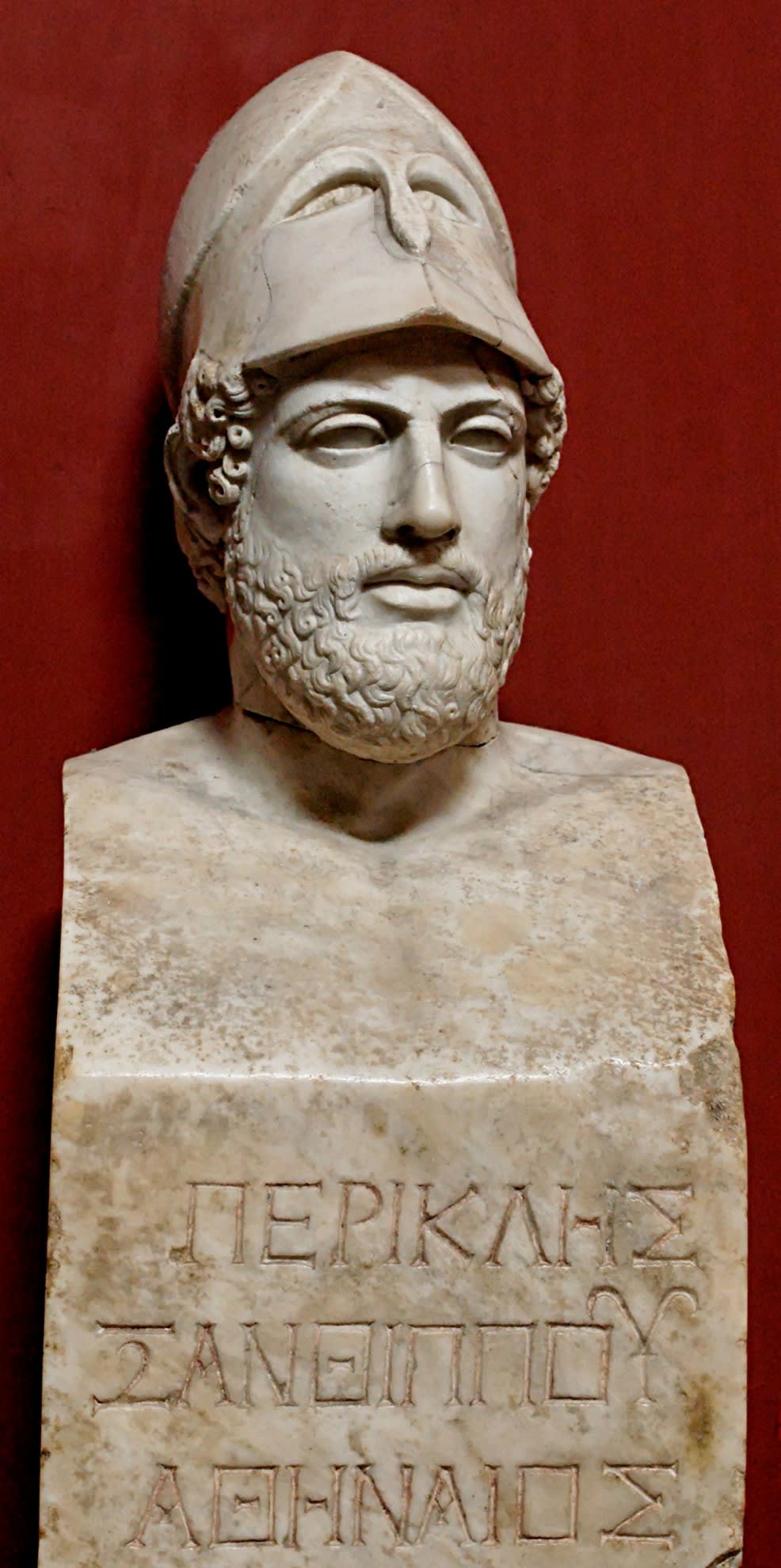
Around 451 BC, Pericles sent one thousand settlers into Macedonian Bisaltia. The Athenians freely extracted resources from the region that were vital for their fleet, especially shipbuilding timber and pitch.
Recognizing the weakness of his fragmented kingdom, Perdiccas initially adopted a policy of submission. There is even evidence, particularly from the orator Demosthenes, that Macedonia may have paid tribute to Athens.
The Macedonian king’s diplomacy was flexible. For example, in 446–445 BC, when Pericles suppressed a revolt on Euboea and expelled the inhabitants of Histiaea, Perdiccas pragmatically received these refugees into his own territories.
However, in 437–436 BC, the Athenians struck directly at the heart of Macedonian economic interests by founding the colony of Amphipolis.
This strategically located city deprived Macedonia of a crucial market for its timber and threatened the silver mines of Bisaltia. Moreover, Athens formed an alliance with the king’s sworn enemies — his exiled brother Philip and the Elimeian ruler Derdas.
Perdiccas’s patience finally ran out. Understanding that an open battle would end in disaster, he began weaving an elaborate network of agents and alliances, setting Athens against Sparta and Corinth while secretly encouraging the cities of Chalcidice to revolt.
By 432 BC, the hidden tension erupted into open war.
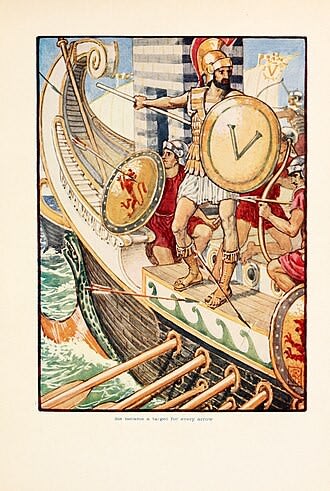
Athens dispatched a squadron of thirty ships carrying one thousand hoplites under the command of Archestratus to the Macedonian coast. Their objective was not only to bring Perdiccas to heel and assist Philip, but also to force the rebellious city of Potidaea to demolish its walls.
In response, Potidaea, supported by Sparta and local tribes, rose in revolt.
The situation quickly became critical. While the combined forces of the rebellious Philip and Derdas invaded from the west and captured the coastal city of Therme, the Athenian general Callias, reinforced by additional troops, laid siege to Pydna, Macedonia’s most important port.
This represented a direct threat to the capital at Aegae.
Perdiccas, however, was extraordinarily fortunate. A Corinthian force under Aristeus arrived to assist Potidaea, forcing the Athenians to abandon the siege of Pydna and hastily conclude a peace treaty with the Macedonian king. As part of the settlement, the strategically important fortress of Methone passed into Athenian hands.
But Perdiccas did not consider himself bound by oaths sworn under the threat of the sword.
The ink on the treaty had barely dried before he broke the agreement and rushed to support the rebels. He positioned himself at Olynthus, intending to strike the Athenians from the rear. Yet the Macedonian cavalry, which was under the control of his enemy Philip, restricted his movements, and the Macedonians ultimately took no part in the decisive battle.
After the fall of Potidaea, Macedonia’s position became critical.
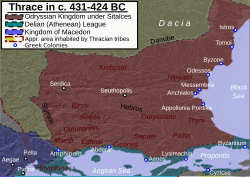
Athens threatened from the sea, the Elimeians from the west, while in the northeast an even more terrifying danger emerged in the form of the rapidly expanding Odrysian Kingdom under King Sitalces.
The Athenians even managed to conclude an alliance with him, forcing Perdiccas into an extraordinary diplomatic reversal. Through one of Sitalces’s favorites, he managed temporarily to enter the Athenian maritime alliance and even recovered Therme.
His duplicity, however, was soon exposed, and in 429 BC disaster struck.
Sitalces invaded Macedonia with an enormous army — ancient authors estimated its strength at 150,000 men.
The Thracians were not merely coming to plunder. They brought with them Amyntas, Perdiccas’s nephew and the son of Philip, intending to place him on the Macedonian throne.
The Macedonian army, unwilling to face such an enormous force in open battle, withdrew into fortified positions and adopted a war of attrition and guerrilla resistance.
The Thracians devastated Anthemus, Mygdonia, and Crestonia.
It seemed that Perdiccas’s days were numbered.
Yet once again the Macedonian king demonstrated extraordinary political skill. After roughly a month, the gigantic Thracian army, suffering from hunger and cold and having failed to receive the expected assistance from the Athenian fleet, turned back.
The secret of Perdiccas’s survival lay not only in logistics.
He had simply purchased the loyalty of Sitalces’s nephew Seuthes by promising him his sister Stratonice in marriage together with an enormous dowry.
This marriage later helped Seuthes seize power in the Odrysian Kingdom — possibly with the assistance of Perdiccas, who may have played a role in the removal of Sitalces.
By 424 BC, Perdiccas’s conflict with Arrhabaeus, ruler of the Upper Macedonian region of Lyncestis, had intensified.
Seeking to solve the problem with someone else’s army, Perdiccas invited the Spartans into Macedonia under the command of the celebrated general Brasidas, promising to finance part of their campaign.
Brasidas, however, had no intention of acting merely as a mercenary for the Macedonian king and began separate negotiations with Arrhabaeus.
Enraged, Perdiccas reduced his financial support.
In the winter of 424–423 BC, after Brasidas captured Amphipolis, Perdiccas nevertheless persuaded the Spartan commander to campaign against Lyncestis.
At first the allies were successful, but suddenly the Illyrian troops they had hired defected to the enemy.
Panic erupted among the Macedonians, who fled and abandoned their Spartan allies.
The furious Spartans fought their way out and, in retaliation, plundered the Macedonian baggage train.
This incident permanently turned Perdiccas against Sparta.
The king immediately reconciled with Athens and blocked the passage of Spartan reinforcements through Thessaly.
In 422 BC, both leading figures of the opposing powers — Cleon and Brasidas — were killed in battle near Amphipolis, paving the way for the Peace of Nicias in 421 BC.
Perdiccas emerged largely unscathed. He had used the Spartans to weaken the Athenians and then restored profitable commercial relations with Athens.
Even in the final years of his life, he continued his grand diplomatic game.
In 417 BC he joined an alliance involving Sparta and Argos, survived a severe winter naval blockade imposed by Athens, and in 414 BC once again fought side by side with the Athenian general Euetion during another attempt to capture Amphipolis.
Perdiccas II was not only a calculating strategist, but also an enlightened monarch who sought to integrate Macedonia into the wider Hellenic cultural world.
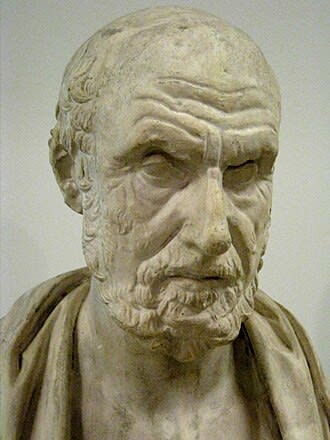
Some of the greatest minds of the age visited his court, including the famous physician Hippocrates, the poet Melanippides, and the “Father of History,” Herodotus.
A famous legend is even associated with Hippocrates. According to the story, the great physician diagnosed the king with a serious illness that turned out to be psychosomatic: Perdiccas was supposedly suffering from unrequited love for Phila, a concubine of his deceased father.
The king’s family life was no less complicated.
His heir Archelaus, who would later become king, was born to Simiche, whom hostile Athenian propaganda described as a slave, although historians tend to believe that she was probably of aristocratic origin.
Perdiccas later married Cleopatra, whose seven-year-old son, after the king’s death, was ruthlessly drowned in a well by Archelaus under the pretense of an “accident.”
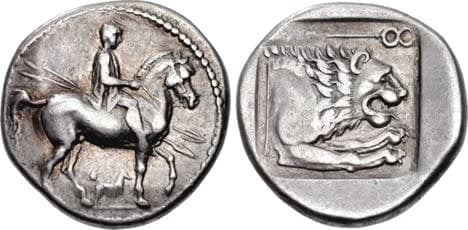
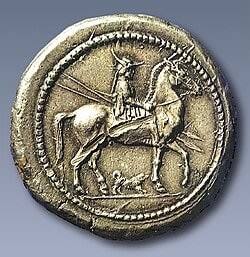
The financial condition of the kingdom during these years was also reflected in its coinage.
Unlike his father, Perdiccas could not afford to mint luxurious octadrachms. His coins, with a maximum denomination of four obols, were issued irregularly and according to different weight standards, adapting to the requirements of trade first with Athens and then with Thrace.
This suggests a persistent shortage of silver caused by the loss of control over important mining regions, but at the same time it highlights the remarkable economic adaptability of the Macedonian state.


