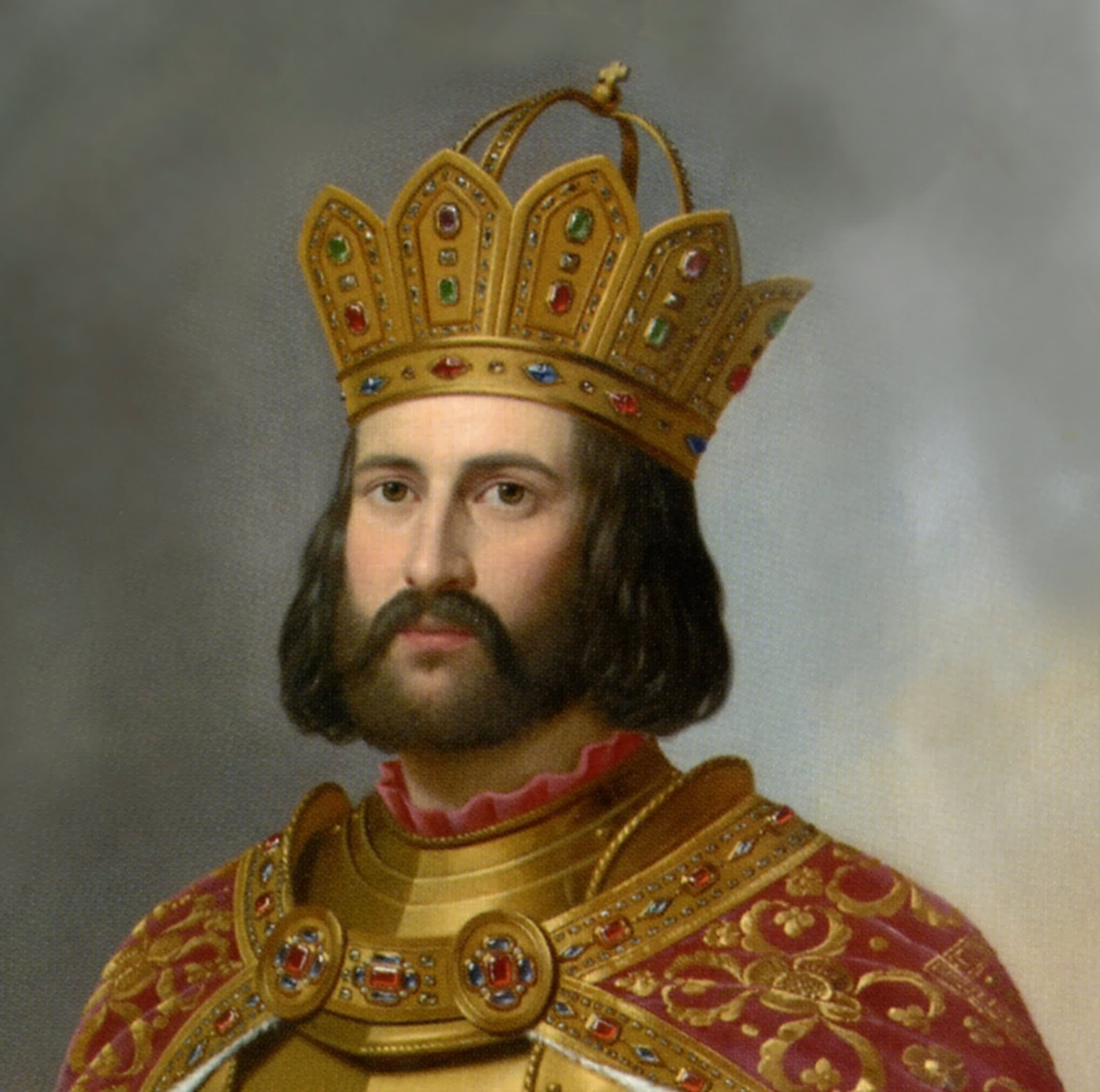
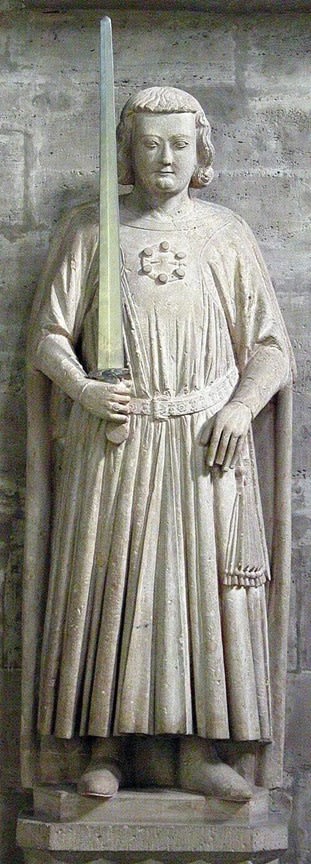
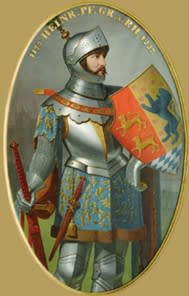
As the third son of the powerful Duke of Bavaria and Saxony, Henry the Lion, and his wife, the English princess Matilda, Otto IV was drawn into the whirlpool of high politics from his earliest childhood.
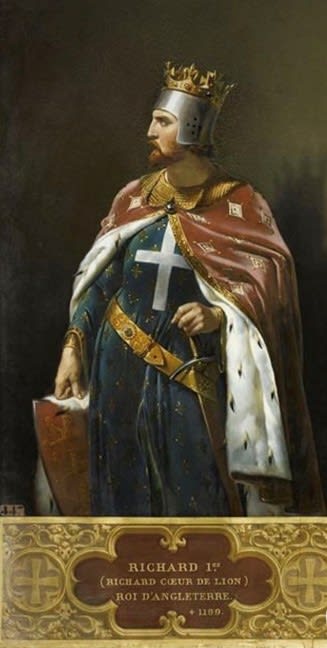
Exiled from Germany, the family found refuge in England at the court of Otto’s maternal grandfather, the formidable King Henry II Plantagenet. It was here, far from the family’s ancestral German lands, that the character of the future monarch was shaped.
Otto grew up at the English court, speaking both French and German with equal fluency and elegance. He soon became the favored protégé of his uncle, the legendary King Richard I the Lionheart of England.
Richard sincerely cared about his nephew’s future. In 1190, before departing on the distant and dangerous Third Crusade, the English monarch granted Otto the title of Count of York. However, the stern Yorkshire vassals questioned the legality of the grant and simply refused to allow the foreign young man to take possession of the lands.
Otto probably visited rebellious Yorkshire in 1191, and even much later, after becoming king of Germany, he stubbornly continued to claim the revenues of the county—revenues that he never actually received.
Another inheritance proved equally elusive: the 25,000 silver marks bequeathed to him by his uncle in 1199 remained nothing more than words on paper.
Richard attempted to compensate for Otto’s failure to secure English territories through a dynastic marriage.
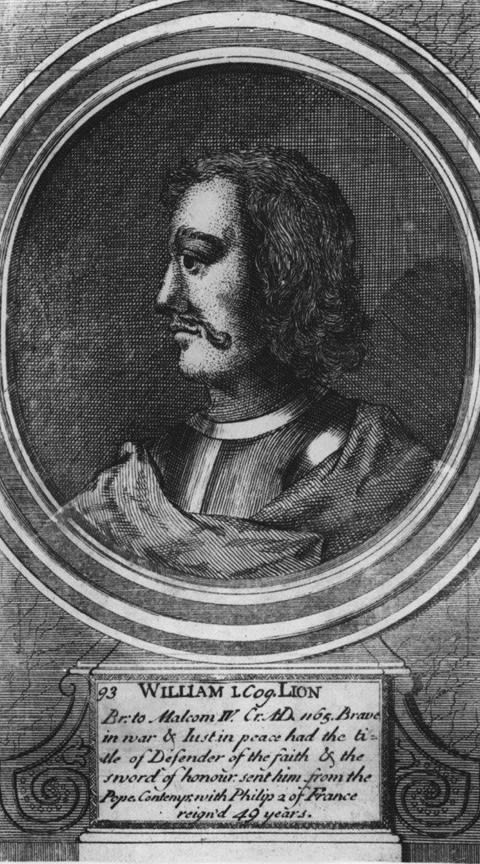
In 1195, he initiated complex negotiations for Otto to marry Margaret, the daughter and presumed heiress of King William the Lion of Scotland.
The plans were ambitious. Richard was to receive control of the region of Lothian as part of the dowry, while Otto was to be granted the counties of Northumberland and Cumberland, including the strategically important city of Carlisle.
Eventually, once Otto ascended the Scottish throne, these lands were supposed to return to Scottish jurisdiction.
However, the diplomatic negotiations, which continued until August 1198, suddenly collapsed: King William unexpectedly fathered the long-awaited male heir, rendering the entire marriage project meaningless.
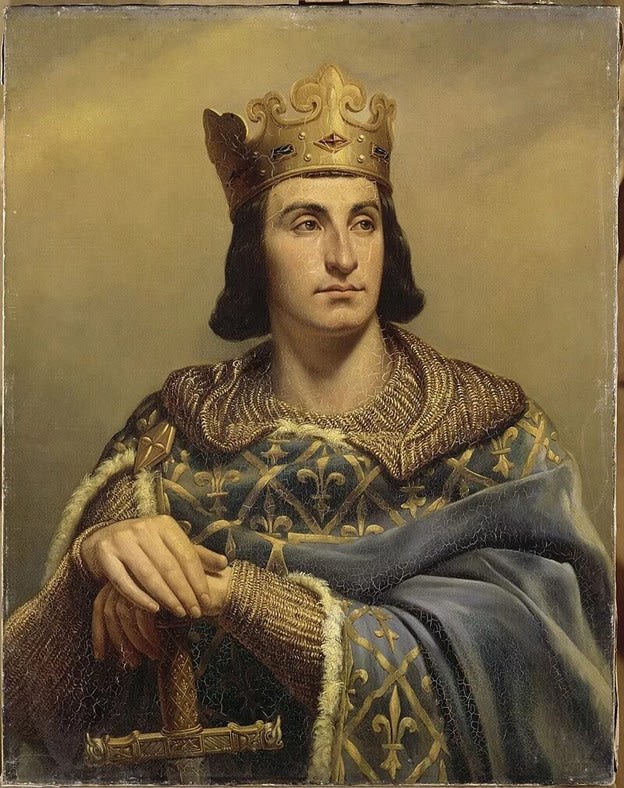
After failing to secure either an English earldom or the Scottish crown for Otto, Richard the Lionheart, who was also Duke of Aquitaine, granted him the County of Poitou in September 1196.
Historians still debate whether this grant was intended as compensation for the lost Earldom of York or as an additional possession.
In any case, Otto ruled Poitou from September 1196 until the middle of 1197, after which he joined his crowned uncle in Normandy.
There, the two participated together in high politics, discussing the appointment of loyal bishops to the vacant sees of Poitiers, Limoges, and Périgord.
Before long, Otto was demonstrating his loyalty to his uncle with sword in hand, fighting alongside Richard in the difficult war against King Philip II Augustus of France.
In October, he returned triumphantly to his possessions in Poitou.
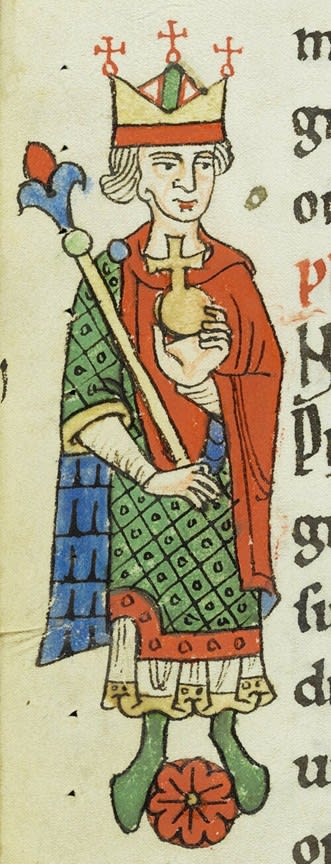
Otto’s great opportunity came after the sudden death of Emperor Henry VI.
The Empire plunged into chaos.
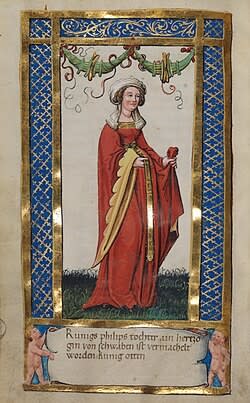
In March 1198, the majority of the imperial princes—predominantly those from the south—elected Philip of Swabia, the brother of the deceased emperor, as king.
Philip acted pragmatically: before the election, he generously distributed gold and made numerous promises.
The northern princes, however, fiercely hated the Hohenstaufen dynasty and, with the active support and initiative of King Richard of England, decided to nominate a candidate from the House of Welf.
Since Otto’s elder brother Henry was at that time fighting in the Crusade of 1197, the choice naturally fell upon Otto.
His authority was soon recognized across much of northwestern Germany and the territories of the Lower Rhine.
On 9 June 1198, his loyal supporters officially elected him king in Cologne.
Demonstrating both military and political skill, Otto seized Aachen—the sacred and traditional coronation site of German monarchs.
On 12 July 1198, Archbishop Adolf of Cologne placed the crown upon his head.
The event carried enormous symbolic significance because historically it was the Archbishop of Cologne who possessed the exclusive right to crown the King of the Romans.
There was only one problem: the ceremony had to be conducted using skillfully manufactured counterfeit imperial regalia, because the authentic sacred insignia remained securely in the hands of the Hohenstaufens.
Otto’s election immediately transformed the Holy Roman Empire into an arena of the wider confrontation between England and France.
Philip of Swabia naturally formed an alliance with the French king Philip II.
Otto, meanwhile, relied upon the military power and gold of Richard I and, after Richard’s death in 1199, upon the support of his brother, King John of England.
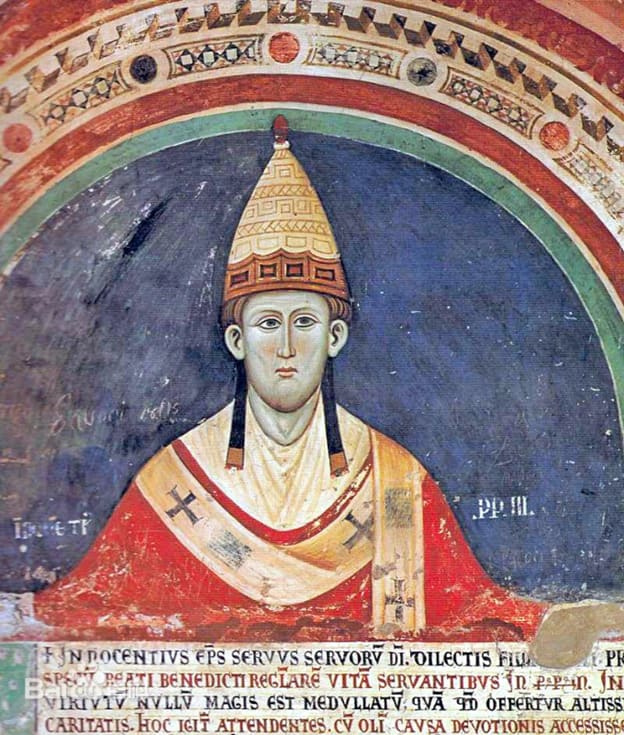
The papacy, led by the ambitious Innocent III, immediately entered this secular struggle.
The pope was deeply afraid of the possibility that the powerful Kingdom of Sicily and the Holy Roman Empire might be united under the rule of a single dynasty, and he decided to exploit the German civil conflict to expand the authority of the Holy See.
Innocent chose Otto, first because the House of Welf was the traditional enemy of the Hohenstaufens, and second because the young king demonstrated a willingness to satisfy virtually any demand made by the pontiff.
Taking advantage of the political paralysis within the Empire, Innocent expelled imperial feudal lords from Ancona, Spoleto, and Perugia—rulers who had previously been appointed by Henry VI.
At the same time, the pope encouraged the cities of Tuscany to create the League of San Genesio, a powerful alliance directed against imperial interests in Italy that immediately placed itself under the protection of the Vatican.
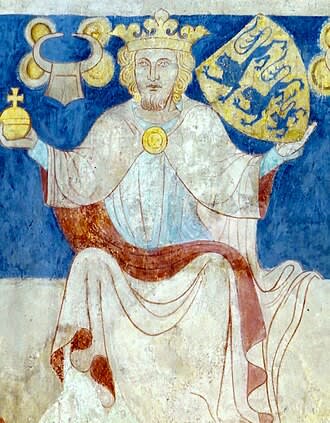
In 1201, Innocent III officially proclaimed Otto the only legitimate king.
In return, the grateful monarch swore to defend papal interests on the Italian Peninsula.
Otto’s diplomatic successes multiplied. King Přemysl Ottokar I of Bohemia, who had initially supported Philip, defected to Otto’s side, while the Welf position in northern Germany was strengthened through an alliance with King Valdemar II of Denmark.
On the battlefields of the civil war, however, fortune turned against Otto.
Philip of Swabia proved to be both a talented military commander and a skillful politician.
In 1204, he achieved an enormously important symbolic victory: he was crowned for a second time, this time by the very Archbishop of Cologne who had defected to his side.
Otto’s situation deteriorated rapidly.
When England was defeated in its war with France, the vital flow of English silver dried up.
One by one, Otto’s previously loyal allies defected to Philip.
Even Otto’s own brother Henry betrayed him.
Disaster struck on 27 July 1206 at the Battle of Wassenberg. Otto’s forces were decisively defeated, and Otto himself was wounded.
The defeat cost him the support of Innocent III. The pragmatic pope hurried to establish relations with Philip, whom he now regarded as the obvious victor.
Wounded and humiliated, Otto was forced to retreat to his hereditary territories around Brunswick, leaving Philip virtually the undisputed master of Germany.
Under pressure from Innocent III, peace negotiations began in Cologne.
The terms offered by Philip in exchange for Otto abandoning his claim to the crown were truly royal: the hand of Philip’s own daughter Beatrice, the title of Duke of Swabia, and an enormous dowry.
But the proud Otto categorically refused.
It seemed that the fires of civil war were about to flare up once more, but an assassin’s dagger intervened in history.
On 21 June 1208, Philip of Swabia was murdered.
His death changed everything overnight.
Otto demonstrated political flexibility: he reconciled with the supporters of the Hohenstaufens and officially became engaged to Philip’s orphaned daughter, Beatrice.
On 11 November 1208, new royal elections were held in Frankfurt, where Otto received the unanimous support of all the prince-electors.
To reassure the nobility, he solemnly swore that he would never attempt to make the imperial crown hereditary in favor of his future children.
Having fully restored his relationship with Innocent III, Otto began extensive preparations for a campaign to obtain the imperial crown.
The price of papal favor was high.
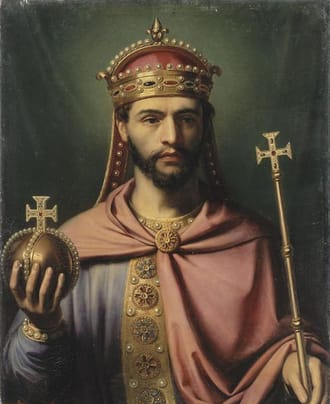
Otto promised to return to the Church enormous territories that the Papal States allegedly had possessed since the reign of Louis the Pious: the March of Ancona, the Duchy of Spoleto, the former Exarchate of Ravenna, and the Pentapolis.
Otto’s triumphal journey into Italy passed through Verona, Modena, and Bologna.
In 1208, in Milan, he placed the Iron Crown of Lombardy upon his head and became King of Italy.
At Viterbo, he was ceremonially received by the pontiff himself.
The culmination came on 4 October 1209, when, beneath the vaults of St. Peter’s Basilica in Rome, Innocent III crowned Otto IV as Holy Roman Emperor.
The triumph, however, was short-lived.
Violent riots soon erupted in the streets of Rome, forcing the newly crowned emperor to leave the Eternal City in haste.
Innocent III, not satisfied with the concessions he had already extracted, continued to pressure the emperor and demanded additional written guarantees.
Otto was required to promise that German bishops would be elected strictly in accordance with canon law, that he would not obstruct appeals by the German clergy to Rome, and—most painfully—that all revenues from vacant episcopal sees, which had traditionally enriched the emperors, would be transferred to the papal treasury.
But the pope had underestimated the pride of the Welf.
After leaving hostile Rome, Otto moved north and reached Pisa by 20 November.
There, surrounded by his advisers—Peter of Celano and Diepold, Count of Acerra—he made a fateful decision: to break all of the humiliating agreements with the Vatican.
The emperor rapidly began the forceful restoration of imperial authority in Italy.
Only a short time earlier, he had sworn not to touch the lands bequeathed to the Church by Countess Matilda of Tuscany a century before, and had promised not to threaten the young King Frederick of Sicily from the Hohenstaufen dynasty.
Now Otto violated all of these promises.
By force of arms, he drove papal garrisons out of Ancona and Spoleto and boldly declared the territories to be imperial fiefs.
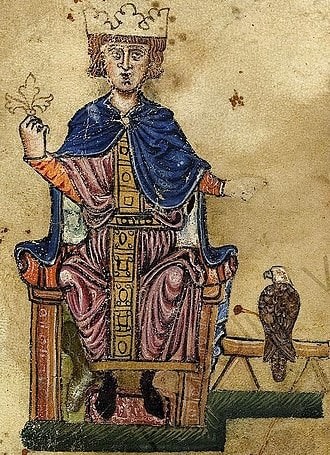
The emperor then demanded that Frederick of Sicily immediately appear before him and swear a vassal oath for the duchies of Calabria and Apulia.
When Frederick predictably refused, Otto declared these extremely wealthy territories confiscated in favor of the Crown and marched his forces directly toward Rome.
At the height of his power, Otto issued an ultimatum demanding that Innocent abolish the Concordat of Worms and recognize the emperor’s absolute right to appoint his own candidates to all ecclesiastical offices.
The Vatican responded with fury.
On 18 November 1210, Innocent III excommunicated Otto IV from the Church and placed him under anathema.
Ignoring papal anger, Otto launched a large-scale invasion of the Kingdom of Sicily, intending to overthrow the young Frederick.
Yet while the emperor became bogged down in the Italian campaign, powerful opposition was developing in Germany.
The princes complained that instead of protecting Germany’s northern frontiers from the expansion of King Valdemar II of Denmark—who, taking advantage of Otto’s absence, had seized almost the entire Baltic coastline from Holstein to Livonia—the monarch was wasting German blood and gold in a personal vendetta against the pope.
The decisive moment came in 1211.
At the Diet of Nuremberg, several of the Empire’s most influential princes, led by the archbishops of Mainz and Magdeburg—with generous financial support from King Philip II of France and the full blessing of the pope—elected Frederick King of the Romans in absentia.
Otto attempted to save the situation.
His representatives traveled from Milan to the Fourth Lateran Council, pleading for the anathema to be lifted and swearing that the emperor sincerely repented and was prepared to fall at the pontiff’s feet.
But Innocent III remained uncompromising: he had already placed his support behind Frederick.
Realizing the scale of the disaster, Otto hurried back to Germany, hoping to preserve his authority by force, only to discover that most bishops and secular nobles had already abandoned him.
Meanwhile, the young Frederick undertook an extraordinary march.
Avoiding Otto’s forces stationed at the Alpine passes, he safely reached Constance.
In the summer of 1212, Otto’s wife Beatrice died, finally severing his connections with Hohenstaufen loyalists.
In September, Frederick entered Germany with an army, and Otto’s former allies defected en masse to his young rival.
Otto withdrew with the remnants of his loyal forces to Cologne, while on 5 December 1212 the princes once again officially proclaimed Frederick king.
In this desperate situation, Otto made his final gamble.
French support for Frederick compelled King John of England to intervene actively in the conflict on behalf of his nephew.
In 1213, the English fleet destroyed French ships, and John began preparing for a major invasion of France.
For Otto, this offered an opportunity to destroy Frederick’s principal sponsor in a single blow and reclaim his throne.
The plan was ambitious.
In February 1214, John was supposed to attack from the Loire region, while Otto, together with the powerful Count of Flanders, would strike the French from the north.
But the brilliant plan collapsed because of disastrous coordination.
John, who had expected an easy campaign, suffered a crushing failure at Roche-au-Moine and fled ignominiously back toward his ships.
Only after this did Otto’s imperial army finally manage to assemble completely in the Low Countries.
On 27 July 1214 came the day that changed the destiny of Europe.
The opposing armies met near a bridge across the small River Marque, a tributary of the Deûle, near Bouvines.
The army of King Philip of France numbered around 15,000 men, while the combined forces of Otto and the Flemings reached approximately 25,000.
The famous Battle of Bouvines began.
The fighting was marked by extraordinary brutality and bloodshed.
The balance shifted repeatedly until a fatal accident occurred.
Otto’s wounded horse, maddened by pain and terror, bolted and carried the emperor away from the battlefield.
Seeing their leader disappear, the allied troops assumed that the monarch had either been killed or had cowardly fled.
Panic spread through the ranks, and the army broke apart into a disorganized mass of fugitives.
The French victory was absolute.
According to tradition, the mocking Philip II picked up Otto’s abandoned imperial eagle from the dust and mud and sent it as a gift to Frederick.
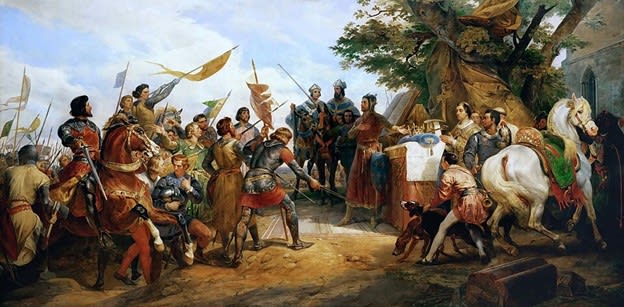
This defeat marked the end for Otto IV.
Frederick entered Aachen and Cologne without serious resistance.
By 1215, Otto had effectively been deposed and had permanently lost real political power.
The deposed emperor spent his final, gloomy years in isolation, wandering among the harsh Harz Mountains and the surrounding wastelands, relying only upon his hereditary possessions around Brunswick.
At the beginning of May 1218, while staying at Harzburg Castle, he became seriously ill, suffering from severe attacks of debilitating diarrhea.
On 13 May, the dying Otto was transported to the family castle of Harzburg.
Sensing that the end was approaching, he dictated his final will.
He named his brother Henry as his principal heir and executor.
Otto also entrusted him with the most valuable possessions he had left—the same counterfeit imperial regalia with which he had once ascended the throne—and strictly instructed him to hand them over to the next legitimately elected king after a specified period.
Otto IV, the man who had nearly brought all of Europe under his control and had challenged the seemingly all-powerful Pope of Rome himself, died on 19 May 1218.


