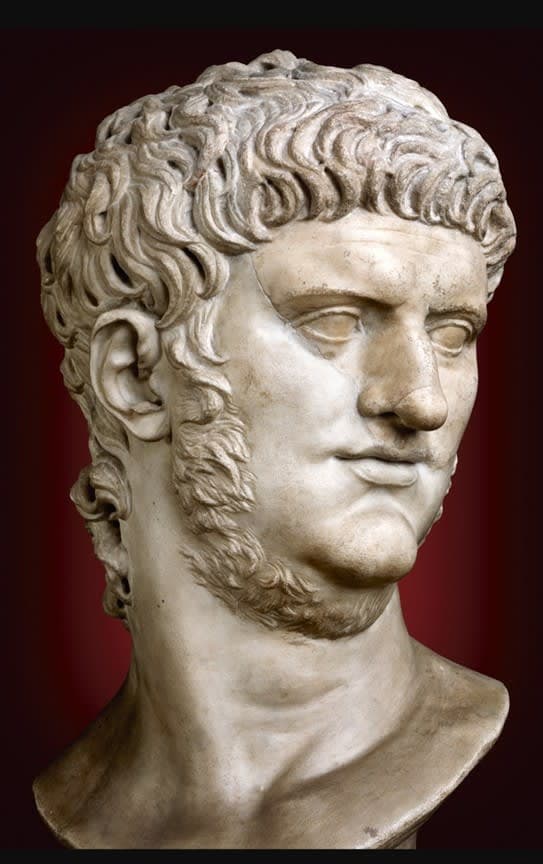
The future emperor Nero was born as Lucius Domitius Ahenobarbus, into an old plebeian family known for its fierce temper and mixed qualities. According to legend, the family’s ancestor, Lucius Domitius, received the nickname “Ahenobarbus” (“red-bearded” in Latin) when two divine twins, resembling the Dioscuri, touched his hair, turning it from black to red. This distinctive trait was passed down by heredity.
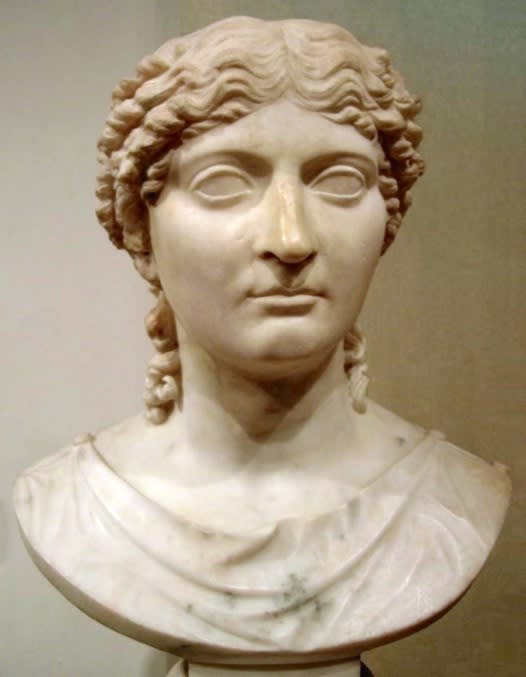
In 28 CE, Gnaeus Domitius, Nero’s father, married the great-granddaughter of Augustus, Julia Agrippina, better known as Agrippina the Younger. Nine years later their son was born. When friends offered congratulations, Gnaeus Domitius grimly replied that from him and Agrippina nothing could be born but “a horror and a calamity for mankind.”
Lucius Domitius was born shortly after the death of Emperor Tiberius. Power passed to his uncle, Emperor Caligula, his mother’s brother. Agrippina, one of Caligula’s favorite sisters, spent much time at court. Ancient historians claim the relations there were highly debauched and that banquets on the Palatine often turned into orgies.
While Agrippina led that life, little Nero lived with his father at a villa between Antium and Rome. In 39, Agrippina and her sister Julia Livilla became embroiled in a plot to overthrow Caligula in favor of their lover Lepidus. Had it succeeded, Lucius Domitius would have become Lepidus’s sole heir. The conspiracy, however, was discovered: Lepidus was executed and the sisters were exiled to the Pontine Islands. Caligula confiscated all their property. Agrippina and Julia Livilla survived by diving for sea sponges and selling them.
In 40, Nero’s father, Gnaeus Domitius, died of dropsy. His property also passed to Caligula. Little Lucius was given to be raised by his aunt, Domitia Lepida the Younger.
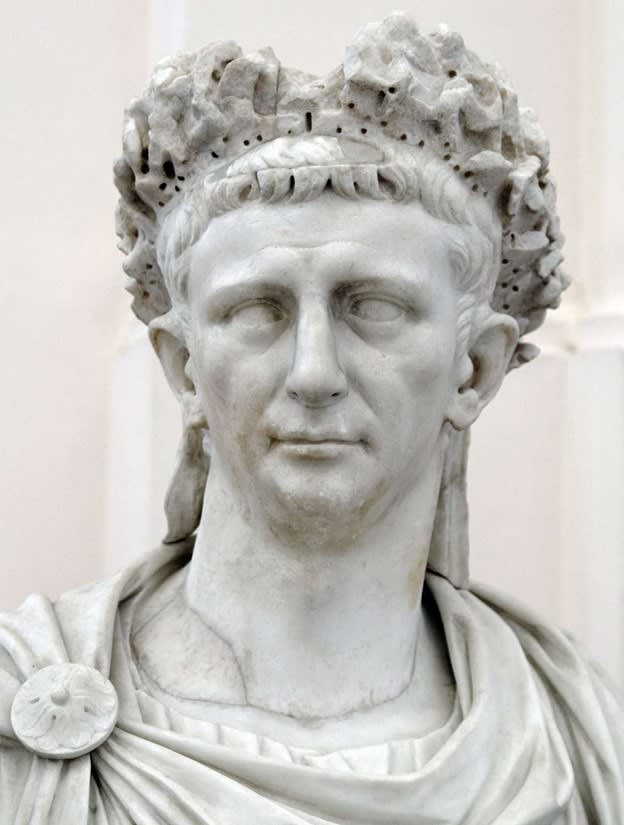
In 41, Caligula was assassinated. His uncle Claudius came to power and recalled his nieces, Agrippina and Julia Livilla, from exile. Agrippina, however, had no means of support. Claudius arranged her marriage to the influential and wealthy consul Gaius Sallustius Passienus Crispus. They lived with Nero in Rome.
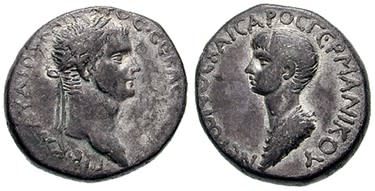
Claudius’s wife, Messalina, saw Agrippina as a serious rival and Nero as a competitor to her son, Britannicus. She even sent killers to strangle the boy, but legend says they were stopped by a snake guarding Nero’s sleep. Messalina did not abandon her attempts to eliminate Agrippina and her son.
In 47, Gaius Sallustius died, and rumors spread through Rome that Agrippina had poisoned him to seize his vast fortune. Soon she became the lover of the imperial treasurer, the powerful freedman Marcus Antonius Pallas.
In 48, Messalina attempted to overthrow Claudius and hand power to her lover Gaius Silius, but the plot was uncovered and she was executed. After her death, Pallas and another powerful freedman, Tiberius Claudius Narcissus, persuaded Claudius to marry Agrippina. They feared that if Britannicus became emperor, he would take revenge on them for Messalina’s execution, and they regarded Nero as a more predictable heir. Despite Claudius’s hesitation, his passion and Agrippina’s persistence won out. Pliny the Elder wrote that Agrippina was beautiful but ruthless and domineering. On January 1, 49, Claudius and Agrippina married.
Agrippina moved decisively. She broke off the engagement of Claudius’s daughter, Claudia Octavia, to Lucius Junius Silanus Torquatus by accusing him of incest. Silanus was forced to commit suicide, and Octavia became free to marry Nero.
In 50, Agrippina persuaded Claudius to adopt Nero. Lucius Domitius Ahenobarbus received a new name Nero Claudius Caesar Drusus Germanicus. Claudius officially recognized him as his heir and betrothed him to Octavia. At the same time Agrippina recalled the Stoic philosopher Seneca from exile to be Nero’s tutor.
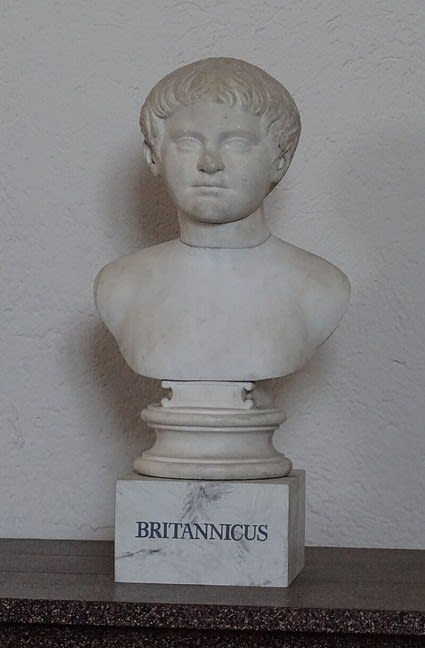
Agrippina began to place her people in key posts. Sextus Afranius Burrus, Nero’s former guardian, became praetorian prefect. Agrippina completely removed Britannicus from court; his tutor Sosebius was executed.
Nero married Octavia in 53. But Claudius began to grow disillusioned with Agrippina. He drew Britannicus close again and started preparing him for power. Seeing her influence wane, Agrippina realized Nero’s only chance to become emperor was to do so quickly. On October 13, 54, Claudius suddenly died after eating mushrooms. Most sources agree he was poisoned by Agrippina, though some say he died a natural death.
After Claudius’s death the praetorians proclaimed the sixteen-year-old Nero emperor. In the first years of his reign, he was entirely under the influence of his mother, Seneca, and Burrus. Agrippina even tried to sit with him at official receptions. Soon, however, listening to his tutors, Nero began to slip from her control. He grew close to the freedwoman Claudia Acte, whom Seneca and Burrus used to weaken Agrippina’s influence. His mother publicly scolded him for the affair, but Nero no longer obeyed.
Agrippina began to weave intrigues, threatening to transfer power to Britannicus. Nero acted ruthlessly: in February 55, Britannicus was poisoned on his orders. Nero then accused his mother of slander, expelled her from the palace, and stripped her of honors and guards. Her lover Pallas fell with her. Nero became sole ruler.
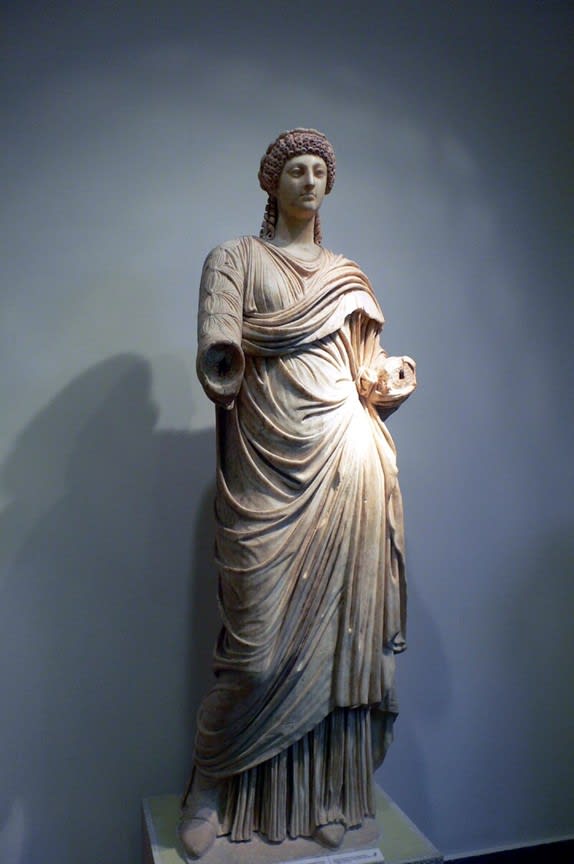
In 58 he grew close to Poppaea Sabina, a beautiful and clever woman of the Roman nobility. Agrippina saw her as a dangerous rival and tried to push Nero back to Octavia. Nero forced Poppaea’s husband, Otho, to divorce and sent him away from Rome. When Poppaea became pregnant, Nero divorced Octavia and married her.
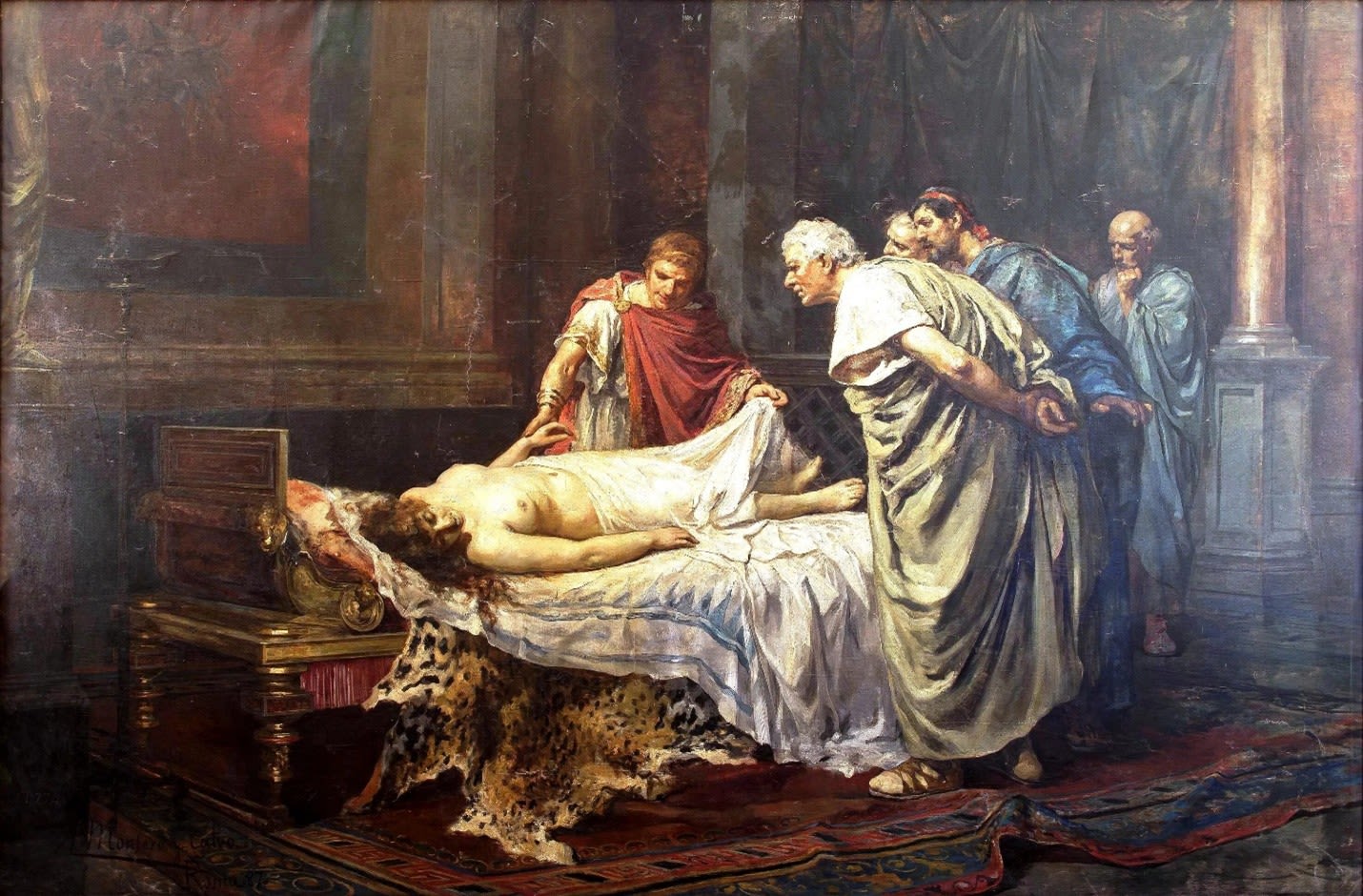
Agrippina did not stop trying to regain influence. Rumors spread that she wanted to transfer power to another relative of Tiberius, Gaius Rubellius Plautus. Learning of this, Nero resolved to kill his mother. He tried to poison her three times without success. Then, in 59, he invited her on a sea voyage in a boat designed to collapse. Agrippina, using her diving skills, saved herself; enraged, Nero ordered her killed openly. When soldiers came, she bared her stomach and asked to be stabbed there, saying she repented of bearing such a son. Nero had her body burned that same night.
Before Nero’s closeness with Acte, he had scarcely engaged in state affairs, shifting them to the Senate. After Britannicus’s death and his mother’s banishment, his attitude to his duties changed. From 55 to 60 he proved an able administrator, focused on improving the lives of ordinary citizens and strengthening his popularity.
Nero enacted laws limiting pledges and fines as well as lawyers’ fees. He protected the rights of freedmen and vetoed a bill that would have punished all slaves for the crime of one. He fought corruption by appointing tax collectors from lower classes and banning officials from holding public banquets.
He also reduced taxes from 4.5% to 2.5% and abolished customs dues for merchants importing foodstuffs. These measures made him extremely popular. To further promote his image, Nero built gymnasia and theaters. In 60 he staged the grand “Neronia” quinquennial festival, with musical, athletic, and equestrian contests to be held every five years.
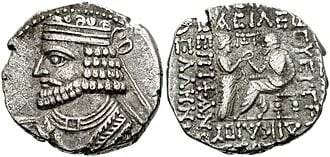
In foreign policy Nero renounced expansionist aims and focused on strengthening existing frontiers. The only major conflict of his reign was the Parthian War of 58–63, sparked by control over Armenia, a buffer between Rome and Parthia.
Armenia had been under Roman protection since Tiberius, but after his death the Parthians several times placed their clients on its throne. In 55, King Vologases I of Parthia, considering the sixteen-year-old Nero inexperienced, openly set his brother Tiridates on the Armenian throne. Rome responded by appointing the talented general Gnaeus Domitius Corbulo proconsul of Asia, Galatia, and Cappadocia.
For three years Corbulo prepared his forces. In 58 he went on the offensive; over two years the Romans seized Armenia’s capital Artaxata and then Tigranocerta. A pro-Roman ruler, Tigranes VI, was installed. In 62, however, the Parthians attacked again, and Nero’s new commander, Lucius Caesennius Paetus, failed to hold the line. Only Corbulo’s intervention averted disaster. In 63, Rome and Parthia concluded the Peace of Rhandeia: Tiridates became king of Armenia, but as a vassal of Rome. To confirm that status he had to go to Rome and receive the diadem from Nero’s own hands. The settlement proved remarkably durable, lasting more than fifty years.
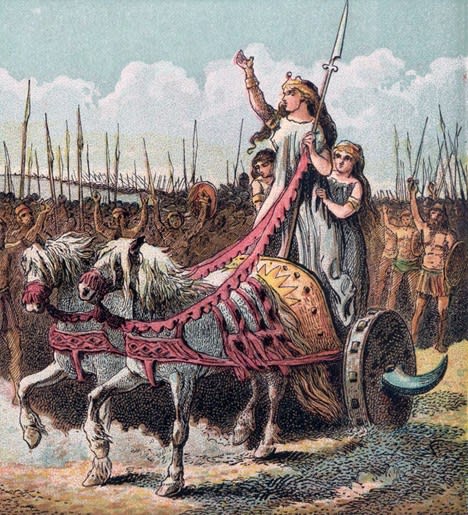
The second serious conflict was Queen Boudicca’s revolt in Britain in 61. The rebels struck first at Camulodunum, then Londinium and Verulamium. The Roman governor, Gaius Suetonius Paulinus, had to abandon the cities; the rebels killed more than 80,000 people. With just 10,000 men, Paulinus fought a decisive battle on a narrow road, where Roman tactics and discipline let them rout the vastly larger Briton host. Roman losses were under 400, while some 80,000 Britons were killed. Seeing defeat, Boudicca took poison.
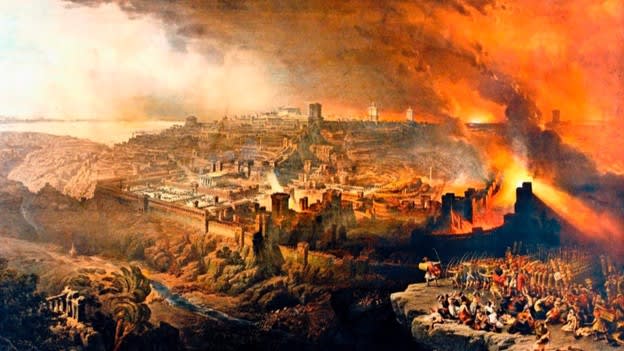
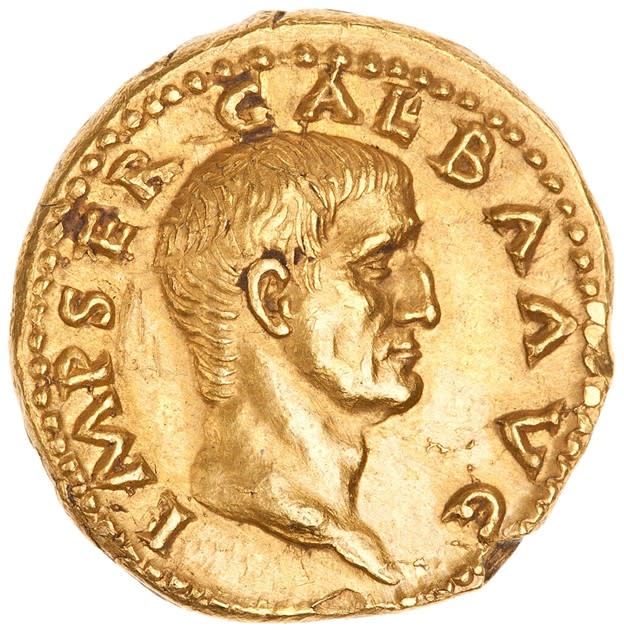
Nero and his advisers skillfully selected able commanders for the provinces. Under him emerged men such as Servius Sulpicius Galba, Marcus Salvius Otho, and Titus Flavius Vespasian each a future emperor. It was Vespasian who was sent in 67 to suppress the Jewish revolt; it ended after Nero’s death, raising him to power and ultimately bringing in the new Flavian dynasty.
The early 60s saw a sharp change in Nero’s behavior. In 62, Burrus died, and the emperor effectively withdrew from governing, lapsing into despotism and arbitrariness. Seneca was again accused of embezzlement and retired from affairs. Nero executed his former wife Octavia and began mass reprisals against his political opponents. At this time persecutions of Christians began in Rome; unlike his earlier protection of low-status citizens, Nero did not defend them.
The emperor’s interests increasingly centered on the arts. Nero considered himself a great poet, singer, and athlete. He composed plays and poems and competed in musical and athletic contests. In 64 he performed publicly for the first time in Naples. In 65 he again took part in the grand “Neronia” festival, displaying his talents before all Rome.
On the night of July 19, 64, one of the largest fires in Rome’s history broke out, destroying much of the city. Rumor blamed Nero himself, saying he watched the blaze while playing the lyre and reciting a poem about Troy’s fall. Modern historians, relying on contemporary testimony, believe the emperor rushed back to Rome on hearing of the fire and funded rescue efforts at his own expense. Afterwards he devised a new urban plan with wider streets and stone buildings to prevent such disasters.
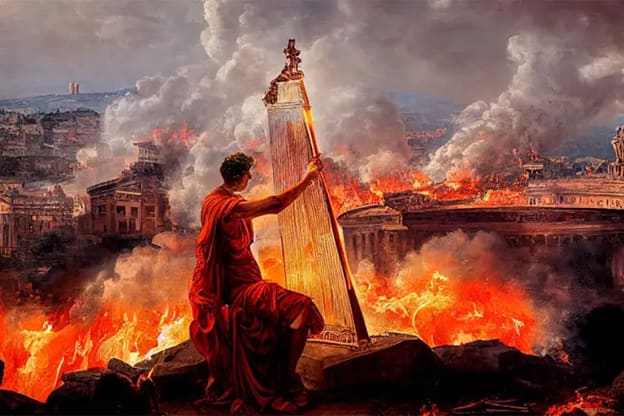
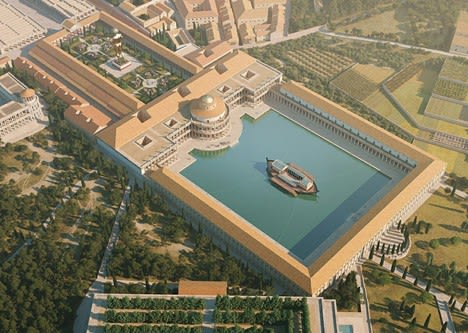
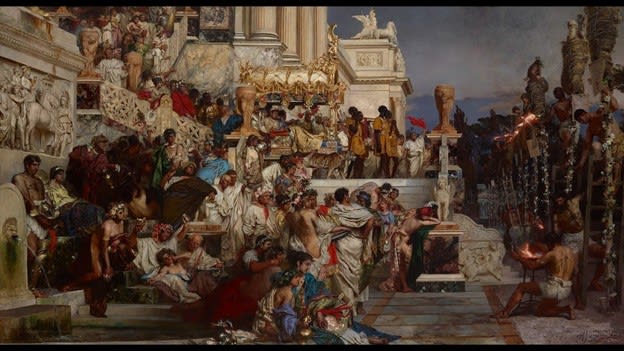
To rebuild the city, Nero levied a one-time tribute on the provinces. In memory of the fire, he began constructing his new luxurious palace the “Golden House of Nero,” intended to be the largest residence in Europe. To find culprits for the arson, he accused the Christians, leading to their mass and brutal executions.
At the same time Nero’s relations with the Senate grew ever more strained. Having promised the Senate privileges, he gradually concentrated all power in his own hands, culminating in the Pisonian conspiracy of 65. The plot was led by the prominent statesman Gaius Calpurnius Piso, who drew many senators and equestrians, as well as Nero’s friends and advisers including Seneca and Petronius and even a praetorian prefect, Fenius Rufus. Motives ranged from changing the monarch to restoring the republic.
The conspiracy came to light through a freedman who informed on his patron. More than forty people were arrested. Piso committed suicide; many others, including Seneca, Petronius, and Fenius Rufus, were executed or forced to kill themselves.
After the plot’s exposure, Nero grew even more suspicious and withdrew entirely from governing, delegating duties to intimates. He plunged into art and sport, competing in various contests. In 67 he even appeared at the Olympic Games; though he fell from his chariot and did not finish, he was nevertheless declared the winner in the ten-horse chariot race.
Meanwhile, orgies on the Palatine resumed, reaching extraordinary scale by 67–68 and lasting several days at a time. Economic difficulties caused by Nero’s grand projects rebuilding Rome and constructing his Golden House were compounded by the plague that struck Italy in 64. Nero drained the provinces with excessive taxation, triggering widespread revolts.
In March 68, the governor of Lugdunensis, Gaius Julius Vindex, raised his legions against Nero in protest at his economic policy. He appealed to the popular governor of Hispania Tarraconensis, Servius Sulpicius Galba, urging him to declare himself emperor. Galba agreed; his legions and those of Vindex proclaimed him emperor.
Vindex’s revolt, however, was quickly crushed by the forces of the governor of Upper Germany, Lucius Verginius Rufus. Despite victory, Verginius refused the imperial title and left the state’s fate to the Senate. Meanwhile Galba, with the remnants of the rebel legions, marched on Rome. His popularity grew, and soon most of the praetorian guard went over to his side.
Learning of the betrayal, Nero left Rome, hoping to raise an army in the eastern provinces. His companions ceased to obey him, and he then heard that even the praetorians planned to swear allegiance to Galba. Realizing all was lost, Nero returned to the Palatine.
Back in an empty palace, he spent the evening alone. Near midnight he sought someone to help him die; no one came. In despair he cried, “I have neither friends nor foes!” He rushed to the Tiber but could not bring himself to drown.
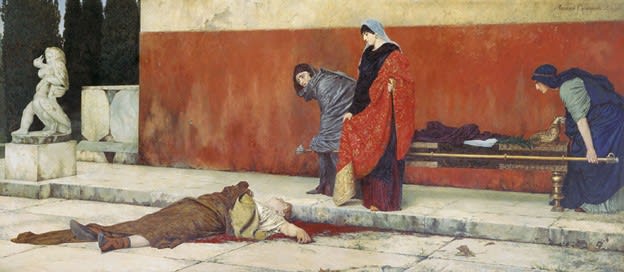
Returning home, Nero found a freedman who advised him to flee to a suburban villa. With a few loyal servants he went there and ordered a grave dug for himself, repeating the famous line: “What a great artist is perishing!” Soon a horseman arrived with news that the Senate had declared him a public enemy and sentenced him to a public execution. Nero tried to kill himself but failed and asked one of his servants to finish him. Hearing the hoofbeats of approaching cavalry, he gathered his courage, recited a line from the Iliad, and, with the help of his secretary Epaphroditus, cut his own throat. He died as the horsemen entered the villa. His last words were: “This is loyalty.”
Nero’s death was received differently in Rome the Senate and upper classes rejoiced, while common people mourned him. His former beloved Acte and two nurses buried his ashes in the Domitii family tomb. Though his name was erased from some monuments, the Senate did not formally pronounce damnatio memoriae.
With Nero’s death the Julio-Claudian dynasty ended. A year of civil war began, with four contenders vying for power. Two of them, Otho and Vitellius, promised to continue Nero’s policies. In the end Vespasian triumphed, founding the new Flavian dynasty. Nero’s death set a precedent: an emperor need not be related to his predecessor. Nero remained a popular and much-discussed figure in Rome for a long time, and rumors of his return circulated for centuries after his death.


