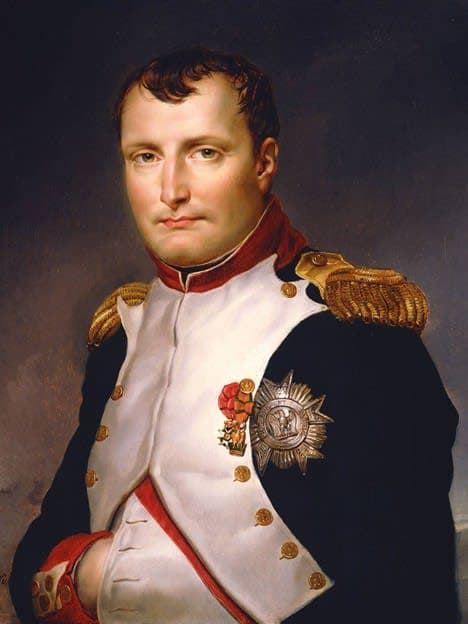
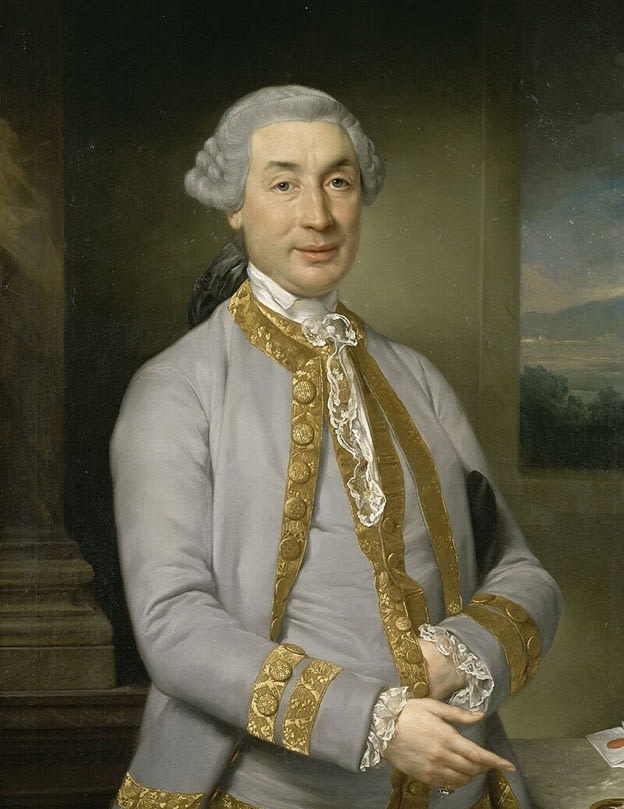
The biography of one of the greatest commanders in history, Napoleon Bonaparte, begins on the island of Corsica. He was born on August 15, 1769, in the city of Ajaccio, to Carlo Maria Buonaparte and Maria Letizia Ramolino. His family belonged to the petty aristocracy, having Florentine roots. His father, Carlo, was a judge and an assistant to the local leader Pasquale Paoli, who headed the resistance to Genoese rule.

In 1768 the Republic of Genoa sold its rights to Corsica to the French king Louis XV. In May 1769 the French troops crushed the rebels. Napoleon’s parents remained on Corsica, and he himself was born just three months after this defeat. Throughout his youth Paoli remained for him an idol and a hero.
The Buonaparte family, despite a modest income, possessed a certain standing thanks to the dowry of Napoleon’s mother, Letizia Ramolino, who was the daughter of the inspector general of bridges and roads. Napoleon was the second of eight children who lived to adulthood. He was born with the Italian name Napoleone, which was rather rare but had historical roots. Although his father bore the surname Buonaparte, the son’s birth certificate read “Bonaparte.”

Little is known about Napoleon’s early childhood, but he was different from his peers. His native language was the Corsican dialect of Italian, and he began to study French only at the age of ten. Throughout his life he spoke with a strong Italian accent.
In December 1778 his father, having secured a royal stipend, took Napoleon and his elder brother Joseph to France. They were placed in the military lycée in Autun so that they would learn the French language. Then, in May 1779, Napoleon entered the cadet school at Brienne-le-Château.
These years were a serious trial for him. Because of his Corsican origin, his not-too-noble surname, and his Italian accent, he became the object of ridicule from classmates. He was nicknamed “Straw-in-the-nose.” Loneliness made him withdraw into himself, but it also pushed him toward deep reading. He devoured historical literature; above all he was captivated by ancient heroes such as Alexander the Great and Julius Caesar. He did well in mathematics and history, which helped him become the informal leader among his classmates despite their initial rejection.
It was at Brienne that Napoleon made his choice and decided to specialize in artillery. This branch required mathematical talent and gave more opportunities for career advancement regardless of origin. In October 1784 he entered the École Militaire in Paris, where he continued to study mathematics, tactics, and military technology.
Despite the years spent in France, he still openly expressed his admiration for Paoli and dislike of the French. He was lonely, but his character was tempered, and his personality was formed under the influence of French culture, which at that time was very attractive. The long years spent away from home made a Frenchman out of a Corsican.
Napoleon’s military career began under circumstances in which his family found itself on the verge of ruin. In 1782 his father, Carlo Maria Buonaparte, received a grant from the king of France to establish a mulberry nursery. However, three years later the concession was revoked, leaving the family with huge debts and the obligation to return the money. In 1785 his father died, and the 16-year-old Napoleon assumed the role of head of the family, although this contradicted tradition.
On September 28, 1785, Napoleon graduated early from the military school, and already on November 3 he began his professional career in the La Fère Artillery Regiment in Valence with the rank of junior lieutenant. To help his family he sent part of his meager salary to his mother, living in extreme poverty. He even attempted to enter the well-paid service in the Russian Imperial Army, which was recruiting foreign volunteers for the war with the Ottoman Empire. However, he refused this step, as he would have had to be reduced in rank.
When the French Revolution began in July 1789, Napoleon found himself at a crossroads. On the one hand, he was a Corsican patriot; on the other, he served France. However, at that moment he was more concerned with the family’s financial problems. In August 1789 he went to Corsica on leave, where he actively participated in local political struggles on the side of the revolutionary forces. He supported turning Corsica into a department of France, which led to a break with his idol, Pasquale Paoli, who advocated full independence for the island. In June 1793 the Bonaparte family, due to political persecution, was forced to move to France.


Napoleon received an appointment in the revolutionary army. At this time, he wrote the pamphlet “The Supper at Beaucaire,” which brought him the reputation of a convinced revolutionary. In September 1793 he arrived at the army besieging Toulon, occupied by the English and royalists. Receiving the post of chief of artillery, he devised and brilliantly carried out a military operation that led to the capture of the city. At the age of 24 he received the rank of brigadier general.
Despite his successes, Napoleon’s political career was unstable. After the Thermidorian coup, he was arrested because of his ties with the younger Robespierre, but two weeks later he was released. He continued to engage in military affairs, but his appointment to the Vendée, where he was to command infantry, outraged him, and he refused, citing poor health. Having lost his pay, he found himself in a difficult financial situation and even considered entering the service of the East India Company.
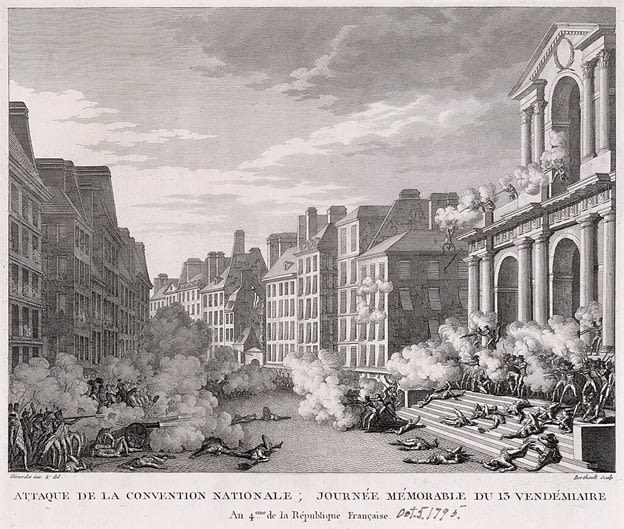
At this critical moment his fate changed. On October 5, 1795, he distinguished himself in suppressing the Vendémiaire uprising in Paris, using artillery grapeshot. For this feat he was promoted to the rank of divisional general and appointed commander of the interior forces.

Another fateful event was his acquaintance with Joséphine de Beauharnais, the widow of an executed general and the mistress of one of the rulers of France. On March 9, 1796, they entered into a civil marriage. Some historians believe that Joséphine’s wedding gift from Barras was Napoleon’s appointment as commander of the Army of Italy, although others claim it was Carnot’s idea. On March 11 Napoleon set out to his new army, and in a letter to Joséphine he deliberately changed his surname from the Italian “Buonaparte” to the French “Bonaparte,” emphasizing his new, French identity.
Taking command of the Army of Italy, Napoleon Bonaparte encountered a dire situation: the soldiers were not receiving pay, and supplies were insufficient. He quickly realized that the only solution would be to carry the war onto enemy territory and live at the enemy’s expense.
Bonaparte developed an innovative operational plan based on speed and concentration of forces. Unlike his opponents, who adhered to the outdated “cordon strategy” (dispersal of troops along the border), Napoleon concentrated his forces. In the Montenotte campaign in April 1796 he quickly defeated the forces of the Sardinian and Austrian generals in turn.
This brilliant victory allowed him to occupy almost all of Northern Italy. The Sardinian king and the Italian dukes were forced to conclude an armistice and pay huge indemnities. The Pope’s possessions were also seized, and he was forced to cede enormous sums of money and numerous works of art.
Napoleon showered Joséphine with letters, begging her to come, but she did not reply at once, being infatuated with a young officer. However, despite personal turmoil, Napoleon displayed a unique talent for separating personal problems from professional ones, which allowed him to remain focused on his military tasks.
After the capture of the fortress of Mantua and a series of victories over the Austrians, including the Battle of Rivoli in January 1797, Napoleon finally drove them out of Italy and advanced on Vienna. He was only 100 kilometers from the Austrian capital when, on April 7, an armistice was concluded.
Napoleon acted as an independent ruler. He declared war, founded new states such as the Cisalpine and Ligurian Republics, completely ignoring the directives of the Directory in Paris. He also used army newspapers to create his political image. He sent part of the enormous war booty to Paris to strengthen his influence. He also provided the Directory with military support, preventing a royalist uprising, and then, by signing peace with Austria at Campo Formio, finally established himself as the victor.


After his triumph in Italy, Napoleon acquired enormous popularity. He was appointed commander of the army intended for the invasion of Great Britain. However, after inspection, he concluded that it was unfeasible and proposed another plan: to conquer Egypt as a foothold for a future campaign against British positions in India. The Directory, fearing the growing influence of the general, gave him carte blanche.
On May 19, 1798, the expedition, which included 35,000 soldiers and 167 scholars, secretly sailed from Toulon, avoiding contact with Nelson’s British fleet. After seizing Malta, Napoleon moved on to Egypt.
On July 21, in the famous Battle of the Pyramids, his troops, thanks to superior tactics, utterly defeated the Mamluk army. However, soon after this victory, Napoleon received news of Joséphine’s infidelity, which, in the opinion of historians, made him even more suspicious and egocentric.


On August 1, in Aboukir Bay, Nelson’s British squadron destroyed the French fleet. Napoleon found himself cut off in Egypt, and the English gained full control of the Mediterranean. Despite this, he continued his mission, creating the Institute of Egypt, whose work laid the foundations of modern Egyptology.
Despite successful measures to win over the local population, an uprising broke out in Cairo. Napoleon suppressed it harshly, and then in February 1799 he began a campaign into Syria. He managed to take Gaza and Jaffa, but he could not seize Acre, which was supported from the sea by the British fleet. Realizing that he was trapped, on August 23, 1798, Napoleon secretly sailed for France, leaving the army to General Kléber. He returned to Paris, but not as a conqueror; rather as a man capable of avoiding defeat.
While Napoleon Bonaparte was with his army in Egypt, France was experiencing a deep political crisis. The Second European Coalition, which included the monarchies of Europe, threatened the republic’s existence. The Russo-Austrian forces under Suvorov regained Northern Italy, and the Directory, having lost all of Napoleon’s gains, found itself in a desperate position. Amid internal instability and external threat, a conspiracy matured, led by the directors Sieyès and Ducos. They sought a “sabre,” a military leader capable of restoring order. Their choice fell on Bonaparte, who had just secretly returned from Egypt with the aura of a hero.
Despite his caution, Napoleon actively participated in preparing the coup. On 18 Brumaire (November 9), 1799, the Council of Elders, controlled by the conspirators, adopted a decree transferring the sessions of both chambers to Saint-Cloud and appointed Napoleon commander of the troops. Sieyès, Ducos, and Barras resigned, which created a vacuum of executive power. However, the next day the Council of Five Hundred, where Jacobin influence was strong, refused to approve the decree. When Napoleon entered the chamber, he was met with threats. Then his brother Lucien summoned the soldiers, and the troops under Murat dispersed the session. That same evening a commission was established which began drafting a new constitution.
Three provisional consuls were appointed: Napoleon Bonaparte, Sieyès, and Ducos. Napoleon, displaying his political mastery, managed in five weeks to draft a constitution that concentrated executive power entirely in the hands of the First Consul, appointed for ten years. The Second and Third Consuls (Cambacérès and Lebrun) had only consultative votes. Formal elections confirmed Napoleon in this office. The constitution was adopted by the people in a plebiscite, although the results were falsified.
At the moment Napoleon came to power, France was at war with Great Britain and Austria. In May 1800 he undertook the Second Italian campaign, repeating the triumph of the first. Crossing the Alps, he defeated the Austrians at the Battle of Marengo on June 14, 1800. This victory made it possible to begin peace negotiations, which concluded with the Treaty of Lunéville with Austria and the Treaty of Amiens with Great Britain, bringing the War of the Second Coalition to an end and temporarily establishing peace in Europe.


Napoleon embarked on large-scale administrative and legal reforms that laid the foundations of the modern French state. In 1800 he carried out an administrative reform, establishing the institution of government-answerable prefects and subprefects. This made it possible to streamline tax collection and conscription. He also founded the Bank of France to issue money and centralized the financial system.
Understanding the importance of control over information, he closed most newspapers and created powerful police under Fouché. In 1802 the Legion of Honour was established, replacing revolutionary decorations. In 1801 a Concordat was concluded with the Pope, which restored Catholicism as the religion of the majority of the French, but placed the Church under state control.
Napoleon skillfully balanced between the achievements of the Revolution and monarchical traditions. He enshrined property rights and equality before the law, putting an end to revolutionary anarchy. In the consciousness of the French, he became the guarantor of stability and prosperity, which allowed him to move to the next step, namely to obtaining lifetime powers.
In 1802 Napoleon, relying on the results of a plebiscite, pushed through the Senate a decision on the lifetime consulate. He received the right to present to the Senate his successor, which in fact restored the hereditary principle of rule. In 1803 he strengthened the financial system by issuing the metallic franc, which remained in circulation until 1928.

Napoleon’s foreign policy aimed at ensuring France’s economic superiority over Great Britain. This led to a worsening of relations: the British refused to evacuate their troops from Malta, and Napoleon, for his part, occupied a number of territories. In May 1803 Great Britain declared war on France, and Napoleon began preparations for a landing on the British Isles, creating a huge military camp near Boulogne.
Within the country he continued to strengthen his personal power. On March 21, 1804, the “Napoleonic Code” was ratified, which enshrined fundamental civil rights and property rights. After the uncovering of the plot of Cadoudal and Pichegru, in which royalists participated, Napoleon used this as a pretext to deal with his opponents. The execution of the Duke of Enghien, a member of the royal house of Bourbon, showed his resolve and was used to justify the necessity of hereditary power.
On May 18, 1804, a new senatus-consultum proclaimed Napoleon Emperor of the French, which marked the end of the republic and the beginning of the First Empire. At the same time new offices were instituted, including the rank of Marshal, which had been abolished during the Revolution. High dignitaries were appointed and eighteen generals became Marshals of France.
Napoleon wanted his power to be legitimized by the highest authority, and insisted that the Pope take part in the coronation ceremony. The Pope, in turn, demanded that Napoleon and Joséphine be married according to the church rite. The ceremony took place on the night of December 2, 1804, in Notre-Dame Cathedral. Napoleon, symbolically showing that his power proceeded from himself, crowned himself, and then placed the crown on Joséphine. This act, in Stendhal’s words, became “the obvious union of all charlatans.”


The coronation laid bare the hidden enmity between Napoleon’s family (the Bonapartes) and Joséphine’s family (the Beauharnais). Napoleon’s sisters did not want to carry Joséphine’s train, and his mother refused to be present at the ceremony. Despite the family quarrels, Napoleon remained generous to his relatives, though he was displeased with them.
To strengthen his power Napoleon created the Kingdom of Italy, where he became king and his stepson Eugène de Beauharnais viceroy. This decision, however, aroused hostility from Austria and contributed to the formation of a new anti-French coalition.
In 1805 the Third Coalition against France was formed, which included Great Britain, Austria, Russia, the Kingdom of Naples, and Sweden. The British financed their allies, granting them huge subsidies. In response, Napoleon, abandoning his plans for a landing on the British Isles, transferred his troops from the Boulogne camp to Germany.
At the Battle of Ulm on October 20, 1805, the Austrian army capitulated. However, the next day the British fleet under Nelson defeated the Franco-Spanish fleet at the Battle of Trafalgar. This defeat made an invasion of Great Britain impossible and secured her dominance at sea.


Despite the setback at sea, Napoleon continued to win on land. On December 2, 1805, at the Battle of Austerlitz, he dealt a crushing defeat to the Russo-Austrian forces. After this Austria concluded the Treaty of Pressburg with France. Napoleon continued to expand his empire, placing his relatives on the thrones of conquered states; his brother Joseph became king of Naples, and another brother, Louis, king of Holland.
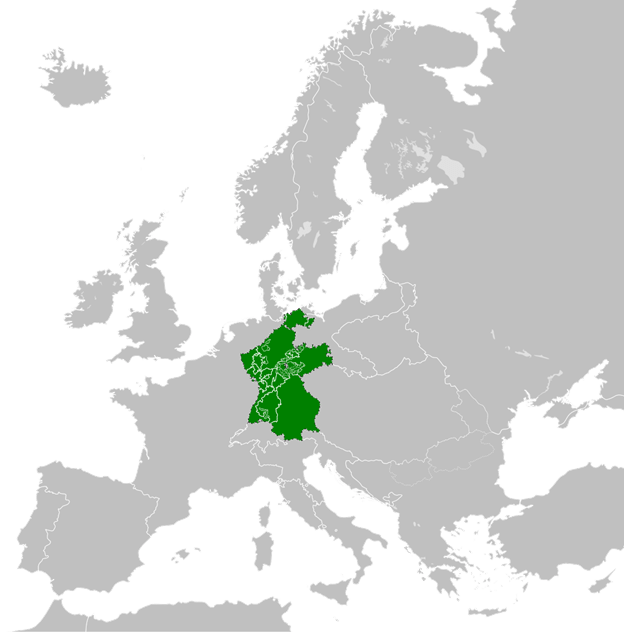
In 1806 the Confederation of the Rhine was created under Napoleon’s protection, which in effect led to the dissolution of the Holy Roman Empire, which had existed for almost a thousand years.
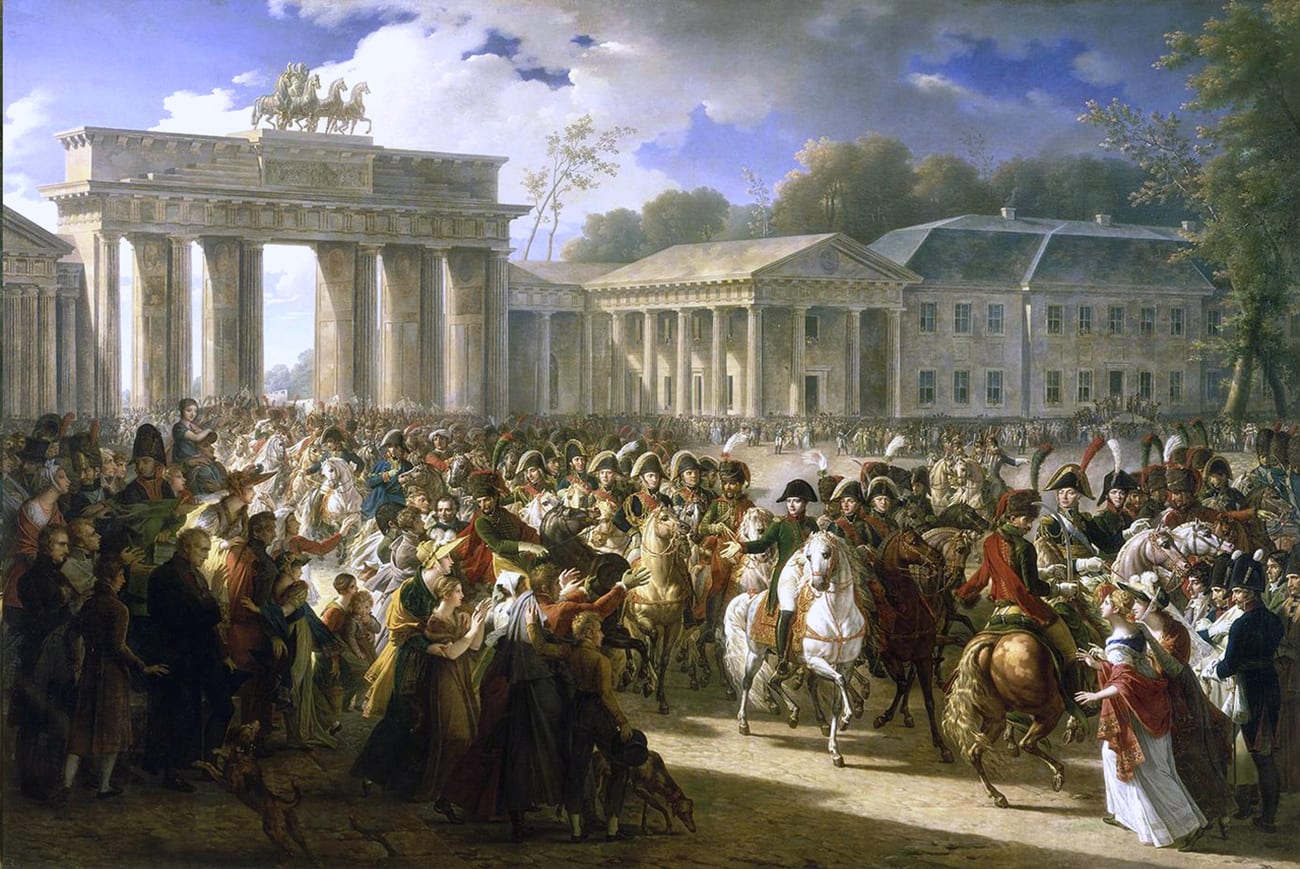
Alarmed by the growth of French influence in Germany, Prussia declared war on Napoleon. In the battles of Jena and Auerstedt on October 14, 1806, the Prussian army suffered a crushing defeat. Napoleon entered Berlin and imposed a huge indemnity on Prussia.
Russia came to Prussia’s aid. Napoleon turned to the Poles, promising them independence, and entered Warsaw. At the Battle of Eylau on February 8, 1807, the Russian and French armies met in a bloody engagement that produced no victor. It was the first time in many years that Napoleon did not win a decisive victory.
During this campaign Napoleon learned of the birth of his son Charles Léon, which strengthened his confidence in the possibility of founding a dynasty if he divorced Joséphine.
After the defeat of the Russian forces at Friedland on June 14, 1807, the Treaty of Tilsit was concluded, which ended the War of the Fourth Coalition. Under its terms the Duchy of Warsaw was created, and from Prussian possessions the Kingdom of Westphalia, at the head of which Napoleon placed his brother Jérôme.
These victories made Napoleon practically an unbeatable commander, and he established complete one-man rule in the empire. He became increasingly nervous and arrogant, disregarding the opinions of his ministers and relatives. In order to control his vast empire, he created a system of administrative councils and established the Court of Accounts.
After Great Britain announced a blockade of the French coast, Napoleon responded on November 21, 1806, in Berlin, by signing the decree on the Continental Blockade. From that moment France and her allies ceased trade relations with England. Since Europe was the main market for British and colonial goods, this inflicted significant damage on the English economy. The export of cloth and cotton fell, and the prices of raw materials imported from the continent rose. The situation became even more critical for Great Britain after the Treaty of Tilsit in 1807, when Russia joined the blockade.
However, the blockade also hit continental Europe. French industry could not satisfy the needs of the European market, which led to the decline of port cities and shortages of colonial goods such as coffee and sugar. Although Napoleon encouraged the production of sugar from sugar beet, new technologies were introduced very slowly.
In 1807, seeking to force Portugal to join the blockade, Napoleon concluded a secret treaty with Spain on its conquest and partition. In November 1807 the French troops entered Lisbon. The Portuguese royal court fled to Brazil, which infuriated Napoleon.
Counting on his share, the Spanish prime minister Godoy allowed the French troops into Spain. However, Napoleon summoned both Spanish monarchs, father and son, to Bayonne, where he forced them to abdicate. He placed his brother Joseph on the Spanish throne.
This intervention provoked a mass uprising in Spain, which grew into a guerrilla war. For the first time the Grande Armée of Napoleon suffered defeat, and the English troops, landing in Portugal, forced the French to evacuate.
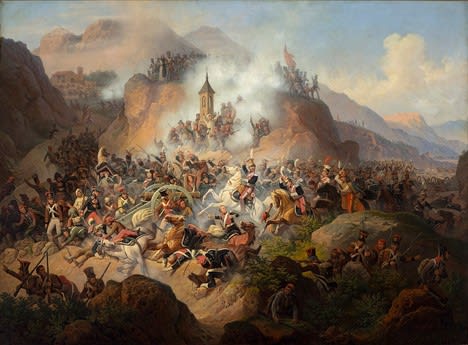

To put an end to the Spanish problem, Napoleon had to personally lead a campaign, but his successes were incomplete. He returned to Paris when he received news of Austria’s military preparations and of intrigues in his own government. The Spanish war became for him a source of constant expense and loss of soldiers. Napoleon called it “the prime cause of misfortunes.”
In April 1809 Austria, counting on anti-French sentiment in Germany, declared war on France. Despite being occupied in Spain, Napoleon managed in three months to assemble a new army. The Russian troops, although on the border, did not take part in the fighting, allowing Austria to wage war on one front, which aroused Napoleon’s anger.
He captured Vienna, but in the Battle of Aspern-Essling he suffered a defeat, which encouraged all his opponents. However, after six weeks of preparation, he won a decisive victory at the Battle of Wagram and concluded the Treaty of Schönbrunn, by which Austria lost access to the sea. This campaign showed that Napoleon no longer had his former advantage on the battlefield.

By 1810 the empire faced a deep crisis. The population was tired of wars, and economic problems caused discontent. The new nobility that Napoleon had created did not become a solid support. Wishing to strengthen the dynasty, Napoleon divorced the childless Joséphine and married the Austrian princess Marie-Louise, who bore him a son. However, this marriage was extremely unpopular in France.
Napoleon continued to demonstrate his boundless power. He arrested Pope Pius VII, who had excommunicated him, and annexed Holland to France, depriving his brother Louis of his crown. The Continental Blockade did not work, and the contradictions between France and Russia became ever more apparent.
After the break in relations with Alexander I, Napoleon decided on war with Russia. In June 1812 his Grande Armée, numbering 450,000 soldiers from different countries of Europe, crossed the Russian border. They were opposed by two Russian armies numbering 193,000 men. Avoiding a general engagement, the Russians retreated deep into the country, leaving scorched earth behind them. The Grande Armée suffered from hunger, disease, and desertion.
Having united near Smolensk, the Russian forces continued their retreat toward Moscow. Command of the united army was taken by Mikhail Kutuzov. On September 7, near the village of Borodino, a general battle took place that did not bring Napoleon a decisive victory. The Russian army again retreated, and on September 14 the French entered Moscow.


A fire broke out in Moscow, destroying most of the city. Napoleon unjustifiably long awaited from Alexander I an offer of peace, but it never came. On October 19 he began his retreat, but failing to break through to the south through the defense of the Russian army near Maloyaroslavets, he was forced to retreat along the already devastated Smolensk Road.
The Grande Armée, suffering from hunger and cold, turned into a disorganized mob. The soldiers plundered the population, which in turn carried out brutal reprisals. Napoleon with great difficulty avoided complete defeat during the crossing of the Berezina on November 27–28. Realizing the scale of the catastrophe, he secretly left the army on December 5 and went to Paris. In his last bulletin he blamed all the losses on the severity of the Russian winter, although the real frosts struck only at the very end of the campaign. Of the 450,000 men, only 25,000 returned to the ranks.
Defeat in Russia shattered the legend of Napoleon’s invincibility. Alexander I, despite the exhaustion of his army, decided to continue the war beyond Russia’s borders. Prussia joined the new, Sixth Coalition. Within a few months Napoleon assembled a new 300,000-strong army, consisting of youths and old men, but it did not have its former combat capability.
In May 1813 Napoleon won victories at Lützen and Bautzen. However, his marshals suffered defeats, and Austria and Sweden joined the coalition. In the “Battle of the Nations” at Leipzig, which lasted three days from October 16 to 19, 1813 where Napoleon’s 160,000-strong army faced a 320,000-strong allied army he suffered a crushing defeat.

Defeat at Leipzig led to the collapse of the empire. At the end of 1813 the allied armies invaded France. On March 31, 1814, the coalition troops entered Paris. Although Napoleon was ready to continue the struggle, his marshals persuaded him to abdicate in favor of his son. On April 6, 1814, at Fontainebleau, he signed the act of abdication and went into exile on the island of Elba.
Under the Treaty of Fontainebleau, he was promised an annual pension, but the money never arrived, which placed him in a dire financial situation. Marie-Louise with his son refused to come to him, and Joséphine died. Napoleon closely followed events in France, where the restored Bourbon dynasty, headed by Louis XVIII, quickly lost popularity due to the discontent of the military and new property owners.
Taking advantage of this situation, on February 26, 1815, Napoleon escaped from Elba. On March 1 he landed on the coast of France with a small army, and on his way to Paris he was met by enthusiastic crowds. On March 20 he triumphantly rode into the Tuileries. This period went down in history as the Hundred Days.
Napoleon tried to convince the European powers of his peaceful intentions, but they outlawed him and formed the Seventh Coalition. He did not choose to use the revolutionary sentiments of the people, but tried to enlist the support of the liberals.
On June 15 Napoleon marched into Belgium with a 125,000-strong army to defeat the British and Prussian forces in detail before the main allied forces arrived. He won tactical victories, but in the general battle at Waterloo on June 18, 1815, he suffered a final defeat.


Returning to Paris, Napoleon again abdicated. He surrendered to the English, hoping to receive political asylum, but a new, final exile to the island of Saint Helena awaited him.
The British government decided that Napoleon represented too great a threat to Europe and must be exiled. His new home became the remote island of Saint Helena in the Atlantic Ocean. Learning of this decision, Napoleon compared his fate to “Tamerlane’s iron cage” and said that he would have preferred to be handed over to the Bourbons.
On August 9, 1815, aboard the ship Northumberland, the former emperor left Europe. On October 17, 1815, he arrived at Jamestown, on the island of Saint Helena. He was settled at the Longwood House estate, which was located on a mountain plateau with an unhealthy climate. Napoleon was under constant surveillance, and the new governor Lowe, who arrived in April 1816, further restricted his freedom.
Napoleon, however, made no plans to escape. He befriended the 14-year-old daughter of the superintendent, Betsy, and began to dictate his memoirs, which were later published in four volumes under the title The Memorial of Saint Helena and became one of the most read books of the 19th century.

In October 1816 Napoleon’s health began to deteriorate. His depression was aggravated by conflict with Governor Lowe. Doctors diagnosed him with “hepatitis,” and Napoleon himself suspected stomach cancer, the disease from which his father had died. Despite the arrival of a new doctor, his condition continued to worsen.
Napoleon died on May 5, 1821, at 5:49 p.m. His last words, according to accounts, were “The head of the army!”
The cause of Napoleon’s death remains a matter of debate. In the 1960s arsenic was discovered in his hair, which gave rise to a theory of poisoning. However, later studies showed that the concentration of arsenic varied, which can be explained by his use of hair powder or storage customs. At present the poisoning version finds no confirmation, and most researchers incline to the official version that the cause of death was stomach cancer, which the autopsy confirmed.
Napoleon bequeathed that he be buried in France. In 1840 King Louis-Philippe I sent a delegation to Saint Helena to fulfill the emperor’s last will. His remains were transported on the frigate Belle-Poule and on December 15, 1840, were solemnly reburied at the Hôtel des Invalides in Paris in the presence of Napoleon’s marshals. His sarcophagus of red quartzite became a majestic monument.

However, Napoleon’s true legacy was not his military victories but his achievements in the sphere of state administration. His reforms, carried out in the relatively peaceful years of the Consulate, laid the foundations of the modern state: the Bank of France, the institution of prefects, the Concordat with the Pope, lycées, the Legion of Honour, the stable franc.
And, of course, the Civil Code (the Napoleonic Code), which enshrined such ideas as equality before the law, property rights, and religious toleration.
Napoleon consolidated and disseminated ideas that remain the foundation of the modern world. He created a rational and efficient administrative system that survived even after the fall of his empire. Many historians consider him the father of modern Europe, and his legacy in state administration outlived all his military failures.


