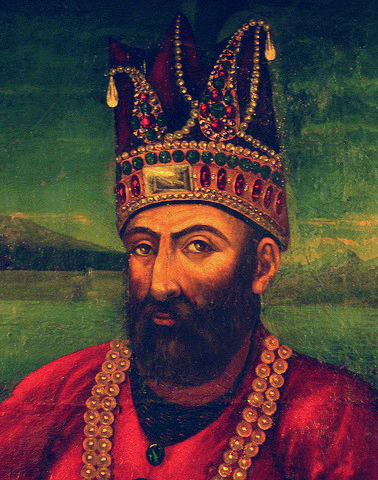

Nader Shah, born Nadrqoli (“slave of the wondrous”), was born in the fortified settlement of Dastgerd, in the Daragöz region of Khorasan. His father, Imamqoli, was a respected shepherd from the Turkic Afshar tribe. The question of Nader’s exact birth date remains disputed in scholarly circles to this day. The main views have split into two camps: supporters of November 1688 (including Laurence Lockhart and the data of Mirza Mahdi Astarabadi) and adherents of 6 August 1698 (Michael Axworthy, Peter Avery). The discrepancies in the sources are connected with the peculiarities of the Islamic calendar and later edits by chroniclers seeking to endow the birth of the future shah with a sacral meaning.
Nadrqoli’s childhood was a harsh school of survival. The family lived a nomadic way of life, moving between the cool pastures of Kobkan in summer and temperate Dastgerd in winter. Losing his father early, the young man confronted extreme need. These years shaped his character—strong-willed, distrustful of the pampered elite, and endlessly devoted to the few close people he had left: his mother and his brother Ibrahim. There is a tradition that in his youth Nader and his mother were captured by Turkmens and sold into slavery. According to one version, he managed to escape; according to another, he displayed a remarkable gift for diplomacy, persuading his captors to release him on the promise of future services. By the age of 10 he was already a master horseman, a hunter, and a warrior, virtuously handling traditional weapons—the bow and javelins.
At about 15, Nader entered the service of the governor of Abivard, the influential Afshar chieftain Baba Ali Beg. Beginning his career as a simple musketeer (tufangchi), he quickly realized that the future belonged to firearms. It was precisely here that he laid the foundation of his future military reform, which would later change the face of warfare throughout the region.
His service was connected with pursuing bandits and recovering loot, part of which, according to rumor, settled in his own hands. Yet it was precisely his martial заслуги that opened the doors of high society to him. In 1714–1715, after routing a Turkmen raid, Nader was sent as a courier to the Safavid shah Sultan Husayn I in Isfahan. There he received a reward of 100 tumans, but it was probably then that his hostility toward the court nobility was born, as they mocked the “Khorasani provincial.”
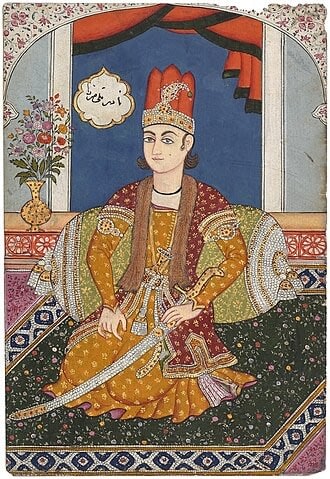
In 1715 Nader strengthened his position by marrying Baba Ali Beg’s daughter, and on 15 April 1719 his firstborn, Reza Qoli, was born. After the death of his father-in-law in battle with the Abdali tribe in 1716, Nader gradually subordinated the administration of Abivard to himself, becoming the real ruler of the region despite the formal appointment of other governors from the capital.
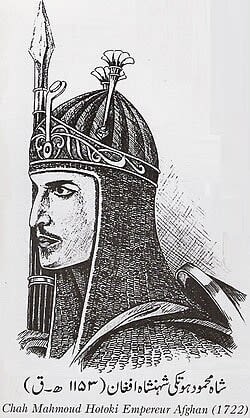
In 1722 Iran suffered a catastrophe: the Afghans under Mir Mahmud Hotaki captured Isfahan. The Safavid dynasty effectively fell. Anarchy reigned in Khorasan, and Nader led a small but disciplined force known as the Army of Atak.
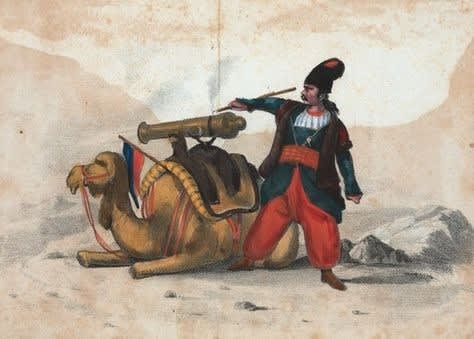
His main rival in the region was Malik Mahmud Sistani, who seized Mashhad and proclaimed himself the heir of the legendary kings. Nader played a subtle game: formally recognizing Malik Mahmud’s authority and becoming his deputy, he used this status to eliminate smaller competitors. Warriors from all over Khorasan flocked to him, including the loyal Tahmasp Khan Jalair, to whom Nader entrusted the impregnable fortress of Kalat. The final break with Sistani occurred in 1724, when Nader began open war, already using his own artillery and camels with cannons mounted on them — zamburaks.
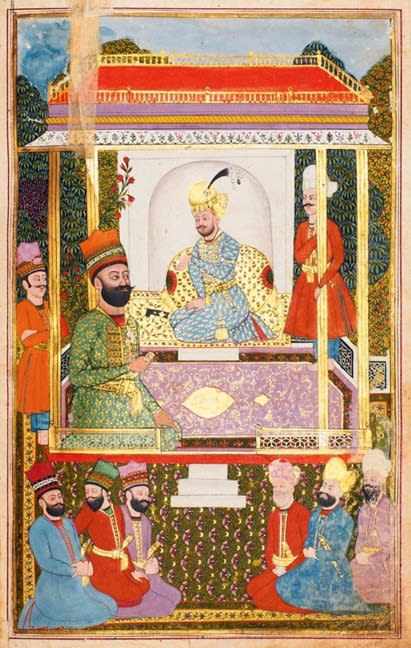
In 1726 Tahmasp II arrived in Khorasan—the legitimate Safavid heir, under the patronage of the Qajar chieftain Fath-Ali Khan. Nader saw in this a chance to legitimize his power. On 19 September 1726 he swore allegiance to the shah, receiving the title “khan.” Intrigues in the camp led to Fath-Ali Khan being accused of treason and executed, and Nader became commander-in-chief (gurchibashi) and took the name Tahmaspquli Khan (“slave of Tahmasp”).
In November of the same year, after a two-month siege and thanks to the betrayal of Malik Mahmud’s commander, the city of Mashhad fell. Sistani himself was soon executed. Khorasan was pacified, but relations between the ambitious general and the weak yet vindictive shah remained tense. In 1727 Nader was even forced to besiege Sabzevar in order to bring the shah back into obedience, after which he effectively took the seal from him and began to rule in his name.
Before marching on the capital, Nader decided to secure his rear. In 1729 he began a campaign against the Abdali Afghans in Herat. The battles of Kafer-Qala and Shakibane demonstrated the superiority of Iranian infantry and Nader’s tactics. The Abdalis recognized Iran’s authority, and many of them even joined his army.
Meanwhile, in the west, Ashraf Shah Hotaki, ruling in Isfahan, stirred. The decisive clash took place on 29 September 1729 at the Battle of Damghan (Mehmandost). Despite the Afghans’ numerical superiority (40,000 against 25,000), Nader’s disciplined musketeers and artillery literally swept away the enemy ranks. Ashraf fled toward Isfahan.
A series of triumphant battles followed: an ambush in the Khvar gorge and the final bloody battle at Murchakhort (13 November 1729). Afghan domination in Iran was broken. In panic, Ashraf Shah abandoned Isfahan, taking the treasury and noble hostages with him.


On 16 November 1729 Nader entered Isfahan. The city, exhausted by years of Afghan yoke, welcomed the victor. Nader personally met Shah Tahmasp II at the city gates, restoring the Safavid dynasty’s power on the Iranian throne. Yet everyone understood: the true master of the country now was not the shah, but the “slave of Tahmasp,” whose guns and disciplined regiments had become the only guarantee of the state’s existence.
After the triumphant entry into Isfahan, the history of Nader Shah turns into a rapid whirlwind of conquests that first raised Iran to the pinnacle of world power and then cast it down into an abyss of suspicion and terror.
The liberation of Isfahan in 1729 brought the townspeople not only peace but also new trials. Nader’s hungry soldiers, disappointed by the meager booty left after the Afghans, began looting. The poor, unable to buy themselves off, were sold into slavery by entire families, and European trading companies, under pressure from officials, surrendered their last funds.
At this time Shah Tahmasp II begged Nader to pursue Ashraf Hotaki in order to save the Safavid princesses. Nader, as a subtle politician, set harsh conditions: authority over Khorasan, Mazandaran, and Kerman; the right to levy taxes for the army; and the wearing of the jigha (a symbol of power made of three feathers). Having secured legitimacy by marrying the shah’s sister, Raziya Begum, Nader set out on campaign.
On 24 December 1729, at the Battle of Zerkane, the Afghans were finally defeated. Ashraf fled toward Kandahar, but his rearguard was caught at the Pol-e Fasa bridge. Many high-ranking Ghilzai were executed, and the princesses were returned. Ashraf himself soon met his death in Kandahar at the hands of his own tribesmen, avenging past grievances.
Without waiting for answers to his ultimatums, on 8 March 1730 Nader began a campaign against the Ottoman Empire. The first victory at Nahavand opened the road to the decisive battle in the valley of the Malayer River. A sudden attack by Nader’s right flank put the 30,000-strong Ottoman army to flight. Hamadan and Kermanshah were liberated without a fight.
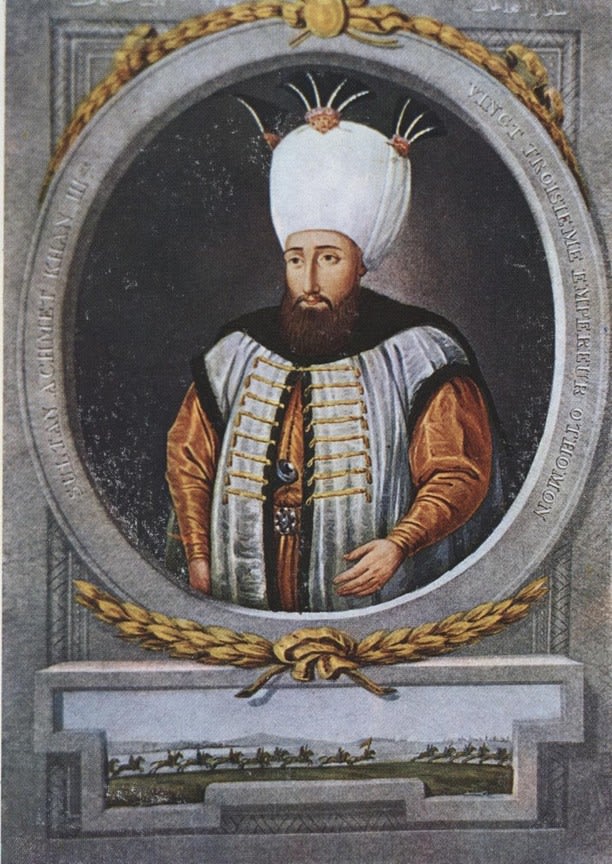
The advance into Azerbaijan was so swift that the Ottomans lost control of the region in a matter of weeks. Defeats in the east led to a coup in Istanbul: Sultan Ahmed III was overthrown, and the grand vizier was killed. Nader was ready to march on Erivan, but in August 1730 alarming news came from Khorasan: Herat had risen again.

The uprising was led by Zulfiqar Khan. Nader’s brother Ibrahim suffered defeat while trying to prove his valor, and the defense of Mashhad fell on the shoulders of Nader’s 12-year-old son, Reza Qoli. Nader arrived in Khorasan in November 1730 and began large-scale preparations.
The siege of Herat in 1731 was exhausting. At one point Nader nearly died, trapped in a tower during a night attack. However, discipline prevailed, and in February 1732 Herat surrendered. Nader showed unexpected restraint, avoiding a massacre and resettling 60,000 Abdali Afghans in Khorasan to use them as an elite part of his future army.

In 1734–1736 Nader concentrated on the Caucasus. His goal was Shirvan and the subjugation of Surkhay Khan, an Ottoman vassal. In August 1734 Nader took Shamakhi. Using the diplomacy of force, he threatened Russia with war, seeking the return of Baku and Derbent, which were ultimately transferred to Iran under an allied treaty.
The campaigns in Dagestan were extremely brutal. In 1735 Nader crushed the combined forces of Surkhay, the Turks, and the Crimean Tatars at Devebatan. Soon Ganja, Tiflis, and Erivan fell. The Crimean khan Kaplan Giray, learning of Nader’s approach, hastily retreated. Nader restored authority over the region, appointing his own protégés, including Khasfulad as Shamkhal of Tarki.
In March 1736, a historic assembly (kurultai) took place on the Mughan plain. Nader, surrounded by grandees, declared that he had expelled the enemies and that the people must now choose a king. Under pressure from the army, the nobility proclaimed him shah.
Nader put forward five conditions, the chief of which was recognition of the Ja‘fari madhhab (Shi‘ism reformed under a Sunni canon) to end the centuries-old enmity with the Ottomans. Those who objected (including the head of the Shiite clergy, Mulla Bashi) were immediately executed. To окончательно bury the Safavid dynasty, in 1740 the underage Abbas III and his father Tahmasp II were killed on Nader’s orders.
In 1738 Nader invaded India. The pretext was the Great Mughal Muhammad Shah’s refusal to hand over Afghan fugitives. Having crushed the Mughal army at Karnal in February 1739, Nader entered Delhi on 8 March.
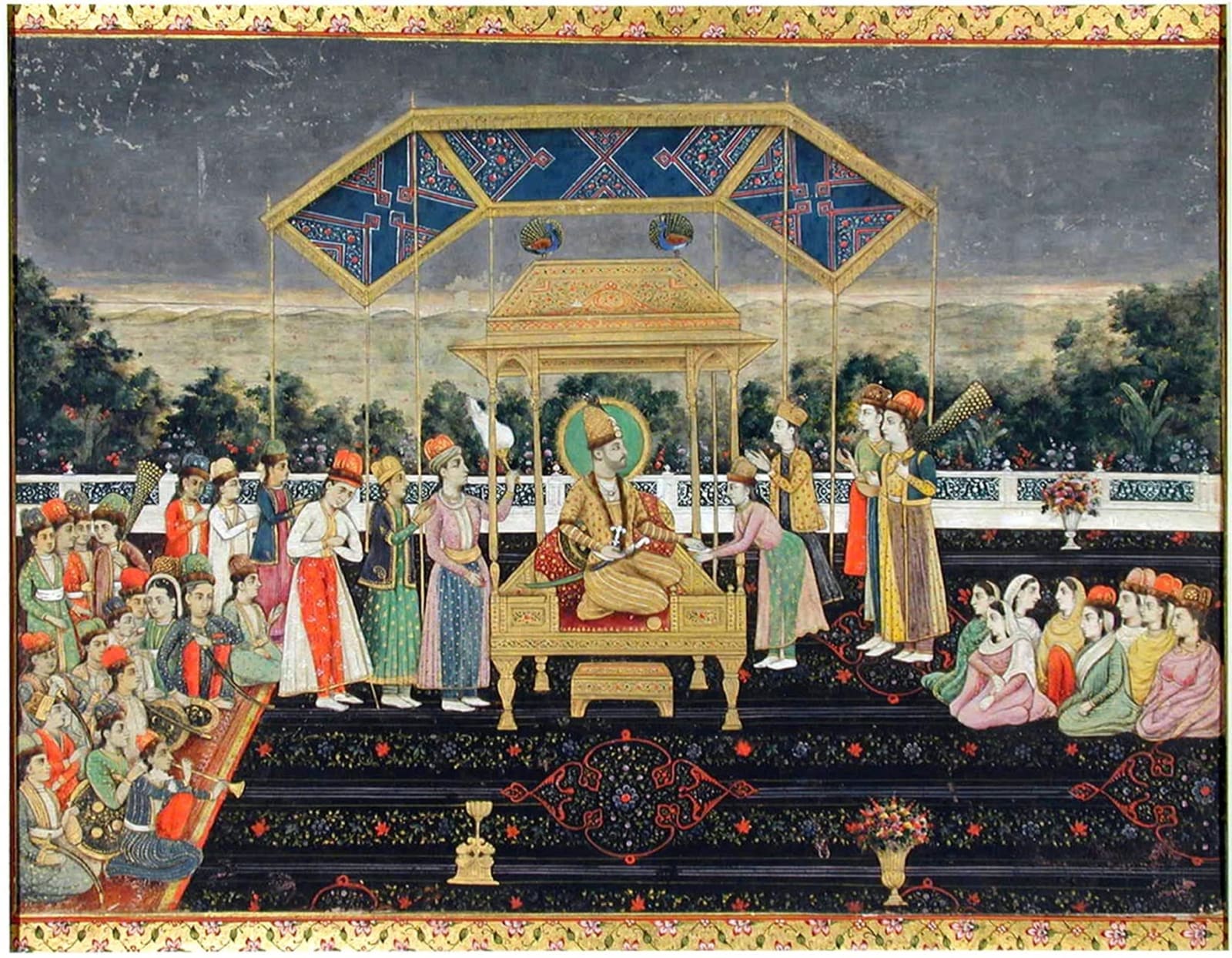
Three days later an uprising broke out in the city. Nader, enraged by disobedience, ordered a massacre to begin. From dawn until noon the city was under the власть of sword and fire. Soon, however, anger gave way to triumph: Nader’s son married a princess of the House of Timur, and the shah himself departed back to Persia, taking with him legendary treasures: the Peacock Throne encrusted with diamonds; the diamonds Koh-i-Noor and Darya-ye Noor; colossal sums of money that made it possible to free the inhabitants of Iran from taxes for three years.
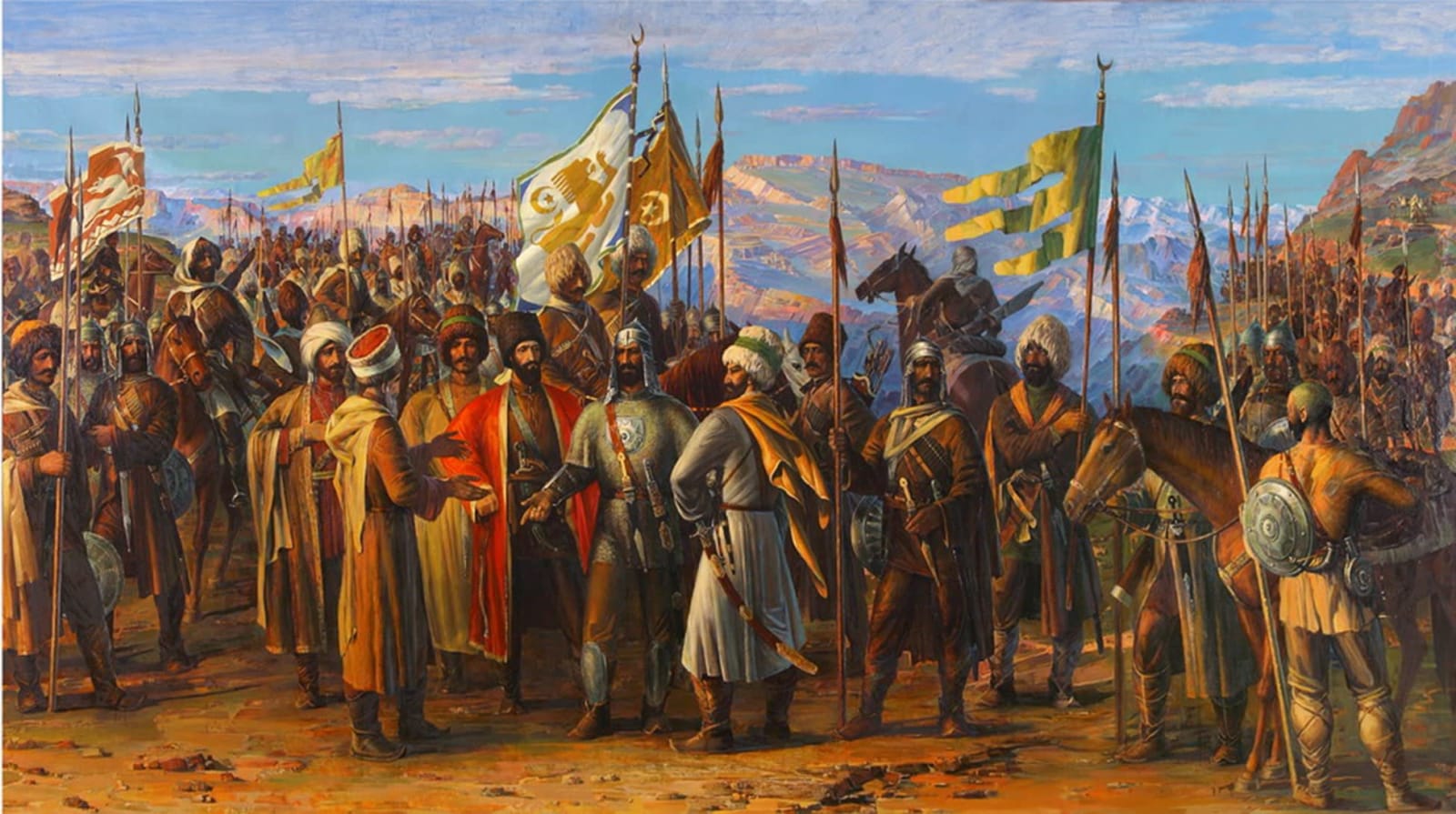
After returning from India and a campaign in Turkestan (the subjugation of Bukhara and Khiva), Nader’s character began to change rapidly. The turning point was an assassination attempt in 1741, in which he blamed his son Reza Qoli. In 1743 he ordered the heir to be blinded, something he later bitterly regretted, executing 50 grandees who had not prevented this order.
Nader’s last years were an era of unceasing executions, uprisings, and exorbitant taxes (he even collected levies he had previously forgiven). His campaign in Dagestan in 1741–1743 against the “Lezgian lions” ended in catastrophe: at the Battle of Andalal, Nader lost half his army and the treasury.
By 1747 hatred for the shah had reached its предел. Nader stopped trusting Turkic officers and planned their arrest with the help of an Afghan guard. Conspirators from among the Qizilbash officers preempted him. On the night of 20 June 1747 they burst into his tent. Despite fierce resistance, the “Sword of Persia” was cut down.
Nader Shah was a man of paradoxes. Possessing a thunderous voice capable of issuing commands at 100 yards, and a phenomenal memory (he recognized thousands of soldiers by sight), he despised softness. His palace was a tent, and his throne a saddle.
“Nasrullah is the son of Nader Shah, son of the sword, and so on to the 70th generation,”—such was his answer to the demand for a pedigree for the marriage of his son to an Indian princess.
He was the “last great Asian conqueror,” whom Europe compared to Alexander the Great, and whom Napoleon Bonaparte considered his idol. Yet his cruelty and greed at the end of his life turned the savior of the country into its executioner. After his death, the Afsharid empire instantly fell apart, leaving behind only the memory of brief and bloody greatness.


