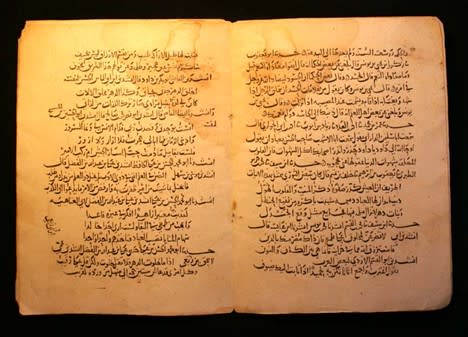
Al-Mansur, a man of strict character, made enormous efforts to ensure that his successor received a brilliant and comprehensive education. The tutor of the crown prince was the outstanding Arab philologist of the time, al-Mufaḍḍal al-Ḍabbī. It was specifically for his august pupil that he compiled the famous anthology al-Mufaḍḍaliyyāt, including sixty-six of the finest works of Arabic poetry, in order to instill in the heir a taste for elevated style and the wisdom of the ancestors.
Contemporaries described al-Mahdī as a man of rare beauty: tall, slender, with long curly hair he was the complete opposite of his ascetic father. Unlike al-Mansur, al-Mahdī did not shy away from the pleasures of life. He adored music, poetry, and hunting, to which he devoted entire weeks. It was at his court that the refined, legendary lifestyle of the Arab caliphs began to take shape the very image that centuries later would gain worldwide fame through the tales of One Thousand and One Nights. This was an era when the harshness of conquerors finally gave way to the elegance of enlightened monarchs.

Al-Mahdī’s path to power began long before his coronation. In 758, his father appointed him governor of Khurasan, with his seat in the city of Rayy. This appointment proved fateful: it was there that the young prince met Yaḥyā ibn Khālid of the influential Iranian Barmakid family. Yaḥyā became not merely an adviser, but a loyal companion and the architect of many of the future caliph’s victories throughout his life.
During this same period, a Yemeni slave woman named Khayzurān appeared in al-Mahdī’s life. Although the prince was already married to Rayṭa, the daughter of the first caliph al-Saffāḥ, it was Khayzurān who was destined to become the most influential woman in the empire. In 768, Muḥammad returned to Baghdad, where he actively joined his father’s urban projects, erecting his own magnificent palace in al-Ruṣāfa and later, in 772, assisting in the construction of a new city on the Euphrates.
After his father’s death during the pilgrimage, al-Mahdī ascended the throne peacefully. His reign was marked by a profound transformation of the state apparatus. Historians associate his name with the final institutionalization of the office of vizier the chief minister endowed with immense authority and heading the entire bureaucratic machinery of the caliphate. The first to occupy this post was his mentor, the Persian Abū ʿUbaydallāh Muʿāwiya.
Al-Mahdī consciously moved away from the simplicity of the early Arab rulers, introducing a lavish Persian court ceremonial. The caliph became a sacral and distant figure: access to him was controlled by the ḥājib (chamberlain), and the monarch appeared before his subjects only on exceptional occasions. A major milestone was the tax reform of 780: instead of a fixed land tax, a proportional system was introduced, dependent on actual harvest yields and market prices. This significantly eased the burden on cultivators and filled the treasury.
Despite the frequent смена viziers (after Muʿāwiya, the post was briefly held by the Alid Yaʿqūb ibn Dāwūd), real levers of power remained in the hands of the Barmakids and the influential ḥājib al-Rabīʿ ibn Yūnus.
While being a patron of the arts, al-Mahdī remained a devout Muslim. He personally preached in mosques and ordered the removal of special enclosed areas (maqṣūras) reserved for the elite, emphasizing the equality of believers before God. Under his rule, the main sanctuaries in Mecca and Medina were reconstructed.
However, his reign was darkened by the struggle against “zindīqism” — heresy or apostasy, of which the Persian nobility was often suspected due to their covert sympathies for Manichaeism. The caliph launched a large-scale campaign against sectarians. The most formidable challenge was the uprising of the “masked prophet” Muqannaʿ, which began in Merv in 776. It took seven years of bloody fighting before the rebellion in Central Asia was finally crushed in 783.

Seeking to strengthen Abbasid legitimacy, al-Mahdī proclaimed that the dynasty’s authority derived directly from the Prophet’s uncle al-ʿAbbās. To reconcile with the Alids, he declared an amnesty and even appointed their representatives to high offices. This temporarily reduced the intensity of internal strife, although minor uprisings (such as in the Hijaz in 785) still occurred.
On the international stage, the Caliphate under al-Mahdī went on the offensive. After a Byzantine invasion in 778, the caliph assembled a colossal army. The nominal head of the campaign was his son Hārūn (the future al-Rashīd), while the actual commander was Yaḥyā the Barmakid. In 780, Arab forces carried out a legendary march across Asia Minor and reached the walls of Constantinople. The Byzantine empress Irene was forced to sue for peace and agreed to pay an annual tribute.

The scope of the caliph’s interests was vast. In the East, a naval expedition to India was organized, reaching the shores of Gujarat; in the West, attempts were made to hold on to the slipping Maghrib, where in 777 the Kharijites founded the independent Rustamid state.

The twilight of al-Mahdī’s reign was clouded by palace intrigues. Under pressure from his beloved wife Khayzurān, the caliph decided to change the order of succession. Initially, the throne was to pass to his eldest son, Mūsā al-Hādī, but Khayzurān insisted on the candidacy of the younger—Hārūn.
To personally persuade his elder son to renounce his claim to the throne, al-Mahdī set out for Jurjān, where Mūsā was fighting rebels. However, this meeting was never to take place. On the way, during his favorite pastime hunting the caliph died in a tragic accident.
Al-Mahdī left behind an empire at the zenith of its cultural and economic power, laying the groundwork for the “Golden Age” that would arrive under his son Hārūn al-Rashīd. His reign became a bridge between the harsh era of conquest and the brilliant flowering of Eastern civilization.


