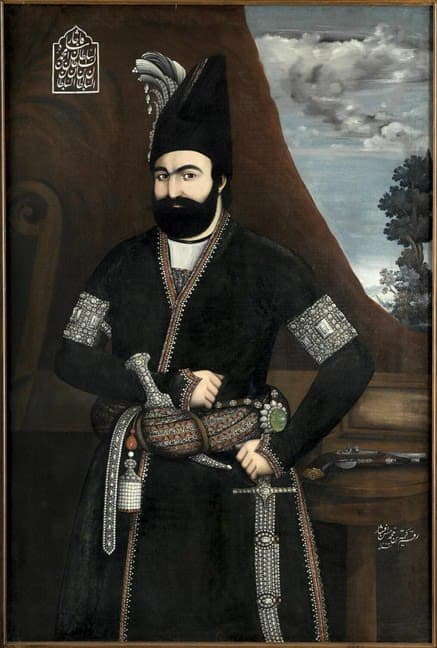

Mohammad Mirza was born on 5 January 1808 in Tabriz. As the eldest son of the legendary Abbas Mirza and Galin Khanum, he was considered from birth one of the key figures in the succession. However, unlike his energetic father, Mohammad grew up a quiet, withdrawn, and deeply introspective youth. He showed no obvious political ambitions, finding comfort in traditional education. His passion became calligraphy and painting—the latter he studied under the Scottish master Robert Ker Porter.
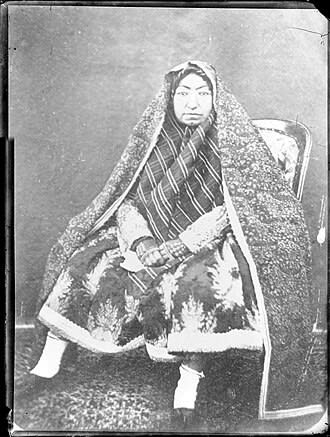
The turning point in his fate was the appearance in his father’s household of the dervish Haji Mirza Aqasi. Appointed as the prince’s mentor, this man exerted an enormous influence on Mohammad, becoming his spiritual guru. Aqasi’s Sufi teaching penetrated so deeply into Mohammad’s soul that even the attempts of his second tutor, Abol-Qasem Qa’em-Maqam, to turn him away from the dervish’s “dangerous ideas” proved unsuccessful. This spiritual patronage of Aqasi would last throughout Mohammad’s life, determining his political decisions.
In September 1819, when Mohammad was only 12 years old, his grandfather Fath Ali Shah summoned him to Tehran to conclude a strategic marriage with Malek-Jahan Khanum. This union was intended to reconcile two branches of the Qajar family, but brought only bitterness: both spouses entered the marriage under pressure, and the deaths of their newborn children only intensified Mohammad’s aversion toward his wife. Only two children survived to adulthood—the future shah Naser al-Din and the daughter Ezzat al-Dowleh.
Mohammad’s baptism of fire occurred during the Second Russo-Iranian War. Despite the crushing defeat at Ganja and the death of his uncle Amir Khan, Mohammad was noted for bravery and awarded the honorary epithet “Ghazi”—a warrior of Islam. Later, accompanying his father to Khorasan in 1831, he succeeded in freeing 20,000 Persians captured by Sunni tribes, and in honor of this victory he named his son Naser al-Din (“Defender of the Faith”).
Mohammad’s fate changed dramatically in 1832–1833. During the siege of Herat, when his forces were already preparing for the decisive assault, news arrived of the sudden death of his father Abbas Mirza in Mashhad. The siege had to be lifted, concluding a compromise treaty with the ruler of Herat, Kamran Mirza.
At Nowruz 1834, Mohammad Mirza was officially proclaimed heir (shahzadeh) and appointed governor of Azerbaijan. His first actions as heir were marked by the bloodshed and cruelty typical of the era: on the advice of Qa’em-Maqam, he imprisoned four of his brothers and ordered them blinded to permanently deprive them of claims to the throne.
The death of the old Fath Ali Shah in October 1834 plunged the country into chaos. While the shah’s body was secretly transported for burial, rebellions of rival princes flared throughout Persia. Nevertheless, Mohammad, relying on the support of his mentor Qa’em-Maqam and foreign missions, managed to secure his authority.
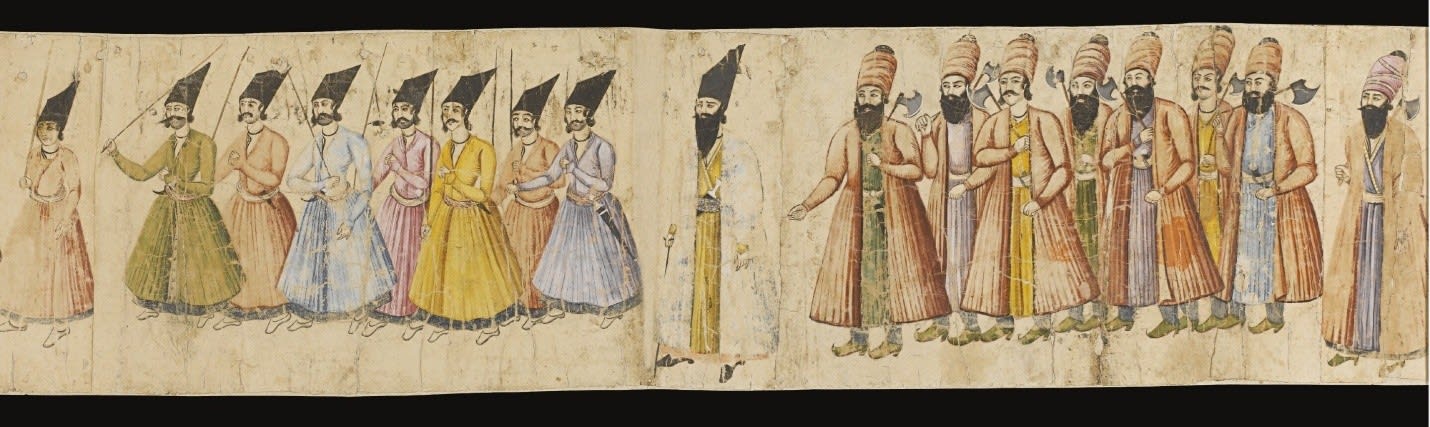
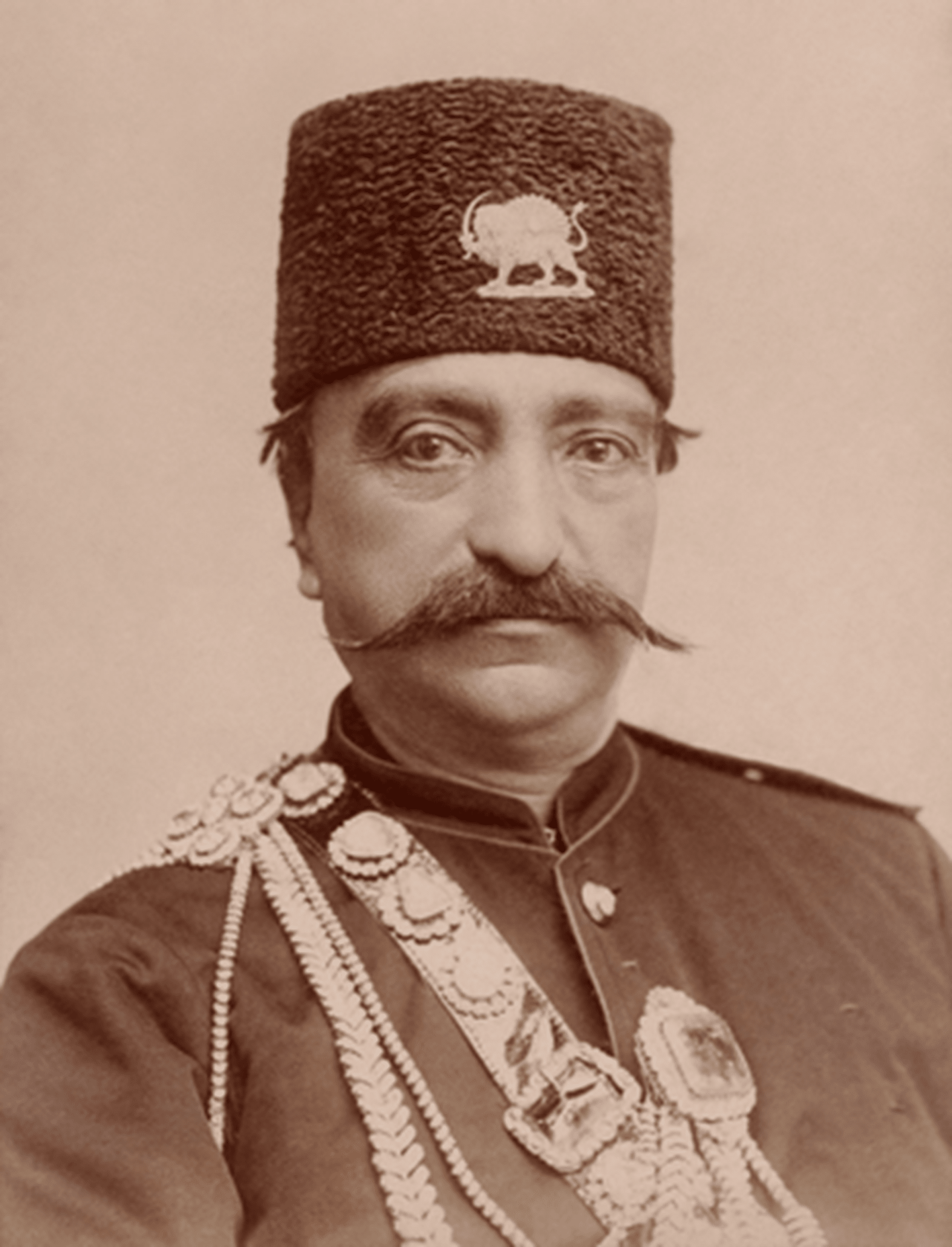
The main objective of Mohammad Shah’s reign became the completion of his father’s plans to restore Herat to Persian rule. In this venture he was actively supported by the Russian Empire.
In 1836 the shah advanced into Khorasan with an army of 30,000. He was accompanied by the Russian envoy Count Simonich and a regiment of Russian troops under the command of a Polish general.
From November 1837 to June 1838 the siege of Herat turned into a bloody confrontation. The Qajar army, reorganized along European lines, used artillery and mining operations to breach the walls, but the Afghans, supported by British military advisers, offered fanatical resistance.
In September 1838, realizing that continued siege would lead to open conflict with the British Empire, Mohammad Shah was forced to withdraw. This defeat became a symbol of the diplomatic deadlock in which Iran found itself, squeezed between two superpowers.
Mohammad Shah entered history as a ruler whose court resembled more a Sufi encampment than the glittering residence of an Eastern monarch. He was the first Qajar whose gaze was directed not toward luxury but toward mystical pursuits, which, however, did not prevent him from being ruthless toward rivals.
Mohammad Shah died in 1848, leaving behind a country still searching for its place between the traditions of the past and the relentless pressure of the West. He was succeeded by his son Naser al-Din, whose reign would become the longest and most contradictory chapter in the history of Qajar Iran.


