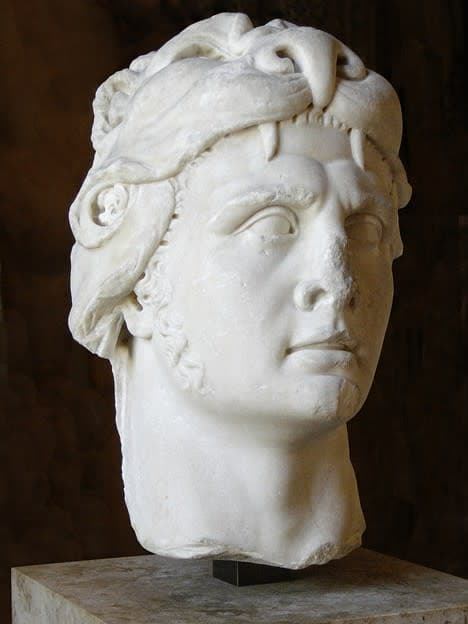

The story of one of Rome’s most formidable enemies began in coastal Sinope, the jewel of the Kingdom of Pontus, spread along the shores of the Black Sea. It was here that the firstborn son of King Mithridates V Euergetes, who ruled from 150 to 120 BC, and Queen Laodice VI was born. The boy, given the name Mithridates VI, carried in his veins the blood of the greatest dynasties of East and West. His genealogical tree was a fusion of Macedonian valor and Persian grandeur: on his mother’s side he descended from Seleucus I Nicator, companion of Alexander the Great, and on his father’s side from Darius III himself, the last king of the Achaemenids. The Pontic monarchs proudly considered themselves successors of Otanes, one of the seven Persians who overthrew the false king Gaumata.

The prince’s childhood was steeped in the spirit of Hellenism and the severity of the East. Under his mother’s supervision, he was educated alongside Greeks and Persians, displaying phenomenal abilities. While his peers were barely mastering literacy, Mithridates was already freely reading Greek treatises and grasping the subtleties of religion. But his mind was hardened not only by books: horseback riding, hunting wild beasts, and exhausting military exercises turned him into an athlete whose physical power astonished his contemporaries.
Yet fate prepared him for a trial by fire. In 120 BC, his father was poisoned in Sinope. The king’s death plunged the country into the chaos of Laodice VI’s regency. His mother clearly favored his younger brother, Mithridates Chrestus, over her eldest son. In an age when the Syrian ruler Cleopatra Thea murdered her own children for the sake of power, Eupator understood: to remain in the palace meant signing his own death warrant. Fearing poison and dagger, the young man fled to Lesser Armenia. There the ruler Antipater not only granted him refuge but, impressed by his guest’s talents, later bequeathed his kingdom to him.

Between 116 and 113 BC, Mithridates returned to Pontus. This was not the return of a supplicant — it was the triumph of a legitimate sovereign. He was officially proclaimed king, and although he spared his mother and brother, their fate was sealed: Laodice VI ended her days in prison, and Chrestus was executed in 113 BC for taking part in a conspiracy. Having fulfilled his duty to the dynasty, Mithridates married his sister Laodice, following the ancient Persian custom of preserving the purity of blood.
But the ambitions of Dionysus — the king’s second name — extended far beyond the Pontic Mountains. Soon a plea for help came from Chersonesus: the Scythians were pressing the Greeks. Mithridates sent his best general, Diophantus, to Crimea. With a detachment of only 6,000 warriors, the Pontic forces defeated a 50,000-strong horde of Roxolani, allies of the Scythian king Palacus. As a result of this campaign, the Taurians were subdued, the fortress of Eupatorium was founded, and by 111 BC Scythian Neapolis had also fallen. Mithridates’ influence on the northern shores of the Pontus became absolute: Chersonesus and Olbia recognized his authority, and the Bosporan Kingdom, after the murder of Paerisades V by the rebel Saumacus, passed under his control. In the spring of 108, Diophantus finally pacified the Bosporus, sending the captive Saumacus to the mainland.

Colchis fell next. Once the great kingdom of the Aeëtids, by the first century BC it had become a patchwork of hostile scepter-bearing principalities. Mithridates, declaring himself heir to the ancient satraps, occupied the Phasis valley and by the 90s turned the country into a satrapy, appointing his son Arcathias as its ruler. Strabo later wrote that the king built 75 fortresses there to store his countless treasures.
The world of the East was too small for two lions — Mithridates and Rome. After the death of Attalus III in 133 BC, Rome entrenched itself in Pergamum, creating the province of Asia. The Pontic kings felt deceived: the lands of Phrygia, promised to Eupator’s father, had been unceremoniously seized by the Republic.

In 109–108 BC, Mithridates traveled incognito through Paphlagonia and Bithynia, studying the enemy’s weak points. After returning, he formed an alliance with Nicomedes III of Bithynia, and in 106–105 they jointly divided Paphlagonia. Rome protested, but was occupied with the war against the Cimbri. However, the allies’ appetites collided in Cappadocia. After the murder of Ariarathes VI, orchestrated by Mithridates, and a succession of intrigues, the king of Pontus decided on extreme measures. In 100 BC, during negotiations, he personally stabbed his nephew Ariarathes VII with a dagger hidden in the folds of his clothing, after first joking that the man searching him should not look there for “a dagger of another kind.”

This murder became the point of no return. The Roman Senate intervened, appointing its own protégé, Ariobarzanes I, king of Cappadocia. Mithridates responded with an alliance with the Armenian king Tigranes II, giving him his daughter Cleopatra in marriage. A dizzying succession of changes followed on the thrones of Bithynia and Cappadocia, where Roman legions restored their puppets while Pontic troops restored theirs.

The explosion came in 89 BC. Provoked by the Romans, King Nicomedes IV of Bithynia invaded Pontus. Mithridates, who had long been gathering his strength, struck back with a crushing blow at the River Amnias. Despite the enemy’s numerical superiority, the Pontic scythed chariots decided the outcome of the battle. The Roman armies of Manius Aquillius and Quintus Oppius were scattered. Aquillius awaited a terrible execution: Mithridates, pointing to Roman greed, ordered molten gold to be poured down his throat.

By 88 BC, almost all of Asia Minor was in Eupator’s hands. He proclaimed himself the liberator of the Hellenes and issued a secret order: on a single day, all Italians on the peninsula were to be killed. This massacre, known as the “Ephesian Vespers,” claimed, according to different estimates, between 80,000 and 150,000 lives.
The war spread to Greece. Athens, led by the strategist Aristion, went over to Mithridates’ side. However, in 87, Sulla landed in the Balkans. After a long and agonizing siege, Athens fell in March 86 and was plundered. Then came two great battles — at Chaeronea and Orchomenus. The Pontic phalanxes of freed slaves and the powerful cavalry of Archelaus could not withstand the discipline of Sulla’s legions. In 85, the Peace of Dardanus was concluded: Mithridates paid an indemnity, surrendered his fleet, and returned to his old borders.

The peace was only a respite. In 82, Lucius Murena provoked the Second Mithridatic War by attacking Pontic settlements, but was defeated by Eupator at the River Halys. Sulla personally ordered the conflict to stop, and for a time a fragile balance was restored.
The true finale began in 74 BC, when Nicomedes IV bequeathed Bithynia to Rome. Mithridates, having prepared a huge army of up to 150,000 men, trained in the Roman style by former senator-defectors, once again marched to war. At first fortune favored him: he trapped the consul Cotta in Chalcedon and destroyed the Roman fleet. But then Lucius Lucullus entered the stage.

The siege of Cyzicus in 73 became a catastrophe for Mithridates. Winter, hunger, and epidemics destroyed his army, while Lucullus cut off his supply routes. The king fled to Armenia, to Tigranes II. Lucullus followed him there, defeating the Armenians at Tigranocerta in 69 and Artaxata in 68. However, a mutiny in the Roman army and Mithridates’ genius allowed the Pontic forces to achieve the impossible: in 67, at the Battle of Zela, they defeated Triarius and regained their native lands.

The end came when Gnaeus Pompey the Great took command. In 66 BC, he caught up with Mithridates’ forces and inflicted a final defeat on them. Tigranes II, exhausted by war, closed his borders to his father-in-law. Eupator was forced to make an unprecedented crossing through the Caucasus Mountains to Dioscurias, and from there to the Bosporus.

By 65, he had regained power in Panticapaeum, modern Kerch, forcing his rebellious son Machares to commit suicide. The old king, already over 70, planned a mad campaign against Rome through the Danube and the Alps, like Hannibal. But the country had been exhausted by blockade. In 63 BC, an uprising broke out, led by his favorite son Pharnaces.
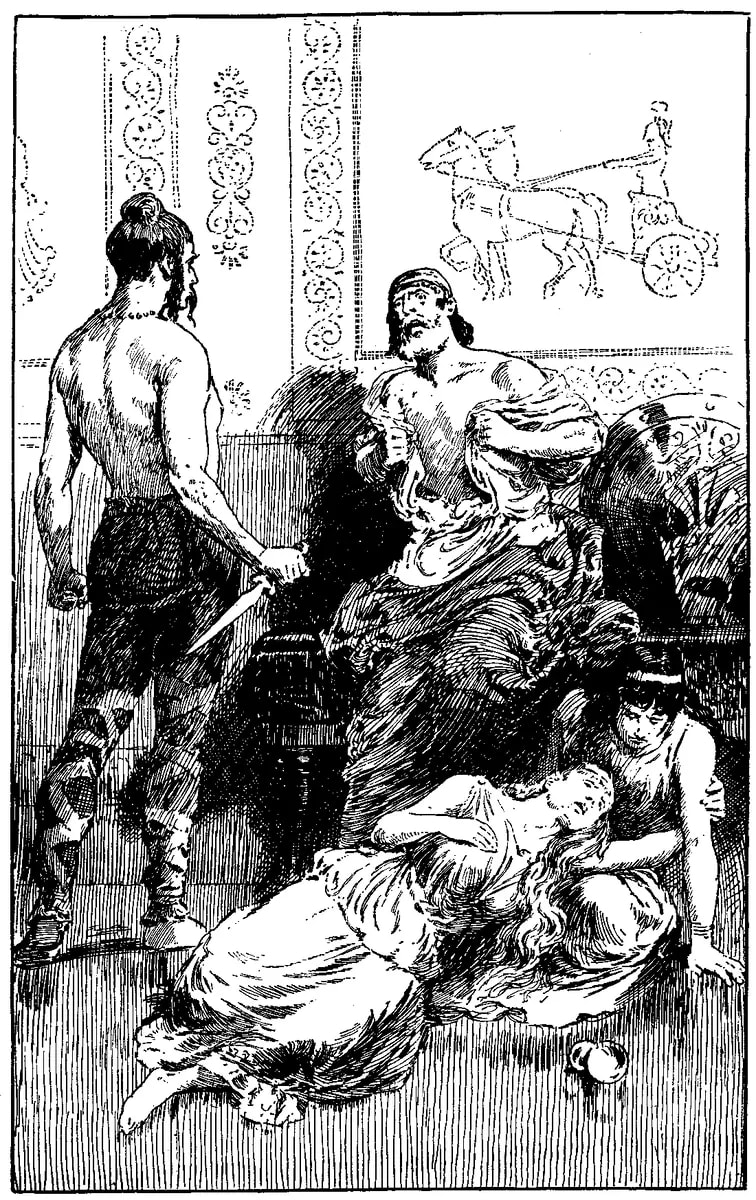
Locked in a tower of Panticapaeum, watching as the troops proclaimed Pharnaces king, Mithridates decided to leave undefeated. He always carried poison in his ring, a substance he had studied for years, building immunity to it. The irony of fate was that “mithridatization” had worked too well — the poison had no effect. Then the great king turned to his bodyguard, the Gaul Bituitus, with a request: “Your hand has always helped me in battle; help me now as well.” Mithridates VI Eupator fell upon his own sword.
Pompey, receiving the body of his enemy, ordered him to be buried with honors in Sinope, recognizing in him the last great monarch of the Hellenistic world. Mithridates remained in memory as a man who knew 22 languages, bore a scar from lightning on his forehead, and possessed an iron will that for decades did not allow Rome to sleep peacefully.


