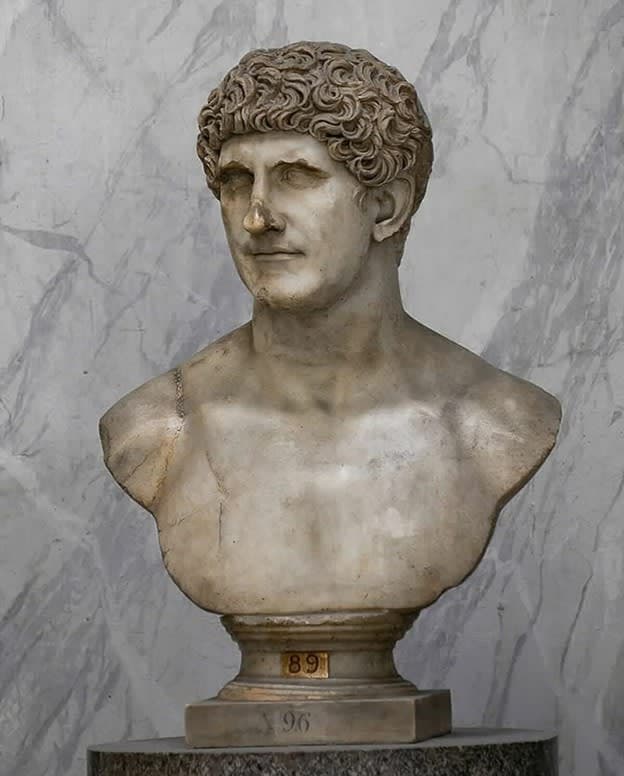
The story of Mark Antony begins at the very heart of the Roman nobility.
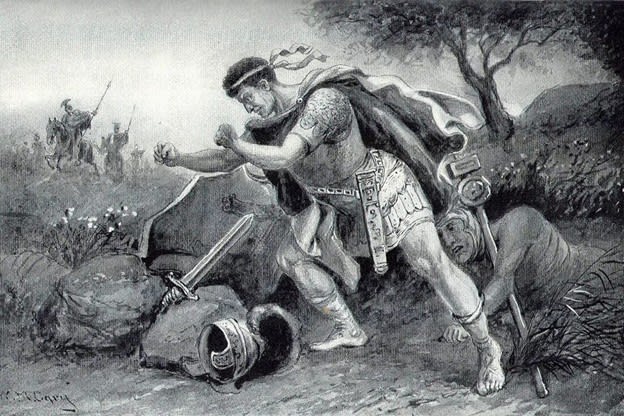
He belonged to the ancient and influential gens Antonia, which, according to family tradition, traced its ancestry back to Anton, a son of the mythical hero Hercules. This legend left its mark on Antony’s public image throughout his life. Even in adulthood, he emphasized his supposed kinship with the demigod by wearing his tunic belted low around the hips and a heavy military cloak.
Antony’s ancestors had held important offices as early as the fifth century BC, although the plebeian branch of the family to which Mark belonged rose to prominence much later.
His grandfather, Marcus Antonius “the Orator,” became consul in 99 BC and later censor, laying the foundations of the family’s political influence.
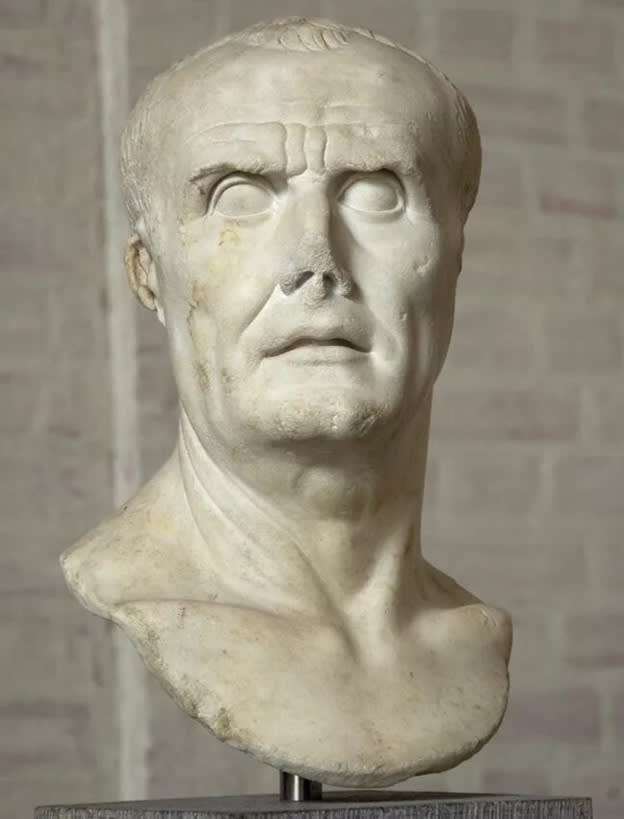
The fortunes of the family, however, were unstable. In 87 BC, the Orator was executed on the orders of Gaius Marius.
His son, Marcus Antonius Creticus, managed to escape persecution and, according to one version, went into hiding together with his pregnant wife Julia. For this reason, the exact birthplace of the future triumvir remains uncertain.
The most likely date of Mark Antony’s birth is 83 BC, although Plutarch and other sources also mention 86 or 82 BC.
His mother, Julia, belonged to the patrician Julian family and was a distant relative of Gaius Julius Caesar.
At the time, however, her branch of the family supported Sulla rather than the followers of Marius, creating a complicated political environment around the young Antony.
Antony and his two younger brothers, Lucius and Gaius, were raised in an atmosphere of former grandeur combined with growing financial difficulties.
Despite receiving what was considered a promising education in rhetoric and possessing excellent physical abilities, Mark experienced the collapse of his family’s prosperity at an early age.
His father, who served as praetor in 74 BC, failed disastrously in his mission against pirates and became notorious mainly for plundering. He died on Crete in 71 BC, leaving behind enormous debts.
The amount was so great that the family was forced to renounce part of the inheritance.
His mother’s second marriage to Publius Cornelius Lentulus Sura, consul in 71 BC, only added further drama.
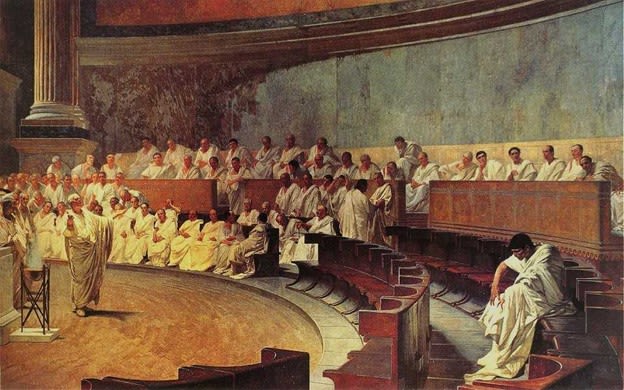
In 63 BC, Antony’s stepfather was executed for participating in the Catilinarian conspiracy.
It was at this time that Antony’s bitter hostility toward Cicero began, since Cicero had insisted on the execution of the conspirators.
Julius Caesar, by contrast, had argued that their lives should be spared. This became one of the first foundations of Antony’s future alliance with the great commander.
Mark’s youth was marked by excess.
Under the influence of his friend Gaius Scribonius Curio, he developed a taste for luxury, women, and wine, severely damaging his reputation.
His first marriage, to Fadia, the daughter of a freedman, was regarded as a socially unequal match and was probably motivated by financial necessity.
Seeking to escape his creditors and his conflict with the demagogue Clodius, Antony left for Greece in 58 BC.
There he studied rhetoric in the elaborate “Asiatic” style and received a decisive offer from the proconsul Aulus Gabinius.
As cavalry prefect, Antony proved himself to be an outstanding soldier.
During the assault on the fortress of Alexandrium in Judaea, he was the first to scale the wall and was awarded the mural crown for his bravery.
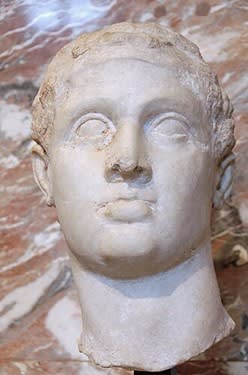
In 56–55 BC, despite prohibitions issued by the Senate, Antony followed Gabinius into Egypt to restore Ptolemy XII Auletes to the throne.
It was Antony who captured the strategically important city of Pelusium and helped decide the battle for Alexandria by attacking the enemy from the rear.
According to later tradition, it was during this campaign that he first saw the young Cleopatra.
Despite the military victory, Gabinius was prosecuted after returning to Rome. Antony, however, managed to avoid trial and, at Caesar’s invitation, departed for Gaul.
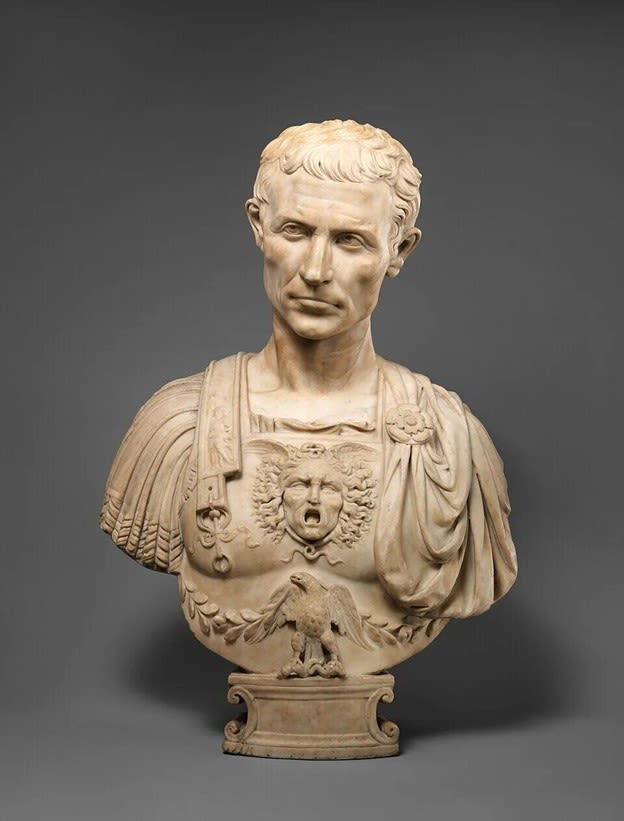
From 54 BC onward, Antony’s life became inseparably linked with Caesar.
In Gaul, he served as legate and quaestor and participated in some of the fiercest battles of the campaign, including the legendary Battle of Alesia in 52 BC.
Caesar valued Antony’s decisiveness and actively supported his political advancement.
In 50 BC, Antony was elected tribune of the plebs and augur.
When the political crisis in Rome reached its climax, Antony became the principal defender of Caesar’s interests in the Senate.
On 7 January 49 BC, after the passage of an emergency decree against Caesar and threats against himself, Antony fled the city together with Quintus Cassius and joined Caesar near the Rubicon.
The expulsion of the tribunes became Caesar’s formal justification for beginning the Civil War.
During the war, Antony acted as the dictator’s “right-hand man.”
He governed Italy while Caesar campaigned in Spain and later carried out a daring crossing of the Ionian Sea to deliver reinforcements to Greece.
At the decisive Battle of Pharsalus in 48 BC, Mark Antony commanded the left wing.
After the victory at Pharsalus, Caesar appointed Antony his deputy, Master of the Horse — magister equitum.
However, governing Rome during Caesar’s absence, while the dictator remained in Egypt, proved difficult for Antony.
He was accused of brutality, extravagant luxury, and an inability to resolve the debt crisis, which led to street fighting with the tribune Dolabella.
During the suppression of the disturbances, Antony’s soldiers reportedly killed around 800 citizens in the Forum.
When Caesar returned in 47 BC, he was angered by Antony’s conduct and temporarily removed him from political affairs.
During this period, Mark married Fulvia, the widow of Clodius and Curio, a woman known for her extraordinary determination and political ambition.
Antony was fully reconciled with Caesar only by 45 BC, and in 44 BC he became Caesar’s colleague in the consulship.
At the beginning of 44 BC, Antony repeatedly demonstrated his loyalty to Caesar.
At the festival of the Lupercalia on 15 February, he publicly offered the dictator a royal diadem, provoking an ambiguous reaction from the crowd and encouraging the conspirators to act more decisively.
The conspirators led by Brutus and Cassius seriously considered killing Antony as well, but Brutus insisted that he should be spared.
On the fatal day of 15 March, Antony was deliberately detained at the entrance to the Senate house, either by Trebonius or Decimus Brutus, while the conspirators attacked Caesar inside.
Mark Antony survived, but now faced a completely new political reality in which his patron was dead and Caesar’s will was about to bring the most unpleasant surprise of Antony’s life — the emergence of the young Gaius Octavius.
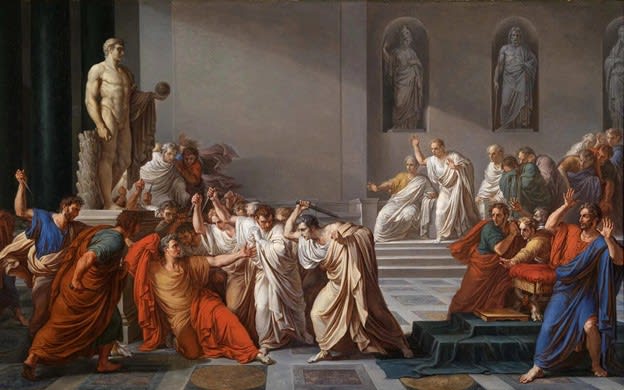
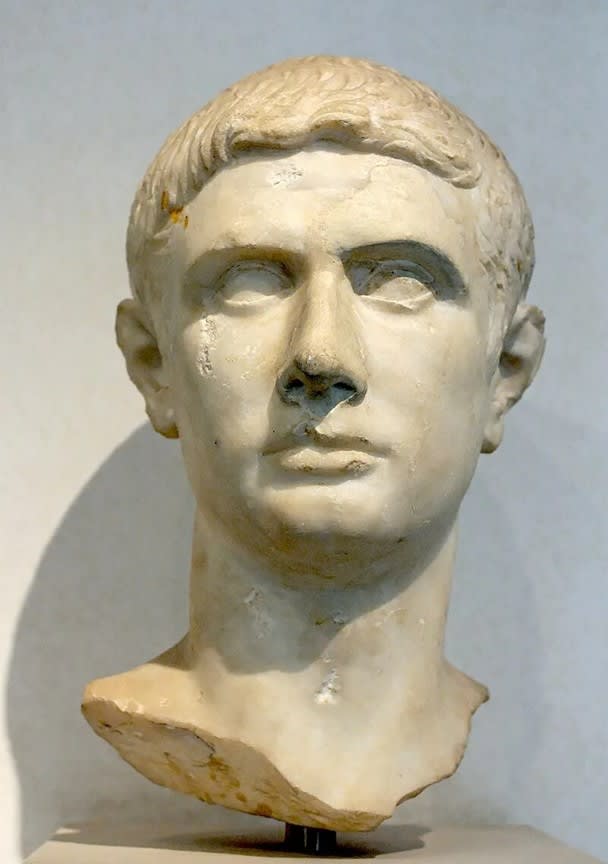
Immediately after the conspirators’ daggers ended the life of Gaius Julius Caesar, Mark Antony, who had narrowly escaped death himself, fled to his house, fearing that he might be their next victim.
Rome, however, did not erupt in celebration as the “liberators” had expected. Instead, the city fell into anxious paralysis.
The conspirators occupied the Capitoline Hill, while Antony quickly recovered from the shock and began to act.
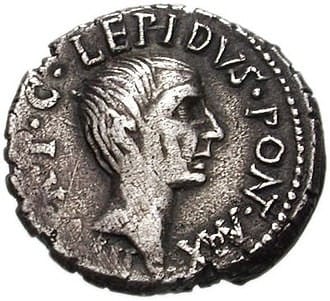
His first step was to secure the support of Marcus Aemilius Lepidus, who commanded troops in the city.
Antony persuaded Lepidus not to launch an immediate attack on Caesar’s assassins, choosing instead a strategy of political pressure.
To bind Lepidus more closely to him, Antony promised him the office of Pontifex Maximus and arranged a betrothal between their children.
That same night, Antony made one of the most important moves of his career.
From Caesar’s widow, Calpurnia, he obtained all of the dictator’s papers, as well as the enormous sum of 700 million sesterces from the state treasury.
On 17 March 44 BC, Antony convened the Senate in the Temple of Tellus.
There, he demonstrated remarkable political skill.
Rome faced a dilemma: if Caesar were declared a tyrant, all his acts and appointments — including the appointments of many senators themselves — would be annulled.
If, on the other hand, Caesar were recognized as a lawful ruler, then the conspirators would automatically become criminals.
Under Cicero’s influence, a compromise was reached: the assassins received an amnesty, while all of Caesar’s official acts remained valid.
Antony even secured approval for legislative proposals that Caesar had supposedly “intended” to enact, effectively giving Antony broad authority to legislate in the name of the dead dictator.
On 18 March, the opposing factions exchanged hostages as a sign of peace, and Antony agreed to the appointment of his enemy Dolabella as suffect consul.
Antony’s true political objective, however, became clear during Caesar’s funeral on 19 or 20 March.
Although the conspirators had hoped for a modest ceremony, Antony transformed the funeral into an explosion of mass anger.
“Brandishing Caesar’s clothing, stained with blood and torn by swords, he called those who had done this murderers and vile assassins...”
The display of Caesar’s bloodstained toga and the public reading of the will, according to which every Roman citizen would receive 300 sesterces, provoked a riot.
The crowd built Caesar’s funeral pyre directly in the Forum and then rushed to hunt down the conspirators.
Brutus and Cassius were forced to flee the city.
It was at this moment that Caesar’s will revealed another surprise for Antony: the principal heir was the young Gaius Octavius, who was then in Apollonia.
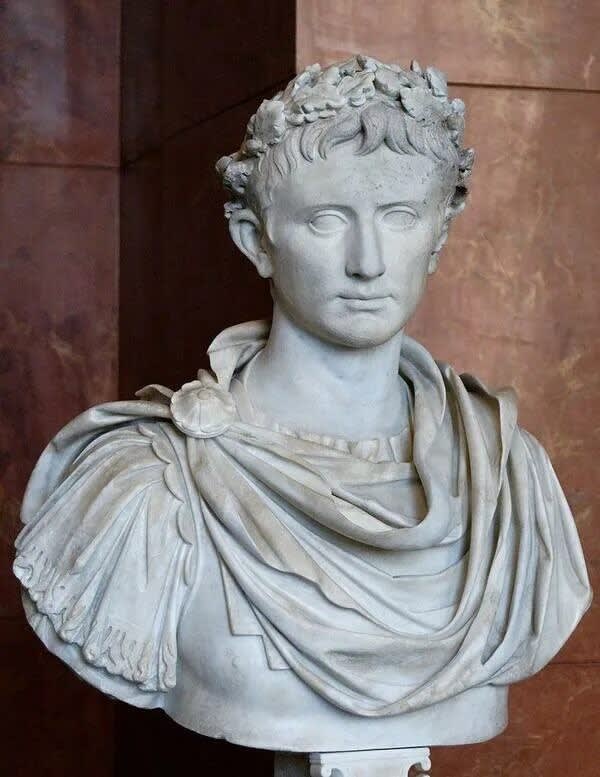
The spring of 44 BC was dominated by Antony’s efforts to strengthen his personal authority.
He eliminated the threat posed by the pretender Amatius, known as the “False Marius,” executing him without trial, and formed a personal guard of around 6,000 veterans.
Using Caesar’s archives, which he was rumored to have actively falsified, Antony redistributed land, judicial offices, and even entire provinces.
The arrival of Octavius — later Octavian — complicated everything.
The young man demanded his inheritance, including the same 700 million sesterces that Antony had already begun to spend.
Antony treated him condescendingly, delayed recognition of his adoption, and even reminded others that Caesar had a biological son, Caesarion.
This rivalry divided Caesar’s supporters.
Veterans demanded reconciliation between the two leaders, while the senatorial opposition led by Cicero saw Octavian as a potential instrument for destroying Antony.
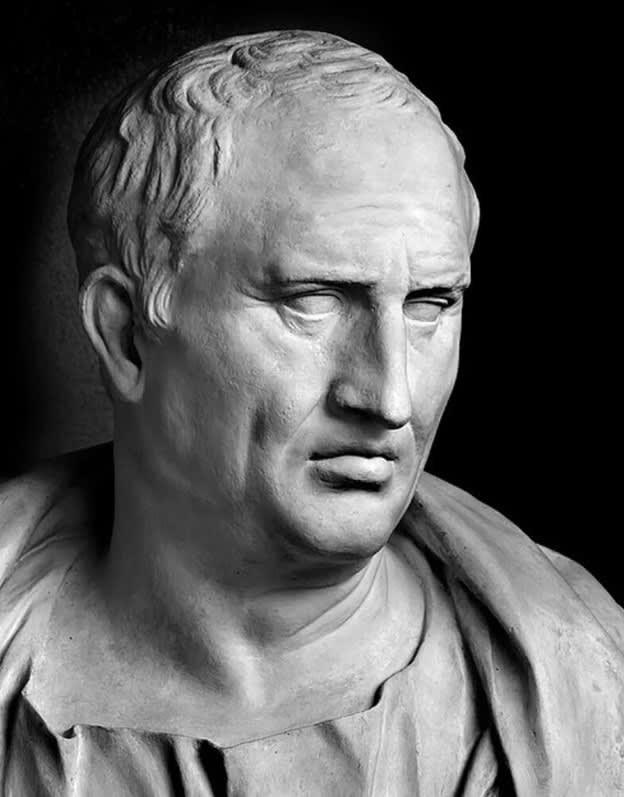
On 2 September 44 BC, Cicero delivered the first of his fourteen Philippics in the Senate — fierce denunciations of Antony.
The consul responded by accusing Cicero of responsibility for virtually every disaster in Rome, from the Catilinarian conspiracy to the murder of Clodius.
The conflict became irreconcilable.
By autumn, Antony realized that the Senate was turning against him and travelled to Brundisium to take command of the Macedonian legions.
There he encountered the first mutinies among soldiers dissatisfied with Antony’s payments compared with Octavian’s promises.
Antony responded with brutal decimation.
At the end of 44 BC, Antony besieged Decimus Brutus at Mutina, seeking control of Cisalpine Gaul.
This gave the Senate grounds to treat him almost as an enemy of the state.
On 1 January 43 BC, the new consuls, Hirtius and Pansa, took office and marched together with Octavian to relieve Mutina.
The military campaign of April was extremely bloody.
At the Battle of Forum Gallorum in mid-April, Antony defeated Pansa but was then attacked by Hirtius.
At the Battle of Mutina on 27 April, Antony was defeated and fled across the Alps.
Despite the tactical defeat, Antony ultimately benefited politically.
Both consuls died during the fighting, leaving Octavian as the only major commander in the field.
Believing Antony to be finished, the Senate attempted to strip Octavian of influence.
This proved to be a fatal political mistake.
Instead of continuing the pursuit, Octavian opened negotiations with Antony and Lepidus.
In October 43 BC, the three leaders met on an island near Bononia.
The result was the creation of the Second Triumvirate, an official alliance between Antony, Octavian, and Lepidus, legalized by the Lex Titia on 27 November 43 BC.
They divided the western provinces between themselves, with Antony receiving all of Gaul except Narbonese Gaul.
To replenish the empty treasury and take revenge on their enemies, the triumvirs introduced proscriptions.
The resulting terror surpassed even that of Sulla.
Around 300 senators and 2,000 equestrians were placed on the lists.
The most famous victim was Marcus Tullius Cicero.
Antony never forgave him for the Philippics.
On 7 December 43 BC, the orator was killed by soldiers while attempting to flee.
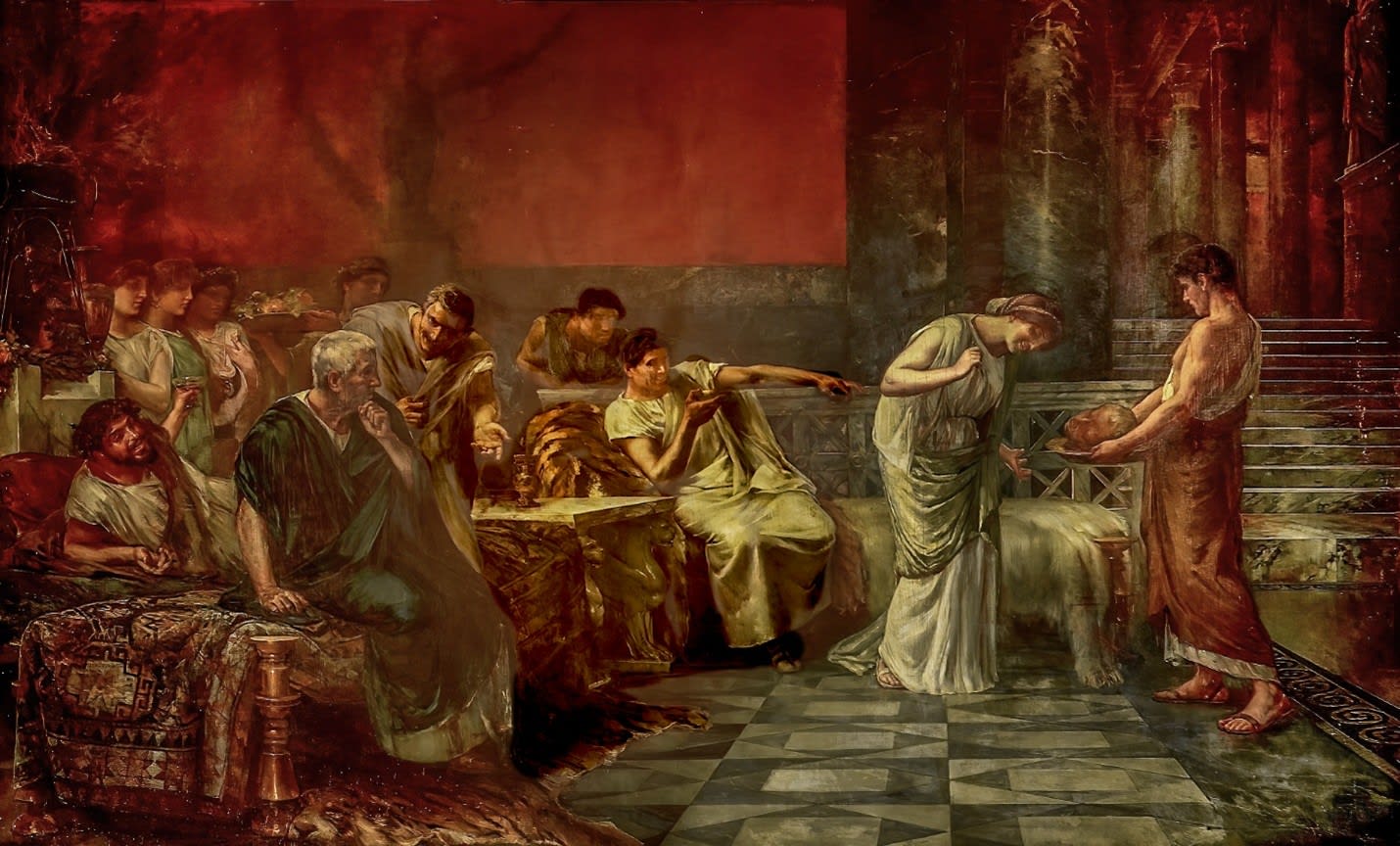
On Antony’s orders, Cicero’s head and right hand were displayed on the Rostra in Rome.
According to later stories, Fulvia, Antony’s wife, pierced the dead orator’s tongue with a hairpin, taking revenge for every word he had spoken against her husband.
Having destroyed their opposition within Italy, the triumvirs turned their attention eastward, where Brutus and Cassius were gathering forces for the decisive confrontation.
Antony, who had effectively become the leading military figure of the alliance, prepared for his greatest test — the campaign in Greece.
After the triumvirs consolidated their power in Italy, Mark Antony and Octavian travelled to Greece to destroy the Republican forces.
Brutus and Cassius, who had gained control of the resources of the eastern provinces, assembled an impressive army of 19 legions and a powerful fleet.
Although relatively few soldiers were genuinely motivated by Republican ideology, generous pay maintained discipline.
The triumvirs faced severe logistical problems because the Republican fleet blocked their supply routes and threatened them with starvation.
Antony, displaying his characteristic energy, advanced rapidly along the Via Egnatia toward the city of Philippi.
In October 42 BC, the first battle began.
While Antony’s legions stormed Cassius’s camp, Brutus’s soldiers attacked Octavian’s position without orders.
The result was mixed: Antony captured the enemy camp, while his colleague suffered a setback on his own flank.
However, Cassius’s poor eyesight and despair proved decisive.
Believing that everything had been lost, he committed suicide.
Three weeks later, under pressure from his own soldiers, Brutus entered a second battle.
In the fierce engagement, in which Octavian participated very little because of illness, it was Antony’s military leadership that brought the triumvirs a complete victory.
After Brutus committed suicide, Antony showed respect for his fallen enemy by covering his body with a purple cloak.
The Republic had fallen, and the Roman world was divided once again.
Leaving Octavian to restore order in Italy, Antony travelled to the eastern provinces.
His goal was to stabilize the region and raise money for the coming war against Parthia.
He behaved increasingly like a Hellenistic monarch: he patronized Athens, rewarded loyal cities, and installed allied kings on their thrones, including Herod in Judaea.
During the winter of 41–40 BC, a fateful meeting took place in Cilicia.
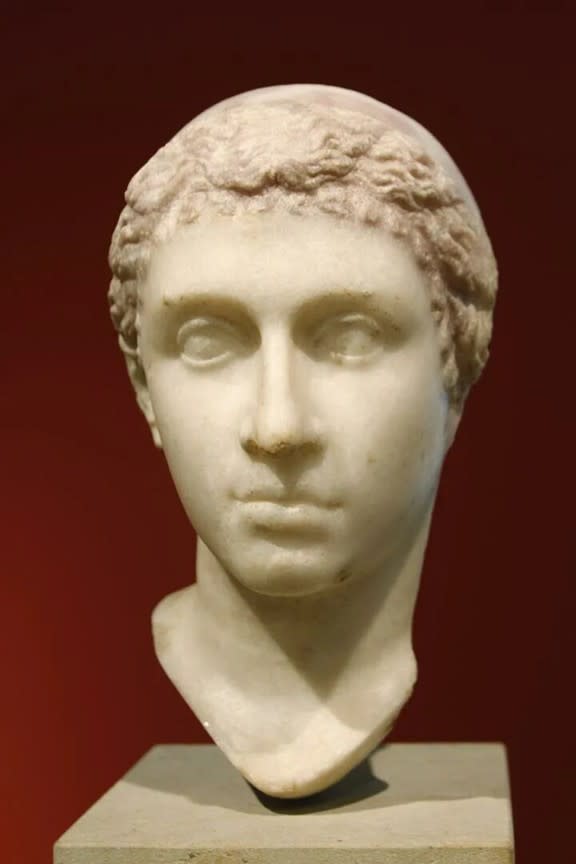
Antony summoned Cleopatra to explain her role in the recent war.
The Egyptian queen arrived at Tarsus aboard a gilded ship with purple sails, surrounded by attendants dressed as nymphs and Graces.
Antony, always attracted to theatrical display and luxury, was completely captivated.
For him, Cleopatra became not merely an ally but an embodiment of Aphrodite, companion of Dionysus, with whom Antony increasingly identified himself.
While Antony enjoyed festivities in Alexandria, Italy approached another crisis.
Octavian was carrying out large-scale confiscations of land for veterans, creating intense hostility among the population.
Antony’s wife Fulvia and his brother Lucius attempted to exploit the unrest, launching an armed conflict known as the Perusine War.
Mark, however, remained strangely passive and did not intervene.
Octavian besieged Lucius in Perusia and burned the city.
Only the threat posed by the Parthian invasion of Roman territories and the need to protect his interests finally forced Antony to return.
In 40 BC, the triumvirs reached a new agreement at Brundisium: Antony received the East, while Octavian controlled the West.
Fulvia’s death opened the way for a new dynastic alliance.
Mark married Octavian’s virtuous sister, Octavia.
Soon afterward, Sextus Pompey, who controlled Sicily, also joined the arrangement.
Peace appeared to have been restored, but it was only a temporary calm.
In 37 BC, the powers of the triumvirate were extended for another five years.
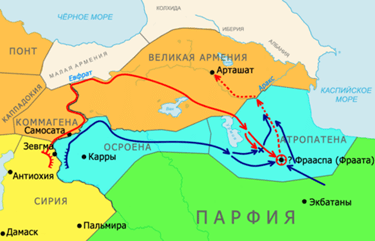
Having never received the reinforcements promised by Octavian, Antony launched a massive campaign against Parthia in 36 BC.
He assembled an enormous force of 16 legions, 10,000 cavalrymen, and 30,000 auxiliary troops.
Determined to avoid the mistakes of Crassus, Antony invaded through Armenia into Media Atropatene.
His haste, however, doomed the expedition.
The siege train fell behind and was destroyed by the Parthians.
The siege of Phraaspa failed.
The Romans were forced to retreat through the mountains under continuous attacks from Parthian cavalry.
Only Antony’s determination and ability to maintain discipline prevented the army from being completely destroyed, although around 25,000 men were lost.
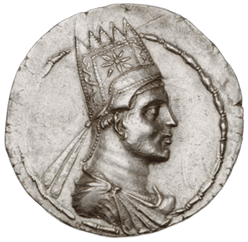
Seeking to restore his prestige, Antony conquered Armenia in 34 BC, treacherously capturing King Artavasdes II.
He celebrated his triumph not in Rome but in Alexandria, shocking Roman public opinion.
The proclamation of Cleopatra as “Queen of Kings” and the distribution of eastern territories among their children — Alexander Helios, Cleopatra Selene, and Ptolemy Philadelphus — gave Octavian an ideal opportunity to launch a propaganda campaign against Antony.
By 32 BC, the break between Antony and Octavian had become final.
Octavian illegally obtained and publicly opened Antony’s will, in which Antony confirmed the rights of Cleopatra’s children and requested burial in Egypt.
Many Romans were outraged by what they saw as the “Easternization” of their commander.
Octavian formally declared war on Cleopatra and portrayed Antony as a man blinded and enslaved by the Egyptian queen.
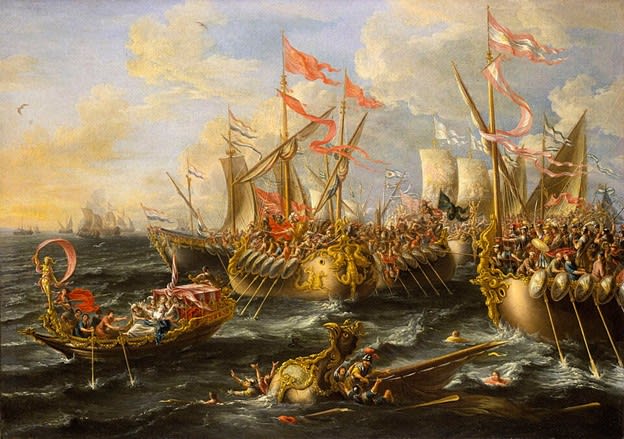
The decisive confrontation occurred on 2 September 31 BC at the Battle of Actium.
Antony’s fleet consisted of enormous, heavily built warships, but his forces suffered from a shortage of rowers and widespread disease in the camp.
Octavian’s admiral, Agrippa, trapped Antony in the Ambracian Gulf.
At the height of the battle, Cleopatra’s lighter ships broke through the battle line and sailed south.
Antony, acting impulsively, abandoned his fleet and army and followed her.
It was not merely a military defeat but a collapse of his authority.
His land legions, left without their commander, eventually surrendered to Octavian.
On 1 August 30 BC, Octavian’s forces approached the walls of Alexandria.
Antony’s remaining supporters abandoned him.
After receiving a false report that Cleopatra was dead, Mark Antony fell upon his sword.
The wound was not immediately fatal.
When he learned that the queen was alive and had barricaded herself inside her tomb, the bleeding commander ordered his attendants to carry him to her.
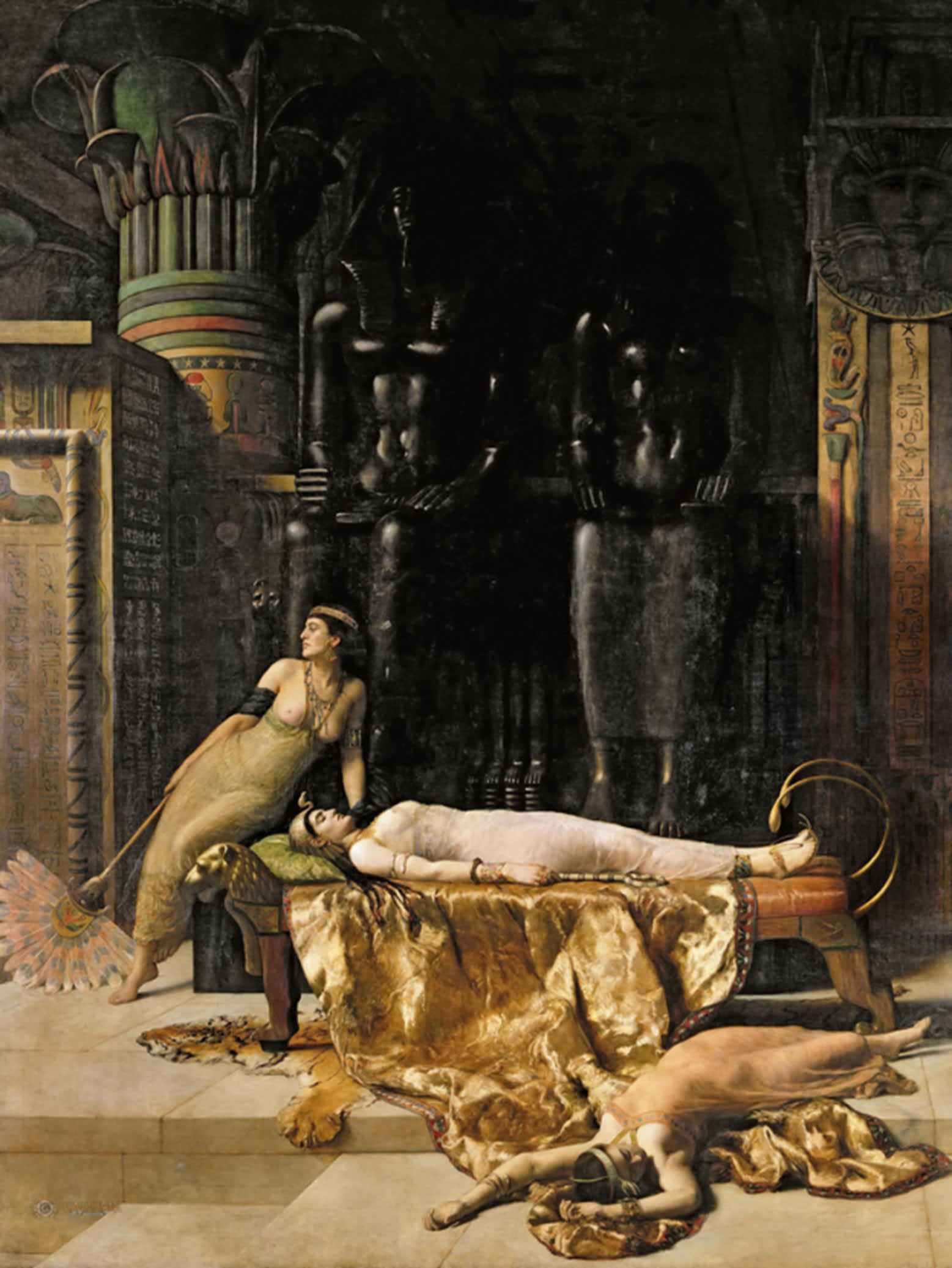
He was hauled up by ropes through a window and died in Cleopatra’s arms.
A few days later, the queen followed him in death, refusing to become a spectacle in Octavian’s triumph.
Egypt became a Roman province.
Octavian, the future Augustus, executed Antony’s eldest son Antyllus and Caesar’s son Caesarion, but spared Antony’s other children, who were raised by Octavia.


