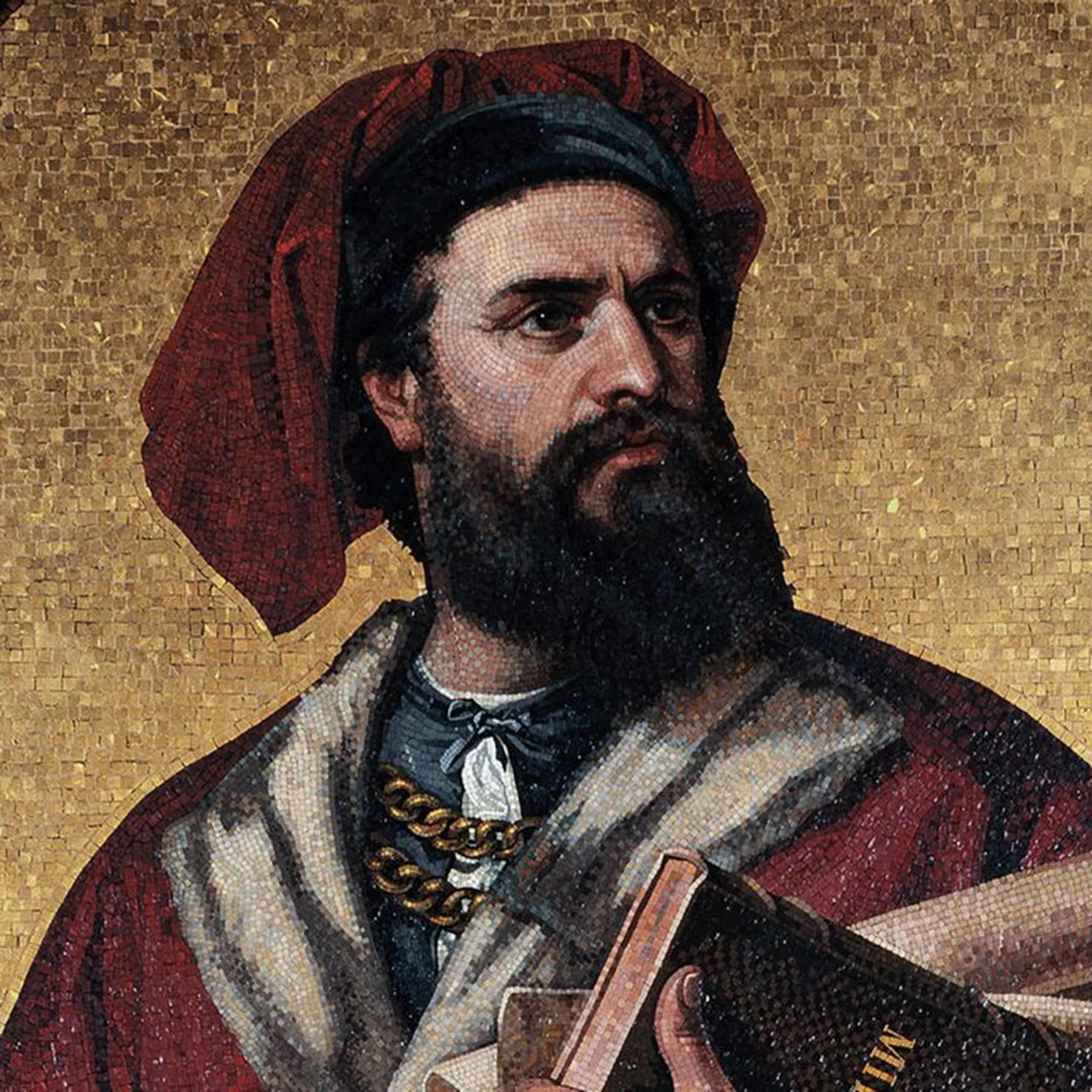

Marco Polo, born around 1254, was the son of the Venetian merchant Niccolò Polo, from a family noted for trading in gems and spices.
In 1260 Niccolò and his brother Maffeo set out for Sudak in Crimea, where a third brother kept a trading house. Traveling through Central Asia, they spent a year in Sarai-Batu, capital of the Golden Horde, then continued to Bukhara. Owing to campaigns waged by Khan Berke, they were forced to remain there for three years. In 1266 they joined a Persian caravan bound for the Mongol ruler Kublai at his capital Khanbaliq (modern Beijing).
Kublai—then close to completing his conquest of the Song empire—received them warmly. He gave them a golden paiza (a credential tablet ensuring safe passage) and asked them to deliver a letter to the pope requesting Christian missionaries and oil from the Holy Sepulchre. When the brothers reached Venice in 1269, Pope Clement IV had died and a successor had not yet been elected. Without waiting for a new pope, they set off in 1271 via Jerusalem—with the now-grown Marco—to fulfill Kublai’s commission.
Their route ran overland across the Armenian highlands, Mesopotamia, the Iranian plateau, the Pamirs, and Kashgaria. In 1275 they reached China; the first Chinese city they visited was Shazhou (modern Dunhuang). That same year they arrived at Kublai’s summer residence in Shangdu (Xanadu).


According to Marco, the khan was impressed and kept him in service for nearly seventeen years. In his book Marco claims Kublai entrusted him with various missions and even appointed him governor of Yangzhou for three years. He also writes that his family taught the Mongols to use counterweight trebuchets in sieges—details many historians treat with caution.

Marco’s account describes daily life among Mongols and Chinese—their crafts, foodways, and, notably, the use of paper money. He was well informed about court affairs, including intrigues and the assassination of the powerful minister Ahmad, a story corroborated by Chinese sources.
Despite repeated requests, Kublai was reluctant to let the Polos leave until 1291, when a Mongol princess needed to be conveyed by sea to Persia to wed the Ilkhan Arghun. Experienced at sea travel, the Polos agreed to escort her.
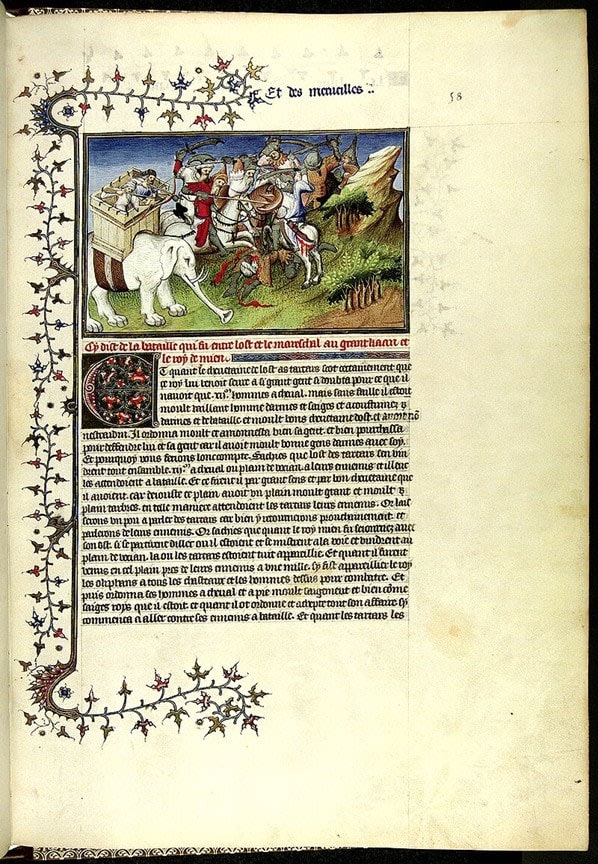
Back in Venice in 1295, little is known of Marco’s life until the Genoese war: in 1298 he was captured after the Battle of Curzola. In prison he met fellow inmate Rustichello of Pisa, who wrote down Marco’s tales. The resulting book—often called The Book of the Marvels of the World—has four parts describing the lands he visited, mentioning marvels such as paper currency, sago palms, and “black stones that burn” (coal). It quickly became one of the Middle Ages’ most widely read works.
Skepticism about his veracity arose even in his lifetime. Modern critics sometimes doubt he ever reached China, pointing to his silence on things like the Great Wall or foot-binding. Most historians find these objections unpersuasive: the “Great Wall” in his era was largely earthen defenses; many customs of commoners would be unfamiliar to a foreigner serving within a Mongol-run administration; and Marco likely spoke Persian and Mongolian rather than Chinese, which explains his Persian toponyms and gaps.
Marco Polo died in 1324 and was buried in the church of San Lorenzo, Venice. His book profoundly influenced European explorers—not least Christopher Columbus, who, inspired by Marco’s tales, sailed west in search of a sea route to India.


