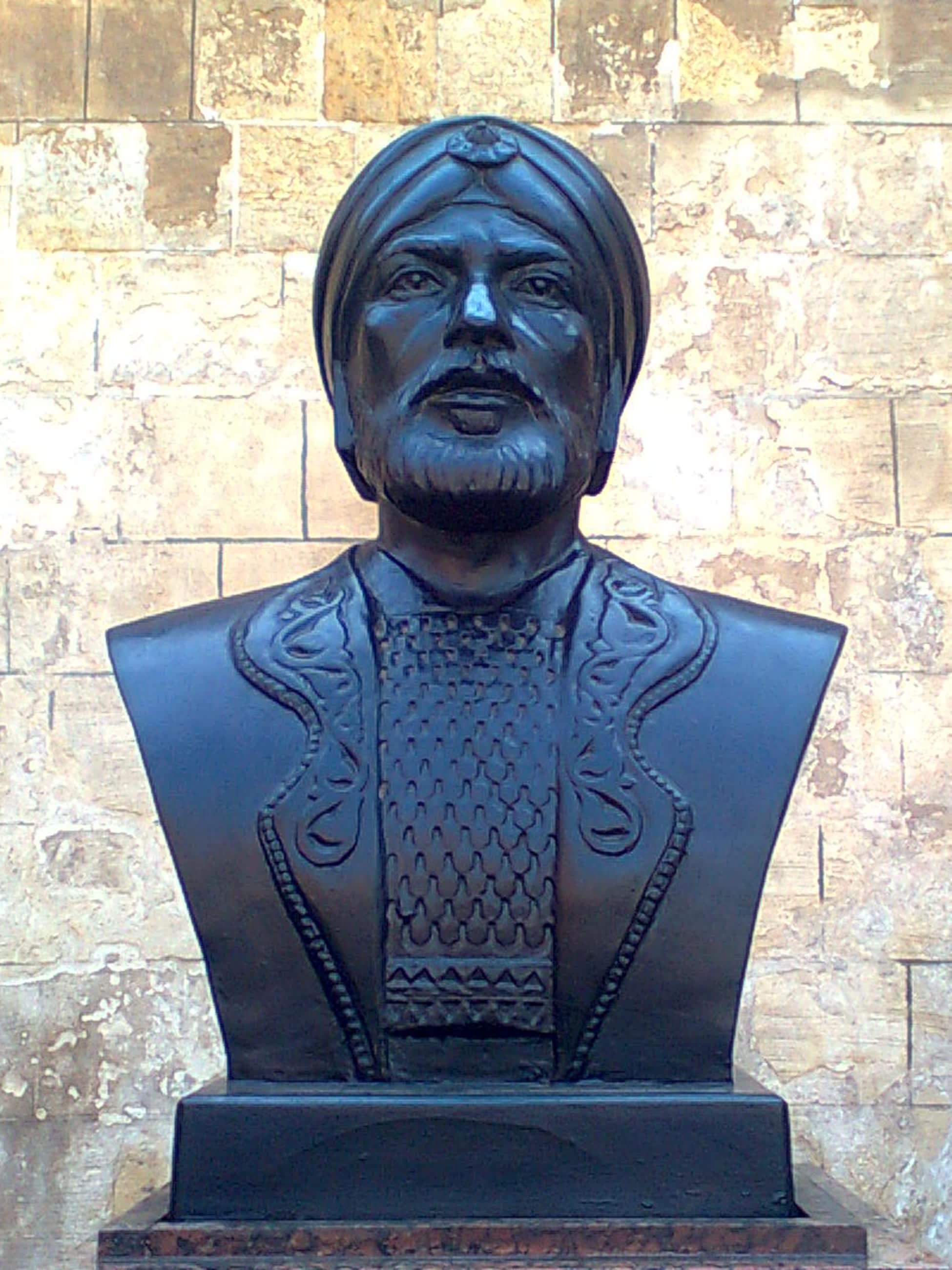

According to the testimony of the historian al-Maqrizi, Qutuz was not a mere mamluk of low birth. His roots went back to the ruling Anushteginid dynasty, which had once governed the powerful Khwarazmian Empire. His real name was Mahmud ibn Mamdud. He was the son of the sister of the legendary Sultan Jalal al-Din Manguberdi, while his father was the sultan’s paternal uncle.

The origin of the dynasty remains disputed in academic circles to this day: Western historians (French, British, and Persian) tend to regard them as Kipchak Turks (Cumans), whereas Soviet historiography saw them as descendants of the Oghuz-Turkmen Begdili tribe. However, Mahmud’s fate was sealed by the Mongol invasion: during the collapse of Khwarazm, the young man was captured by the Mongols. He was sold in Damascus, from where he was later taken to Cairo, beginning his path as a mamluk under the name Qutuz.
In Egypt, Qutuz quickly distinguished himself among the other warriors and became a senior emir in the circle of al-Mu‘izz Aybak. After Aybak seized power, Qutuz assumed the strategically important post of نائب السلطنة in Egypt (na'ib al-saltana Misr), effectively the viceroy of the sultanate. His military talent first became especially evident in 1249–1250, when he played one of the key roles in crushing the Seventh Crusade, effectively burying the ambitions of the European knights in Egypt.

Qutuz’s domestic policy was harsh and pragmatic. In January 1254, he personally took part in the elimination of the leader of the Bahri Mamluks, the charismatic emir Faris al-Din Aktay, who was the chief rival of Sultan Aybak. This murder caused a split: many Bahri mamluks, including the future Sultan Baybars, fled Cairo in fear. In 1257 and 1258, they attempted twice to attack Egypt in order to regain their influence, but Qutuz repelled both attacks, executing the captured leaders.
After Aybak’s death in 1257, his fifteen-year-old son al-Mansur Ali became the formal sultan. Behind his back, however, a fierce struggle for power was underway. Qutuz, displaying remarkable cunning, managed to imprison his main rival Sanjar al-Halabi and took the post of commander-in-chief (atabeg al-‘asakir), becoming the de facto dictator of Egypt.

When the shadow of Hulagu’s Mongol invasion fell over the Islamic world, Qutuz understood that the time for political games was over. Waiting until his opponents from the Salihi and Mu‘izzi factions had left the capital, he deposed the young al-Mansur Ali on November 12, 1259, and officially seized the throne, taking the title al-Malik al-Muzaffar (“The Victorious King”).
His legitimacy was based on the necessity of immediate jihad. Qutuz argued that a seventeen-year-old youth was incapable of leading the army against the Mongols. Moreover, he skillfully used his descent from the Khwarazmshahs, presenting himself as the avenger of his dynasty, which had been erased from the face of the earth by the Mongols decades earlier.
The situation was critical. On January 25, 1260, the Mongols captured Aleppo. The Ayyubid ruler of Damascus, al-Nasir Yusuf, showed indecision and refused to join forces with Qutuz. Seeing this, Baybars, who had been in al-Nasir’s service, left him and turned to his old enemy Qutuz, seeking pardon (aman). Qutuz, understanding that the best warriors were needed for victory, accepted Baybars.
When Hulagu’s envoys arrived in Cairo demanding submission, Qutuz had them executed, closing off any path to a peaceful resolution of the conflict. Preparations for the campaign began. Qutuz proved himself a subtle diplomat, managing to reach an agreement with the Franks of Acre for neutrality and for the right of passage for the Mamluk army through their lands.
On September 3, 1260, the historic Battle of عين جالوت (Ayn Jalut) took place in the Jezreel Valley. When the left flank of the Mamluk army began to waver under the assault of the forces of the Mongol noyon Kitbuqa, Qutuz displayed extraordinary courage. Throwing off his helmet so that the warriors could see his face, he personally led the counterattack with the cry, “O Islam!” The Mongols were utterly defeated, and Syria passed under Mamluk control.

“At present, Diyar Bakr, Diyar Rabi‘a, and Syria are full of weeping, and from Baghdad to Rum the provinces and lands are laid waste... If we do not move before the Mongols and rise to repel them, then Egypt will soon be devastated. We must choose one of three things: either reconciliation, or enmity, or to abandon our homeland. To emigrate is difficult... My opinion is this—let us all together turn to war!”
— From Qutuz’s speech before the emirs (Rashid al-Din)
Victory brought Qutuz glory, but not peace. While distributing governorships in liberated Syria, he made a fatal mistake: he gave Damascus to Sanjar al-Halabi, while Aleppo, which had been promised to Baybars, he handed over to Ala al-Din Ali. This became the spark for a conspiracy.
On the way back to Egypt, on October 24, 1260, the army encamped near Gaza. During a hunting expedition, a group of conspiratorial emirs surrounded the sultan. The pretext was a prearranged signal: Baybars approached Qutuz and asked him to grant him a beautiful captive Kipchak girl. Having received consent, he kissed the sultan’s hand. This was the signal. At that very moment, the mamluks attacked Qutuz. According to some accounts, the fatal blow was struck by Baybars himself; according to others, by a little-known mamluk named Anas al-Silahdar.
Thus ended the brief but dazzling reign of Sayf al-Din Qutuz. A man who had been sold into slavery by those whom he would later defeat saved Egypt and Syria from Mongol domination, only to fall at the hands of his own comrades. His place on the throne was taken by Baybars I, who would continue the work of strengthening the Mamluk Sultanate for centuries to come.


