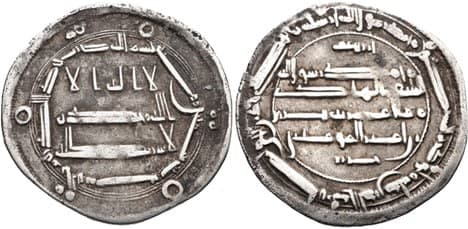

Abu Muḥammad Mūsā was born in the Iranian city of Rayy. He was the eldest son of the future caliph al-Mahdī and the legendary Khayzurān a former slave whose will and intellect enabled her to become the ruler’s lawful wife and one of the most influential women in the East. Mūsā had an adopted brother, Ḥusayn, the son of the prominent general Muʿādh ibn Muslim, but it was Mūsā and his younger brother Hārūn who, from childhood, were prepared for the burden of power.
The first serious encounter with the realities of succession came in 775. The young Mūsā accompanied his grandfather, the great al-Mansur, on his final pilgrimage. When the old caliph died near Mecca, the chamberlain (ḥājib) al-Rabīʿ ibn Yūnus resorted to a ruse to avoid turmoil. He concealed the ruler’s death, assembled the dignitaries, and seated Mūsā in a place of honor. Reading out the late caliph’s testament, al-Rabīʿ compelled the courtiers to swear allegiance to Mūsā’s father, al-Mahdī guiding them toward the young prince, who became a living guarantee of legitimacy. This peaceful transfer of power was an important lesson for Mūsā.
As he matured, he began to take an active part in governance: he subdued rebels in Jurjān and, in March 780, while his father and brother were campaigning against Byzantium, served as governor in the very heart of the empire Baghdad.

The death of his father in April 785 found Mūsā in Jurjān. It was a critical moment: al-Mahdī, yielding to Khayzurān’s influence, had been traveling to persuade his eldest son to renounce the throne in favor of his mother’s favorite — Hārūn. The caliph’s sudden death under unclear circumstances changed everything. Mūsā displayed extraordinary energy: in twenty days he covered the distance to Baghdad and ascended the throne under the name al-Hādī.
In the capital he was met by a triumvirate that maintained order—his mother Khayzurān, the chamberlain al-Rabīʿ ibn Yūnus, and the wise Yaḥyā the Barmakid. The new caliph, however, had no intention of being a puppet. His first step was to renew the government: he appointed ʿAlī ibn ʿĪsā ibn Māhān as head of the guard and showed distrust toward the old al-Rabīʿ. He chose as his residence a palace in Isābādh, seeking to distance himself from the influence of his mother’s quarters.
The principal conflict of al-Hādī’s reign was his attempt to change the order of succession. Although Hārūn had voluntarily acknowledged his brother’s authority, al-Hādī wished to strip him of his rights in favor of his own young son Jaʿfar. The army supported this move, fearing Hārūn’s entourage, but Khayzurān and Yaḥyā the Barmakid stood firm in opposition. Yaḥyā was even thrown into prison for his audacity, yet in the end the caliph retreated: he feared openly violating the oath sworn to Hārūn during their father’s lifetime and was wary of his mother’s resolve.

Relations with Khayzurān finally turned into open hostility. The caliph was enraged that officials continued to come to her “to pay homage” in order to settle state affairs. Hot-tempered al-Hādī publicly humiliated his mother before the dignitaries, advising her to take up spinning or the Qurʾān and threatening to cut off the heads of anyone who crossed the threshold of her house. It was an open challenge to a woman accustomed to ruling the empire from behind a curtain.
Amid these family quarrels, an Alid uprising flared up. In Medina, a descendant of Imam Ḥasan Ḥusayn ibn ʿAlī rose in revolt after the Abbasid governor subjected his relatives to torture. The rebels seized the city, but al-Hādī’s punitive forces quickly crushed them near Mecca in 786. It was then that Idrīs ibn ʿAbdallāh fled to the Maghrib, where he later founded the Idrisid dynasty.
The repression of the Alids was brutal, adding darker shades to the caliph’s portrait. In mid-September 786, after ruling for only fifteen months, al-Hādī suddenly died. The official version cited illness, but whispers at court told another story. It was said that Khayzurān fearing for Hārūn’s life and weary of her elder son’s excesses ordered a slave woman to smother him with a pillow. Be that as it may, her influence was instantly restored after his death.
Physically, al-Hādī was handsome and well built, but he had a congenital defect a cleft lip. Because of this his mouth often remained slightly open, and in childhood he was teased as “Mūsā, close your mouth.” Perhaps this early trauma shaped his quarrelsome and unpredictable character. His moods swung from tenderness toward his brother to fierce hatred.
Legends circulated about the caliph’s cruelty. Once he caught two of his concubines in the same bed. Without a word he left, then returned a few minutes later, breathing heavily. A servant followed, carrying a tray with the severed heads of the two beautiful women. “I killed them for what they were doing,” he coldly told the guests and continued the conversation as if nothing had happened.
Al-Hādī left behind nine children born of concubines. His favorite son Jaʿfar, whom he had intended as his heir, was immediately taken into custody on the night of his father’s death, and his trace in history was lost. Hārūn al-Rashīd ascended the throne, ushering in an era that would be called the Golden Age an age that would have been impossible without the harsh and brief prelude of Mūsā al-Hādī.


