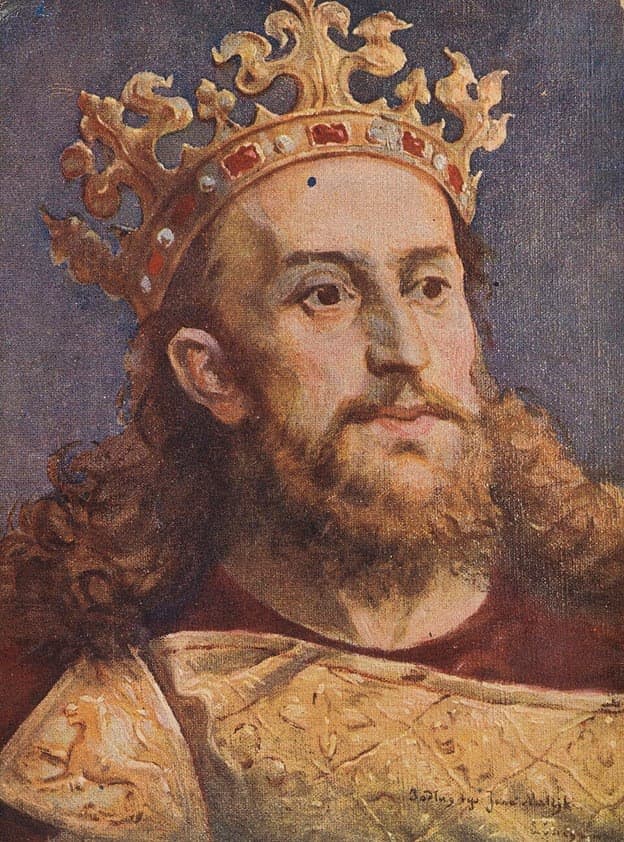
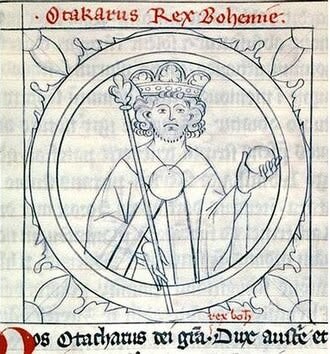
The dramatic fate of Wenceslaus had been shaped even before his birth by the great confrontation between his father, Přemysl Ottokar II, and Rudolf I of Habsburg. In 1276, when the young prince was only five years old, Rudolf placed his father under the imperial ban and laid siege to Vienna. Under mounting pressure, Ottokar was forced to sign a harsh settlement, renouncing his Austrian territories and retaining only Bohemia and Moravia.
At the same time, it was agreed that Wenceslaus would seal the peace by marrying Rudolf’s daughter Judith. The truce, however, proved to be only temporary. In 1278, at the fateful Battle on the Marchfeld, Přemysl Ottokar II was killed, leaving his seven-year-old son as heir to a realm in crisis.
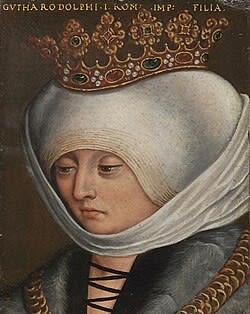
Guardianship of the child passed to Margrave Otto V of Brandenburg of the House of Ascania. For the young Wenceslaus, these years became a period of humiliating captivity. While the regent governed in his name, Wenceslaus was effectively kept under arrest far from his homeland.
Only in 1283, when the prince was twelve years old, was he allowed to return to Bohemia and rejoin his mother, Queen Kunigunda. Even then, however, real power did not immediately pass into his hands. The dominant figure at court was Záviš of Falkenstein, Kunigunda’s new husband, who concentrated control of the government in his own hands.
Wenceslaus’s entry into adult political life began in January 1285, when he formally married Judith of Habsburg. The marriage, originally designed to reconcile the Přemyslids with the Habsburgs, gradually became a channel through which Judith and her circle exerted influence over the young king.
In 1290, Wenceslaus finally took a radical step to free himself from the influence of his stepfather. Following politically motivated accusations encouraged by Judith’s supporters, Záviš of Falkenstein was executed by beheading. From that moment onward, the independent and highly successful reign of Wenceslaus II truly began.
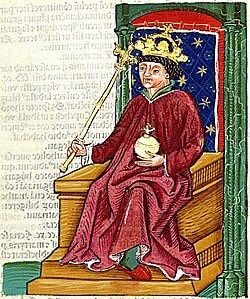
His political attention soon turned northward toward fragmented Poland. In 1291, Duke Przemysł II transferred the Duchy of Kraków to Wenceslaus, a territory that symbolized supreme authority over the Polish lands.
The political situation remained complicated. Przemysł II was crowned King of Poland in 1295, but after his violent death in 1296, Wenceslaus emerged as one of the strongest claimants to the vacant throne.
Acting as both a skilled diplomat and a decisive ruler, Wenceslaus II was crowned King of Poland in ancient Gniezno in 1300, bringing the Bohemian and Polish crowns under his authority.
The economic foundation of Wenceslaus’s power was the discovery of exceptionally rich silver deposits at Kuttenberg, modern-day Kutná Hora, in 1298. Recognizing the strategic importance of this resource, the king introduced a major mining reform in 1300 through the legal code known as the Ius regale montanorum, which established extensive royal control over silver mining.
This reform gave rise to the Prague groschen, a coin that became one of the principal currencies of Central Europe for centuries.
Between 1300 and 1340, the mines of Kutná Hora reportedly produced as much as twenty tons of pure silver per year. This wealth enabled Wenceslaus to maintain a powerful army and helped transform Prague into one of the richest and most magnificent capitals of Central Europe.
He encouraged the development of crafts and towns and even planned to establish a university, anticipating the cultural flourishing that Bohemia would experience in later generations.
Queen Judith died in 1297, and Wenceslaus later entered into a second marriage with Elisabeth Richeza, the daughter of Przemysł II. This union further strengthened his dynastic claims to the Polish lands.
In 1301, the death of King Andrew III of Hungary brought the male line of the Árpád dynasty to an end. As a close relative of the deceased monarch, Wenceslaus II put forward his young son as a candidate for the Hungarian throne.

On August 27, 1301, his son Wenceslaus III was crowned at Székesfehérvár as King of Hungary under the name Ladislaus V.
Hungary, however, was engulfed in internal conflict. By 1303, support for the young king was rapidly declining, forcing Wenceslaus II to intervene personally. He eventually brought his son and the Hungarian royal regalia back to the safety of Prague.
The king was at the height of his power and preparing for a campaign against Austria when illness struck.
On June 23, 1305, at the age of only thirty-four, Wenceslaus II died, most likely from tuberculosis.
His death marked the beginning of the rapid decline of the Přemyslid dynasty. His son and successor, Wenceslaus III, the last male representative of the dynasty, was unable to preserve the vast political inheritance his father had built.


