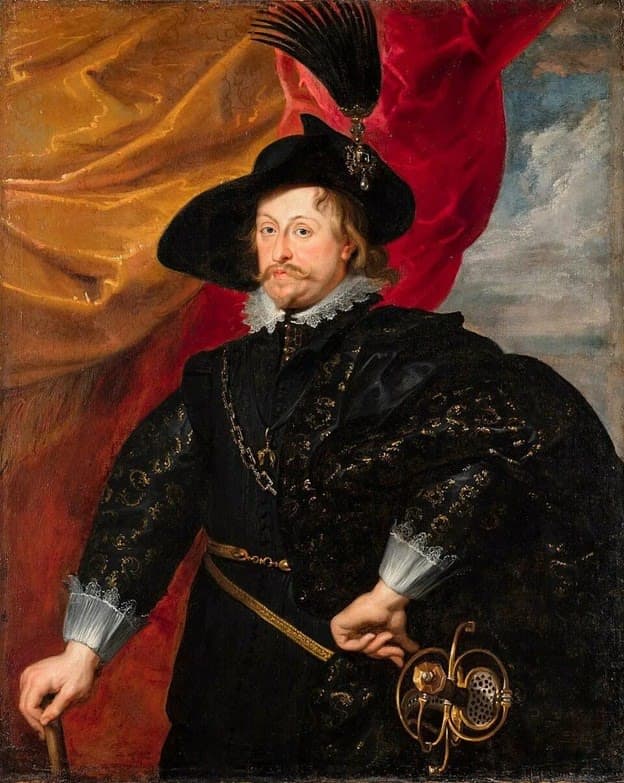
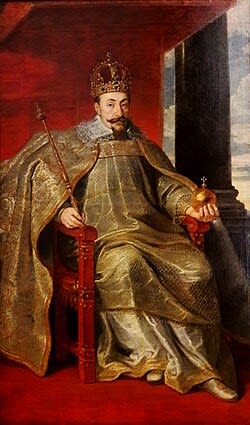
Władysław's fate was shaped long before his birth by a complex web of dynastic conflicts. His father, Sigismund III, was the grandson of Gustav I, the founder of Sweden's Vasa dynasty. In 1592, Sigismund inherited the Swedish throne, but by 1599 he had been overthrown by his uncle, Charles IX. This event sparked a long-lasting rivalry between the Polish and Swedish branches of the Vasa dynasty, leading to a series of exhausting wars, including the famous "Deluge."
Władysław was born on June 20, 1595. His mother, Anne of Austria, died when he was only three years old. The prince was raised by the influential lady-in-waiting Ursula Meyerin and later educated by distinguished clergymen Gabriel Prewancjusz and Andrzej Szołdrski. Despite his Swedish and Austrian ancestry, Władysław grew up in a deeply Polish environment. He was fluent in German, Italian, and Latin, but as a matter of principle, he preferred to speak only Polish.
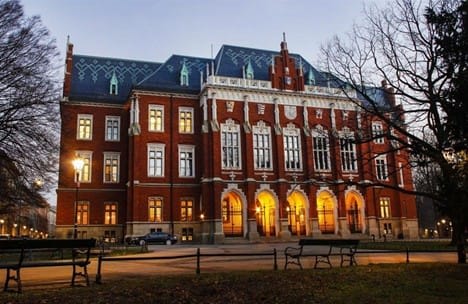
After studying at the University of Kraków, the young prince embarked on a two-year journey across Europe. In Rome, he not only studied the fundamentals of state administration but also developed a passionate interest in art, becoming acquainted with some of the greatest masters of the Baroque era. This artistic education would later help transform Warsaw into one of Europe's cultural capitals.
One of the most fascinating chapters in Władysław's biography was his election to the Russian throne during the Time of Troubles. Following the collapse of Boris Godunov's rule and the emergence of several pretenders to the throne, the Russian boyars sought a figure who was not involved in the country's internal conflicts.
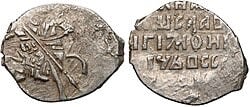
Under the agreement of February 4, 1610, concluded near Smolensk, and subsequently through decisions made by the Council of Seven Boyars and the Zemsky Sobor, the 15-year-old Władysław was proclaimed Tsar of Russia. On August 27, 1610, the inhabitants of Moscow swore allegiance to him in absentia. Coins were even minted in Moscow bearing the name "Tsar Władysław Zhigimontovich," following traditional Russian coinage practices.
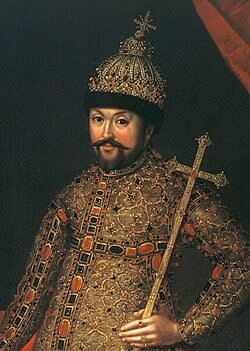
However, this triumph never materialized. His father, Sigismund III, pursued ambitions of his own: he refused to allow his son to travel to Moscow, demanded that Russia come under his own authority, and rejected the condition that Władysław convert to Eastern Orthodoxy. This led to growing anti-Polish sentiment, the uprising led by Minin and Pozharsky, and the accession of Michael Romanov to the Russian throne in 1613. Władysław struggled for years to accept the loss of the Russian crown. He launched a military campaign in 1617–1618 and officially retained the title of tsar until 1634, even wearing a specially crafted "Muscovite crown" at ceremonial receptions.
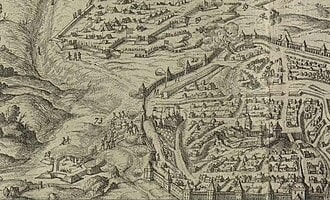
Władysław IV was elected king on November 8, 1632, shortly after his father's death. His reign began with a serious challenge — the Smolensk War. Tsar Michael Feodorovich of Russia, hoping to take advantage of the political uncertainty in the Polish-Lithuanian Commonwealth during the interregnum, sent an army toward Smolensk.
The king proved himself to be a talented military commander and reformer. He not only lifted the siege of Smolensk in September 1633 but also surrounded the Russian army under the command of Mikhail Shein, forcing it to surrender on March 1, 1634. The conflict ended with the Treaty of Polyanovka: Władysław permanently renounced his claims to the Russian throne in exchange for financial compensation and recognition of the existing borders. In practice, the treaty preserved the Polish-Lithuanian Commonwealth's position as the dominant power in Eastern Europe.
At the same time, the king managed to neutralize threats from the south by compelling the Ottoman Empire to enter peace negotiations in 1634, and from the north by concluding the favorable Truce of Stuhmsdorf with Sweden in 1635, which restored previously lost territories to Poland.
Władysław IV understood that the future of the state depended on military modernization. He actively developed artillery and Western-style infantry formations, attempting to reduce dependence on the unpredictable noble levy. However, his enthusiasm for reform repeatedly encountered resistance from the Sejm. The nobility, determined to protect their "Golden Liberty," feared that a powerful army under the king's command could become an instrument of absolutism.
In religious matters, Władysław was remarkably tolerant for his time. He sought to reconcile Catholics, Protestants, and Orthodox Christians, sometimes bringing himself into conflict with his fervently Catholic entourage. In 1633, he officially confirmed the rights of the Orthodox population, attempting to act as the supreme arbiter between the different religious communities.
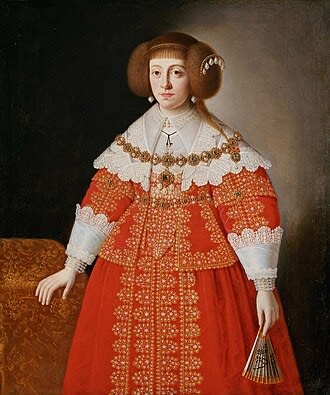
The king's personal life was closely intertwined with major political developments. In 1637, he married Cecilia Renata of Austria, the sister of Emperor Ferdinand III. The marriage was intended to strengthen the alliance with the Habsburgs, but it ended in personal tragedy: the couple's children died in infancy, and the queen herself died during childbirth in 1644.
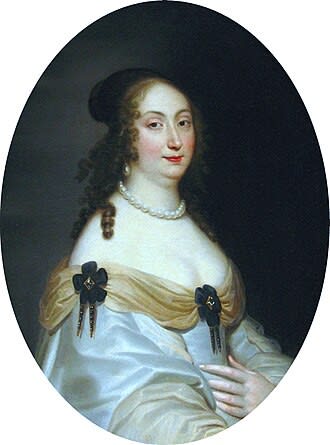
His second marriage, in 1646, to the French princess Marie Louise Gonzaga (Ludwika Maria), marked a shift in foreign policy toward France. The Polish nobility disliked the new queen because of her active involvement in state affairs, while Władysław himself, whose heart belonged to his longtime lover Jadwiga Łuszkowska, felt little affection for his wife.
Władysław IV went down in history as one of the greatest patrons of the arts. During his reign, the first amphitheater was established in the Royal Castle in Warsaw, where the first operas and ballets in Polish history were performed. He collected paintings by Rubens, Guido Reni, and other great masters.
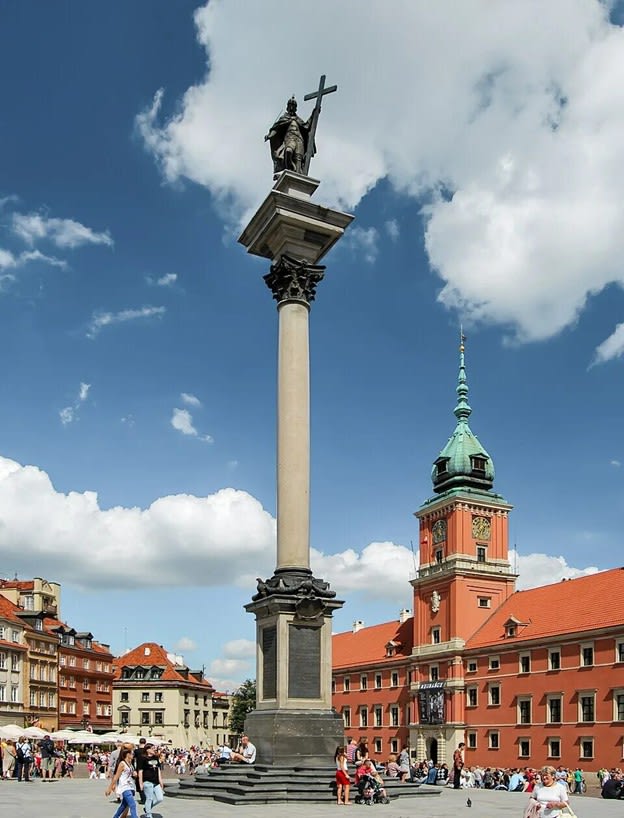
The most famous monument of his era was Sigismund's Column in Warsaw, erected in 1644 in honor of his father. To this day, the monument remains one of the principal symbols of the Polish capital.
The final years of Władysław's reign were overshadowed by his deteriorating health and a growing crisis in relations with the Cossacks. The king's plan to use Cossack forces in a large-scale war against the Ottoman Empire collapsed when the Sejm blocked the necessary funding. This betrayal of expectations ultimately contributed to an explosive situation.
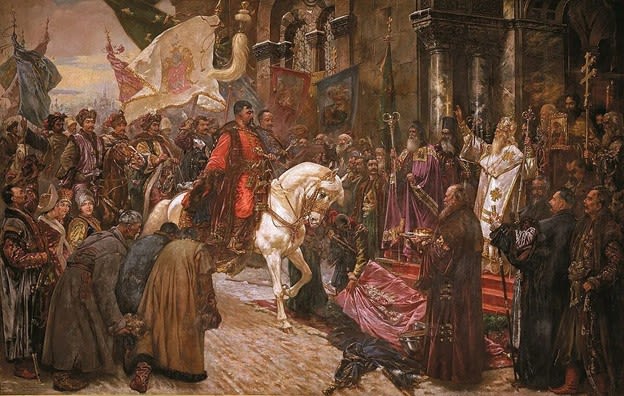
In 1648, the uprising led by Bohdan Khmelnytsky began. According to legend, when Khmelnytsky complained to the king about the injustices he had suffered, Władysław replied, "Do you not have a saber at your side?" Whether this response was genuine or not, it symbolized the monarch's helplessness in the face of growing internal anarchy.
Władysław IV died on May 20, 1648, just as the flames of a conflict that would soon engulf the Polish-Lithuanian Commonwealth were beginning to spread. His body was buried at Wawel, while his heart was interred in the Chapel of St. Casimir in Vilnius. With his passing, the "Golden Age" came to an end, and the shadows of a great crisis began to descend upon the state.


