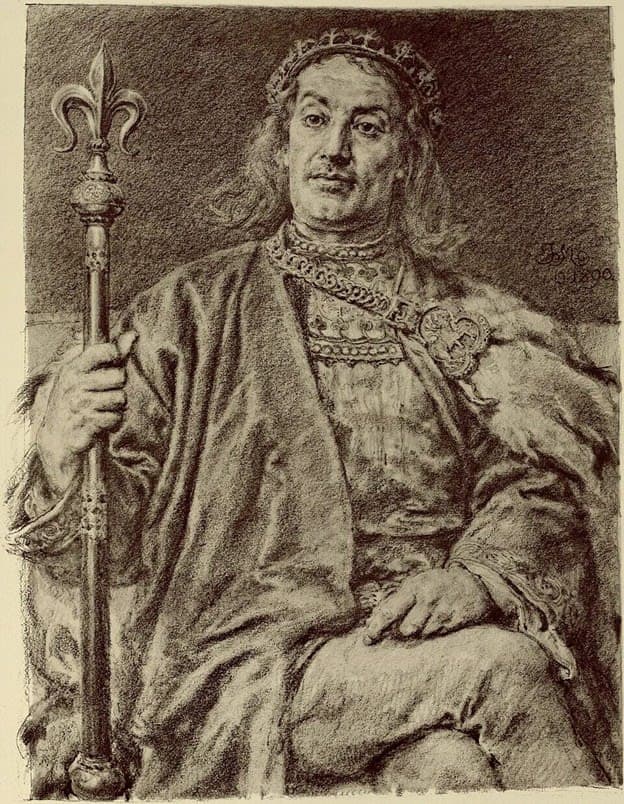
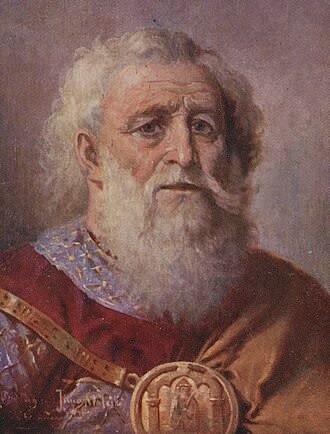
Władysław III entered history under the nickname Spindleshanks (Laskonogi). He was the youngest son of the powerful Mieszko III the Old and his second wife, Eudoxia of Kyiv. The first mention of him in historical chronicles dates to 1168, when the young Władysław attended the assembly at Jędrzejów and witnessed a donation to a Cistercian monastery.
His childhood, however, was far from peaceful. Between 1177 and 1179, because of the rebellion led by Casimir II and Odon of Greater Poland, his family was forced into exile. Władysław was able to return to his homeland only in 1181.
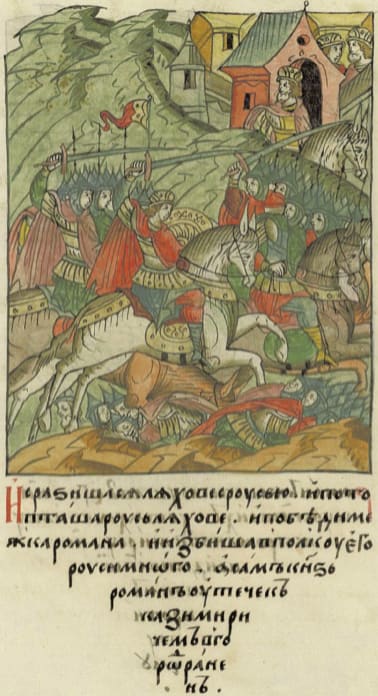
Fate gradually cleared his path to power through a series of deaths within his family. After the death of his half-brother Odon in 1194, Władysław became guardian of his nephew, Władysław Odonic, and took control of the Duchy of Poznań. Then, after the bloody Battle of the Mozgawa River in 1195, in which his last surviving brother Bolesław was killed, Władysław became the sole direct heir of his father.
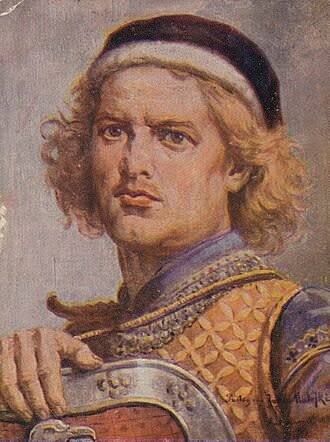
On March 13, 1202, Mieszko III died, and Władysław, supported by the influential Kraków voivode Mikołaj Gryfita, took the throne of the High Duke without serious opposition. His first period of rule in Kraków lasted four years.
Political authority at the time, however, was extremely fragile. After Gryfita’s death in 1206, the local nobility, dissatisfied with Władysław’s treatment of their privileges and with his alliance with the Pomeranians, invited his cousin Leszek the White to take the throne.
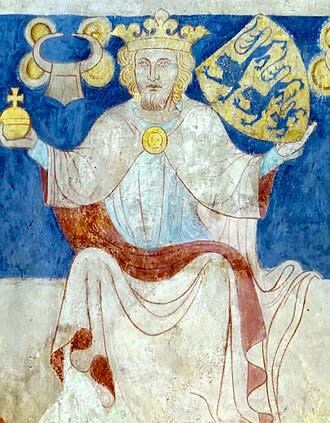
Seeking to strengthen his position in the north, Władysław pursued an active diplomatic policy. He met King Valdemar II of Denmark and, in the same year, 1206, made an unexpected political move: he offered the Duchy of Kalisz to Henry the Bearded in exchange for the Lubusz Land.
This acquisition gave him strategic access toward the Baltic, but the success was short-lived. In 1209, his brother-in-law, Margrave Conrad II, defeated Władysław’s forces near Lubusz and deprived him of this strategically important territory.
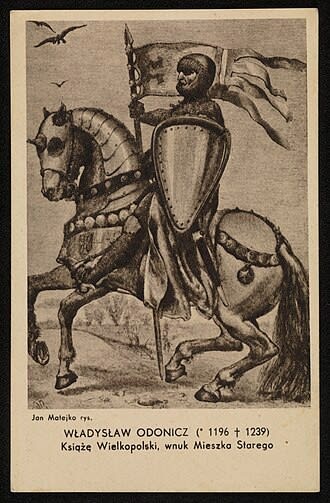
The longest and most bitter conflict of Władysław’s life was his struggle with his nephew, Władysław Odonic. The transfer of Kalisz to Henry the Bearded enraged the sixteen-year-old Odonic, who considered those lands to be his rightful inheritance.
With the support of Archbishop Henryk Kietlicz, Odonic launched a rebellion. Władysław III suppressed the revolt and forced his opponents to flee to Wrocław, but this was only the beginning of the conflict.
In 1208, an attempt at reconciliation took place in Głogów. Through the mediation of Henry the Bearded, Władysław III made peace with the Church, represented by Kietlicz, but the conflict with his nephew remained unresolved and continued to smolder.
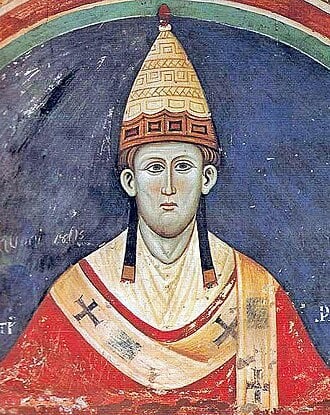
The situation became even more complicated in 1210, when Pope Innocent III issued a bull demanding the restoration of the rights of the Silesian branch of the Piast dynasty. This temporarily enabled Mieszko Tanglefoot to seize Kraków. After Mieszko’s death in 1211, however, Leszek the White regained the throne.
Władysław, meanwhile, was forced to make concessions. In 1216, under pressure from a coalition of princes, he formally transferred the Duchy of Poznań to his nephew, a settlement later confirmed by a papal bull in 1217.

Unexpectedly, in 1217, the former enemies Leszek the White and Władysław Spindleshanks concluded a mutual succession agreement: if either ruler died without an heir, the other would inherit his lands. Henry the Bearded joined the agreement, creating a powerful political triumvirate.
This alliance allowed Władysław to recover Kalisz and the Lubusz Land in 1218, effectively isolating Odonic and Archbishop Kietlicz.
Odonic, however, refused to surrender. In 1223, with the support of Duke Świętopełk II of Pomerania, he launched a new war, capturing Ujście and Nakło. The decisive confrontation came in 1227, when Władysław Spindleshanks’s army was completely defeated and his voivode Dobrogost was killed.
In an attempt to end the bloodshed, an assembly of princes was convened at Gąsawa on November 11, 1227. Władysław Spindleshanks did not attend, a decision that may have saved his life.
On the night of November 24, Pomeranian forces attacked the camp. Leszek the White was killed, while Henry the Bearded was seriously wounded. Although many later suspected Władysław Spindleshanks of involvement in the conspiracy, the subsequent political events point in the opposite direction: he was entrusted with the guardianship of Leszek’s young son.
The death of Leszek the White opened the way for Władysław’s second period of rule in Kraków. On May 5, 1228, at Wiślica, he was formally elected High Duke, defeating the political claims of Konrad of Masovia.
This was an unusual moment in Polish history: for the first time, supreme power was established through an electoral process. To preserve his position, Władysław expanded the privileges of the Church and assumed guardianship over the young Bolesław the Chaste.
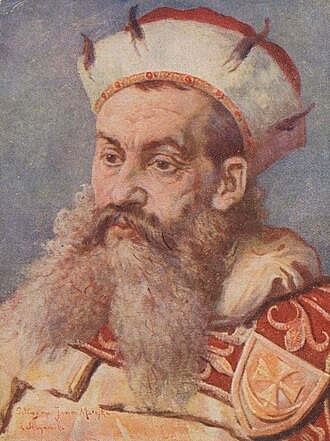
The war, however, continued. Konrad of Masovia and Władysław Odonic joined forces against Spindleshanks. In 1229, after a series of defeats, Władysław III was forced to flee, first to Racibórz and then to Wrocław, where he sought refuge with Henry the Bearded, whom he formally named as his heir.
His final attempt to recover power came in the spring of 1231 at the walls of Gniezno, but it ended in failure. Władysław’s political career was effectively over, and his life soon came to an end under highly controversial circumstances.
The chronicler Alberic of Trois-Fontaines claimed that the nearly seventy-year-old prince was killed at Środa Śląska by a German girl while attempting to sexually assault her. Jan Długosz likewise referred to accusations of sexual misconduct and claimed that Władysław’s subjects despised the aging ruler because of his lifestyle.
Władysław III Spindleshanks died on November 3, 1231. The location of his burial remains uncertain. Possible sites include Racibórz in Silesia and the Benedictine monastery at Lubiń.
After his death, his claims to both Greater and Lesser Poland passed to Henry I the Bearded, opening a new chapter in the struggle to reunify the Polish lands.


