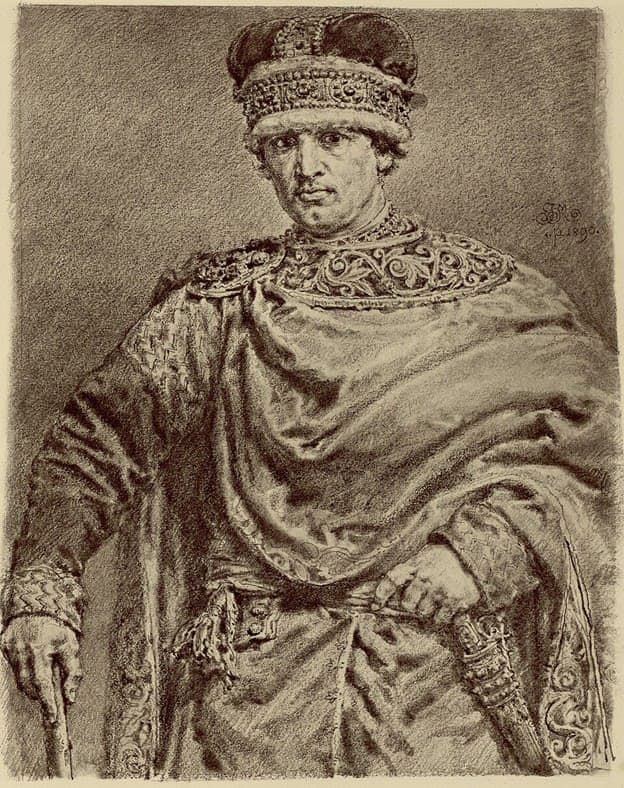

As the eldest son of Bolesław III Wrymouth, Władysław was most likely involved in governing the state during his father’s lifetime, serving as a co-ruler in Silesia. His first serious military trials came in 1133–1135, when Poland became involved in a major conflict with Bohemia and Austria over the succession to the Hungarian throne. While Bolesław III supported the claimant Boris, their opponents backed Béla II. The young Władysław was entrusted with the important task of defending the Silesian frontier. His military debut, however, was far from brilliant: he failed to stop the enemy advance, allowing Bohemian forces to penetrate deep into Polish territory as far as the Oder River.

Nevertheless, diplomatic maneuvers soon helped compensate for these military failures. After peace was concluded, relations between Poland and Bohemia improved, culminating in a meeting at Niemcza in 1137. At this gathering, Władysław acted as godfather to Wenceslaus, the newborn son of the Bohemian duke Soběslav I, strengthening his position on the international stage.
Even earlier, sometime between 1125 and 1127, Władysław had entered into a strategically important marriage with Agnes of Babenberg. She was the daughter of Austrian Margrave Leopold III and, more importantly, the half-sister of the future German king Conrad III. She later also became the aunt of the famous Frederick Barbarossa. This marriage not only connected Władysław with the highest ranks of European aristocracy but also largely determined the direction of his future foreign policy.

A turning point in Polish history came on October 28, 1138, when Bolesław III died. His testament, which entered history as the Statute of Bolesław Wrymouth, established the foundations of the seniorate system. According to the document, Poland was divided among the duke’s sons, but the eldest member of the dynasty — the princeps — was to exercise supreme authority.
Władysław II, by then a mature thirty-three-year-old man with political experience and a family of his own, including his growing son Bolesław the Tall, inherited Silesia as his hereditary domain. As the eldest son, however, he also received a vast senioral province.
This non-hereditary territory included strategically important lands: eastern Greater Poland with the city of Gniezno, western Lesser Poland with Kraków, the capital of the princeps, the Sieradz region, and western Kuyavia. In addition, Władysław received control over Gdańsk Pomerania and supreme authority over Western Pomerania.
Inspired by the example of his great predecessors — Bolesław the Brave and Mieszko II — Władysław was unwilling to accept the role of merely “first among equals.” He dreamed of eliminating the system of separate principalities altogether and restoring sole rule, as his father had once done.
Conflict with his younger brothers, who were supported by their mother, the dowager duchess Salomea of Berg, was therefore inevitable. In 1141, Salomea summoned an assembly of magnates at Łęczyca without inviting Władysław. The purpose of the gathering was to seek allies against him. One proposal was to marry Bolesław Wrymouth’s younger daughter, Agnes, to the son of Grand Prince Vsevolod Olgovich of Kyiv.
Władysław, however, showed considerable political foresight. He took countermeasures and concluded an alliance with Kyiv himself, sealing it through the marriage of his eldest son Bolesław to Zvenislava, daughter of Vsevolod Olgovich.

Open armed conflict broke out in 1142–1143. With the assistance of allied Rus’ troops, Władysław began to put increasing pressure on his brothers. The situation reached a critical point after Salomea’s death on July 27, 1144.
The dispute centered on her widow’s domain, the Łęczyca region, which under the terms of the seniorate system was supposed to pass into Władysław’s senioral province. His younger brothers, Bolesław of Masovia and Mieszko, opposed this transfer.
The chronicles provide conflicting accounts of the events that followed. The Polish chronicler Wincenty Kadłubek, who sympathized with the younger brothers, wrote that Władysław’s forces were defeated in 1145 at the Battle of the Pilica River and claimed that the prince was saved only through the intervention of Rus’ regiments. Rus’ sources, by contrast, describe a peaceful resolution of the dispute in which Władysław obtained the contested lands while his allies received the town of Wizna.
In the end, Władysław annexed Łęczyca, but his desire for absolute power only grew stronger.
The most important and darkest episode of Władysław’s reign was the affair of Piotr Włostowic, also known as Piotr Włast, the powerful palatine and one of the closest associates of his father. As one of the executors of Bolesław III’s will, Włostowic insisted that the testament be respected and opposed any violation of the younger brothers’ rights.
The conflict was further intensified by Władysław’s wife Agnes, whose ambition and hostility toward the influential nobleman were considerable. In 1146, despite an outward appearance of peace, Władysław ordered Włostowic to be secretly seized. At Agnes’s urging, the palatine was subjected to a brutal punishment: he was blinded, had his tongue cut out, and was expelled from the country.
This unprecedented act of cruelty shocked Polish society. The clergy and nobility, outraged by the prince’s actions, began to defect in large numbers to the side of his younger brothers.

At the beginning of the same year, 1146, Władysław decided to strike a final blow against his brothers. He seized Masovia and laid siege to them in Poznań. At that moment, however, fortune turned against him.
Revolts broke out behind his lines, while Jakub of Żnin, Archbishop of Gniezno, publicly excommunicated the princeps. A devastating attack by the forces of the nobility, combined with a sortie by the besieged defenders, resulted in the complete defeat of Władysław’s army.
Władysław was forced to flee first to Prague, where he sought refuge with his namesake and brother-in-law, Duke Vladislaus II of Bohemia, and later with the German king Conrad III.
After reaching Saxony, Władysław rendered homage to Conrad III in the hope of securing military assistance from the Empire. In August 1146, Conrad launched a campaign against Poland, but natural conditions and Polish tactics — including the flooding of the Oder and the avoidance of a decisive battle — forced him to withdraw. He obtained little more than a promise from Bolesław the Curly to appear before an imperial court.
That promise was never fulfilled. Conrad later departed on the Second Crusade, and the Polish question moved into the background. Władysław was granted Altenburg Castle in Thuringia as his residence.
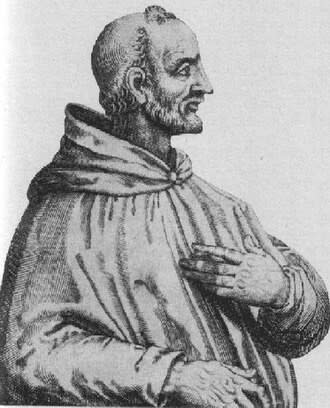
Even the intervention of Pope Eugene III and the mission of the papal legate Guido in 1148 failed to produce results. The Polish bishops, still remembering the fate of Piotr Włostowic, refused to obey the pope’s demand that Władysław be restored to the throne.
A final opportunity for his return appeared in 1157, when the new emperor, Frederick Barbarossa, marched toward Poznań. Yet this campaign also ended in a diplomatic compromise with Bolesław the Curly. He paid tribute and acknowledged the emperor’s supremacy, but once again postponed the question of Władysław’s restoration by promising to appear before an imperial court in Magdeburg.
Władysław II the Exile never again saw his homeland. He died in Altenburg on May 30, 1159, leaving behind the memory of a ruler whose ambition and cruelty ultimately deprived him of everything he had tried to preserve.
His sons were eventually able to return to Silesia, but the unity of Poland had already been lost for many decades.


