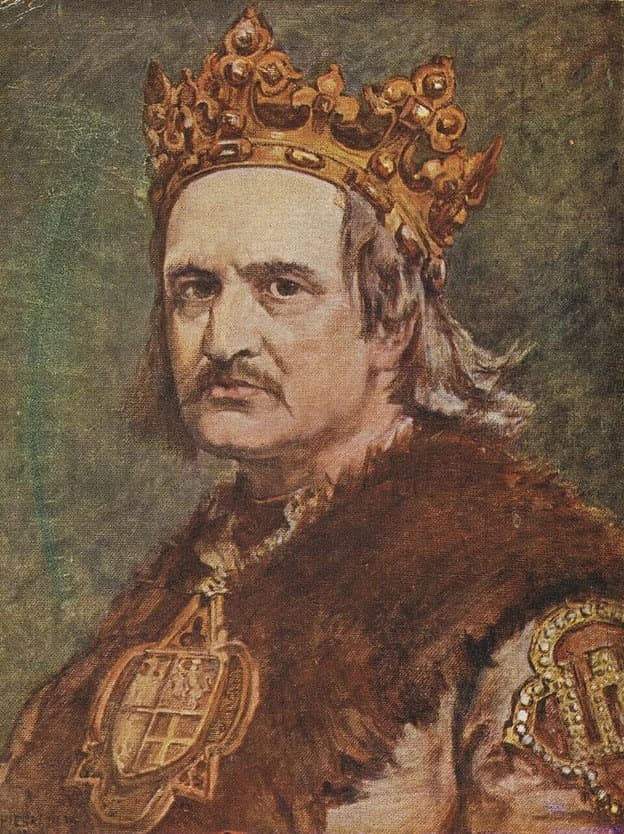
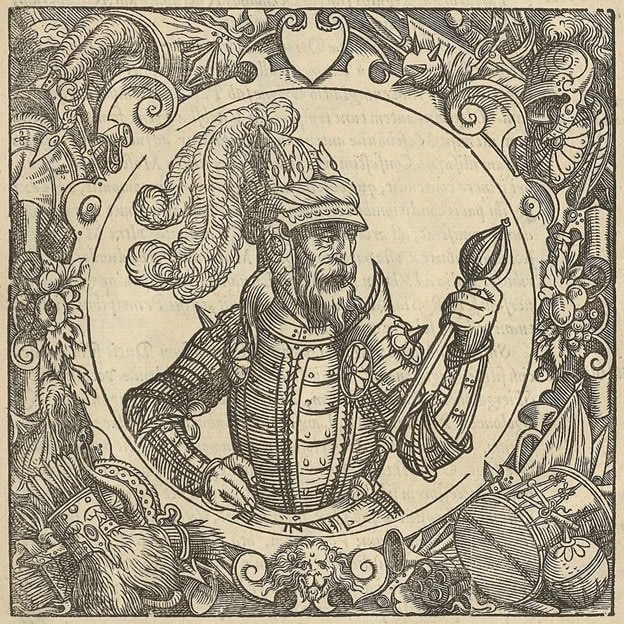
The figure of Jagiełło has been surrounded by mystery since the very beginning of his life. Historians still debate the exact date of his birth, placing it somewhere between 1351 and 1362. As the son of Grand Duke Algirdas of Lithuania and the Tver princess Uliana, he grew up in an atmosphere of divided authority and constant warfare. Although he was probably baptized into the Orthodox faith as a child under the name Jacob, his name barely appears in the chronicles before 1377.
Everything changed after the death of his father. As Algirdas’s favored heir, Jagiełło entered a brutal struggle for power that would ultimately shape the political future of Eastern Europe.
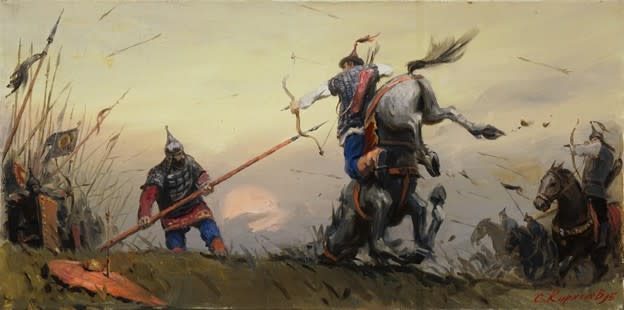
The beginning of his reign was marked by conflicts with his brothers and by the loss of control over eastern territories, including Volhynia and Severia. In 1380, Jagiełło chose to support Mamai against Moscow, but the defeat of the Tatars at the Battle of Kulikovo forced him to turn his forces back.
While Jagiełło maneuvered between Moscow and the Golden Horde, a conspiracy was developing within Lithuania itself. In 1381, his uncle Kęstutis, a supporter of a more aggressively anti-Tatar policy, overthrew his nephew.
Jagiełło, however, demonstrated remarkable political flexibility. In 1382, with the support of the Teutonic Order, he regained the throne. Kęstutis died in Kreva Castle — according to one account by suicide, according to another by strangulation on Jagiełło’s orders.
This bloody dynastic struggle planted the seeds of a long conflict with Jagiełło’s cousin Vytautas, who fled to the Teutonic Knights and began a war against him.
By 1384, Jagiełło found himself in a difficult position, balancing between proposals from Moscow — which included marriage to a daughter of Dmitry Donskoy and conversion to Orthodox Christianity — and mounting pressure from the Teutonic Order.
Ultimately, he chose the western path.
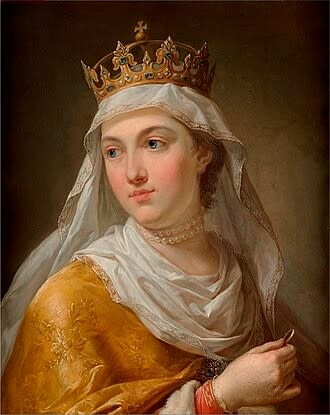
On August 14, 1385, the Union of Kreva was concluded, a political agreement that permanently transformed the map of Europe. Jagiełło pledged to convert Lithuania to Catholicism, release Polish prisoners, and marry the young Polish monarch Jadwiga.

In February 1386, Jagiełło’s transformation from Lithuanian grand duke into a Polish monarch was completed in Kraków. He was baptized under the Christian name Władysław, married Jadwiga, and was crowned King of Poland.
Although legally his initial position was closely tied to his marriage to the reigning queen, in practice Jagiełło became the architect of a new political union.
In 1387, he personally supervised the Christianization of Lithuania in Vilnius, ordering pagan sacred fires to be extinguished and sacred groves to be cut down. These measures provoked deep resistance, which eventually became associated with Vytautas.
A compromise was finally achieved through the Ostrów Agreement of 1392. Vytautas was recognized as the effective ruler of Lithuania for life, while remaining politically subordinate to Jagiełło.
Jagiełło’s reign became inseparable from the struggle against the Teutonic Order. The crusading knights refused to accept the sincerity of Lithuania’s conversion and continued their territorial expansion.
The conflict intensified over Samogitia and the Dobrzyń Land. By 1404, tensions had even reached the level of personal insults. During a visit to Toruń, the king was reportedly splashed with waste thrown from a window, an incident that many contemporaries regarded as a deliberate provocation.
The confrontation reached its climax in the Great War of 1409–1411.
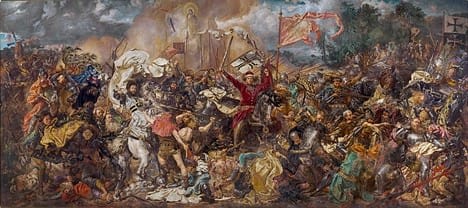
On July 15, 1410, the combined armies of Poland and Lithuania confronted the full military power of the Teutonic Order on the fields of Grunwald.
The Battle of Grunwald became a devastating defeat for the crusading state. Grand Master Ulrich von Jungingen was killed, and the military strength of the Order was permanently weakened.
Although the Peace of Toruń concluded in 1411 did not give Poland and Lithuania all the territories they had hoped to gain, it nevertheless marked the beginning of the decline of Teutonic dominance in the Baltic region.
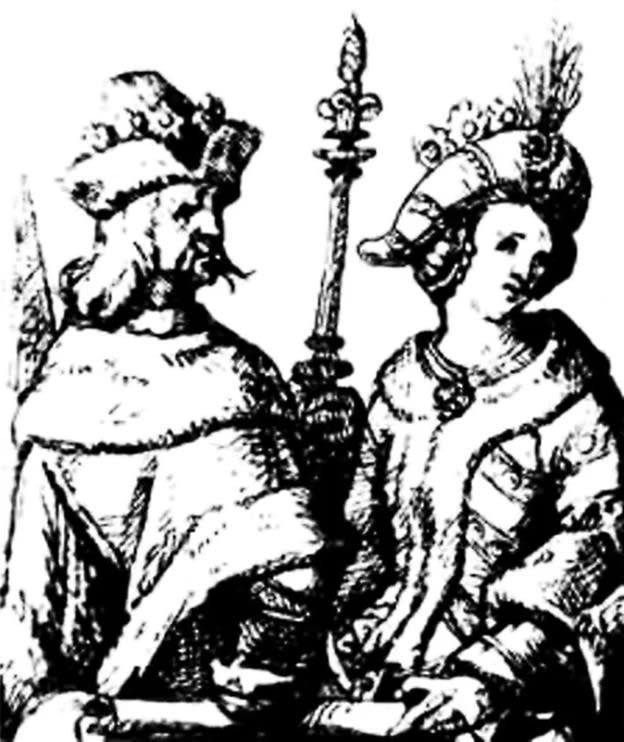
After Jadwiga’s death in 1399, Jagiełło’s position on the Polish throne became less secure, but his authority was subsequently confirmed by the royal council.
To strengthen his dynastic position, he entered into a series of marriages with women from prominent noble families, including Anna of Celje, a granddaughter of Casimir the Great, and finally Sophia of Halshany.
It was only during his fourth marriage, when the king was already well over sixty years old, that the long-awaited male heirs were born.
Their birth produced a new wave of political intrigue. Vytautas even raised doubts concerning the king’s paternity, leading to a highly publicized investigation that ultimately cleared Queen Sophia of the accusations against her.
During the final decades of his life, Jagiełło was forced to make increasing concessions to the Polish nobility in order to secure the succession of his sons.
The Privilege of Jedlnia of 1430 expanded the legal rights of the nobility but at the same time weakened the direct authority of the Crown.
The king’s final years were also overshadowed by conflict with his brother Švitrigaila. After Vytautas’s death in 1430, Švitrigaila attempted to break Lithuania’s political union with Poland, triggering a new period of warfare.
Jagiełło’s long life came to an end in 1434. While staying at Horodok in May, the elderly king reportedly went into the forest to listen to the singing of nightingales, caught a severe chill, and died on June 1.
He was around eighty years old.
The Jagiellonian dynasty founded by Jagiełło would rule Poland and Lithuania for nearly two centuries, presiding over one of the most prosperous and influential periods in the history of the region.
Historians have interpreted his personality in very different ways — from descriptions of a ruler of “weak character” in some strands of Russian historiography to portrayals of a highly skilled strategist in Polish scholarship.
What remains beyond dispute is the scale of his historical achievement: Jagiełło succeeded in bringing together political, religious, and cultural worlds that had long appeared incompatible and laid the foundations for one of the great powers of Eastern and Central Europe.


