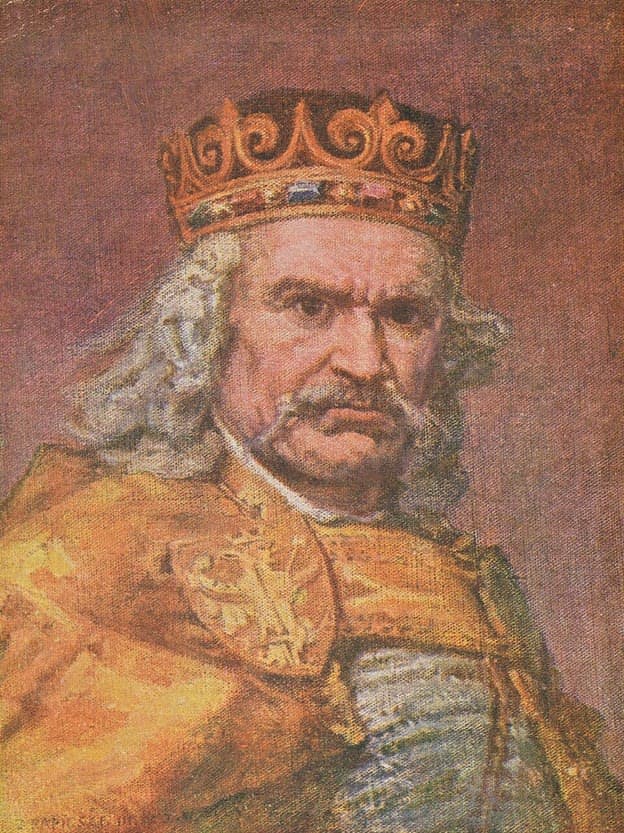
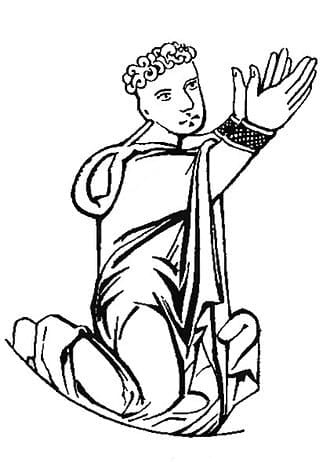
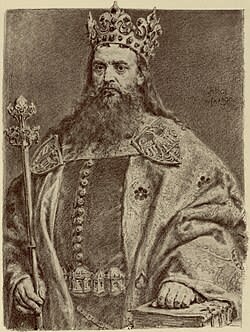
Władysław was born into the family of Duke Casimir I of Kuyavia and Euphrosyne of Opole, making him a representative of the Kuyavian branch of the Piast dynasty. His famous nickname — Łokietek, derived from the Polish word łokieć, meaning “elbow” — was, according to Jan Długosz, given to him because of his unusually short stature. Historians, however, continue to debate whether the nickname referred to a physical characteristic or whether it was instead a mocking reference to the tiny size of his original domains compared with the enormous scale of his ambitions.
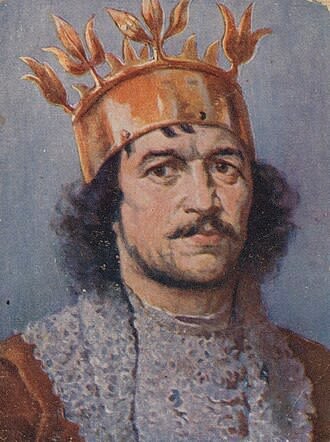
After his father’s death in 1267, the young Władysław remained in the shadow of his elder brothers. While his mother ruled as regent, he was raised in Kraków at the court of Bolesław the Chaste. He began ruling independently only in 1275, when he received a modest territory in Kuyavia.
For many years, Władysław remained a loyal supporter of his half-brother Leszek the Black, but Leszek’s death without an heir in 1288 opened a new struggle for the throne of Kraków.
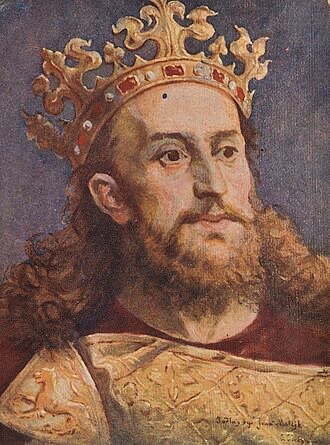
The final years of the thirteenth century became a period of severe trials for Władysław. In 1289, he joined a coalition with Przemysł II and, at the bloody Battle of Siewierz on February 26, 1289, defeated the Silesian allies of Henry Probus.
For a brief moment, Wawel Castle fell into Władysław’s hands, but he was unable to hold it. Under pressure from Henry Probus, Władysław was forced to flee the city, reportedly descending the walls with the help of ropes provided by loyal Franciscan monks.
In 1292, fate struck again. A powerful army led by King Wenceslaus II of Bohemia besieged Władysław at Sieradz. Captured and defeated, he was forced to swear feudal homage to the Bohemian king and renounce his claims to Lesser Poland.
After the assassination of Przemysł II in 1296, Władysław attempted to establish himself in Greater Poland, but he failed to gain the support of the local nobility and clergy. By 1299, pursued by the forces of Wenceslaus II, he was forced to flee the country.
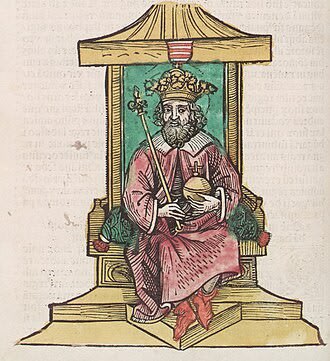
These “dark years” remain surrounded by uncertainty. According to tradition, Władysław visited Rome during the Jubilee Year of 1300 and sought assistance in Rus’ and Hungary. While he wandered through Europe, his family reportedly lived in Radziejów disguised as ordinary townspeople, concealing their noble identity.
It was a period of profound humiliation, but one that only hardened Władysław’s determination.
His return in 1304 seemed almost miraculous. Supported by Hungarian magnates, he captured Wiślica. The death of Wenceslaus II in 1305 and the mysterious assassination of Wenceslaus III in 1306 created a political vacuum, which Władysław exploited with remarkable speed.
On September 1, 1306, he entered Kraków triumphantly as its recognized ruler.
His triumph, however, was overshadowed by the loss of Gdańsk Pomerania, or Pomerelia.
In 1308, lacking sufficient forces to resist Brandenburg, Władysław made a decision that would have enormous consequences: he called upon the Teutonic Order for assistance.
The knights drove the Brandenburg forces away, but instead of returning the territory to Władysław, they massacred the Polish defenders of Gdańsk and seized the region for themselves.
This betrayal marked the beginning of a centuries-long conflict between Poland and the Teutonic Order. The Teutonic Knights soon transferred their capital from Venice to Malbork, establishing a powerful state that blocked Poland’s access to the Baltic Sea.
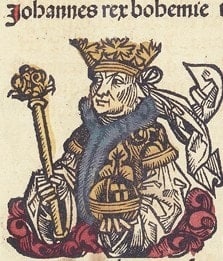
Within the country, Władysław also faced serious opposition. In 1311–1312, a revolt broke out in Kraków under the leadership of Mayor Albert and Bishop Jan Muskata, whose supporters wanted the Bohemian king John of Luxembourg to take the throne.
Władysław suppressed the uprising with great severity. Its leaders were punished, while the privileges of Kraków’s German-speaking burgher elite were sharply restricted.
After securing Greater Poland in 1314 following the weakening of the Głogów branch, Władysław realized that the time had come for a decisive political step.
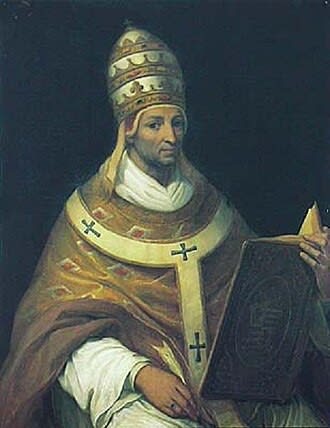
Following prolonged diplomatic efforts at the papal court in Avignon, Pope John XXII approved his coronation.
On January 20, 1320, in Wawel Cathedral in Kraków, the royal crown was placed upon Władysław’s head.
The event symbolized the formal restoration of the Polish monarchy after the long period of territorial fragmentation. Although the Luxembourg dynasty continued to challenge his title abroad and sometimes referred to him merely as the “King of Kraków,” within Poland he became King Władysław I.
The final decade of Władysław’s reign was dominated by almost continuous warfare.
He constructed a network of dynastic alliances, marrying his daughter Elisabeth to the king of Hungary and arranging the marriage of his son Casimir to the Lithuanian princess Aldona.
These alliances were essential, because Władysław faced two powerful enemies: Bohemia and the Teutonic Order.
In 1331, the aging king demonstrated that his determination had not weakened. At the Battle of Płowce on September 27, 1331, Polish forces inflicted heavy losses on the Teutonic rear guard.
Although the battle did not restore Pomerelia to Poland, it shattered the image of the black-crossed knights as invincible and gave the Polish side renewed confidence.
Władysław I the Elbow-high died on March 2, 1333, at Wawel Castle.
He left to his son Casimir, the future Casimir the Great, not merely a collection of separate principalities, but a state that had once again begun to rise from the ashes of fragmentation.
Władysław was a ruler who knew how to wait, how to survive defeat, and, above all, how never to surrender.


