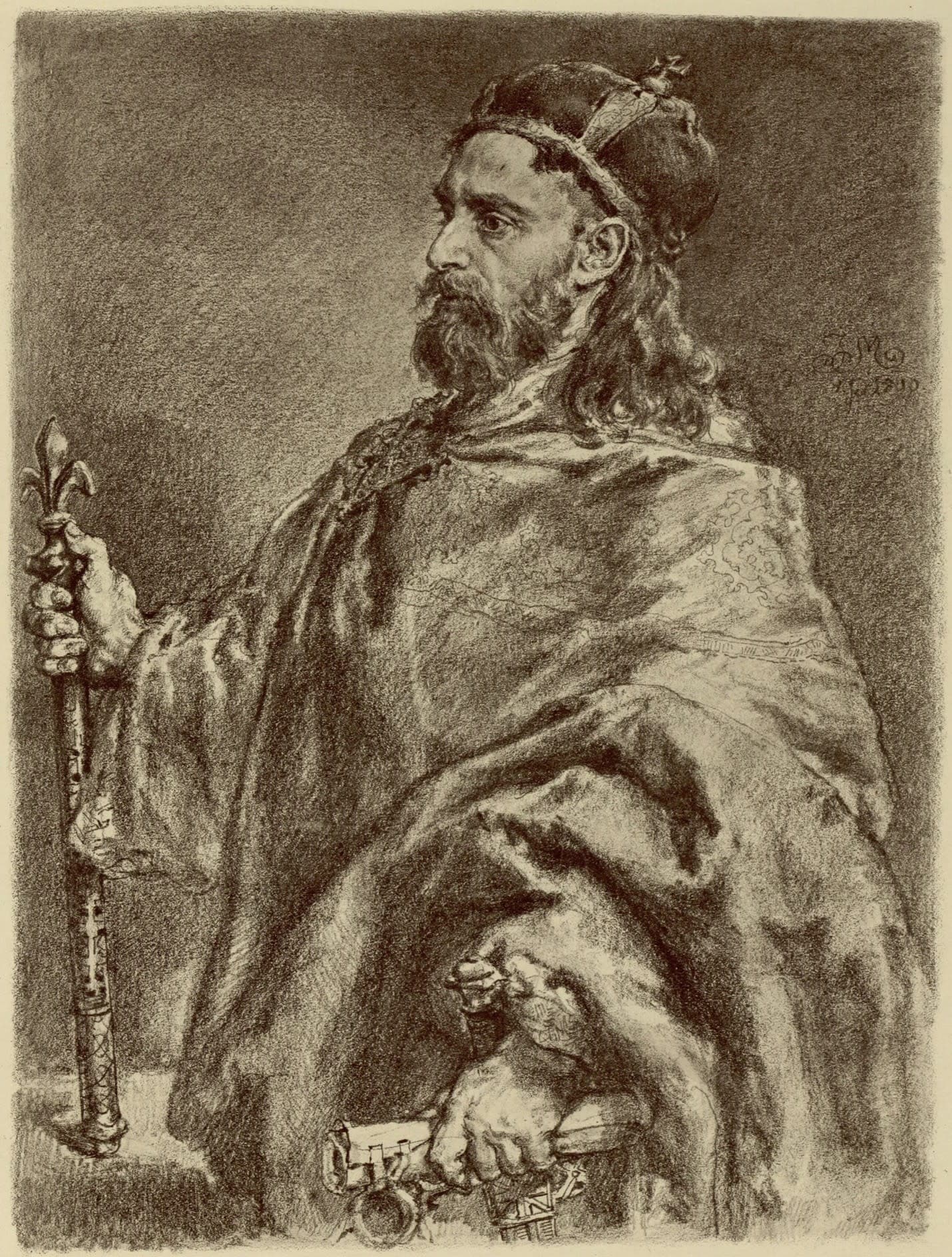
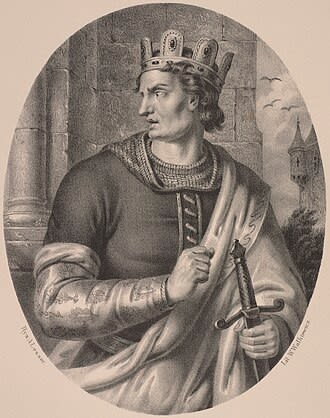
The reign of Władysław I Herman marked a sharp turning point in the history of medieval Poland — from ambitious expansion and the struggle for European influence to a period of internal weakness, political compromise, and the beginnings of feudal fragmentation. The son of Casimir I the Restorer and the Kievan princess Dobroniega, Władysław came to power in 1079 not as the designated heir, but as the leader of an aristocratic revolt that overthrew his elder brother, Bolesław II the Bold. This fact shaped the nature of his rule from the very beginning: brought to power by the great magnates, he remained dependent on their interests throughout his reign.

Unlike his predecessors, who had sought the status of independent kings, Władysław I Herman voluntarily abandoned the outward symbols of royal greatness. Seeking to restore peaceful relations with the Holy Roman Empire and bring an end to the exhausting confrontation with it, he did not assume the royal title. Throughout the twenty-three years of his reign, he styled himself only as Duke of Poland, thereby implicitly acknowledging the supremacy of the emperor.
This policy had serious consequences:
Loss of international prestige: Poland effectively ceased to be regarded by its neighbors as an equal power.
Dominance of the magnates: Real control over the government gradually passed from the duke into the hands of the provincial aristocracy.
Military failures: Campaigns in Western Pomerania, which under his grandfather and great-grandfather had expanded Poland’s borders, ended in complete failure under Władysław.
Central authority weakened to such an extent that the duke fell under the overwhelming influence of the voivode Sieciech, one of the leading representatives of the Polish aristocracy. Sieciech effectively became the shadow ruler of the country, provoking growing dissatisfaction among both the lesser knights and members of the ruling Piast dynasty.

The crisis of centralized authority was most clearly visible in Silesia, which became a stronghold of separatist sentiment. The situation was further complicated when the duke’s elder son, Zbigniew, emerged as the leader of the opposition. In 1092, having secured military support from Bohemia, Zbigniew seized Wrocław and proclaimed the establishment of a semi-independent domain in Silesia.
Although Voivode Sieciech temporarily managed to stabilize the situation by making peace with the Bohemians and defeating Zbigniew’s forces in 1096, the process of political fragmentation had already become irreversible. In 1097, Władysław Herman was forced to accept the first formal division of the country. According to the agreement:
Zbigniew received part of Greater Poland.
The duke’s younger son, Bolesław, the future Bolesław III Wrymouth, received Silesia.
Władysław himself remained the senior duke, formally retaining control over foreign policy and the army.

This fragile peace, however, lasted only a year. In 1098, war between the father and his sons broke out once again. The young princes united against the dominance of Voivode Sieciech, whom they regarded as the principal threat to their political rights.
By 1099, the coalition of the brothers had achieved a decisive victory over the forces of Władysław Herman. The aging duke was forced to accept another, even more humiliating division of the Polish lands:
Zbigniew received the remaining part of Greater Poland, as well as Kuyavia and the Sieradz-Łęczyca region.
Bolesław received Lesser Poland together with its capital, Kraków.
Only Masovia remained under the direct authority of Władysław I.
One of the most important consequences of this struggle was the downfall of Voivode Sieciech, who was removed from power and exiled through the efforts of Zbigniew and Bolesław. This marked the end of the influence of the so-called “centralist party” at Władysław’s court.
The reign of Władysław Herman ended in an atmosphere of profound political weakness. Although he left behind a fragmented state, he also unintentionally prepared the ground for the next stage of Polish history — a fierce struggle for the reunification of the Polish lands, which would be led by his son Bolesław Wrymouth.
Władysław I Herman entered history as a ruler who preferred peace and stability to the preservation of political greatness, and whose indecisiveness became one of the catalysts for the era of territorial fragmentation and dynastic conflict in Poland.


