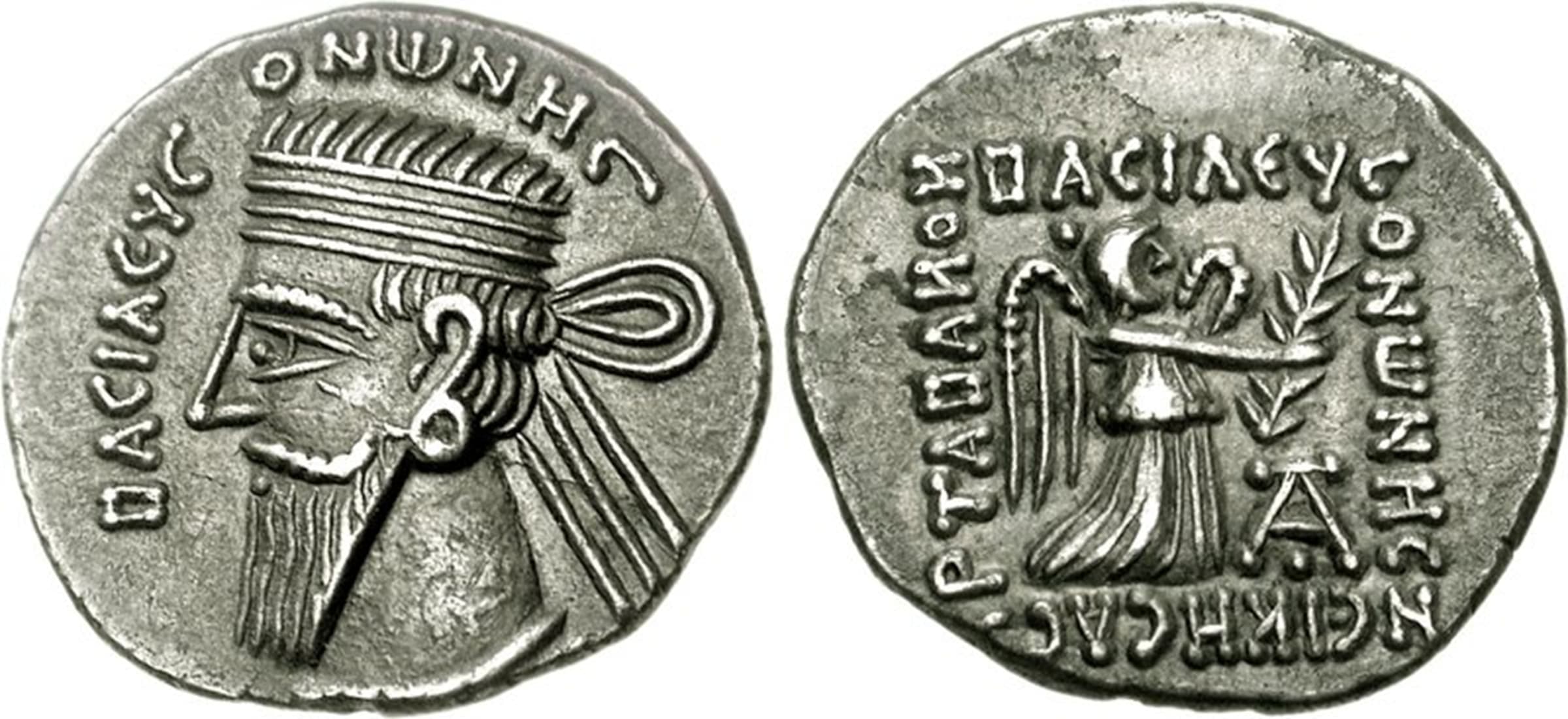
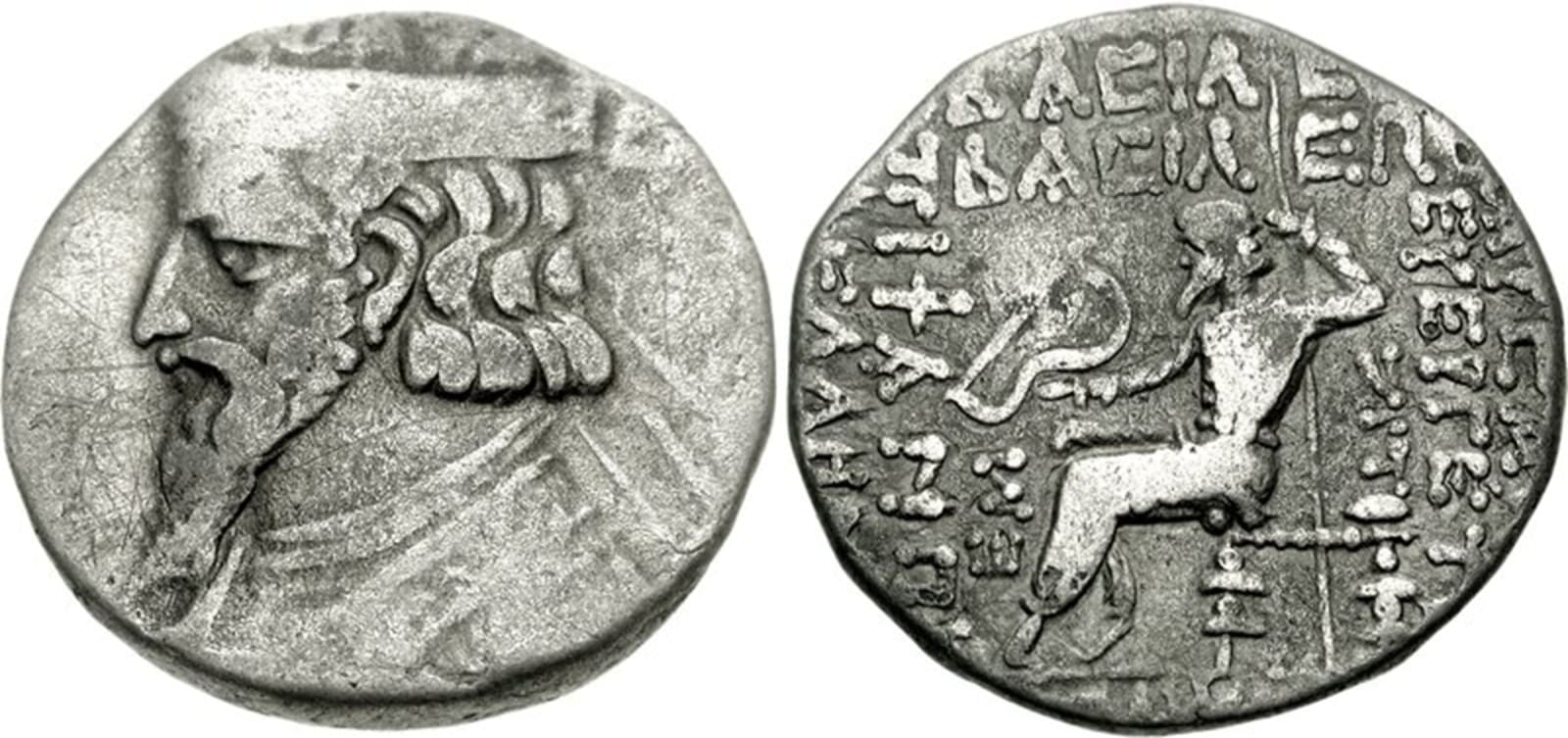
The story of Vonones I begins not in the palaces of Ctesiphon but in distant Rome. In the 10s BCE his father, King Phraates IV, fell under the influence of his younger wife, the Italian Musa. Wishing to clear the path to the throne for her own son Phraataces, the cunning queen persuaded her husband to send his elder sons from other wives to Rome as “honorable hostages.”
Thus the young Vonones found himself in the heart of a foreign empire. Years passed, and cut off from his roots, he absorbed the Roman spirit. He received a classical education, adopted Latin manners, and grew accustomed to the luxury of the Eternal City. Vonones became Roman in spirit, yet by blood he remained an Arsacid — heir to a great dynasty.
After turmoil and the murder of King Orodes III, the Parthian nobility found itself at an impasse. The country needed a legitimate ruler of royal blood. The eyes of the aristocracy turned westward. Envoys were sent to Emperor Augustus requesting the return of Vonones.
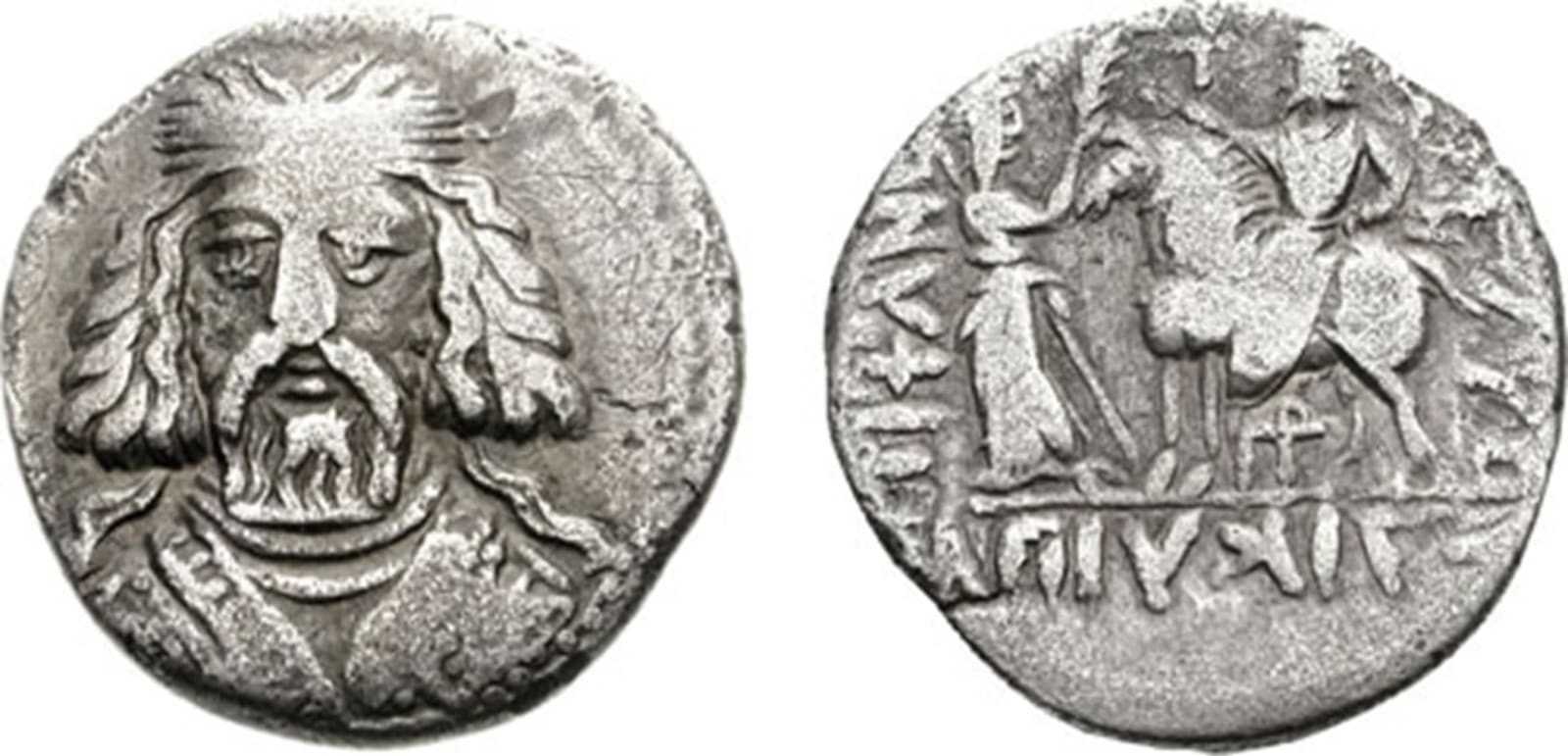
Augustus, seeing an opportunity to expand Roman influence in the East, generously endowed his protégé and allowed him to return home. Around 8–9 CE Vonones came back to Parthia. At first he was greeted with jubilation. The people, weary of civil strife, saw in the new king a savior. But the honeymoon with his subjects did not last long.
His Roman upbringing played a cruel trick on him. Tacitus mercilessly describes this cultural clash: the Parthians discovered with horror that their king was a foreigner.
He disliked hunting and neglected traditional equestrian pursuits — sacred to the Parthians.
Instead of riding on horseback, he traveled in soft litters.
He recoiled from the noisy and rough feasts of his ancestors.
He was surrounded by a retinue of mocking Greeks, and even trivial items in his palace were kept under lock and seal, which Parthians considered petty.
Even his virtues — accessibility and mildness — were perceived by hardened warriors as weakness. “The Parthians have degenerated,” the nobility whispered, “if we are ruled by Caesar’s slave, who languished in captivity.” National pride was wounded: where was the glory of those who had destroyed Crassus, if now the throne was occupied by a Roman puppet?
Discontent quickly turned into rebellion. The national party called to the throne Artabanus II (III), king of Atropatene. Though he was an Arsacid only through his mother (his father descended from the Dahae), he was “one of their own” — a warrior and traditionalist.

The first clash in 9–10 CE ended in Vonones’s victory. Artabanus was defeated and fled into the mountains of his domain. Elated by success, Vonones hastened to commemorate the triumph. He overstruck older coins of Musa and Phraataces, depicting the winged goddess Nike with a palm branch and the proud inscription: “King Vonones, conqueror of Artabanus.”
But the joy was premature. Artabanus, having gathered a new army of hardened mountaineers and nomads, returned. This time the refined Vonones could not withstand him. Defeated, he fled to Seleucia on the Tigris, while the victorious Artabanus triumphantly entered Ctesiphon and around 12 CE was proclaimed king.
Vonones did not surrender. From Seleucia he fled to Armenia. The throne there was vacant; Roman protégés (Artavasdes IV and Tigranes V) had been overthrown or killed. Exploiting the power vacuum, Vonones proclaimed himself king of Armenia.
However, Artabanus, now the undisputed master of Parthia, had no intention of tolerating a rival on his borders. Under pressure from his threats and lacking Roman support (Emperor Tiberius chose not to enter a war), Vonones was forced to abdicate the Armenian throne in 15 or 16 CE.
Taking with him a vast treasury, he surrendered to the Roman governor of Syria, Creticus Silanus. The latter received the former king, allowed him to reside in luxurious Antioch, preserving his title and honors, but in reality Vonones found himself in a gilded cage under guard.
Even in exile he remained a piece on the geopolitical chessboard. The Parthian king Artabanus, through envoys, demanded that the Roman commander Germanicus move Vonones farther from the frontier, fearing he was fomenting unrest. Germanicus agreed and transferred the exile to the coastal city of Pompeiopolis in Cilicia.
The end came in 19 CE. Weary of humiliating captivity, Vonones made a desperate attempt. Having bribed his guards, he tried to escape during a hunt, hoping to reach relatives in Armenia or Scythia. But the plan failed: the bridges over the river Pyramus (Ceyhan) had been destroyed in advance by the Romans. On the riverbank he was overtaken by the prefect of cavalry, Vibius Fronto. Vonones was arrested and soon killed. The fatal blow was delivered by his jailer, the veteran Remmius. Historians (including Tacitus) believe that Remmius had been complicit in the escape and murdered the king to conceal his own betrayal and “cover his tracks.”
Thus, on the banks of a Cilician river, perished ingloriously Vonones I — a man who was too Roman for the Parthians and too Parthian for the Romans, a victim of the clash between two great civilizations.


