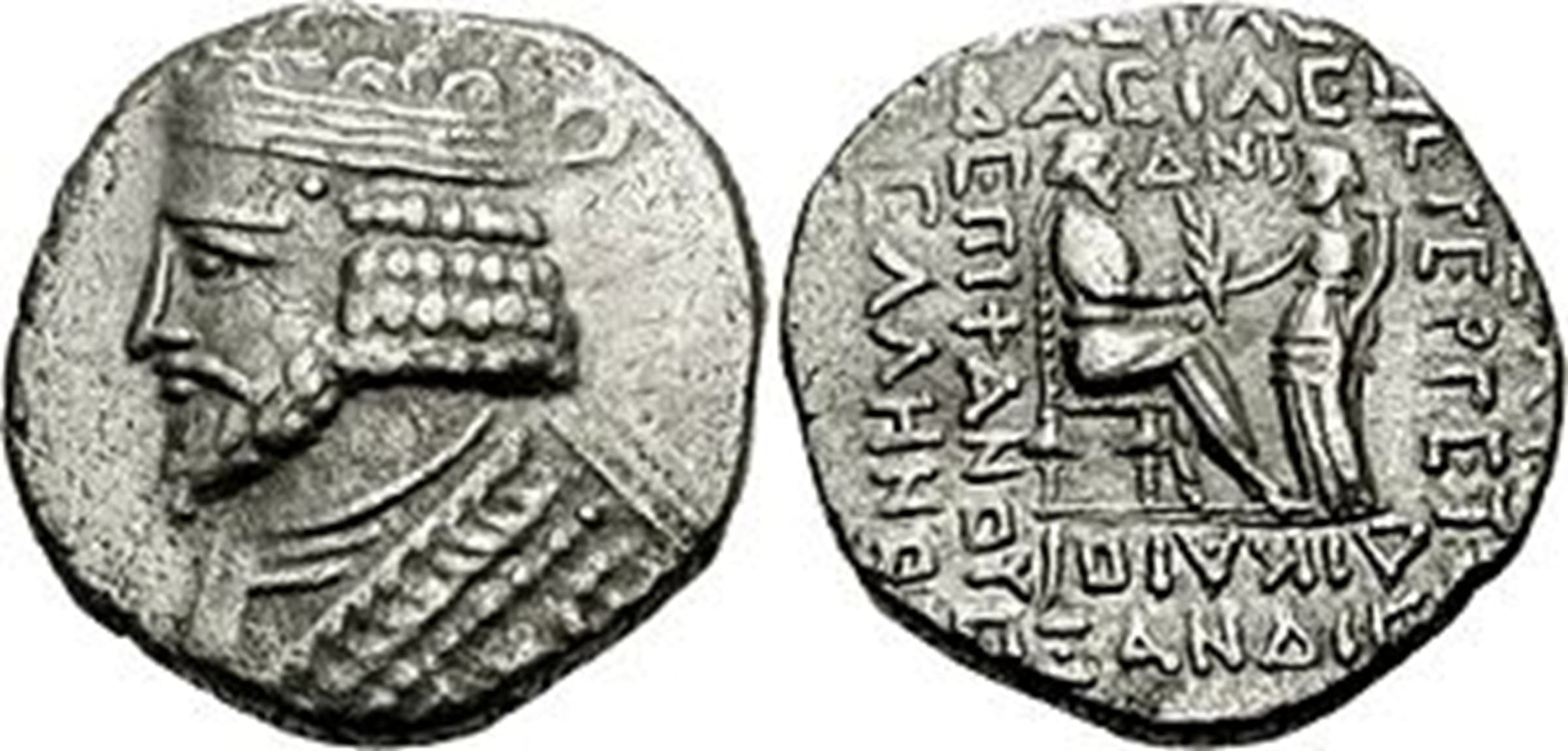

After the death of the great Artabanus III (c. 38–39 CE), who had ruled Parthia for several decades, the empire once again stood on the brink of disintegration. The king left two ambitious sons: Vardanes and Gotarzes.
Sources (Josephus and Tacitus) differ on which of them first took the throne, but the overall picture appears as follows: the brothers attempted to divide power. Vardanes, relying on the support of the nobility of the western provinces, received Media and Babylonia. Gotarzes, a cruel and suspicious man, established himself in the east, in Hyrcania and the lands of the Dahae.
The peace did not last. Seeking sole power, Gotarzes began a bloody purge. He murdered his brother Artabanus (another son of the old king) together with his wife and son. This senseless brutality horrified the Parthian aristocracy. In 39 CE envoys secretly went to Vardanes, asking him to save the country from the tyrant.
Vardanes’s response entered history as one of the most astonishing military marches of antiquity. Learning of the appeal, he did not waste time assembling supply trains. According to Tacitus, Vardanes covered 3,000 stades (over 550 km) in just two days. He literally “outran the rumor of his own coming.”
Appearing before the stunned Gotarzes, who had not expected an attack, Vardanes put him to flight without a pitched battle. Gotarzes fled into the steppe among the Dahae, and Vardanes was proclaimed sole king. To consolidate his success he needed only one thing — coronation and control over finances. But a problem arose: although Ctesiphon lay open, wealthy Seleucia-on-the-Tigris, which minted coinage, remained in rebellion that had begun under his father.
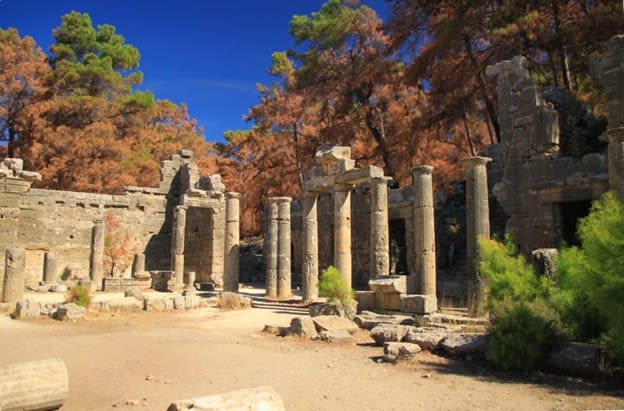
Vardanes began the siege of the rebellious metropolis. The city was virtually impregnable — protected by the Tigris River, canals, and powerful walls, with food supplies sufficient for years. While Vardanes stood before Seleucia, Gotarzes gathered a new army of Dahae and Hyrcanians in the eastern steppes.
Showing flexibility, Vardanes lifted the siege and marched to meet his brother on the great Bactrian plain. But no battle occurred. On the eve of combat the brothers learned of a conspiracy by the nobility to overthrow both of them and place a puppet on the throne. Facing a common threat, they met and concluded an agreement:
Vardanes I was recognized as supreme king of Parthia.
Gotarzes received Hyrcania as an appanage.
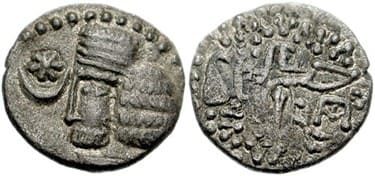
Returning west, by June 42 CE Vardanes finally compelled Seleucia to surrender. The seven-year uprising ended. The city capitulated voluntarily, and the aristocratic party issued famous “victory” coins, hailing Vardanes as the restorer of order.

Vardanes I entered history not only as a warrior but also as a magnanimous ruler. In the spring of 42 CE the renowned sage and mystic Apollonius of Tyana passed through Babylonia on his way to India.

Their meeting, described by Philostratus, portrays Vardanes as a man of high culture. The king not only received the philosopher but showed remarkable care. He issued Apollonius safe-conduct letters as far as India and even wrote to his vassal, the satrap of the coastal Indus region (who in fact did not truly obey him), requesting hospitality for the sage not as a command but out of respect. Vardanes gave gold to the guide with orders to hand it to Apollonius only in case of extreme need, knowing that the philosopher despised wealth.
Peace in the west was disrupted by Rome. Emperor Claudius restored the Iberian Mithridates to the Armenian throne. The new ruler was cruel, and the local nobility appealed to Vardanes for help.
Vardanes was ready for war. He planned a grand campaign to expel the Roman client king. But the feudal structure of Parthia cracked. Izates II, king of Adiabene and a powerful vassal, refused to participate. The reason was simple: five of Izates’s sons were in Rome as hostages. Enraged, Vardanes turned his army not against Armenia but against his own vassal. The Roman governor of Syria, Vibius Marsus, exploited the situation by conducting demonstrative maneuvers along the Euphrates, finally ruining Parthian plans for invasion.
While Vardanes quarreled with his vassals, Gotarzes in Hyrcania raised his head again. Encouraged by nobles who feared Vardanes’s growing power, he assembled an army and marched west.
The decisive battle occurred around 43 CE near the River Erind (presumably the Harinda) in Hyrcania. The fighting was fierce, but Vardanes’s military genius prevailed once more. He defeated his brother and drove him eastward. Pursuing the enemy, Vardanes reached the River Sind (the Tejen or Hari-rud), which separated the Iranian world from the nomads. There, on the edge of the inhabited world, he erected a victory monument, becoming master of a vast territory.
Vardanes I stood at the zenith of his glory. Tacitus wrote of him: “He was still very young, yet he would have been honored as few old kings are, had he cared as much to win the affection of his countrymen as he did to inspire fear in his enemies.”
It was precisely the fear of the nobility before a strong king that caused his death. The Parthian aristocracy, accustomed to autonomy, did not wish to tolerate an authoritarian ruler. At the end of 45 CE a conspiracy was formed. Vardanes, an avid hunter, was invited to a traditional royal hunt. There, far from his army and guards, the conspirators — bribed by the surviving Gotarzes — attacked the king. Vardanes I fell, pierced by the spears of his own subjects.
His death opened the way to power for Gotarzes II, whose reign became an era of cruelty and decline — precisely the fate Vardanes had tried so desperately to prevent with his lightning march to power.


