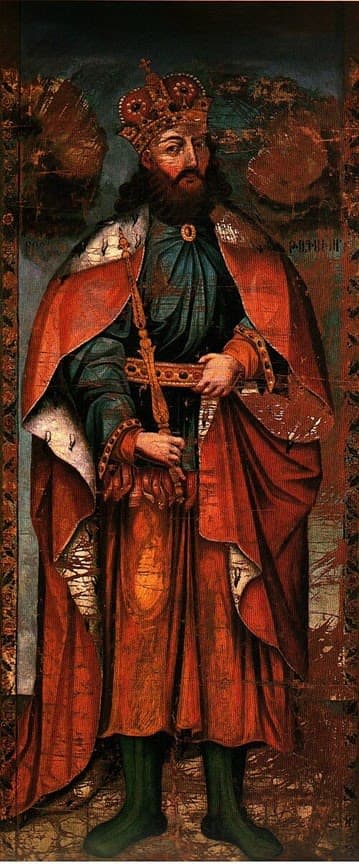
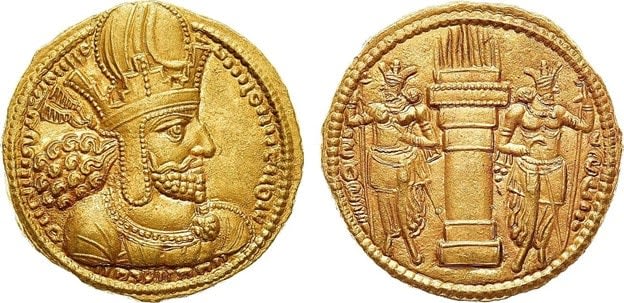
In AD 252, by order of the Persian Shahanshah Shapur I, an event took place that would change the course of Caucasian history: a Persian agent named Anak treacherously murdered King Khosrov II and almost his entire family. In the bloody massacre that followed, only two children survived, whose destinies would later converge once again in Armenia. One was the murderer's son, the future Gregory the Illuminator, whom loyal supporters managed to take to Caesarea. The other was the sole heir to the throne, the infant Tiridates, who was hastily sent to Rome under the protection of the empire.
Tiridates spent the best years of his youth in the capital of the world. His upbringing was entrusted to the noble count Licianes, under whose guidance the young prince not only mastered several languages but also became an outstanding expert in military affairs. His name itself, of Parthian origin and meaning "created by Tir," emphasized his noble ancestry, but his education was entirely Roman. He grew into a tall, powerful warrior, ready at any moment to reclaim his ancestral inheritance.
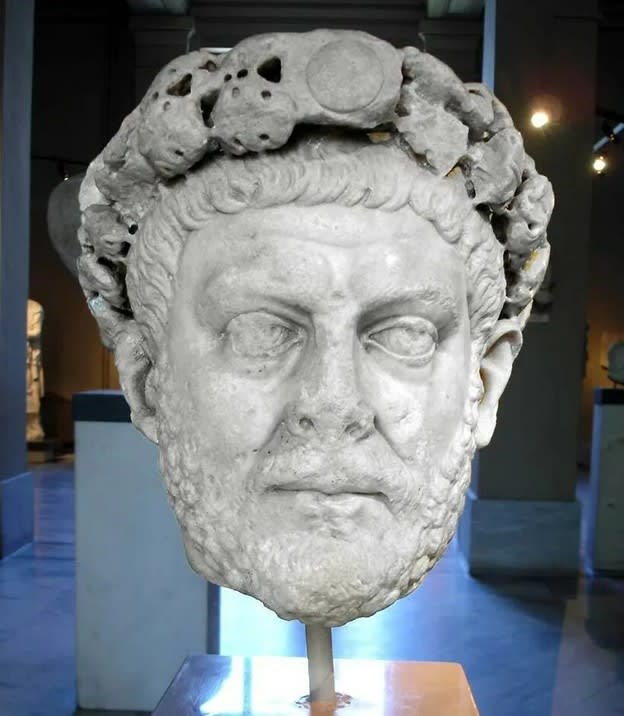
A political opportunity arose in AD 287, when the Roman emperor Diocletian officially recognized Tiridates III as the legitimate king of Armenia. With the support of Roman legions, Tiridates made a triumphant return to his homeland. However, peace was short-lived: Persia had no intention of surrendering control over Greater Armenia. In AD 296, the Persian Shahanshah Narseh invaded Armenian territories and Rome's eastern provinces, forcing Tiridates to retreat temporarily.
The decisive turning point came only in AD 298, following the signing of the Peace of Nisibis. This agreement represented a triumph for Tiridates: Rome and Persia recognized Armenia's independence and clearly defined its borders along the frontiers of Media. Tiridates firmly established himself on the throne, transforming Armenia into a stronghold of Roman influence in the East.
During this period, the king became concerned with securing the continuation of his dynasty. On his orders, the sparapet Smbat brought him a bride, Ashkhen, the daughter of Ashkhadar. According to the chronicles, she was so tall that she was almost equal in height to the king himself. Tiridates ordered that she be officially admitted into the Arsacid dynasty, dressed in royal purple, and crowned as queen. Their marriage produced a son, Khosrov, who was nicknamed "Kotak" ("the Short") because of his small stature, which contrasted sharply with his powerful parents.
Despite his outward magnificence, Tiridates' inner peace was disturbed by a conflict over religion. Early in his reign, in the settlement of Eriza, the king ordered his loyal servant Gregory (the very son of Anak) to place wreaths before the statue of the goddess Anahit. Gregory's refusal, as he had secretly become a Christian, enraged the king. "How dare you, a foreigner, worship a God whom I do not worship?" Tiridates demanded. Gregory remained unwavering, reminding the king that true loyalty belonged to God rather than earthly idols.
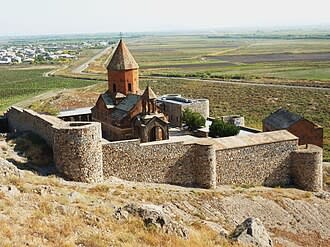
Remembering Gregory's many years of devoted service, Tiridates initially attempted to persuade him to worship the pagan gods through promises and threats, but eventually condemned him to terrible torture. After enduring prolonged torment, Gregory was thrown into the deep dungeon of Khor Virap, infested with snakes and scorpions, where he was destined to spend thirteen long years.
The turning point in the king's life came with the arrival of a group of Christian virgins from Rome who had fled the persecutions of Diocletian. Among them was the beautiful Hripsime, whose beauty captivated Tiridates. When she rejected his marriage proposal, the king, blinded by rage, ordered the execution of thirty-three women, including Hripsime and their spiritual leader, Gayane. Only one of them, Nune (Saint Nino), managed to escape and flee to Georgia.
The brutal execution of the innocent virgins inflicted a severe psychological blow on Tiridates. He descended into profound madness, which his contemporaries called the "swine disease." According to legend, the king became like a wild boar, lost his human appearance, and went to live in the forests. His sister, Khosrovidukht, repeatedly received visions of an angel who revealed that only Gregory, imprisoned in Khor Virap, could heal her brother.
When Gregory, long believed to be dead, was brought out of the dungeon, he found the king in a miserable condition. Through Gregory's prayers, a miracle occurred: Tiridates regained his sanity, and his physical appearance was restored. This event marked the beginning of the great conversion to Christianity.
At the beginning of the 4th century, Tiridates III and his entire royal court were baptized, and Armenia became the first state in the world to adopt Christianity as its official religion. The king devoted the remaining years of his life to eradicating paganism. Acting at times with severity and using force, he destroyed ancient temples and statues of the gods. This led to bloody confrontations with the nakharars — the Armenian hereditary nobility — who remained loyal to the old gods. Unfortunately, amid these religious struggles, almost all written monuments of pre-Christian Armenian culture were destroyed.
Tiridates III ruled for fifty-six years and became renowned as a zealous defender of the new faith. However, his uncompromising policies provoked a conspiracy among the nobility. In AD 330, the great reforming king was poisoned by the nakharars, who had never forgiven him for destroying their ancient traditions.
Tiridates III left behind a new era that would forever determine the civilizational path of the Armenian people.


