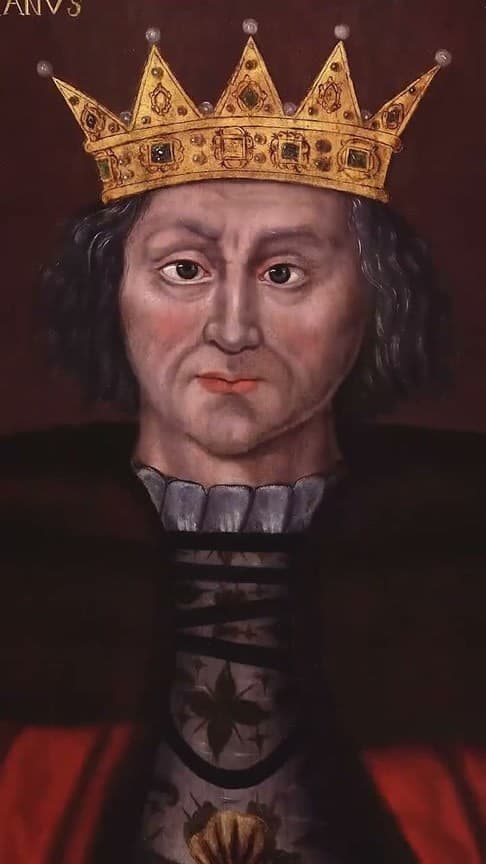

Stephen, the future king of England, was born in France, in the County of Blois, between 1092 and 1096. He was the third son of Count Stephen II and Adela, daughter of William the Conqueror himself. His father, Stephen, gained a reputation for cowardice during the First Crusade but returned to restore his honor and was killed at the Battle of Ramla in 1101.
Stephen was deeply influenced by his mother, Adela, renowned for her piety and political acumen. After his father’s death, the heir was his second brother, Theobald (since the eldest, William, was likely mentally disabled). As the younger son of a noble house, Stephen needed patronage to make a career, and he found it with his uncle, King Henry I of England.

Stephen’s relationship with Henry I proved decisive for his fate. Henry, who had seized Normandy after defeating his brother Robert Curthose, needed loyal allies in France. Adela, being his sister, sent Stephen to the English king’s court in 1111. Henry favored his nephew, seeing in him a faithful, not overly ambitious, ally. With royal support Stephen quickly amassed extensive lands and titles, becoming Count of Mortain in Normandy and gaining vast estates in England. In 1125 he married Matilda of Boulogne, who inherited the wealthy County of Boulogne, making them among the richest and most influential magnates in the Anglo-Norman world.
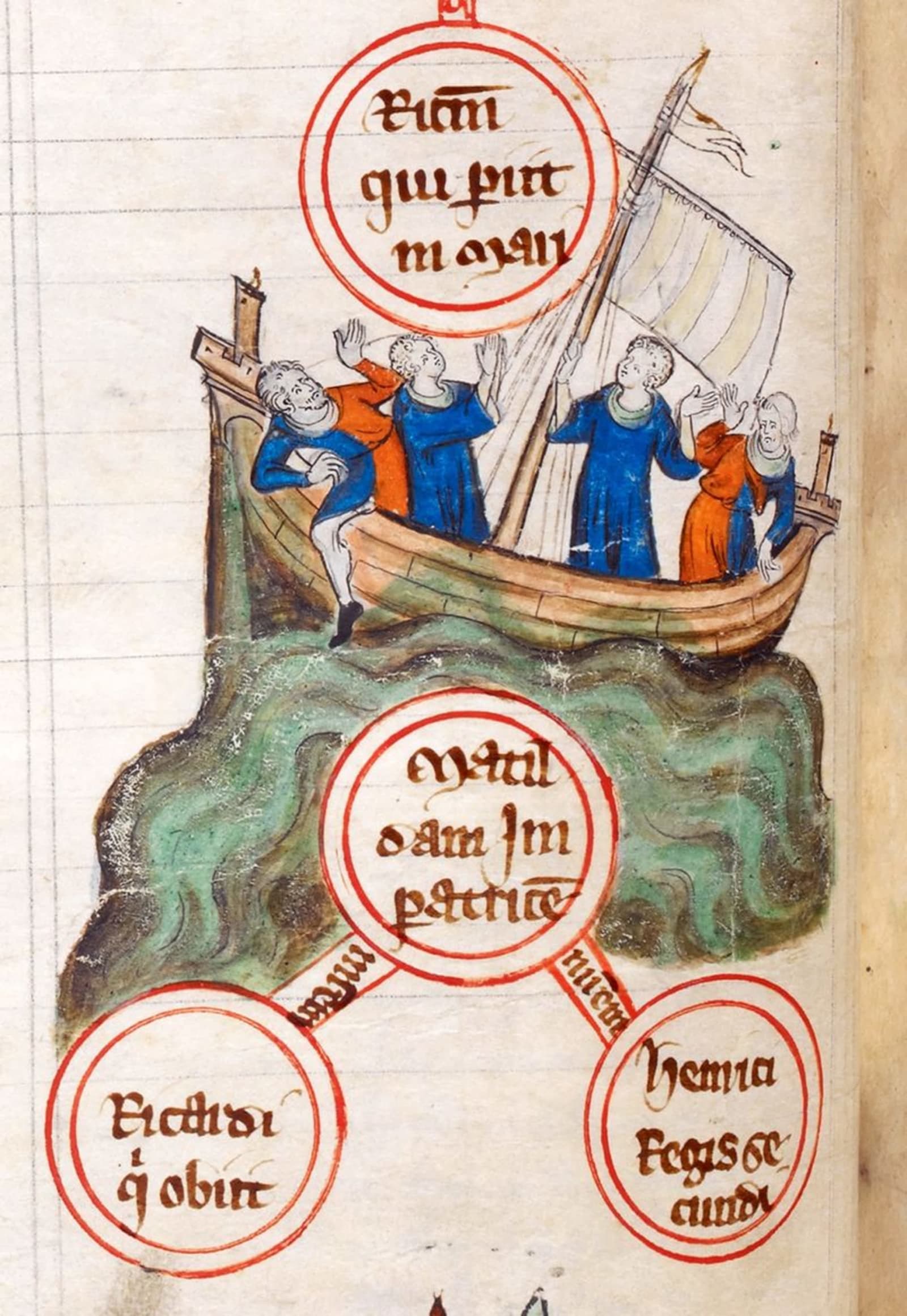
In 1120 Henry’s fortunes—and with them those of the realm changed abruptly. The heir to the throne, the king’s only legitimate son William Adelin, was returning from Normandy to England aboard the White Ship. By happy chance (or happenstance), Stephen, who was also to sail on that vessel, changed his mind at the last moment and waited for another. The ship sank, and William Adelin, along with hundreds of other nobles, drowned.
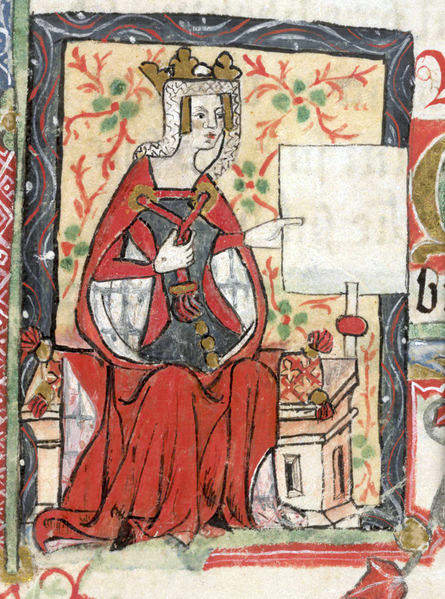
This tragedy created an acute succession crisis for Henry I. Clear rules for succession did not exist, as in England and Normandy power might pass by seniority or by the king’s will. After his son’s death Henry had only one legitimate child, Matilda. Her position was complicated by her sex and by her marriage to Geoffrey of Anjou, a descendant of the Normans’ traditional enemies. Henry sought to secure her rights by compelling the barons Stephen among them to swear fealty to her three times. Many, however, balked at a female ruler and, still less, at an Angevin consort.
When Henry I died suddenly on 1 December 1135, many potential claimants were far from England. Matilda and Geoffrey were in Anjou suppressing a rebellion; Stephen’s elder brother, Theobald, was in Blois. Stephen, in Boulogne, was closest. Receiving news of the king’s death, he sailed for England at once.
Stephen possessed many of the qualities needed to be king: he was wealthy, well-mannered, favored by the nobility, and considered decisive. Relying on his brother Henry of Blois, Bishop of Winchester, Stephen swiftly seized the royal treasury at Winchester. Henry, acting as papal legate, played a key role in persuading the clergy of Stephen’s lawful claim despite the oath sworn to Matilda.


On 26 December 1135 Stephen was crowned in Westminster Abbey. The citizens of London and many barons proclaimed him king, hoping for new privileges and stability. Meanwhile, Norman magnates wished to crown Stephen’s elder brother, Theobald, but he missed his moment, and Stephen secured his position by paying for Theobald’s support.
The early years of Stephen’s reign were full of challenges. King David I of Scotland, Matilda’s cousin, invaded northern England, and Wales erupted in revolt against Norman rule. Stephen mobilized quickly, made peace with David by ceding some lands, and turned to internal problems.

At Easter 1136 Stephen held his first royal court, confirming the Charter of Liberties, promising to restore church lands confiscated by the crown and to reform the legal system. He lavishly distributed lands and titles to his supporters to secure their loyalty. Soon his accession was confirmed by Pope Innocent II, lending legitimacy to his rule.

His efforts to stabilize Normandy, however, were thwarted by invasions from Geoffrey of Anjou. Unable to remain constantly in the duchy, Stephen faced growing discontent among local barons, and the treasury he inherited from Henry I was quickly depleted by military expenses and a luxurious court.

By 1138 Stephen was under attack on multiple fronts. The chief threat was the revolt of Robert of Gloucester, Henry I’s illegitimate son and Matilda’s half-brother. One of the mightiest barons, Robert renounced loyalty to Stephen and declared for Matilda. This uprising, together with new invasions by Geoffrey in Normandy and David in northern England, launched a full-scale civil war.
Warfare then relied more on castle sieges and attrition than open battle. An experienced commander, Stephen moved his forces rapidly. He sent his wife, Queen Matilda of Boulogne, to retake the vital port of Dover, while he marched west to suppress the revolt.
To cement his power Stephen created new earldoms and granted them to loyalists, chiefly members of the powerful Beaumont family—alienating many older barons who felt overlooked.
In 1139 Stephen took a decisive but controversial step: he arrested powerful bishops including Roger of Salisbury on suspicion of conspiracy. Though this removed a military threat, it enraged the Church, especially his brother Henry of Blois, who, as papal legate, summoned the king before an ecclesiastical council. Stephen escaped punishment, but relations with the clergy were badly damaged.
In September 1139 Empress Matilda finally invaded England. With a force of 140 knights she landed at Arundel, while her chief commander, Robert of Gloucester, rode west to rally support. Chivalrous as ever, Stephen besieged Matilda at Arundel but, on Henry of Blois’s advice, allowed her to depart under escort to Bristol to join Robert. Though knightly in spirit, this act allowed his chief rival to entrench herself.
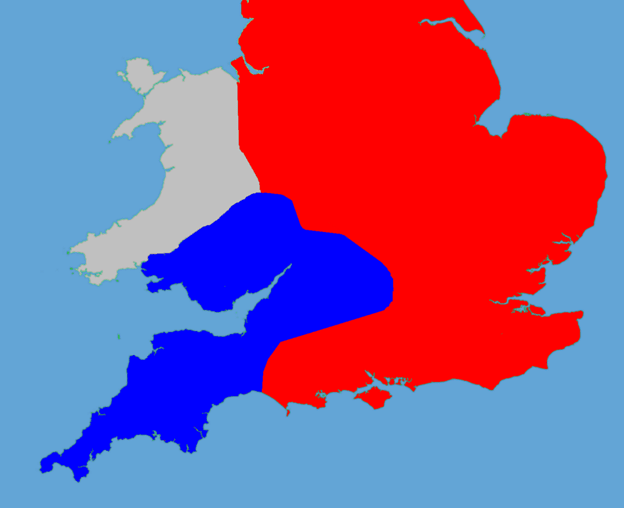
Matilda and her adherents quickly established control over wide swathes of the southwest from Gloucester to Devon. Stephen tried to recover these lands, but new uprisings including the revolt of Nigel, Bishop of Ely interrupted his campaigns. Attempts by Henry of Blois to negotiate peace failed because Stephen refused to compromise.

On 2 February 1141 Stephen faced the forces of Robert of Gloucester and Ranulf de Gernon at the Battle of Lincoln. Though many of his men fled, Stephen fought to the end, commanding on foot first with a sword, then with a battle-axe until he was captured. Robert took him to Bristol Castle, where the king was chained.
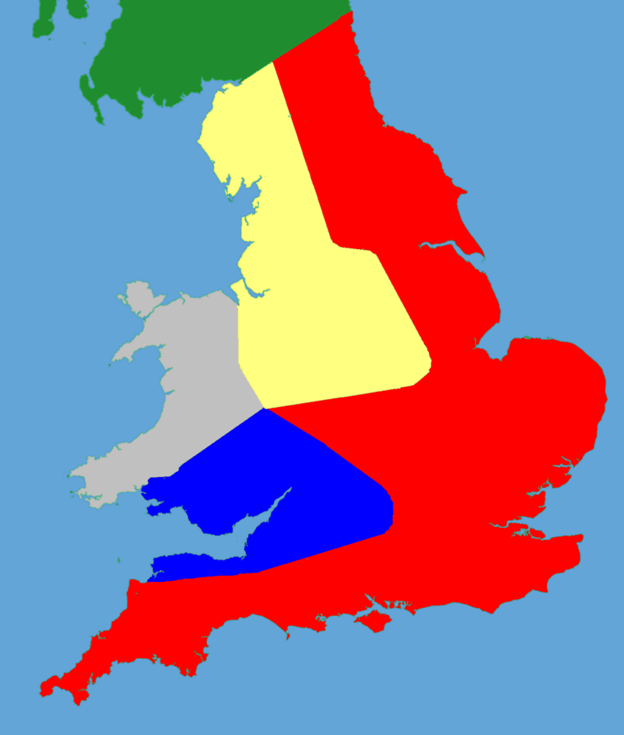
Stephen’s capture gave Matilda a chance to assert power. With Henry of Blois’s support she took the title “Lady of England and Normandy.” Her triumph was brief. When she entered London, townspeople loyal to Stephen rose up, forcing her to flee to Oxford. Meanwhile Queen Matilda gathered her husband’s remaining supporters and advanced on London.
In July 1141 the queen’s army routed the empress’s forces at the Battle of Winchester, capturing Robert of Gloucester. In November they exchanged prisoners: Stephen was freed in return for Robert. The king began restoring his authority.
In September 1142 Stephen besieged Matilda in Oxford. The castle was impregnable, and he resolved to starve it out. But on Christmas Eve Matilda, dressed in white, slipped out over the ice of the frozen river and escaped.
After these events the war settled into a stalemate. Neither side could win a decisive victory. In 1144 Geoffrey of Anjou, taking advantage of England’s civil strife, completed the conquest of Normandy. Stephen faced fresh uprisings, including Geoffrey de Mandeville in the east and Ranulf de Gernon in the north. He was forced to arrest barons and demand the surrender of their castles, further eroding trust.
During this period both sides suffered heavy losses, and the country groaned under “the Anarchy.” The Anglo-Saxon Chronicle describes it as a time of “disturbance, lawlessness, and robbery.” Local lords built their own castles and struck coin; royal authority weakened everywhere.
The tide began to turn by 1147: Robert of Gloucester died, and Matilda left England. Fighting subsided, and barons began arranging local truces. In 1149 Matilda’s son Henry Plantagenet returned to England. His reputation as an energetic, capable leader grew especially after his 1152 marriage to Eleanor of Aquitaine, which made him ruler of a vast French domain.
By 1153 Henry landed in England with a small force and soon won the backing of powerful barons. Stephen and Henry faced off at Wallingford, where a decisive battle loomed. Exhausted, barons on both sides pressed for peace.
Mediated by the clergy, a peace agreement was reached. The death of Stephen’s son Eustace, who opposed peace, hastened the accord. In November 1153, in Westminster Abbey, Stephen and Henry ratified the Treaty of Wallingford (often called the Treaty of Winchester). Stephen recognized Henry as his adopted son and heir; in return Henry did him homage, and Stephen’s surviving son, William, retained his lands and titles.

On 25 October 1154 Stephen died at Dover and was buried in Faversham Abbey, which he had founded. His death ended the civil war.
With the accession of Henry II, the first Plantagenet, royal authority was restored. Henry pursued centralization begun under Stephen, demolishing adulterine castles and rebuilding royal revenues. Although Stephen’s reign was marred by civil war, he managed to preserve the monarchy and lay groundwork for its future strengthening even if he could not complete the task in his lifetime.


