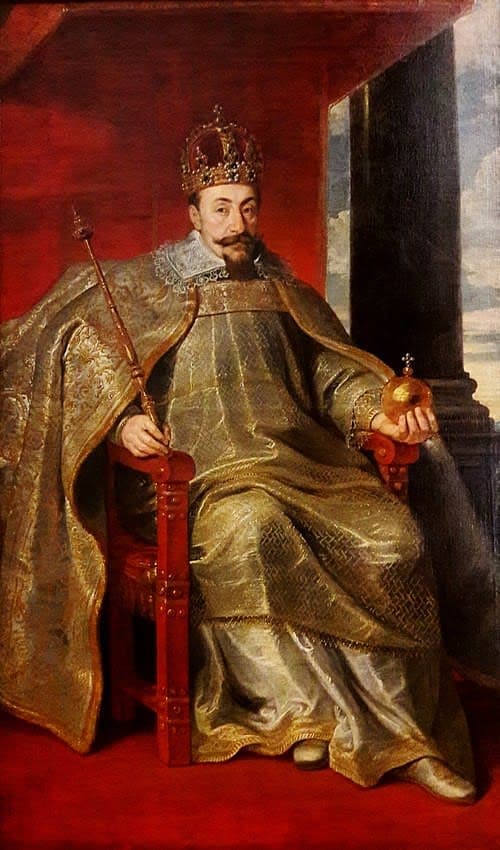

Sigismund's story began under harsh circumstances: he was born on June 20, 1566, in Gripsholm Castle in Sweden, where his parents, John Vasa and Catherine Jagiellon, were being held in captivity. Raised by the Jesuits in the spirit of fervent, almost militant Catholicism, the prince carried this faith throughout his life, and it became the key to many of his triumphs and disasters.

In 1587, when the Polish-Lithuanian Commonwealth once again entered a period of interregnum, the 21-year-old Sigismund was elected king. His candidacy was actively promoted by his aunt, Anna Jagiellon, and the Grand Crown Hetman, Jan Zamoyski. The Polish nobility's calculations were pragmatic: by inviting the heir to the Swedish throne to become their king, they hoped not only to preserve the continuity of the Jagiellonian dynasty but also to resolve territorial disputes in the north, particularly by acquiring Estonia.

However, Sigismund had to defend his claim to the throne by force of arms. His rival was Archduke Maximilian III of Austria, a member of the Habsburg dynasty. In 1588, at the Battle of Byczyna, the forces of Hetman Zamoyski defeated the Austrians, and Maximilian himself was taken prisoner. Only under the terms of the treaty of 1589 did he renounce his claims to the throne, securing his freedom in return.
Sigismund III proved to be a monarch who was "not to Polish tastes." Secretive, cold, and displaying distinctly Spanish-style manners, he failed to win the sympathy of the unruly and fiercely independent Polish nobility. The divide between the king and society deepened in 1589, when, during a meeting with his father in Reval (Tallinn), Sigismund secretly entered into negotiations with Archduke Ernest of Austria, considering the possibility of abdicating the Polish throne in his favor.
This incident, along with the king's unwillingness to transfer Estonia to the Polish-Lithuanian Commonwealth, led to a serious conflict with Jan Zamoyski. In 1592, the so-called "Inquisition Sejm" was convened to investigate the king's actions. As a result, royal authority weakened, while the influential hetman's place in the monarch's inner circle was taken by the Jesuits, who became the architects of his domestic and foreign policies.
Sigismund III saw himself as a defender of the Catholic faith. His principal goal was to eradicate Protestantism and bring Eastern Orthodoxy under the authority of Rome. In 1596, with his active support, the Union of Brest was concluded, establishing the Greek Catholic Church. This decision caused a profound division within society and led to a series of uprisings in the eastern territories. Religious persecution, combined with attempts to restrict Cossack freedoms, provoked rebellions led by Kosiński (1591–1593), Nalyvaiko (1594–1596), and later Zhmaylo (1625) and Fedorovych (1630).
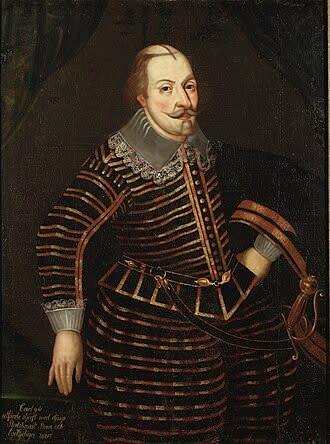
Although the king occasionally made concessions to Orthodox Christians, confirming their rights at the Sejm sessions of 1609, 1618, and 1631, his overall policy remained unchanged: a struggle against the "enemies of the faith" — Protestant Sweden and the Orthodox Tsardom of Russia.
Domestic political developments under Sigismund III marked the beginning of the erosion of the state's political system. The king sought to establish absolute rule along Western European lines, aiming to limit the powers of the Sejm and create an administrative apparatus dependent on the Crown. These ambitions met fierce resistance. Between 1606 and 1609, the Zebrzydowski Rebellion, known as a rokosz, erupted — an armed uprising of the nobility against the king.
Paradoxically, while striving for absolutism, Sigismund himself contributed to the strengthening of the principle of unanimity (liberum veto). When Zamoyski proposed that decisions in the Sejm should be adopted by majority vote, the king, fearing a loss of influence, supported the opposition, which defended the traditional system. Thus, the foundations were laid for the future political anarchy concealed behind the ideology of "Golden Liberty." During the same period, in 1596, the monarch's residence was transferred from Kraków to Warsaw, which became the country's new political center.
In 1592, following his father's death, Sigismund inherited the Swedish throne and was crowned in Stockholm in 1594. A Polish-Swedish personal union emerged, bringing together the two sides of the Baltic Sea. However, Sigismund's Catholic fanaticism and his attempts to introduce the Counter-Reformation into Protestant Sweden turned the local nobility against him.
His uncle, Charles, Duke of Södermanland, was appointed regent in Sweden and skillfully exploited popular dissatisfaction. Following Sigismund's unsuccessful military campaign in Sweden in 1598, he was formally deposed in 1599. Charles IX became the new king of Sweden. Sigismund refused to recognize this loss for the rest of his life, drawing the Polish-Lithuanian Commonwealth into an exhausting 60-year war with Sweden that ultimately brought the country nothing but devastation.
The most striking and dramatic episode of Sigismund's foreign policy was his involvement in the wars against Russia. Taking advantage of the Time of Troubles, the king supported False Dmitry I and, after his downfall, proceeded to open military intervention. In 1609, he personally led the siege of Smolensk.
In 1610, at the Battle of Klushino, the forces of Hetman Stanisław Żółkiewski defeated the Russo-Swedish army, opening the road to Moscow. A Polish garrison occupied the Kremlin, and the Russian boyars elected Sigismund's son, Prince Władysław IV, to the Russian throne. The culmination of this triumph came on October 29, 1611, when the captive Tsar Vasily Shuisky solemnly swore allegiance to Sigismund in Warsaw.


Despite the subsequent expulsion of Polish forces from Moscow in 1612, the war continued until 1618. Under the terms of the Truce of Deulino, the Polish-Lithuanian Commonwealth reached its greatest territorial extent, securing control over Smolensk, Chernihiv, and Severian lands.
In his personal life, the king maintained close ties with the House of Habsburg. He married twice, both times to sisters — Anne of Austria (the mother of Władysław IV) and Constance of Austria (the mother of John II Casimir). This dynastic alliance also determined his involvement in the Thirty Years' War on the side of the Holy Roman Emperors.
Constance's death in 1631 severely affected the monarch's health. Sigismund III Vasa died of a stroke on April 30, 1632. He left behind a state that was territorially powerful but internally weakened, engulfed in seemingly endless wars in the north and east. His reign became known as the "Silver Age," after which the ominous shadow of the "Deluge" would descend upon the Commonwealth.


