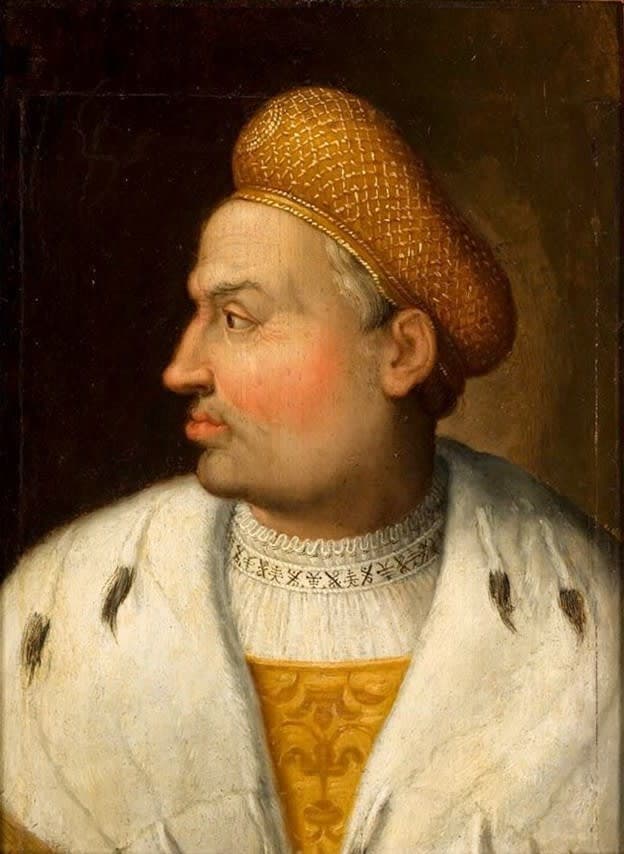
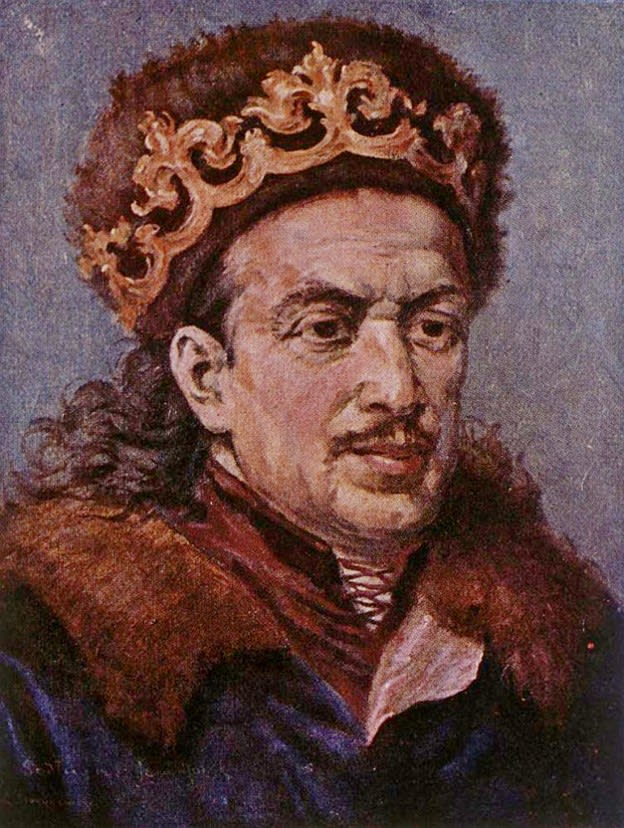
The future monarch was born in 1467 as one of the younger sons of Casimir IV Jagiellon. Sigismund's path to the heights of power was long, and this experience largely shaped his character as a cautious and pragmatic ruler.
Before ascending the royal throne, he spent many years governing territories in Silesia, holding the titles of Duke of Oppeln (Opole) and Glogau (Głogów). From 1498, he controlled the lands of Głogów, and in 1500, the Duchy of Opava came under his authority.
It was during this "Silesian period" that Sigismund demonstrated his abilities as a talented administrator and capable steward, earning a reputation as a man of profound intelligence and strong will.
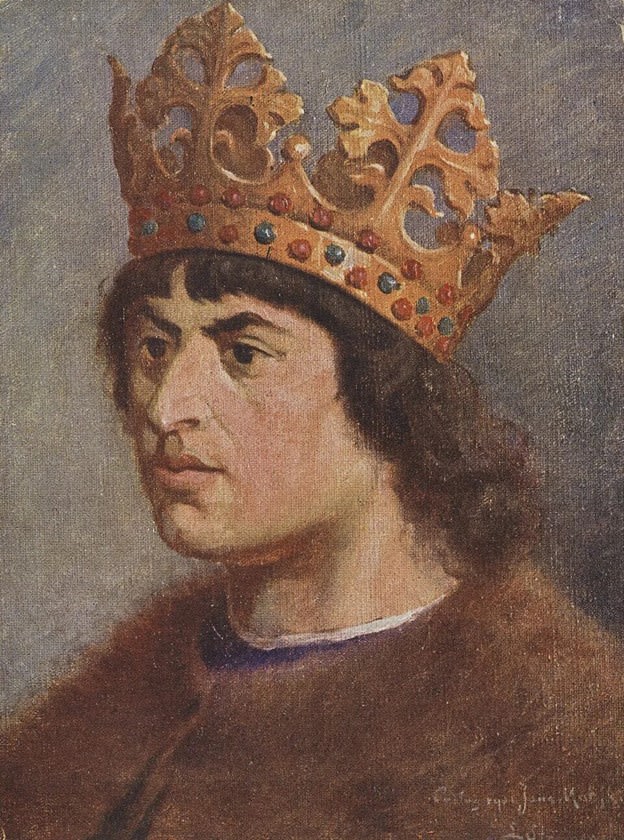
He received his famous nickname "the Old" not only because of his longevity but also because of the circumstances surrounding his accession to the throne. He became Grand Duke of Lithuania and King of Poland at a relatively advanced age by the standards of the time, succeeding his elder brothers, John Albert and Alexander.
In 1506, after being summoned to the bedside of his dying brother Alexander in Vilnius, Sigismund found himself at the center of a political whirlwind. Immediately after the monarch's funeral, on October 20, 1506, he was elected Grand Duke of Lithuania.
Soon afterward, on December 8 of the same year, he was elected King of Poland at the Sejm of Piotrków. His solemn coronation in Kraków on January 24, 1507, marked the beginning of a new era.
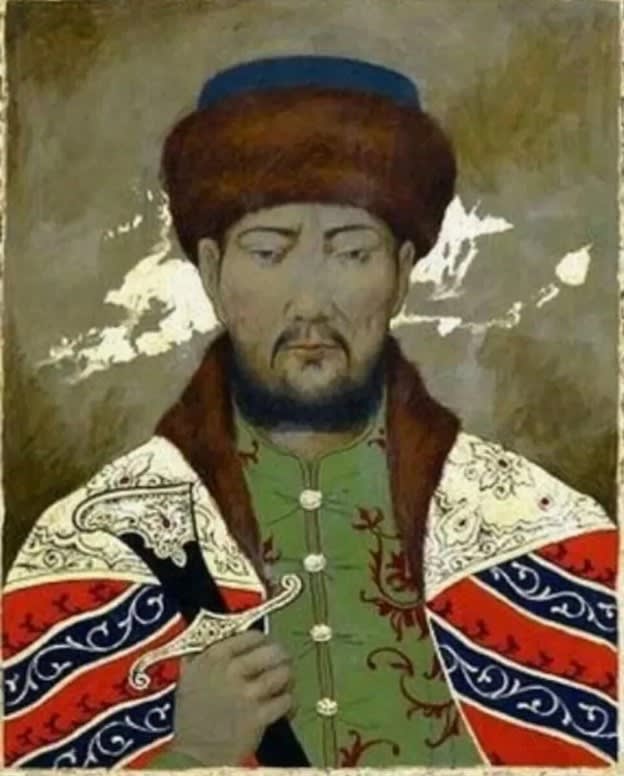
Upon assuming power, Sigismund faced the urgent necessity of restoring order to domestic affairs. His first priority was to secure peace along the kingdom's borders. He promised an annual tribute to the Crimean Khan Meñli I Giray and dispatched a diplomatic mission to the Wallachian voivode Bogdan.
Having temporarily removed the most immediate external threats, the king began restoring the state's finances. He systematically redeemed royal estates that had been mortgaged by his predecessors, paid the army's outstanding salaries, and established reserve funds for public needs.
Military affairs were particularly pressing. In 1512, new defense regulations were approved: Poland, excluding Lithuania, was divided into five military districts.
Under this system, each district was required to take its turn defending the eastern frontiers over a five-year rotation. Soldiers were responsible for supporting themselves, while those who evaded military service were subjected to taxation or confiscation of their property.
In 1527, at a session of the Sejm, Sigismund attempted to introduce an even more comprehensive military and financial reform aimed at eliminating corruption and establishing a disciplined militia under the leadership of elected representatives of the nobility.
However, these progressive initiatives encountered fierce resistance from the clergy and the upper estates.
During this period, the Polish nobility rapidly increased its influence, a development reflected in several parliamentary acts adopted in 1520 and 1521.
These laws effectively reinforced the serfdom of the peasantry by introducing compulsory labor services, requiring every serf to work one day per week on the lord's estate, regardless of previously granted privileges.
Social tensions erupted into open conflict. In 1526, the lower classes of Gdańsk rebelled under the banner of the Reformation, while major peasant uprisings broke out in the Grand Duchy of Lithuania in 1536–1537 and 1545. These rebellions were suppressed by armed force.
An important legal achievement of the era was the promulgation of the First Statute of the Grand Duchy of Lithuania in 1529, a fundamental compilation of laws.
Sigismund I's foreign policy was dominated by an exhausting struggle to preserve his influence in Europe.
Relations with the Russian state remained extremely tense and resulted in a series of wars. The conflict of 1507–1508 ended with the incorporation of Lyubech into the Grand Duchy of Lithuania.
However, the subsequent prolonged war of 1512–1522 proved particularly painful, as Lithuania lost the strategically important city of Smolensk.
During the next confrontation, from 1534 to 1537, Sebezh and Zavolochye passed into Moscow's possession, although the Grand Duchy of Lithuania managed to regain Gomel.
Meanwhile, the southern frontiers were constantly subjected to devastating raids by the Crimean Tatars, who disregarded existing tribute agreements.
In the west, Sigismund attempted to maneuver between the great European powers.
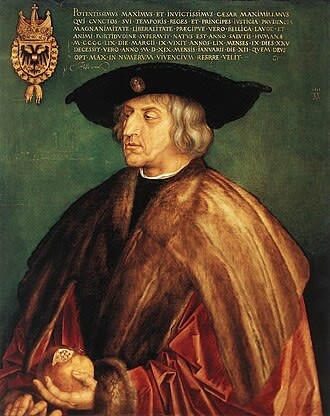
In 1515, at the Congress of Vienna, he concluded an alliance with Emperor Maximilian I, hoping to secure his assistance in restraining the Teutonic Order and reaching an agreement with Moscow.
When the emperor failed to fulfill his promises, Sigismund launched a successful war against the Teutonic Order in 1520.
Nevertheless, he did not pursue his victory to the point of completely annexing the crusaders' territories.
In 1525, the famous "Prussian Homage" took place. Albert of Brandenburg-Ansbach swore feudal allegiance to the Polish crown, while the territory of the Teutonic Order was transformed into the secular Duchy of Prussia.
This decision would eventually create serious difficulties for Polish dominance in the Baltic region.
In his relations with the Habsburgs, Sigismund demonstrated flexibility, sometimes bordering on excessive accommodation.
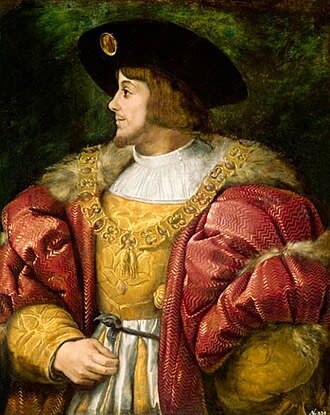
In 1526, he did not protest when the Hungarian and Bohemian crowns passed to Ferdinand I following the death of Louis II.
However, recognizing the growing power of the Habsburg dynasty, the king sought a counterbalance. In 1524, he concluded an alliance with France, and in 1533, he even entered into an alliance with the Ottoman Empire.
Later, his foreign policy shifted once again toward closer relations with Vienna. This rapprochement was reinforced in 1543 through the marriage of his son, Sigismund Augustus, to Elizabeth of Austria.
Among the major achievements of this period were the final incorporation of Mazovia into the Kingdom of Poland in 1529 and the victory over the Moldavian ruler Petru Rareș in the battle for Pokuttya in 1531.
The final years of Sigismund's reign were overshadowed by internal conflicts.
In 1537, dissatisfaction among the nobility erupted into the so-called "Chicken War" (wojna kokosza).
A noble militia numbering approximately 150,000 men gathered near Lviv. However, instead of marching against the enemy, the assembled nobles presented the king with a list of demands and grievances concerning abuses committed by the aristocracy.
As the ideas of the Reformation continued to spread, the aging monarch, increasingly influenced by the clergy, adopted a particularly strict attitude toward the new religious movement.
Sigismund I the Old died in 1548 in Kraków, leaving behind a state on the threshold of its "Golden Age."
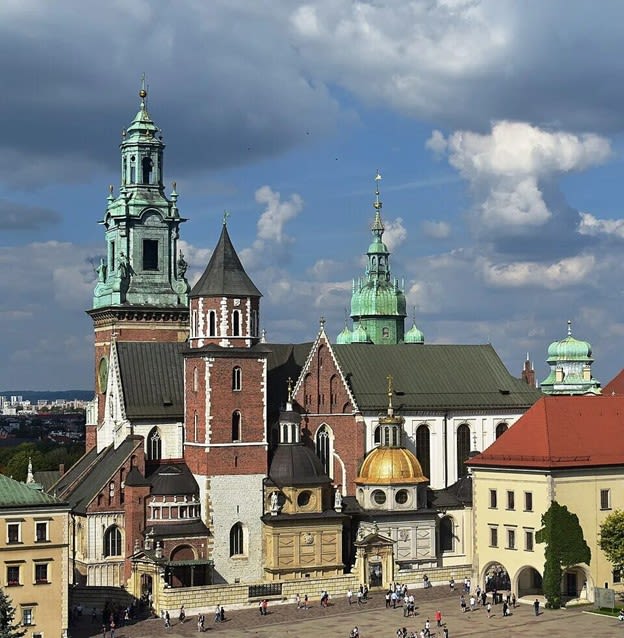
He was buried in Wawel Cathedral, in the magnificent chapel designed by the architect Bartolomeo Berrecci.
In the memory of later generations, Sigismund remained not only a warrior and reformer but also one of the greatest patrons of the arts.
It was largely thanks to his support that the artistic achievements of the Italian Renaissance were introduced to Poland.
At his initiative, the royal castle on Wawel Hill was reconstructed in the Renaissance style.
The king possessed an extensive library and invited some of Europe's finest craftsmen to his court, including sculptors, painters, and architects.
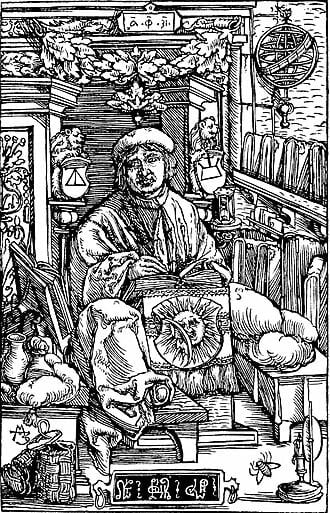
Notably, his signature appears on two letters of protection issued to Francysk Skaryna, the pioneering East Slavic printer. This highlights the breadth of the monarch's intellectual outlook and his contribution to the advancement of education and learning.
Sigismund I succeeded in preserving the greatness of the Jagiellonian dynasty, laying the foundations for the cultural flourishing of the decades that followed.
Engraving from a Publication by Francysk Skaryna


