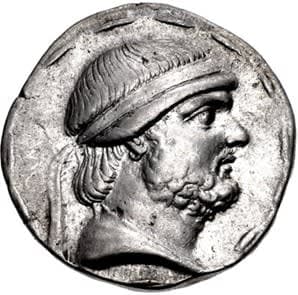
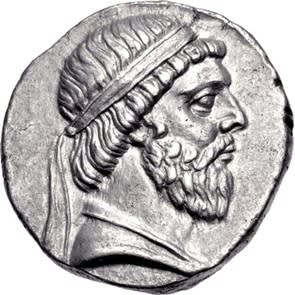
The reign of Phraates II began in the shadow of the great victories of his father, Mithridates I, but the inheritance he received was far from simple. Parthia found itself squeezed between two threats — the Seleucids on the west, thirsting for revenge, and the turbulent Great Steppe on the east.

At the court of Phraates a subtle psychological drama unfolded. The Seleucid king Demetrius II Nicator, captured during his father’s lifetime, remained in honorable captivity. Phraates, like an experienced puppeteer, kept this monarch as a living card in his political deck. He treated the captive with demonstrative goodwill, gave him his sister Rhodogune in marriage, and even allowed him to have children. The goal was simple: Phraates, who dreamed of conquering Syria, was preparing Demetrius for the role of a puppet ruler.

However, Demetrius, tormented by a thirst for freedom, attempted to escape twice. The second attempt ended dramatically — he was intercepted at the very border. Phraates II, refusing to meet the fugitive personally, sent him back to his wife and children and, as a mocking gift, presented a pair of golden dice — a hint at the frivolity of a king gambling with fate. Soon, however, these political games had to be set aside, for the clouds of real war were gathering on the horizon.
In 139–138 BCE the energetic Antiochus VII Sidetes, brother of the captive Demetrius, ascended the Seleucid throne. Having consolidated power, in 130 BCE he embarked on a grand campaign to recover the lost eastern satrapies.
Antiochus assembled an armada that astonished contemporaries. Ancient historians speak of 80,000 soldiers and an incredible train of 200,000 camp followers — cooks, hetaerae, merchants. The Greek camp glittered with gold and silver, and the warriors, according to Justin, even fastened their boots with precious-metal nails. Against this avalanche Phraates II could field, by various estimates, from a modest 20–50 thousand (Overtoom’s version) to 150 thousand fighters (Olbrycht’s version).
The beginning of the war was disastrous for Parthia. Antiochus inflicted three consecutive defeats on Phraates, driving the Parthians into the Zagros Mountains. Babylonia fell, Media was occupied. Local rulers and tributaries, deciding that the star of the Arsacids had set, defected en masse to the Greeks. It seemed that the empire created by Mithridates was collapsing before everyone’s eyes.
Yet Antiochus’s triumph proved fatal to himself. Committing a critical mistake, he dispersed his enormous army into winter quarters across many cities of Media and Parthia. Exactions, violence, and plundering by mercenaries quickly transformed the local population from liberators into avengers.
Phraates II did not waste time. In the spring, to gain time, he opened feigned peace negotiations, but upon hearing Antiochus’s humiliating demands (to return all lands outside Parthia and release Demetrius), he took decisive action. He released Demetrius II with a small detachment into Syria to sow chaos in the enemy’s rear. Then Parthian agents provoked simultaneous uprisings in all the cities where the Greeks were wintering.
Antiochus VII, attempting to save his scattered forces, rushed into battle despite the pleas of his generals. The fighting turned into a slaughter. The Seleucid king, abandoned by fleeing troops, perished — either falling in combat or, seeing the catastrophe, throwing himself into a chasm. Diodorus writes of 300,000 dead (a clearly exaggerated figure, but reflecting the scale of the tragedy). Standing over the body of the fallen enemy, Phraates uttered the famous epitaph: “Your drunkenness and folly have destroyed you, Antiochus; you hoped to drain the kingdom of Arsaces with great cups.” The king’s body was sent to Syria with honors in a silver coffin.
This was the end. The Seleucid state lost its army, the flower of its nation, and its status as a great power, sinking into a 65-year agony of civil strife. Phraates, meanwhile, having captured Antiochus’s niece Laodice (and even marrying her), became the absolute hegemon of the region.
Elated by victory, Phraates II planned an invasion of Syria to finish off the Greeks. But fate struck from another direction. For the war against Antiochus, Phraates had hired nomads — the Saka and Yuezhi — whose hordes, driven from Turkestan, were seeking new lands and plunder. The mercenaries arrived too late for the battle but demanded payment. Phraates refused.
The enraged nomads descended upon Parthia. The Yuezhi, who had destroyed the Greco-Bactrian Kingdom, now ravaged the frontiers of the Arsacid empire. Their forces (from 80,000 to 200,000 horse-archers) were assessed by Chinese sources as superior to the Parthians’. Phraates, leaving in Babylonia a cruel governor, Himerus (his favorite, who tyrannized the population), marched east.
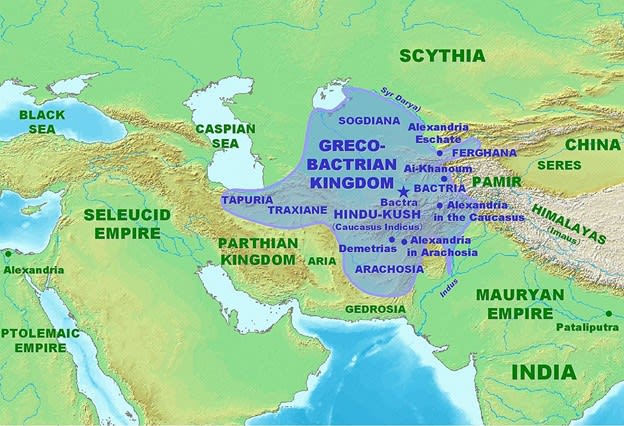

In 128–127 BCE catastrophe struck. In his army Phraates recklessly employed Greek prisoners from Antiochus’s forces. At the decisive moment of the battle with the nomads, the Greeks, remembering the humiliations of captivity, struck the Parthians from behind. The army was scattered, and Phraates II himself perished in the melee, becoming a victim of his own overconfidence.
The death of Phraates, who left no direct heirs, plunged the country into chaos. Traditional history (following Justin) states that the throne passed to his uncle Artabanus I (II). However, modern finds — ostraca from Nisa and numismatic evidence — reveal a forgotten page.
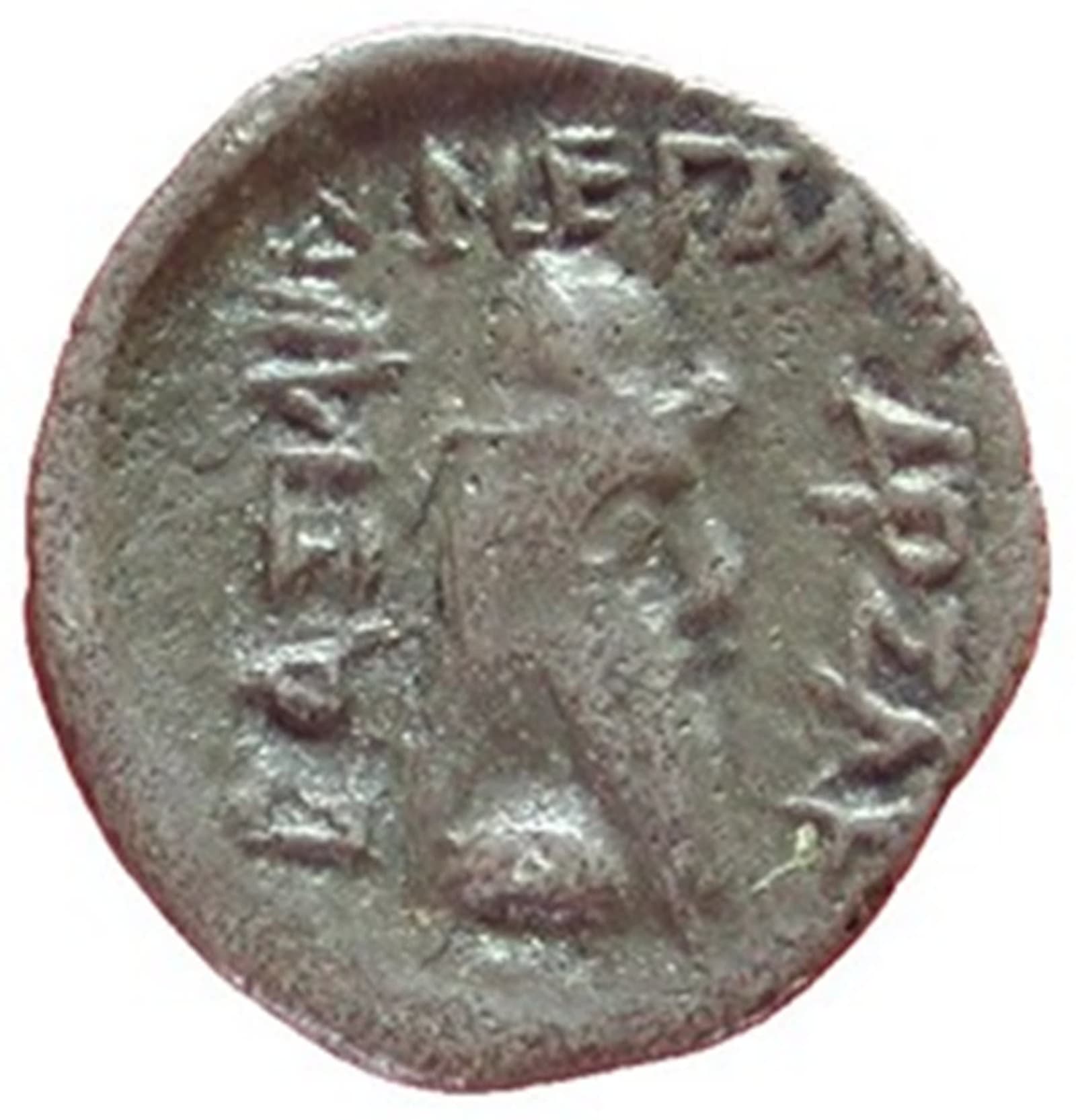
There exists a well-founded hypothesis (supported by J. Lendering but disputed by N. Overtoom) that between Phraates and Artabanus there was a brief reign of another uncle — Bagasis (Bagayasha). This experienced commander and courtier may have held power for about eight months. His portrait is even identified on overstruck tetradrachms. Whether he was officially crowned or ruled as a regent remains a mystery that historians continue to debate.

Phraates II also left his mark in metal. His coins, minted in Seleucia, continued the imperial tradition. He wore a diadem in the Hellenistic style but retained the full beard of an eastern ruler. The inscriptions proudly proclaimed: “King of Kings” and “Philhellene” (friend of the Greeks) — a title that sounded with bitter irony in light of his death at Greek swords. On the reverse invariably sat an archer in Iranian dress — the symbol of the eternal watch of the Arsacids, which under Phraates II withstood a terrible blow but paid for it with the blood of its king.


